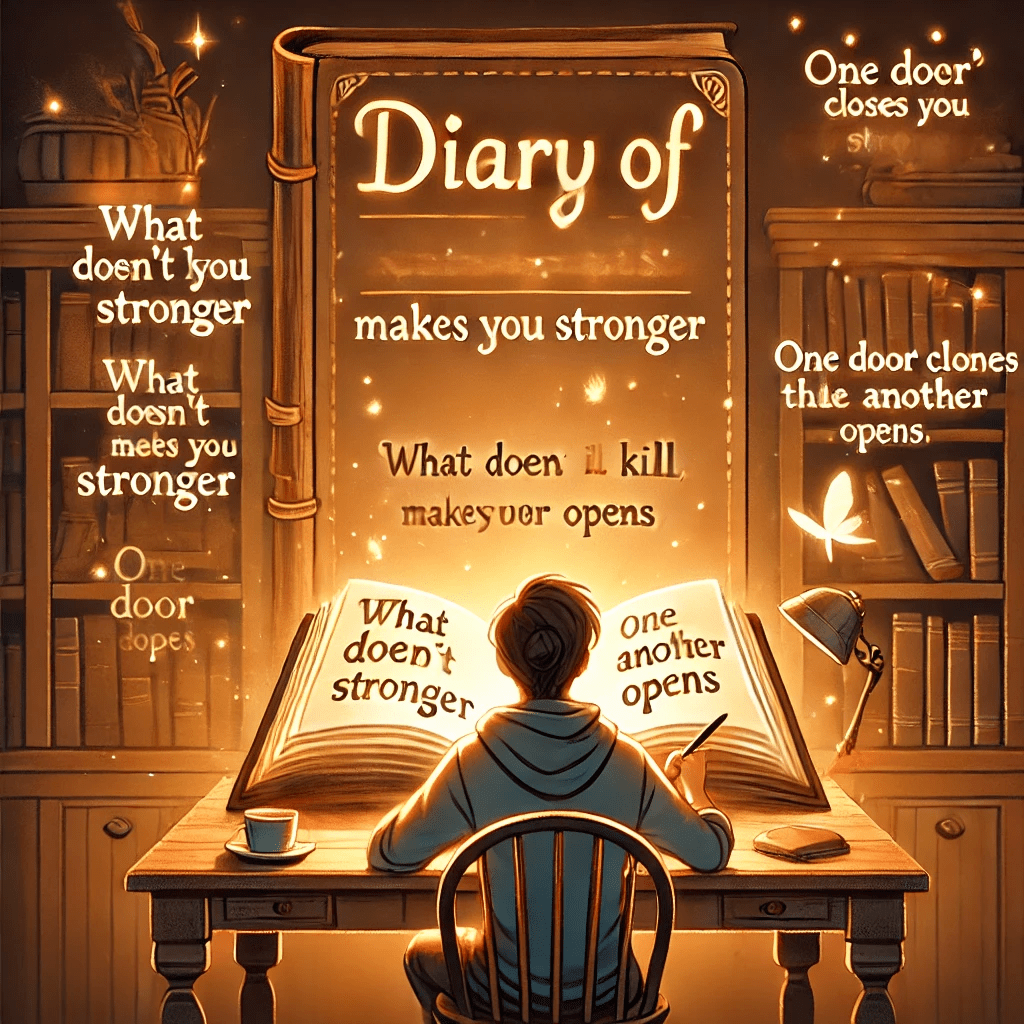
Clichés—those overused phrases we often dismiss with a roll of our eyes. Growing up, I was no exception. “Everything happens for a reason,” people would say, and I’d silently groan. How could they possibly know? But as life unfolded, these once-irritating platitudes began to morph into something else entirely: lessons, lifelines, and, dare I say, wisdom.
It didn’t happen overnight. It started during a particularly low period in my life, when I lost a job that had defined so much of who I thought I was. For weeks, I felt adrift, unable to reconcile the person I used to be with the one staring back at me in the mirror. A well-meaning friend handed me a notebook and said, “Why don’t you write about it?”
I wasn’t sold on the idea. Writing about what? My failures? My confusion? My complete lack of direction? But eventually, I opened that notebook and let the pen wander. And that’s when the clichés started showing up.
The Cliché Renaissance
At first, they came as sarcastic rebuttals. “When one door closes, another opens,” I scrawled one day, immediately adding, “But what if I’m stuck in the hallway, huh?” It was an attempt at humor, but as the words sat there on the page, something shifted. Was I in the hallway? If so, could I light a match and find my way forward?
That’s how it began: a grudging acknowledgment of these overused phrases, which slowly turned into exploration. I started to write each one down as it popped into my head, then dissect it. “This too shall pass.” Pass into what? What could I build while I waited? “You miss 100% of the shots you don’t take.” Which shots had I been too afraid to try?
Each cliché turned into a prompt, a chance to explore my inner world. I wasn’t just writing anymore—I was excavating. And with every page, I found more than I expected.
Clichés and Connection
What surprised me most was how these phrases, which I once thought of as lazy shortcuts, held the power to connect. The more I journaled, the more I found shared experiences with friends, family, and even strangers.
I remember sharing, “What doesn’t kill you makes you stronger,” during a conversation about resilience. My friend paused and said, “You know, that got me through my dad’s illness.” Suddenly, it wasn’t just a saying—it was a bridge.
The Transformation
Through these journal entries, I began to see clichés for what they truly are: distilled truths. They’ve survived generations because they encapsulate something universal, something deeply human. And once I stopped fighting their familiarity, I realized they could teach me far more than I ever expected.
When I poured these thoughts into what would eventually become Diary of Clichés, I wanted to capture that journey—how these phrases moved me from skepticism to solace, from frustration to understanding. It’s not just a book about clichés; it’s a book about the beauty of finding meaning in the everyday, of turning simple words into profound change.
Why It Matters
We all hit those moments when life feels overwhelming or directionless. In those moments, we don’t need grand theories or lofty ideals. Sometimes, all we need is a few words—a reminder that we’re not alone, that others have walked this path and found their way through.
That’s what clichés offer. They’re like breadcrumbs left by previous travelers, guiding us when we’re lost. Yes, they’re simple. But simplicity is often where the magic lies.
Your Turn
Have you ever dismissed a cliché, only to find it resonates with you later? I’d love to hear your thoughts. And if you’re curious about my journey, Diary of Clichés is my love letter to the words that helped me heal, grow, and connect.
Because in the end, life isn’t about reinventing the wheel—it’s about rolling forward, one cliché at a time.



 Kay’s Odyssey
Leave a comment