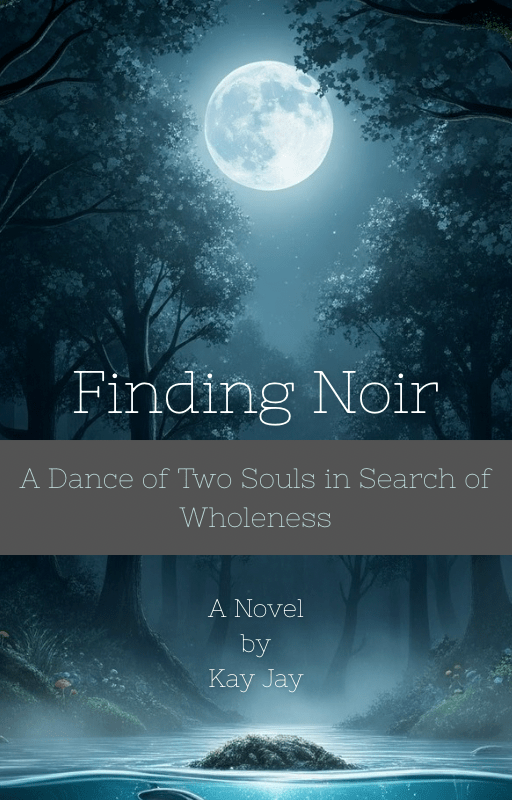
Do you spend more time thinking about the future or the past? Why?
Most of us like to believe we’re future-oriented.
We talk about growth, next chapters, manifestation, moving on. It sounds healthier.
But if I’m honest, I’ve learned this:
We don’t spend more time in the past because we’re nostalgic.
We do it because something there didn’t finish.
I used to think I was imagining the future—what could have been, what might still happen. But when I looked closely, I wasn’t actually ahead of myself. I was standing in the wreckage of a moment that never got an ending, asking it to explain itself.
The past isn’t memory.
It’s unfinished business.
The future, by contrast, is clean. It hasn’t disappointed us yet. That’s why we borrow it as a fantasy when the present can’t hold our longing. We don’t want the future—we want relief from the unanswered.
Finding Noir lives in that exact in-between space: where the past keeps intruding not because it was better, but because it was incomplete. A connection that felt inevitable inside but never materialized outside. A bond that existed in language, sensation, and silence—but not in follow-through.
This book doesn’t argue for staying stuck. It asks a harder question:
What if revisiting the past isn’t regression, but an attempt at truth?
Not to relive it.
Not to romanticize it.
But to finally see it clearly—without hope doing the editing.
If you find yourself oscillating between memory and possibility, wondering why neither feels stable, this isn’t a failure of imagination. It’s a signal.
Some stories don’t ask to be continued.
They ask to be understood.
And once they are, the future stops feeling like an escape—and starts feeling like a choice.



 Kay’s Odyssey
Leave a comment