Falling in love is often mistaken for courage.
In truth, it’s the most natural thing we do.
Love arrives the way breath does—effortlessly, instinctively, without negotiation. It bypasses our intellect and slips straight into the body. One look, one sentence, one shared silence, and something inside us recognizes itself. We call this magic, chemistry, fate. But what’s really happening is simpler: a part of us has been awakened.
That awakening feels expansive. Alive. Almost holy.
And because it feels so alive, we rush to hold it.
This is where love begins to change.
Love as Awakening vs. Love as Possession
Awakening doesn’t ask for ownership. Possession does.
In the early stages of love, we don’t yet know the difference. The feeling is so vivid that we assume it must be protected, defined, secured. We turn toward the future instinctively—What does this mean? Where is this going? How do I keep this?
But the truth is: love doesn’t need to be kept.
It needs to be met.
Falling in love is easy because it flatters the ego. It gives us story, momentum, identity. We become “chosen,” “seen,” “special.” Even the vulnerability feels glamorous. We are willing to risk because the reward feels immediate.
Letting go, on the other hand, offers no such romance.
Letting go removes the scaffolding.
The labels.
The imagined endings.
The version of ourselves that existed because someone else was there to reflect it.
And that is why letting go feels like loss—when in fact, it is initiation.
The Part of You That Comes Alive
What makes letting go so difficult is not the absence of the other person.
It is the presence of yourself without them.
When love awakens something dormant—joy, creativity, tenderness, depth—it’s easy to believe that the other person is the source. But they are not. They are the trigger, not the origin.
Letting go forces a confrontation with a quiet question we often avoid:
Can I stay with what came alive in me, even if the person who awakened it is no longer present?
This is where most people turn back. Not because they don’t love—but because they don’t yet trust themselves to carry that aliveness alone.
So we chase, cling, negotiate, spiritualize, romanticize. We confuse intensity with destiny. We mistake attachment for devotion.
But love that requires possession to survive is not love—it is dependency dressed as meaning.
Letting Go as Spiritual Maturity
Letting go does not mean severing love.
It means releasing control.
It means allowing love to exist without demanding a shape, a role, or a future. It means sitting with longing without collapsing into it. It means letting grief soften you instead of harden you.
This kind of letting go is not passive.
It is deeply active.
It asks you to remain present while the mind searches for narrative. To stay embodied while the heart aches. To resist turning connection into currency or proof of worth.
Very few people are taught how to do this. We are taught how to attract, how to commit, how to build—but not how to release without erasing.
And yet, release is where love matures.
When Love Survives Release
There is a quieter form of love that appears only after letting go. It is not fueled by hope or fear. It does not ask to be returned. It does not perform.
It simply is.
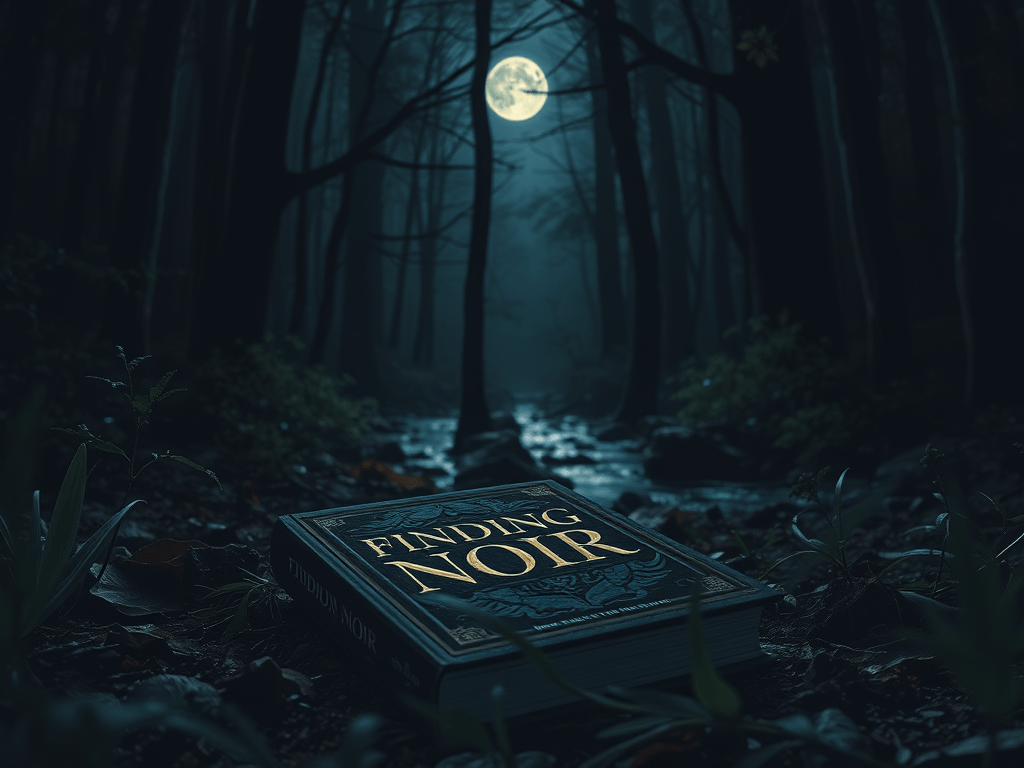
In Finding Noir, love is explored not as something that must be held onto, but as something that remains intact even when the story dissolves. The relationship becomes less important than the inner alignment it reveals. What survives is not the bond—but the truth it exposed.
This kind of love does not weaken you.
It stabilizes you.
You stop asking, Will this last?
And start asking, Who am I when I don’t need it to?
The Real Initiation
Falling in love opens the door.
Letting go walks you through it.
On the other side is not emptiness—but integration. You discover that love was never meant to rescue you from yourself. It was meant to return you to yourself, fully intact.
And once you know that—
you are no longer afraid to love deeply.
Because you are no longer afraid to stand alone with what love reveals.




 Kay’s Odyssey
Leave a comment