Author: Kay’s Corner

  • You Are Not Looking for Tactics, You Are Looking for Clarity: Why the answer to your sales problem is internal.

    You Are Not Looking for Tactics, You Are Looking for Clarity: Why the answer to your sales problem is internal.

    The single most important perspective shift that transforms a problem into a solvable system.

    If you have been drawn to this guide, you are likely already exhausted by the pursuit of tactics. You have searched the web for marketing hacks, social media tricks, and the latest algorithms—the fleeting, external solutions that promise an instant, explosive spike. You are operating with the energy of the Gambler, believing that one lucky, clever tactic will magically break the silence.

    This pursuit of tactics is the most significant strategic dead end in publishing. It fails because it is an external solution to a problem that is fundamentally internal.

    The Internal Problem of Disconnection

    The silence you are experiencing is not a failure of strategy; it is a failure of signal. Your book is invisible not because you lacked the right ad copy, but because the bridge between your content and the reader’s need (the Invisible Barrier) is unclear. This lack of clarity stems from a failure of Position—an internal ambiguity about your book’s exact purpose, value, and audience.

    1. Tactics are Passive: They require you to wait for the next viral trick to be handed to you. They are the domain of the anxious Why question (Why is this happening to me?).
    2. Clarity is Active: It forces you to become the Positioner—the active force in your career—by embracing the strategic What question (What is the next step I can take to clarify my signal?).

    The painful truth is that no external tactic can fix an internal lack of clarity. If your Position is vague, a viral tweet will only send a generic Vague Promise to more people, accelerating the failure. If your price is set with a Hesitant Price Trap, a massive discount tactic only confirms your low conviction to a larger audience.

    The Irresistible Power of Clarity

    The Intentional Author knows the answer to the sales problem is internal Clarity. This is the hard, necessary work of:

    • Defining the Shared Secret: Naming the specific, hidden pain your ideal reader is too embarrassed to admit.
    • Embracing Your Authority: Speaking from the Truth of Your Scars as the Traveler Who Found the Map, rather than hiding behind the Expert’s Pedestal.
    • Articulating Transformation: Framing your book as the necessary Investment (the map), not an optional expense (the product).

    Clarity is the ultimate, non-negotiable tactic. It is the single competitive advantage that no amount of money or “hustle” can buy. The moment you stop chasing fleeting external tricks and commit to the relentless internal work of achieving clarity, you transform your anxiety into Agency, and your book’s message becomes an irresistible signal that no reader can ignore.


    The Intentional Author

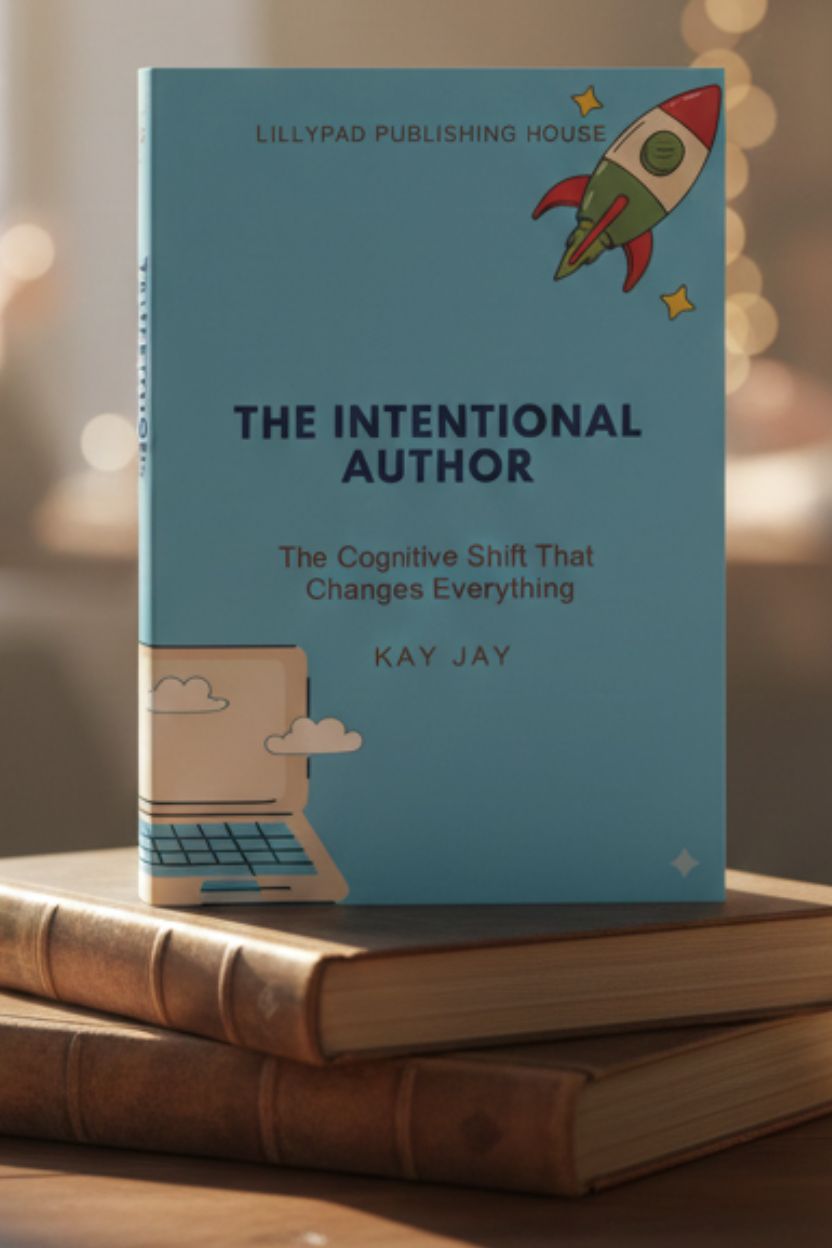
    A book titled 'The Intentional Author' by Kay Jay, featuring a blue cover with illustrations of a rocket and a laptop, placed on top of two stacked brown hardcover books.
  • First Month Success: Focus on $1 Metric

    First Month Success: Focus on $1 Metric

    The Only Metric That Matters in Your First Month is $1

    If you feel paralyzed, it’s because you’re evaluating your business at a macro scale before it even exists at a micro scale. You are worrying about how to manage fifty clients when you haven’t secured one.

    Success in month one isn’t philosophical—it is sequential. A launch is not a dramatic unveiling; it is a series of conversations leading to one payment.

    Your 30-Day Sprint:

    • Days 1–10: Define one offer, one price, and one contact method. You are now open.
    • Days 11–20: Initiate five active conversations a day. Not pitches—probes. Ask people about the problems they face.
    • Days 21–30: Present a solution and ask for the sale.

    The moment that first dollar clears, you are no longer a person with an expensive hobby. You are an operator of a validated business. You are banned from worrying about automation or scaling until that dollar is in the bank. Build infrastructure only after it has been earned.

  • The Simple Problem of Safety Check Failure: How to look at your title and description like an engineer, not a writer.

    The Simple Problem of Safety Check Failure: How to look at your title and description like an engineer, not a writer.

    The essential filter that determines whether your book is seen or ignored.

    When a writer finally finishes their manuscript, their primary emotional attachment is to the art. They view the title, subtitle, and description as final, beautiful packaging—a poetic encapsulation of the work they poured their soul into. This is the Writer’s Mindset, and while it creates great content, it often leads directly to the Silence.

    The problem is that the market is not a literary salon; it is a complex, chaotic system. The reader scrolling past your book is not performing an art critique; they are performing a high-speed, emotional Invisible Safety Check.

    To survive this test and break the silence, you must temporarily set aside the Writer’s Mindset and adopt the focus of an Engineer.

    The Engineer’s Mindset views the title and description not as final art, but as a crucial piece of signal infrastructure that must perform a specific, measurable function: Signal Integrity.

    The Simple Problem of Safety Check Failure

    The engineer understands that a failure of the system is not a personal failure, but a solvable problem of alignment. The goal is to ensure the signal is so clear that it eliminates the reader’s doubt. The Writer’s Mindset asks, “Is this beautiful?” The Engineer’s Mindset asks, “Does this pass the Safety Check?”

    The Safety Check requires the external signal to confirm three things to the reader’s subconscious in two seconds:

    1. Signal Integrity Check (Is the Signal Clear?): A writer uses a Vague Promise because it sounds elegant. An engineer rejects this because it fails to communicate the specific function. The signal must be an Irresistible Signal that names the specific pain (the Shared Secret). Function: Interrupt the Scroll.
    2. Safety Protocol Check (Is the Guide Safe?): A writer may hide their vulnerabilities. An engineer understands that trust is a required safety protocol. You must communicate the Authority of Clarity by speaking the Language of Shared Confusion and leading with your scars (the Traveler Post). Function: Establish Empathy and Trust.
    3. End-State Guarantee Check (Is the Map Reliable?): A writer lists content (the Inventory List Trap). An engineer guarantees the functional outcome. Your description must sell Transformation Over Information, framing the book as a vital Survival Guide. Function: Promise an Unambiguous Outcome.

    The silence is simply a pattern—a failure of signal integrity. The Student of Patterns does not blame the manuscript; they analyze the signal. The moment you look at your title and description like an engineer—focused not on the beauty of the pipe, but on the unshakeable clarity of the water flowing through it—you solve the simple problem of Safety Check Failure, and your necessary book finally gets the clear signal it needs to travel.

    The Intentional Author

    A book titled 'The Intentional Author' by Kay Jay, featuring a blue cover with illustrations of a rocket and a laptop, placed on top of two stacked brown hardcover books.
  • Overcoming Author Guilt: A New Approach to Promotion

    Overcoming Author Guilt: A New Approach to Promotion

    The single internal choice that transforms a burden into a mission.

    When an author looks at the promotional process—the continuous posting, the emails, the direct asks for sales—the overwhelming emotion is often a deep, quiet guilt. We feel guilty for asking for money, guilty for interrupting the reader’s scroll, and guilty for focusing on the transactional aspect of our work. This guilt is rooted in the fear that we are being a pushy “salesperson,” and it is the single greatest drain on the author’s energy.

    This guilt is a direct product of the Performance mindset. When you act from the energy of Performance, you are focused on yourself: I need to sell this book to justify my effort. I feel guilty because I am putting my own needs first. This feeling is a massive Invisible Barrier that makes your voice small and your signal weak.

    The emotional liberation that breaks this cycle is a single, profound identity shift: Stop Feeling Guilty, Start Acting on Duty.

    This is the core commitment of the Intentional Author. It replaces the anxious, self-focused energy of the Gambler with the calm, resolute certainty of the Positioner.

    The Duty of the Intentional Author

    The moment you commit to this duty, the entire perception of promotion changes:

    1. Duty Replaces Guilt: You are no longer asking for a favor; you are fulfilling a duty to the person who is still lost. Your book is a necessary map that eliminates their specific pain (the Shared Secret). You have a moral obligation to ensure that map reaches the traveler who needs it. To withhold the map out of your own personal discomfort with selling is the ultimate act of self-indulgence.
    2. Service Replaces Performance: Your promotion ceases to be a transactional Product Post and becomes a clear, confident Service Post. You are no longer selling; you are providing the recognition and clarity that only your book can offer. The energy is no longer transactional (Buy this) but transformational (I see your struggle).
    3. Agency Replaces Anxiety: The pursuit of sales is no longer an emotional burden of persuasion; it is a strategic act of Agency—the clear next step to provide the map. The anxiety that asks, Am I good enough? is replaced with the steady conviction that: This map is necessary.

    The Intentional Author’s duty is to be the clear signal. This commitment is the only way to endure the Marathon and ensure your voice is sustained. The guilt is an internal noise that blocks the signal. The duty is the external clarity that makes the sale inevitable. When you stop worrying about your own feelings and focus relentlessly on the reader’s desperate need, you achieve the ultimate emancipation: promotion stops feeling like a shame to be avoided and becomes a necessary, powerful act of service.

    The Intentional Author

    A book titled 'The Intentional Author' by Kay Jay, featuring a blue cover with illustrations of a rocket and a laptop, placed on top of two stacked brown hardcover books.
  • The Invisible Barrier: Connecting with Readers Deeply

    The Invisible Barrier: Connecting with Readers Deeply

    The true measure of a clear signal, found in the quiet confessions of readers.

    When an author embarks on the long game, they are searching for a clear sign that the shift from Performance to Service—from chasing sales to cultivating clarity—is actually working. The conventional measure of success is a transactional number: a spike on the sales dashboard, a chart position, a flood of positive reviews. But these are the metrics of the Sprint, and they are often noisy, fleeting, and ultimately unsatisfying.

    The true, unvarnished evidence that your signal has achieved the irresistible clarity of the Intentional Author is found in the quiet, private confessions of your readers.

    When the shift from transactional persuasion to emotional recognition goes from theory to reality, success no longer looks like a number. It looks like a simple message in your inbox, a note on social media, or a quiet statement that proves your signal has successfully navigated the Invisible Barrier and reached the exact person it was intended for.

    Success is the Proof of Recognition

    This is the unvarnished evidence that proves your Position → Package → Signal sequence is working:

    1. The Validation of the Shared Secret: The single most common message you receive is one that says, “I thought I was the only one. Thank you for naming that specific fear.” This proves you successfully articulated the Shared Secret—the hidden, contradictory pain your reader was too embarrassed to admit. It proves you achieved Authority of Clarity by making the reader feel seen, which is the foundational purpose of your map.
    2. The End of Isolation: The reader stops speaking about the book’s content and starts speaking about the emotional relief of their discovery. “I no longer check the dashboard with shame at 2 AM. I feel like the problem is solvable now.” This proves your message is working as a Survival Guide to a specific, painful state. It shows the emotional transformation has begun, which is the true value of your Investment.
    3. The Acknowledgment of the Traveler: Readers stop addressing you as the distant expert on the Pedestal and start addressing you as a fellow journeyer. “Your honesty about your first book’s failure is why I bought yours.” This proves you successfully led with your scars (the Truth of Your Scars), establishing a relationship built on empathy and trust, not just expertise.

    These private confessions—the moments where a reader shares the intimate truth of their pain and thanks you for the map—are the only metrics that matter in the long game. They are the undeniable proof that your message has not only broken the silence but also forged a connection that transcends a transaction.
    When you commit to the Marathoner’s Mindset and dedicate every Service Post to achieving this emotional recognition, the unvarnished evidence will follow. It confirms the profound truth that your book’s ultimate purpose is not to be a product of massive sales, but to be a trusted map for a few, leading inevitably to the cumulative sales that sustain your career.

    The Intentional Author

    A book titled 'The Intentional Author' by Kay Jay, featuring a blue cover with illustrations of a rocket and a laptop, placed on top of two stacked brown hardcover books.
  • Unlocking Success with the Full Alignment Matrix

    Unlocking Success with the Full Alignment Matrix

    The single most powerful internal shift that guarantees your book is seen.

    When your book is an “ignored product,” the problem is not a simple failure of marketing. It is a profound failure of Alignment—a deep, internal misalignment between the profound value you poured into the manuscript and the weak, confusing signal you are sending to the world.

    The ignored product operates on the anxious energy of the Gambler, hoping the market will reward an external event (the launch). The magnetic necessity operates on the calm conviction of the Positioner, knowing the market must reward an internal, unshakeable truth (the clear signal).

    The process of transforming an ignored product into a magnetic necessity is the Full Alignment Matrix. It is the internal work that must be done before you can ask the external world for a sale. This matrix requires the ruthless, honest alignment of three core elements:

    1. Alignment of Identity (Expert vs. Traveler)

    • The Problem: The author is operating from the Expert’s Pedestal, trying to sell a product based on credentials and polished perfection. This is emotionally distant and repels the connection the reader desperately needs.
    • The Internal Work: Embrace the Truth of Your Scars. Make the Confession that you wrote the book from the hole you climbed out of. You must become the Traveler Who Found the Map.
    • The Result: You establish the Authority of Clarity—a deep, magnetic trust built on shared experience, not titles. The reader stops asking, “Are you good enough for this book?” and starts thinking, “This guide is a safe haven for my struggle.”

    2. Alignment of Value (Expense vs. Investment)

    • The Problem: The author carries an Invisible Resistance—a private discomfort with wealth—that causes them to fall into the Hesitant Price Trap. This whispers to the market that the book is an Expense that might be risked.
    • The Internal Work: Reframe your book’s price and value. Your book is not an object to be sold; it is a life-saving map that eliminates the Shared Secret (the anxiety, the shame, the confusion). It is a vital Investment in the reader’s time and future.
    • The Result: You set the Confident Price and speak the language of conviction. The magnetic necessity is created when the reader concludes that the cost of staying stuck in their pain is exponentially higher than the cost of buying your map.

    3. Alignment of Service (Performance vs. Purpose)

    • The Problem: The author is trapped in a transactional Sprint, focusing on external Performance (volume, urgency, sales figures) to compensate for internal fear. This leads to the Failure of Sequencing.
    • The Internal Work: Commit to a core Purpose—a Silent Vow to serve. Shift the energy of your communication from “Buy my book” to “Let me help you feel seen.” This is the essence of the Service Post and the Marathoner’s Mindset.
    • The Result: The launch transforms from an easily ignored Interruption into the Anticipated Culmination of a Cumulative Conversation. The book becomes a magnetic necessity because it is seen as the inevitable answer to a relationship built on sustained, clear, and valuable service.

    The Full Alignment Matrix is the definitive work that precedes the launch. The ignored product operates from fear and scarcity. The magnetic necessity operates from clarity and conviction. The moment you achieve this internal alignment, your book’s signal becomes irresistible, and the sales finally become an inevitable act of self-recognition.

    The Intentional Author

    A book titled 'The Intentional Author' by Kay Jay, featuring a blue cover with illustrations of a rocket and a laptop, placed on top of two stacked brown hardcover books.
  • Overcoming Internal Resistance as an Author

    Overcoming Internal Resistance as an Author

    Addressing the internal hesitation that readers perceive as a lack of value.

    We’ve discussed the strategic failures that lead to book invisibility—the Vague Promise, the confusing Signal, the failure of Sequencing. But sometimes, the ultimate source of that weakness is not external or technical; it is a quiet, powerful internal sabotage that stems from your relationship with money and value.

    This is the Hidden Money-Value Link: your private discomfort with wealth, selling, and receiving value for your work leaks into your public signal, creating an Invisible Resistance that readers perceive as a lack of conviction.

    Authors, often driven by the high-minded purpose of art and service, view money as a distraction or a necessary evil. This internal conflict—the fear of being judged for selling—is what kills the sale. You may believe this feeling stays internal, but it immediately manifests in a shaky, apologetic external signal.

    The Loop of Public Invisibility

    This private discomfort creates a destructive, self-sabotaging loop that leads directly to invisibility:

    1. The Internal Hesitation: You feel uncomfortable asking for the full, appropriate price for the immense transformation your book provides. The Anxiety of Persuasion is high.
    2. The External Apology: To compensate, you fall into the Hesitant Price Trap. You set a price that is too low, or your promotional language is passive, indirect, and apologetic. You whisper your value instead of shouting your relevance.
    3. The Reader’s Interpretation: The market doesn’t hear your humility. The reader, operating under the Invisible Safety Check, unconsciously registers the weak signal as low conviction. They conclude: “This author is unsure of their value. Therefore, the value of the book is probably low and not worth my time.”

    The problem is that you are sending a signal of risk, not a signal of confidence.

    The Shift from Expense to Conviction

    The breakthrough that breaks this link is a profound shift in mindset: The money you receive is not a reward for your effort; it is a measure of your unshakeable conviction in the transformation you provide.

    Your book is a map that will save the reader months or years of struggle, eliminating the shame of the 2 AM Dashboard Check. That is immense, life-changing value. The moment you achieve the Intentional Author’s clarity—the realization that your book is a vital Investment in the reader’s future—your internal conflict disappears.You replace the Hesitant Price with the Confident Price—a statement that unapologetically matches the transformation offered. You replace the pleading Product Post with a confident Service Post. This clarity of conviction eliminates the Invisible Resistance and transforms the sale from a reluctant transaction into an irresistible act of self-recognition. Your external visibility is simply a reflection of your internal clarity on your worth.

    The Intentional Author

    A book titled 'The Intentional Author' by Kay Jay, featuring a blue cover with illustrations of a rocket and a laptop, placed on top of two stacked brown hardcover books.
  • Transform Your Book with The Intentional Author System

    Transform Your Book with The Intentional Author System

    The essential reason why the full map is the only way to break the silence for good.

    If you have read this far, you have already experienced the power of clarity. You now understand the truth of the Invisible Barrier—that your book is not unwanted, but simply invisible. You have learned about the Vague Promise Trap, the emotional cost of the 2 AM Dashboard Check, and the critical importance of shifting from Performance to Service. You have been given the foundational pieces of the map.

    But a traveler lost in the woods cannot survive on fragments of a map.

    The most dangerous thing you can do now is mistake clarity about the problem for the completion of the solution. You have the emotional truth, but you need the System.

    This book, The Intentional Author, is the only place where I have laid out the entire, complete, step-by-step framework for ending your silence and building an irresistible signal.

    The Difference Between a Fragment and a System

    1. The Fragment (The Free Content): Provides the crucial insight—the one emotional truth that interrupts your anxiety. It tells you what the problem is (e.g., you are a Gambler in a transactional cycle).
    2. The System (The Full Book): Provides the engineering plan—the precise, actionable framework for the Positioner that builds the Cumulative Conversation. It shows you how to implement the fix, step by strategic step.

    The complete system is the unedited, full sequence of Position → Package → Signal that transforms your book from an invisible product into a Living Entity.

    Inside, you will find the deep-code framework that moves beyond the single-sentence advice: the step-by-step audit of your Package, the precise sequence for building the Authority of Clarity, the mechanics of setting the Confident Price, and the complete blueprint for the Marathoner’s Mindset that sustains your success for years, not just a single launch week.Your conviction is high. Your motivation is clear. But to transform the silence into sustained sales, you need more than a moment of clarity—you need a Survival Guide that covers every inch of the territory. This book is that map. The time for single fragments is over. Your breakthrough requires the complete system.

    The Intentional Author

    A book titled 'The Intentional Author' by Kay Jay, featuring a blue cover with illustrations of a rocket and a laptop, placed on top of two stacked brown hardcover books.
  • Books Do Not Fail Because They Are Weak, They Fail Because They Are Invisible.

    Books Do Not Fail Because They Are Weak, They Fail Because They Are Invisible.

    The single most emotionally destructive consequence of an invisible launch.

    As authors, we live with a comfortable, yet ultimately fatal, delusion: the belief in meritocracy. We pour our hearts into the work—the craft, the research, the profound inner truth—and conclude that if the book is objectively Weak, it will fail, and if it is Strong, it will succeed.

    But when the book is launched and met with the deafening Silence, the failure is not of strength or weakness. It is a failure of visibility.

    The most dangerous and destructive truth for an author is this: Books do not fail because they are weak. They fail because they are invisible.

    The brutal reality of the attention economy is that your book’s quality is irrelevant if it is never perceived. A masterpiece that is unread is, functionally, a non-existent book. The market is not judging your content; it is confirming a lack of connection.

    The Failure is Not Talent, It is Signal

    The silence is not a mass rejection of your talent. It is the sound of a clear, powerful message failing to pierce the overwhelming noise of distraction. The author assumes the problem is a failure of Quality—my book is not good enough. The market is signaling a failure of Signal—your book is not clear enough.

    The reason for this lies in the Invisible Barrier. The reader, overwhelmed and skeptical, is not looking for a general guide; they are looking for a precise map out of a specific, hidden pain (the Shared Secret).

    When your signal is a Vague Promise or a Technical Label, it forces the reader to perform the labor of translation, figuring out how the broad idea applies to their unique shame. They won’t accept that labor. They will move on. The book disappears, not because it lacked strength, but because it lacked clarity.The single truth that saves your career is realizing that your book’s strength is an internal quality; its signal is an external act of service. The Intentional Author stops fighting the painful internal question (Am I good enough?) and focuses on the strategic external instruction: How do I make my book so relentlessly relevant that it becomes irresistible? The silence breaks not with a new surge of strength, but with a new, uncompromising signal of clarity.

    The Intentional Author

    A book titled 'The Intentional Author' by Kay Jay, featuring a blue cover with illustrations of a rocket and a laptop, placed on top of two stacked brown hardcover books.
  • Building Profitable Businesses: Lessons from Passion Projects

    Building Profitable Businesses: Lessons from Passion Projects

    Why Your Passion Projects are Costing You Your Future

    There is a popular sentiment on the internet: “The boring business paid my mortgage. The cool startup paid for my therapy.”

    We live in a culture that romanticizes the high-growth tech startup. We are told to “think big,” chase VC funding, and disrupt industries. But out in the real world, the data points to a different reality: the most profitable businesses are often the most mundane.

    When I transitioned from a software career to entrepreneurship, I tried to launch an artisanal candle company out of passion. It failed because it lacked a foundation. The businesses that actually make money don’t rely on inspiration; they rely on three structural pillars:

    1. Recurring Demand: Don’t educate the market. Find a need that grows back (grass, dirty offices, tax deadlines).
    2. Healthy Margins: Skip high-volume, low-margin traps. Services with low overhead provide the economic buffer you need to survive.
    3. Repeatability: If your business requires you to be a creative genius every single day, it’s not a business; it’s a high-stress job. Build systems that work even when you’re tired.

    Status doesn’t pay the rent. Cash flow does. Stop chasing “cool” and start chasing “reliable.”