It’s a question that seems simple enough—wars, revolutions, inventions, pandemics, elections. The milestones we were taught to underline in textbooks. But when I think of history, I don’t see dates or leaders. I see moments—small, human moments—where the Earth herself bore witness.
I remember the day the skies over San Francisco turned orange, as if the sun had grown weary and decided to rest. I remember the summer when rivers ran so dry that the fish lay gasping in the mud. I remember the floods that swallowed entire towns, the fires that raged for weeks, the ice that cracked and wept into the sea.
We call these “environmental crises,” but to me, they feel like history too—because they mark the chapters of a changing Earth.
In many ways, A Song and Dance for Mother Earth is about remembering. Not the history we memorized, but the history we have lived alongside the planet—the one written in smoke, wind, and tide. The one that reminds us that the Earth, too, has stories to tell.
Each piece in this series is a fable, but also a mirror.
There’s The Day Fire Disappeared, when humanity learns what happens when the flame that built civilization decides to go out.
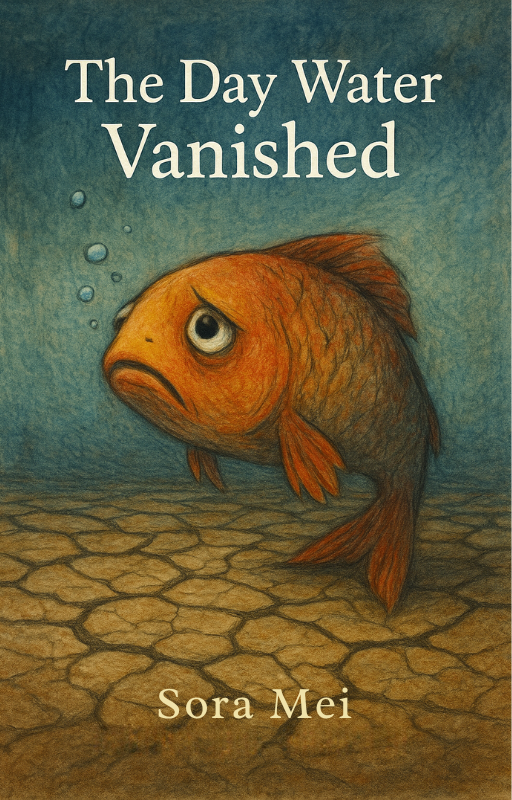
There’s The Day Water Vanished, where rivers dry up to remind us that every drop we waste is a piece of our own reflection.
And there’s The Day the Sun Slept, when the light that sustained us grows dim, asking us to pause and listen to the Earth’s silent plea.
These are not apocalyptic tales. They are love stories—between humankind and the world that raised us. They are reminders that the Earth’s memory runs deep, and that every act of care, every small promise kept, becomes a note in the song we sing back to her.
So, when I ask what major historical events you remember, perhaps I’m not asking about kings or wars or borders. I’m asking:
Do you remember the first rain that smelled like home?
Do you remember the forest path where you felt utterly alive?
Do you remember the sound of the ocean that made you feel both tiny and infinite?
Those are the moments that matter now. Because history is not only about what we’ve built—it’s about what we’ve broken, and what we still have the chance to heal.
A Song and Dance for Mother Earth is my way of remembering—and inviting you to remember too.
Because perhaps the greatest event in human history isn’t something that happened to us, but something we’re still part of:
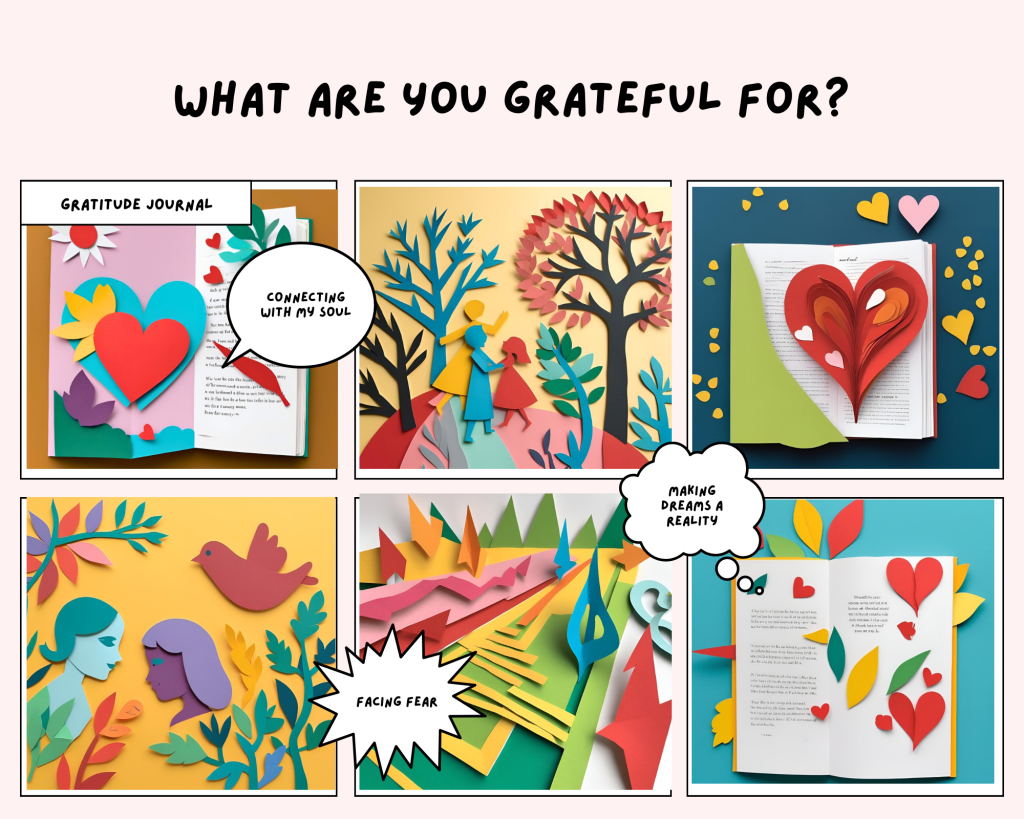
Life often feels like a balancing act between what we fear and what we dream of achieving. On one side is the weight of self-doubt, fear of failure, and the unknown. On the other is the shining promise of our ambitions and aspirations. How do we bridge the gap? For me, the answer has always been through reflection, gratitude, and journaling.
Journaling is more than just scribbling words on a page. It’s a practice that allows us to sit with our fears, explore the whispers of our dreams, and uncover the truths that lie within us. When we take the time to write, we create a safe space to navigate life’s challenges and cultivate the courage to move forward.
Facing Fear with Gratitude
Fear often stems from the unknown. We fear we’re not good enough, that we’ll fail, or that we’ll be judged. But fear loses its power when we meet it with gratitude.
Gratitude shifts our focus from what we lack to what we have. It reminds us of the strength we’ve gained from past challenges, the people who’ve supported us, and the small victories we’ve achieved. When I sit down to write in my journal, I start with gratitude. I list the things that light me up—big or small. It might be the comfort of a morning cup of coffee, a kind word from a friend, or the way writing has helped me heal.
Gratitude doesn’t erase fear, but it gives us a solid foundation to stand on. It reminds us of what we’re capable of and makes the journey ahead feel less daunting.
Journaling Your Dreams into Reality
Dreams can feel distant and overwhelming, but journaling helps to bring them closer. Writing about your dreams makes them tangible—it transforms a vague idea into something you can visualize, plan, and act upon.
Start by asking yourself: What do I truly want? Write it down without judgment or hesitation. Let your pen flow, capturing the essence of your aspirations.
Next, break those dreams into smaller, actionable steps. If your dream is to write a book, your journal might include a timeline for finishing the first draft or a list of topics you’d like to explore. If your dream is to travel the world, jot down destinations, savings goals, or ways to learn a new language.
Journaling not only helps you map out your dreams but also allows you to track your progress. It’s a way of holding yourself accountable while celebrating every milestone along the way.
Overcoming Fear Through Writing
When fear creeps in—and it will—your journal becomes your confidant. Write about your fears honestly and openly. What’s holding you back? What’s the worst that could happen? More often than not, putting your fears on paper diminishes their power.
But don’t stop there. After you’ve named your fears, write about the strengths you already possess. What challenges have you overcome in the past? What resources and skills do you have to face this new challenge?
For me, writing through fear has been transformative. It’s a way to acknowledge the discomfort while also reminding myself that I am more resilient than I often realize.
The Soul Connection of Journaling
Journaling isn’t just a tool for productivity—it’s a way to connect with your soul. It’s where your deepest truths emerge, where your fears and dreams coexist, and where you find clarity in the chaos of life.
This is why I created Diary of Clichés. It’s not just a book; it’s a companion for those who are ready to embrace their stories, reflect on their journeys, and rewrite the narratives that no longer serve them. It’s a space for dreamers, thinkers, and anyone looking to connect with their authentic selves.
When we take the time to journal, we’re not just writing words; we’re laying the foundation for a life that aligns with our truest desires.
Your Turn
If you’ve never tried journaling, now is the time to start. Find a quiet space, grab a notebook, and let your thoughts flow. Write about your fears, your dreams, and the things you’re grateful for. Let your journal become your sanctuary—a place where you can dream boldly, confront your fears, and build the life you’ve always imagined.
And if you’re looking for inspiration, pick up a copy of Diary of Clichés. Let it guide you through the process of self-reflection and transformation. Together, we can turn fears into lessons and dreams into realities.
Because life is too short to let fear win—and your dreams are far too beautiful to wait.
Today I feel nostalgic about food, Julia the show and Julie and Julia the movie and the numerous hours I have spent with Mrs. Child watching her do her magic in her beautiful kitchen.
Julia Child has a very special place in my heart. She was my post-Covid late-night go-to haven. I remember those nights after a long day of remote work and a nice meal inspired by Mrs. Child, I used to go to the movie Julie and Julia, my favorite late-night watch, and fall asleep somewhere in the middle of the scene where she spoke to her favorite lobster, Lou…
I got hit by Covid really bad. It was so bad that amidst the cognitive confusion and the brain fog, my taste buds forgot to taste. For me, the recovery from all the things I lost in COVID-19—my taste buds, my curves, my creativity—was a long road. That’s when I discovered the show Julia on HBO. And Julia brought me back on track—one recipe at a time.
I started my mornings trying to make eggs the way she did, pouring coffee the way she did, and tossing and twirling in the kitchen as she did.
Julia became my support system, my food guru, and my creative confidante during my COVID recovery days. Maybe I sound like Julie from the movie, but maybe I had watched the movie so much—especially my subconscious mind—that I became the movie.
There was something profoundly comforting about Julia Child’s voice, her mannerisms, her unapologetic love for butter and cream. She wasn’t perfect in the traditional sense, and that imperfection was her magic. It was what made me, in my vulnerable and battered state, feel seen.
When you’re recovering from something as intense as Covid, there’s an odd loneliness that accompanies the process. Even if you’re surrounded by loved ones, it’s easy to feel detached—like a part of you is stuck somewhere else, struggling to catch up. Watching Julia Child whip up soufflés, debone ducks, and laugh at her own blunders reminded me that life is a series of imperfect attempts. And that trying, even when it feels messy, is worth it.
I started small. One day, it was a simple omelet. Another, it was crepes. Slowly, my taste buds began to return, one dish at a time. I remember the moment I first tasted the rich, velvety warmth of her boeuf bourguignon recipe—it was like my taste buds were welcoming me home after a long absence.
But it wasn’t just about food. Julia gave me permission to embrace creativity again. In her kitchen, there were no rules, no rigid standards—just joy, curiosity, and a willingness to make a mess in pursuit of something beautiful. I found myself not just cooking but writing again, sketching ideas, and tinkering with projects I had abandoned long ago.
Julia wasn’t just teaching me how to cook; she was teaching me how to live. How to find joy in the mundane, how to laugh at my mistakes, how to embrace the process instead of fixating on the result.
There’s a moment in Julia where she talks about the power of food to bring people together, to nurture and heal. That message hit me deeply. In a time when I felt disconnected from myself and the world, cooking Julia’s recipes became my way of rebuilding those connections. It was my love letter to myself, my family, and the little joys I had overlooked.
Even now, long after my recovery, I find myself returning to Julia’s world. Her voice is a constant reminder that life is better when it’s seasoned with laughter, butter, and a pinch of perseverance.
So, here’s to Julia—my late-night haven, my culinary muse, and my unexpected guide through the fog. In her own words, “Bon appétit!”
You get to build your perfect space for reading and writing. What’s it like?
Dream Oceanfront Cave Retreat
My dream reading and writing space feels like an intimate retreat carved into nature itself. Imagine a serene haven where the natural textures of limestone walls meet modern minimalism, blending effortlessly with the surrounding seascape. The golden light of sunset spills into the space, creating a warm, tranquil glow.
Living Area: Cozy, oversized white sofas invite you to sink into their embrace as you dive into a story or jot down ideas. A textured jute rug grounds the room, while woven ottomans and wood accents connect the interiors to the earth. Floor-to-ceiling glass doors open directly to the cliffside patio, where ocean waves gently crash, providing a rhythmic backdrop to your thoughts.
Kitchen & Dining: Steps away, an open-concept kitchen with organic stone finishes offers a space for reflection and creativity over a cup of coffee or tea. Its sleek simplicity complements the natural cave structure, while sunlight filters through arched openings, enhancing the sense of calm. A rustic dining bench invites you to sit and brainstorm while gazing at the horizon.
Bedroom Sanctuary: A cozy cave-bedroom with a curved doorway leading to a private ocean-view terrace is the ultimate retreat. Linen bedding in neutral tones complements the earthy decor, and dried florals add a touch of timeless charm. A rattan chaise lounge positioned near the doorway offers a perfect spot to relax with a notebook, soaking in the sea breeze.
This space is not just a room—it’s a timeless cocoon where creativity flows effortlessly, inspired by the raw beauty of nature and the comfort of thoughtful design.
Every detail in this dream space is carefully curated to foster an environment of creativity, relaxation, and inspiration. The boundaries between indoors and outdoors blur, creating a seamless connection to nature. The gentle sound of waves crashing against the cliffs acts as an ever-present symphony, enhancing focus and providing moments of meditative calm.
Reading Nooks and Writing Corners: Throughout the space, cozy corners are tucked into the natural contours of the walls. A low-slung, cushioned chair sits next to a carved stone shelf stacked with books, offering an intimate nook to lose yourself in stories. For writing, a simple wooden desk placed by an open archway provides an uninterrupted view of the horizon—perfect for letting your thoughts flow freely onto the page.
Natural Light and Serenity: The interplay of light and shadow in the space is magical. The golden hour transforms the rough textures of the cave walls into warm, glowing canvases. Soft, sheer curtains can be drawn for diffused light, maintaining a dreamy ambiance as you read late into the afternoon or write in the early morning calm.
Outdoor Elements: Stepping outside, a minimalist patio features handcrafted wooden loungers overlooking the endless ocean. A small stone fountain adds the gentle sound of trickling water to the ambiance, creating a serene backdrop for inspiration. Whether you’re jotting down ideas under the sun or unwinding with a book at dusk, the open-air setting provides a restorative experience.
This is a sanctuary where time slows down and creativity thrives. The harmony of natural textures, breathtaking views, and intentional simplicity makes this space a haven for reading, writing, and reconnecting with your inner self. It’s not just a space—it’s an invitation to dream, imagine, and create.
As the world slows down, the air fills with laughter, the glow of twinkling lights warms every heart, and the smell of freshly baked treats wafts through cozy homes—it’s Christmas.
This season is a gentle reminder of all that truly matters:
✨ Kindness that lights up someone’s world.
✨ Generosity that expects nothing in return.
✨ Love that bridges gaps and brings us closer.
Let’s celebrate not just with gifts but with moments—shared stories, hearty laughs, and quiet gratitude for the people who make life meaningful. Whether it’s a call to a distant friend, a hug to a loved one, or a simple act of care for someone in need, let’s spread the magic of this season far and wide.
Wishing you a Christmas filled with joy, peace, and the warmth of togetherness. 🌟
I generally don’t have the patience to sit down and read a book cover to cover.
I take my time absorbing it, breathing in it and completely internalizing it.. that is.. if I really like the book.
Here I am only talking about non-fiction. That’s been my genre lately.
So going back to this book I am reading – Focused Manifesting.
I picked this book around a time when nothing was working for me. No power of attraction. No amount of meditations. No amount of mindfulness techniques. To an extent where I had completely given up on life and had even stopped trying to push through my dreams.
It’s usually these times when a good book finds you. And that’s how Focused Manifesting found Me.
A few things that resonated in this book that have not really been written about anywhere else:
Effect of Pendulums – These are social, economic and existential factors whose combined effect acts as a moving pendulum that could affect our better judgements during our manifestations for ourselves. Eg: Family pressure, peer pressure, etc. This resonated with me a ton given I had just changed my living situation from living by myself to living with my family. Because of this change the social pendulum s had started acting against me.
Emotional Inertia – This one was a game-changer for me. I was caught in a past that was non-existential. But the emotions that I had gathered and stored into my psyche (emotions from the past) still had a combined effect on my present which was a huge obstacle in manifesting my dreams for the future.
I am still reading the book. But one thing I know for sure.. the right book had finally found me.
Everything changes when you turn your sacrifices into an art called letting go.
When you sacrifice you create a void. The more you count your sacrifices the more you stay in your void and the more you attract more void.
But when you let go, you make space. In that space fresh new energy flows in creating new experiences. The more you let go to create space the more you are motivated to let go to create more space.
More space brings in more energy for new things, new experiences to come into your life keeping you forever in a fresh vibe that attracts fresh new things.
Several factors can contribute to fear becoming a first response to everything.
Fear, as a primal instinct, serves a vital role in keeping us safe from potential threats. However, when fear becomes the default response to every situation, it can significantly impede our ability to navigate daily life with ease and confidence. Understanding why fear takes precedence in our reactions is key to developing effective strategies for managing and overcoming it.
From past traumas and genetic predispositions to learned behaviors and underlying anxiety disorders, each factor contributes to the complex interplay of emotions and cognitive processes underlying fear-based responses. By gaining insight into these underlying mechanisms, individuals can begin to cultivate resilience and reclaim agency in the face of fear.
1. Past Trauma: Previous traumatic experiences, such as abuse, accidents, or significant losses, can create a heightened sense of fear and hypervigilance. The brain’s natural response to protect itself may lead to a tendency to perceive danger in everyday situations.
2. Genetic Predisposition: Some individuals may have a genetic predisposition to anxiety disorders or heightened fear responses. Genetic factors can influence the functioning of neurotransmitters and brain structures involved in processing fear and threat.
3. Learned Behavior: Growing up in an environment where fear was a prevalent response or witnessing others reacting fearfully to various situations can contribute to the internalization of fear as a coping mechanism. Children often learn from the behavior modeled by their caregivers and surroundings.
4. Cognitive Biases: Certain cognitive biases, such as catastrophizing (expecting the worst possible outcome) or overgeneralizing (applying negative experiences to unrelated situations), can lead to an exaggerated perception of threat and a propensity towards fear-based responses.
5. Perceived Lack of Control: Feeling a lack of control over one’s environment or circumstances can fuel feelings of vulnerability and insecurity, leading to a heightened sense of fear. Uncertainty about the future or feeling powerless in the face of challenges can exacerbate this response.
6. Conditioning: Repeated exposure to fear-inducing stimuli or experiences without adequate coping strategies or support can lead to a conditioned fear response. The brain learns to associate certain triggers with fear, leading to an automatic fear reaction.
7. Underlying Anxiety Disorders: Generalized anxiety disorder (GAD), panic disorder, phobias, and other anxiety disorders are characterized by excessive and persistent fear or worry. Individuals with these disorders may experience fear as a dominant emotional response across various situations.
8. Biological Factors: Imbalances in neurotransmitters such as serotonin and gamma-aminobutyric acid (GABA), as well as alterations in brain structures like the amygdala and prefrontal cortex, can contribute to heightened fear responses and difficulty regulating emotions.
Living in a constant state of fear can be overwhelming and debilitating, impacting every aspect of one’s life. When fear becomes the default response to situations, it can hinder decision-making, relationships, and overall well-being.
Let’s delve into actionable steps to break free from the grip of constant fear and embrace a more empowered way of living.
Understanding the underlying reasons for fear becoming a first response is crucial in developing targeted interventions and strategies for managing and mitigating its impact on daily life. Therapy, self-help techniques, and lifestyle modifications can all play a role in addressing fear-based responses and fostering a greater sense of calm and resilience.
If fear is your first response to everything, it can significantly impact your daily life, decision-making, and overall well-being. Here are some steps you can take to address this pattern:
1. Acknowledge Your Fear: Recognize and acknowledge that fear is your default response. Awareness is the first step towards making positive changes.
2. Identify Triggers: Pay attention to the situations, thoughts, or emotions that trigger fear responses. Understanding your triggers can help you anticipate and manage your reactions more effectively.
3. Challenge Negative Thoughts: Question the validity of your fearful thoughts and beliefs. Ask yourself if there is evidence to support them or if they are based on assumptions or past experiences. Consider reframing your thoughts in a more balanced and realistic way.
4. Practice Mindfulness: Engage in mindfulness practices to cultivate present-moment awareness and observe your thoughts and feelings without judgment. Mindfulness can help you disengage from automatic fear responses and choose more intentional reactions.
5. Gradual Exposure: Gradually expose yourself to situations or activities that trigger fear in a controlled and supportive environment. This gradual exposure can help desensitize you to fear-inducing stimuli and build confidence in your ability to cope.
6. Seek Support: Reach out to friends, family members, or a therapist for support and guidance. Talking to others about your fears can provide validation, perspective, and practical strategies for managing them.
7. Focus on Self-Compassion: Be kind and compassionate towards yourself as you work through your fears. Acknowledge that it’s normal to feel afraid at times and that you are capable of learning and growing from these experiences.
8. Professional Help: If fear significantly interferes with your daily functioning or quality of life, consider seeking professional help from a therapist or counselor. They can provide personalized support and therapeutic interventions to address underlying issues contributing to your fear responses.
By acknowledging fear, identifying triggers, challenging negative thoughts, practicing mindfulness, gradually exposing oneself to feared situations, seeking support, focusing on self-compassion, and considering professional help when needed, individuals can begin to reclaim control over their lives and cultivate resilience in the face of fear.
By taking proactive steps to understand and manage your fear responses, you can gradually reduce their impact on your life and cultivate a greater sense of resilience and empowerment. Remember that change takes time and patience, so be gentle with yourself as you navigate this process.
Navigating the complexities of a professional network can be both rewarding and challenging. While these connections offer opportunities for collaboration, mentorship, and growth, they can also become sources of stress and anxiety for individuals. In some cases, certain aspects of the professional network may serve as triggers, exacerbating feelings of overwhelm and tension.
Maybe they remind us of traumatic situations? Maybe they said or did things unintentionally that hurt us deeply. Or maybe they don’t “get” us due to the cultural and diversity-related differences.
A trigger from an unintentional (maybe even a little unassuming) colleague can sometimes lead to monumental damage – to the ego, the relationship, the project, and the work environment causing unneeded stress which could have been avoided in the first place if triggers were managed.
We all come with our baggage of past hurts and traumatic histories in and out of work.
So How can you effectively manage stress when your professional network becomes a source of distress?
Let’s delve into practical approaches for addressing stress within the context of professional networks and fostering a healthier relationship with work-related connections.
If your professional network is a trigger for stress, it’s important to address this issue proactively and strategically. Here are some steps you can take:
1. Identify Specific Triggers: Reflect on what aspects of your professional network are triggering stress. Is it certain individuals, specific situations, or the overall environment? Understanding the root causes of your stress will help you devise targeted solutions.
2. Set Boundaries: Establish clear boundaries within your professional network to protect your well-being. This might involve limiting your exposure to certain individuals or situations, setting expectations for communication and availability, and prioritizing your own needs and boundaries.
3. Communicate Effectively: If certain interactions or dynamics within your professional network are causing stress, consider addressing them directly and assertively. Communicate your needs, concerns, and boundaries in a respectful yet firm manner. Open and honest communication can often lead to positive changes in relationships and dynamics.
4. Seek Support: Reach out to trusted colleagues, mentors, or a supportive professional network outside of your immediate work environment for guidance and perspective. Having a supportive community can help you navigate challenging situations and provide emotional support during times of stress.
5. Practice Self-Care: Prioritize self-care strategies to help mitigate the impact of stress from your professional network. This may include engaging in relaxation techniques, maintaining a healthy work-life balance, exercising regularly, and seeking activities outside of work that bring you joy and fulfillment.
6. Explore Alternative Options: If despite your efforts, your professional network continues to be a significant source of stress and negatively impacts your well-being, it may be worth considering alternative options such as seeking a new job or adjusting your professional network by forming new connections or seeking different opportunities within your current organization.
By identifying triggers, setting boundaries, communicating effectively, seeking support, prioritizing self-care, and exploring alternative options, individuals can cultivate resilience and well-being within their professional environments.
Managing stress related to your professional network is a process that may require ongoing effort and adaptation. By taking proactive steps to address the triggers and prioritize your well-being, you can create a healthier and more manageable professional environment for yourself.



































 Kay’s Odyssey