(A story about chaos, second chances, and one unforgettable rescue pup)
If you’d asked me this question years ago, I might’ve said something predictable—career milestones, creative projects, maybe a degree or two.
But now, I’d say: I’m proud that I said yes.
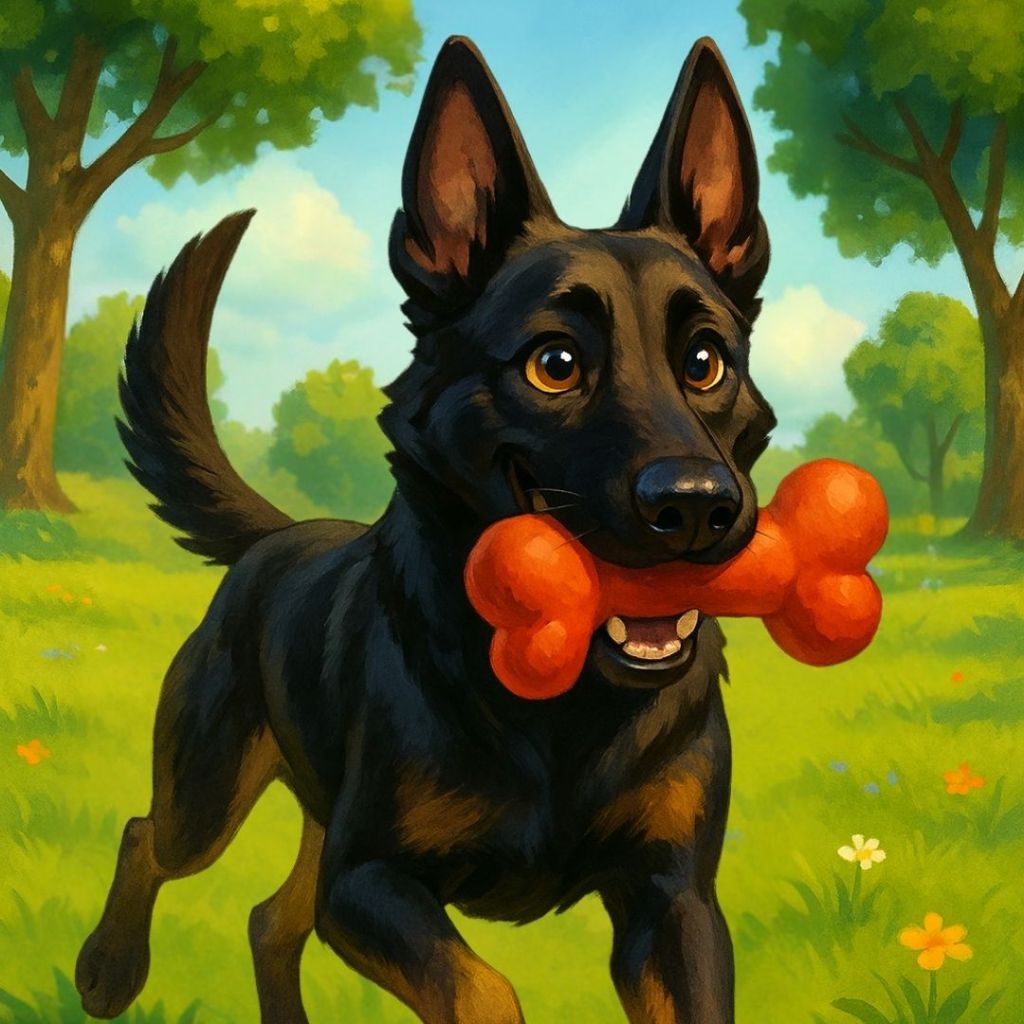
Yes to a rescue dog named Sauli.
Yes to the chaos she brought.
Yes to the life that unraveled (and rebuilt itself) because of her.
When I first met Sauli, she wasn’t the picture of a calm, adoptable pup. She was a blur of energy—sharp, stubborn, wild-hearted. The first weekend we spent together, she nearly tore apart a hotel room and escaped twice. It was, quite literally, a disaster.
But somewhere in that storm, I found something I didn’t even know I was missing—a sense of aliveness, of responsibility, of connection.
She made me show up. Every single day. No excuses.
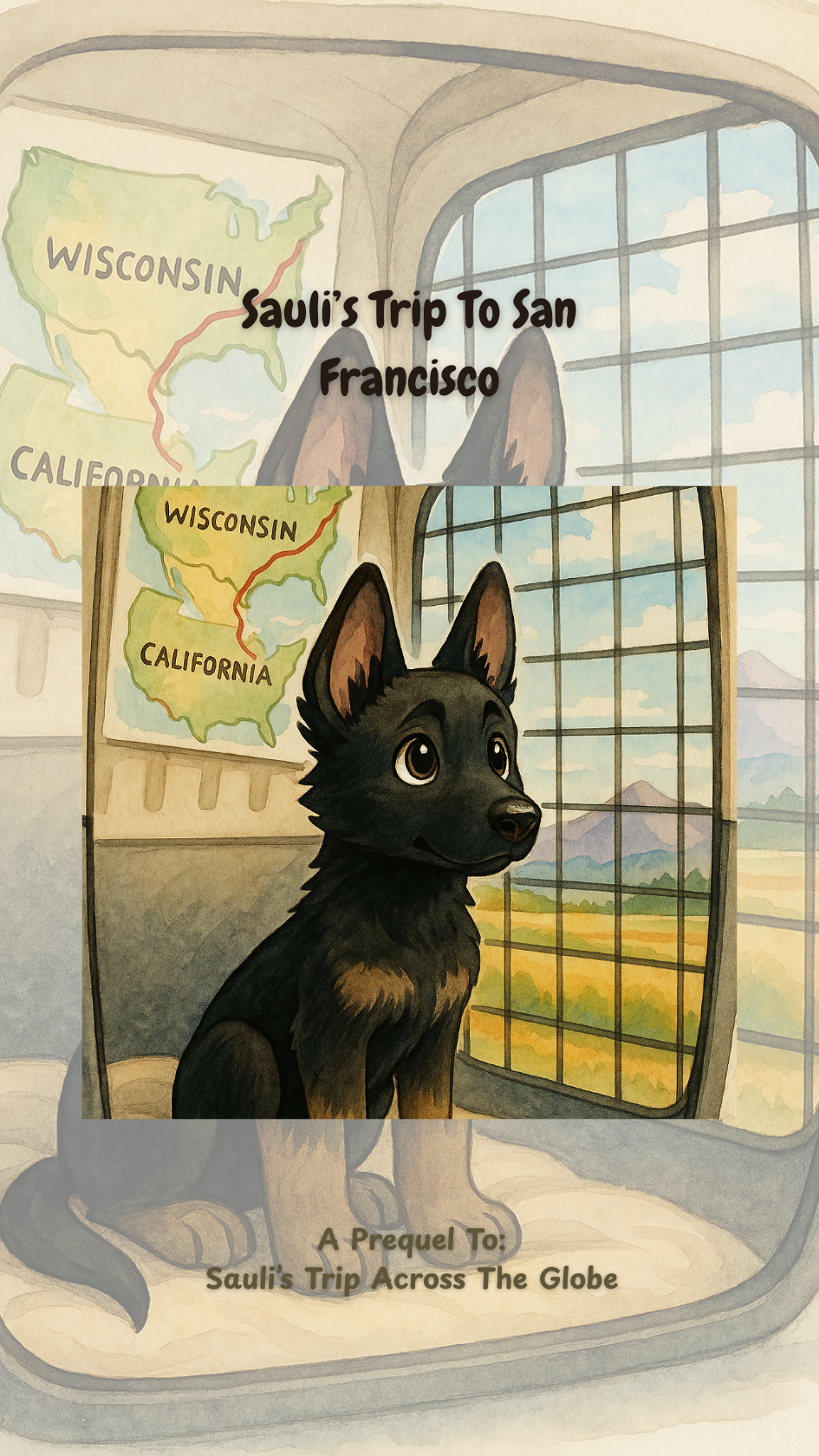
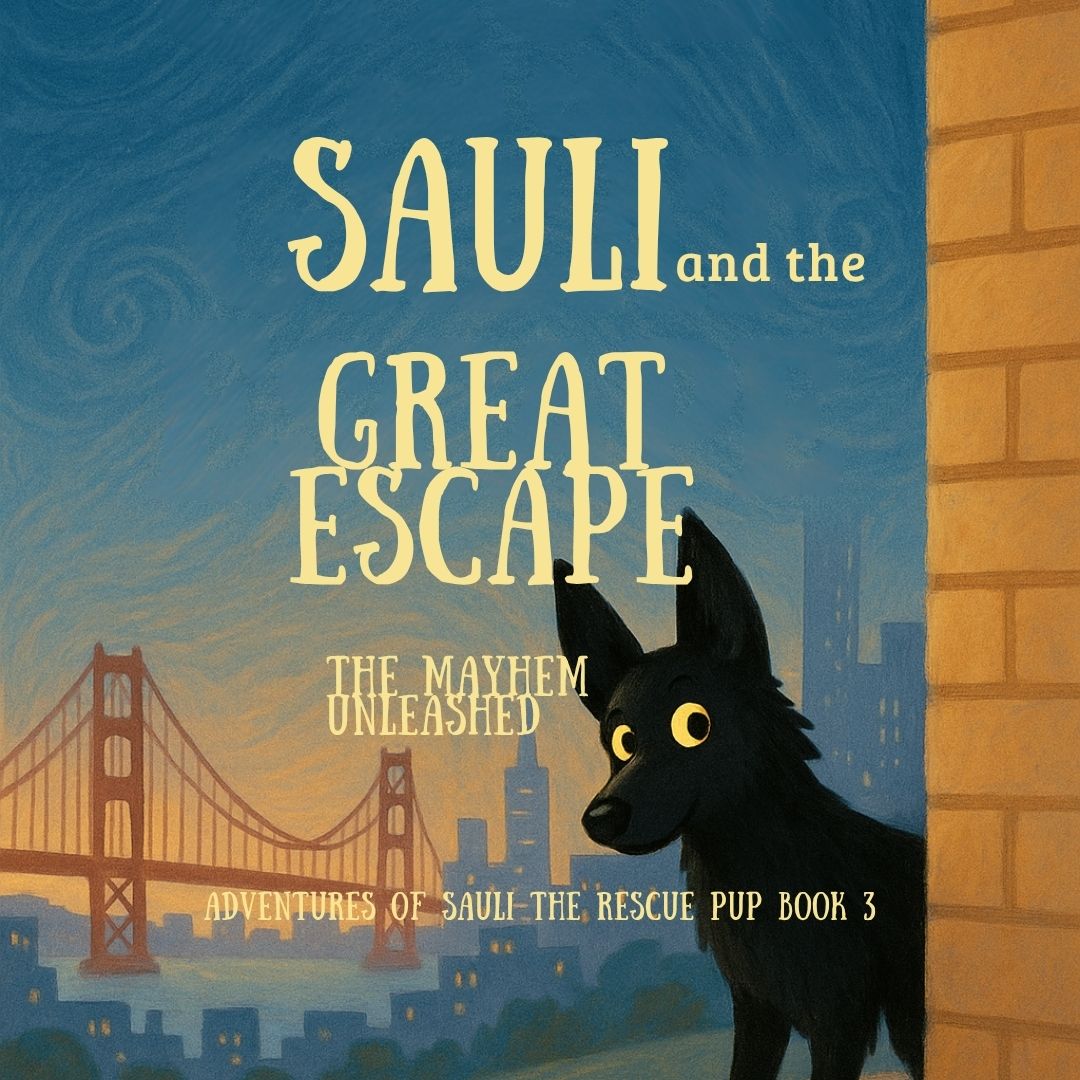
What started as a rescue story turned into a companionship I never expected—and eventually, a book series: The Adventures of Sauli the Rescue Pup.
Through every escape, every moment of mayhem, and every quiet night where she finally fell asleep beside me, I realized this was more than just about having a dog. It was about choosing love over control, patience over frustration, and joy over perfection.
That’s what I’m most proud of.
Not that I rescued her—but that she rescued me right back.
🐾 Sauli and the Great Escape
Book 3 of The Adventures of Sauli the Rescue Pup is now available on Amazon.
A personal reflection and a love letter to my readers
If you’ve been wondering what I’ve been quietly piecing together in the late hours of the night, between cups of tea and half-finished journal entries — it’s this: Fever Dreams.
For months now, my mind has been a carousel of words, emotions, and half-remembered feelings. The kind that tug at you long after a conversation ends, or when a song unexpectedly takes you back to a moment you thought you’d forgotten. Fever Dreams was born from that space — from the ache of memories that never truly leave and the beauty of learning to live with them.
The Heart Behind the Story
Fever Dreams isn’t a story about perfect love.
It’s about love that changes you.
It’s about the kind of connection that finds you when you’re not looking for it — when your guard is up, when your world feels out of balance — and somehow still manages to leave a mark. It’s about two people, Mira and Dev, whose paths cross at exactly the wrong time, and yet, in that fleeting overlap, something profound happens.
Their love isn’t tidy. It doesn’t follow the rhythm of romantic clichés. It burns, softens, fades, and lingers — like the afterglow of a sunset you didn’t realize was the last one you’d see together.
At its core, Fever Dreams is a story about timing, connection, and letting go — and how those three things often dance together in the strangest, most beautiful ways.
Why I Wrote It
I wrote Fever Dreams because I wanted to explore the quiet kind of heartbreak — the kind that doesn’t come with dramatic goodbyes or explosive endings, but rather the slow, unspoken drifting apart that happens when life, distance, or timing simply get in the way.
It’s the kind of story you live through once and never quite forget. The kind you carry with you, tucked somewhere between nostalgia and peace.
Like many of us, I’ve held on to people who were never meant to stay. I’ve replayed conversations, reread old messages, and tried to find meaning in the endings that never made sense. Writing Fever Dreams was my way of making peace with all of that — of transforming what once felt like loss into something softer, something healing.
What Makes This Story Different
In Fever Dreams, the romance isn’t the destination. It’s the journey.
The story doesn’t end with forever — it ends with understanding.
Through Mira’s introspection and Dev’s quiet resilience, the story explores what it means to love deeply without possession, to find beauty in impermanence, and to carry someone’s memory not as a wound, but as a quiet echo of gratitude.
It’s a story for the thinkers, the dreamers, the ones who feel too deeply and write too much.
For the ones who believe that every connection, no matter how brief, has a purpose.
A Glimpse Inside the Pages
“She didn’t want to forget him. She just wanted to remember without pain.”
“Some people arrive like seasons — beautiful, necessary, but never meant to stay.”
“He was logic and chaos in one body, a soldier who wrote poetry between missions.”
The book moves like a dream — part memory, part reflection.
It’s slow, emotional, poetic. Every chapter feels like opening a journal Mira might have written herself — soft, honest, and quietly powerful.
Who I Wrote It For
I wrote this for anyone who’s ever had to let go without closure.
For the ones who still remember the sound of someone’s laughter,
the warmth of a conversation that ended too soon.
For those who have loved deeply and lost quietly,
and who are learning that healing isn’t forgetting — it’s remembering differently.
If you’ve ever sat by a window and wondered what if, this story is for you.
Where I Am Now
I think the most beautiful part of writing Fever Dreams has been realizing that stories don’t always need happy endings to be meaningful. Sometimes, they just need to be honest.
Working on this book has taught me patience, vulnerability, and acceptance — not just in writing, but in life. And as I finally share it with you, I hope you find pieces of yourself in its pages.
Because Fever Dreams isn’t just my story.
It’s ours — every one of us who has loved, lost, and learned to let go with grace.
🌙 Fever Dreams is now available to read on Wattpad.
Come wander through the haze — where love feels like memory, and memory feels like a dream.
Most people who meet me now think I have it all figured out.
I write. I tell stories about life and choices and, yes, potholes — both metaphorical and the ones outside my lane in Mumbai. I have this calm, almost “zen” way of talking about chaos, like I’ve somehow transcended it.
But here’s what most people don’t know about me:
I wasn’t always this centered.
In fact, for a good part of my life, I was running — literally and emotionally — from everything that made me who I am.
A few years ago, I was living in San Francisco. I had a “respectable” job in tech, the kind that made my LinkedIn sparkle. My friends thought I was living the dream: a high-rise apartment, brunches on weekends, a passport full of stamps.
And I believed it too — until the morning it all came crashing down.
A layoff email. A visa countdown clock.
Two suitcases and a future that suddenly didn’t exist.
Most people don’t know that when I landed back in Mumbai, I didn’t even know how to explain what I did anymore. My father, a retired civil engineer, looked at me blankly when I said I worked in “data storytelling.”
“Storytelling?” he repeated, frowning.
“Engineers build bridges, not bedtime stories.”
And I remember thinking — if only he knew how many bridges I’ve been trying to build all my life.
Coming home after years abroad felt like stepping into a time capsule that no longer fit.
My room had been repurposed.
The city smelled like ambition and exhaust.
And I — I just smelled like jet lag and confusion.
There was this one evening when I found myself standing in the balcony, watching the rain beat down on the tin roof. My parents were arguing over dinner logistics, the dog was barking at imaginary intruders, and I — I was just wondering who I had become.
Was I still the girl who coded her way through Silicon Valley? Or the woman who now spent afternoons writing about life and spirituality while battling an existential headache?
That’s when I started to write again — not because I wanted to, but because I needed to.
Most people don’t know that my writing began as therapy.
Pages filled with rants, questions, unfinished prayers.
About love that didn’t work out. Jobs that didn’t last. Friendships that faded somewhere between time zones and WhatsApp silence.
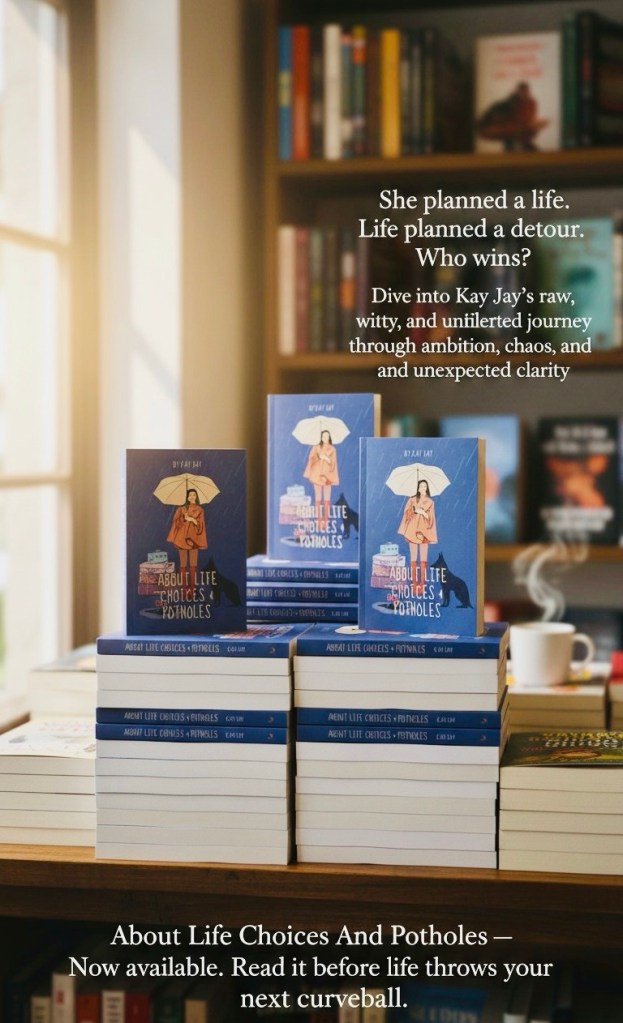
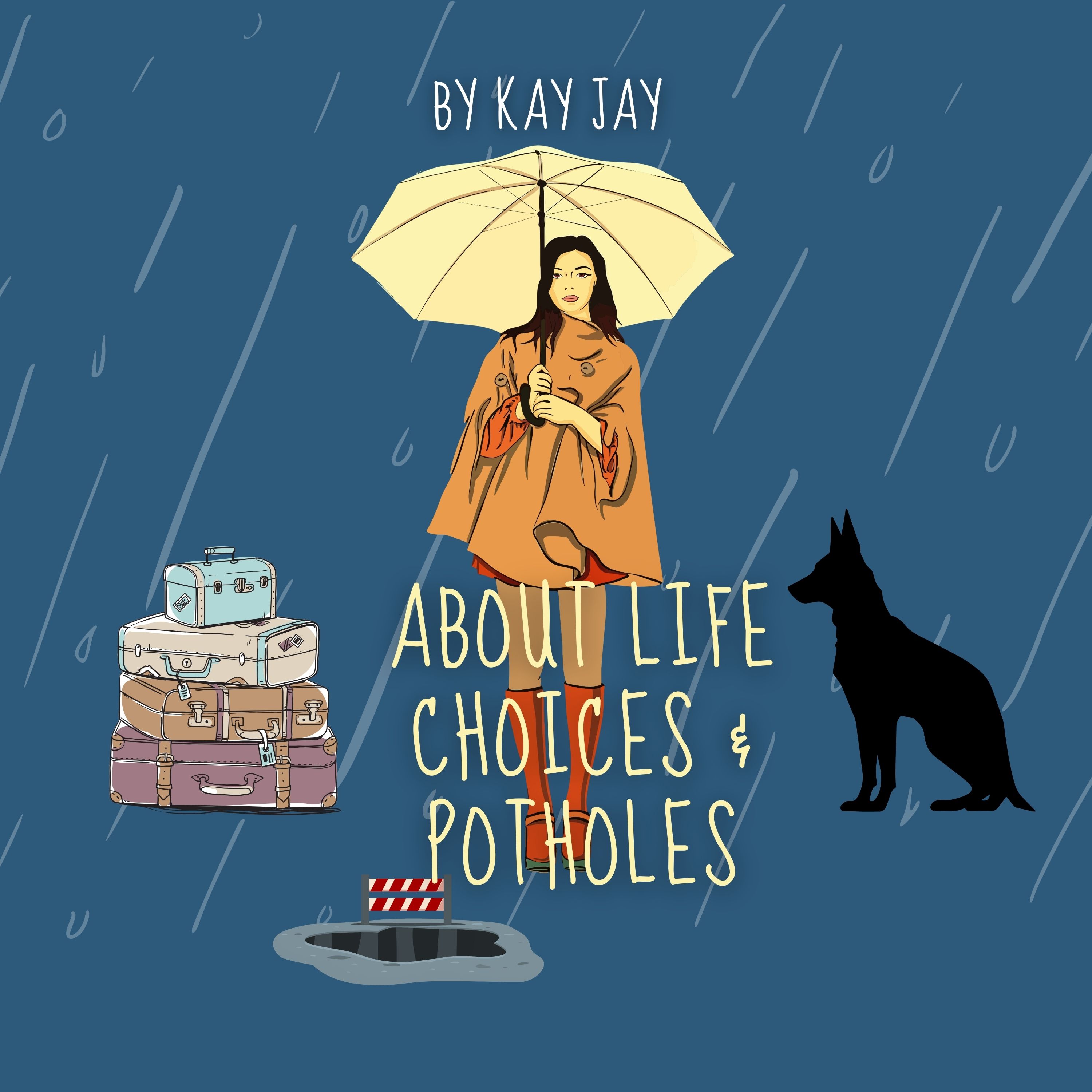
Eventually, these fragments turned into reflections — and those reflections became my book, About Life Choices and Potholes.
It wasn’t meant to be a “self-help” book or a memoir of triumphs. It was simply a map — of detours, delays, heartbreaks, and small miracles — that somehow all pointed home.
People assume transformation happens in grand moments — a new city, a new career, a big “aha.”
But mine happened quietly.
It happened in the kitchen when I first learned to make vegetarian soup in a house full of meat lovers.
It happened on the road, stuck in traffic, where I realized that potholes make better philosophers than podcasts.
It happened in the silence between my father’s sighs and my mother’s gentle, resigned wisdom.
And most of all, it happened in the messy middle — between ambition and surrender, logic and faith.
Most people don’t know that I used to measure my worth by my output — how much I produced, achieved, accomplished.
Now, I measure it by how much peace I can hold while doing nothing.
It’s funny, isn’t it?
The same people who once asked, “So, what do you do?” now ask, “How did you find this calm?”
And I tell them the truth — it wasn’t through success.
It was through stumbling.
Through falling face-first into life’s potholes, and realizing that every time I stood up again, I was someone new.
There’s a chapter in my book about the absurdity of career reinvention — about applying to Google one month and selling holistic herbs on Amazon the next.
At the time, it felt like failure.
Now I see it as freedom.
Most people don’t know that the version of me they see today — the writer, the “philosophical” one, the dog mom with spiritual metaphors — was born out of pure chaos.
And maybe that’s the point.
You don’t find yourself in the perfect plan — you lose yourself enough times that you finally stop pretending to be someone else.
So what most people don’t know about me is this:
I’m not a success story.
I’m a survival story.
A collection of missed exits, unplanned detours, and potholes that showed me who I was when everything else fell apart.
And if there’s one thing I’ve learned — it’s that maybe we’re all just trying to write our own versions of “home.”
Sometimes it’s a place.
Sometimes it’s a page.
And sometimes, it’s the person we become after all the plans fail.
💭 If you’ve ever found yourself between destinations — in your career, relationships, or identity — my book “About Life Choices and Potholes” might just feel like the conversation you’ve been needing.
I’ve spent the better part of my life watching teachers, becoming one, resisting the label, then finally surrendering to it with a nod of grace. I used to think great teachers were born in classrooms, standing at a podium with a chalk in one hand and a world of wisdom in the other. Now, I know better.
A great teacher, I’ve come to believe, isn’t someone who knows it all—but someone who knows how to stay curious. Someone who teaches not from a pedestal but from the trenches of their own lived experience. Someone who admits they too have potholes, detours, and doubts—and that the syllabus they teach is written, not in ink, but in mud, laughter, and late-night journal entries.
That’s how I began writing Diary of Clichés—as a kind of curriculum for the emotionally brave. Because sometimes the best teachers are not the ones in schools or seminar rooms, but the ones who sit across from you with a cup of coffee, or write books that hold up a mirror and whisper, “You too?”
I don’t believe in perfection. Never have. I believe in vulnerability. I believe in showing up, even when the lesson plan is incomplete. I believe in asking the hard questions—even if the answers are uncomfortable. Especially when they are. I believe in learning aloud, in failing forward, and in inviting others to join the journey—not when you’ve figured it all out, but when you haven’t.
That’s what Life Choices & Potholes is all about. It’s the textbook I wish I had when I was stumbling through crossroads, unsure of whether to listen to logic, intuition, or the girl inside me still learning how to speak. That book, and others like it, are my offering. Not because I claim to have all the answers—but because I’ve finally stopped pretending that I do.
A great teacher listens before they lecture. Holds space before they hand out solutions. And sometimes, a great teacher just asks the right question at the right moment and lets the silence do the rest.
So what makes a teacher great? Maybe it’s this: the willingness to show up fully human, to love people into their potential, and to remind them—gently, consistently, quietly—that their story matters.
That they matter.
And that maybe, just maybe, their mess is the message someone else has been waiting for.
If you had told me a year ago that I’d be helping to bring a children’s book series into the world — one written by an author I have never met in person, who prefers to let her words speak in whispers — I might have smiled politely and gone back to my coffee.
But life, and the Universe, have a way of surprising us.
It began with a letter. A soft, wise letter from someone writing under the name Sora Mei — a storyteller who described herself simply as “one who writes for the Earth and its children.”
Her words moved me instantly. She had read something on my blog about protecting the planet and had been inspired to share her own project: a small collection of timeless tales that would speak gently to little hearts about big things — about fire, water, Earth, and the balance we must honor between them.
I was captivated. And soon, we were writing back and forth — exchanging drafts, reflections, and ideas for how these stories might live in the world.
The more I read her words, the more I knew: this series needed to be shared. Not just with children, but with the grown-ups who read to them — who, in doing so, might remember their own love for this fragile blue planet.
And so, quietly, a collaboration was born.
We called the series: A Song and Dance for Mother Earth.
Because stories, like songs, can stay in your heart long after the final note is played. Because we wanted these books to be not lectures, but invitations — to wonder, to respect, to care.
The Day Fire Disappeared
The first book in the series — The Day Fire Disappeared — is launching this weekend.
It was inspired by a real and heartbreaking event: the death of a baby red fox in Britain, frightened to death by the shock of fireworks.
From that single spark of sorrow grew a gentle fable about a future world where fire disappears because it has been misused. A world where children and animals must learn to live in harmony again — and where the Universe reminds us that every gift we are given must be treated with care.
The story is written in the language of The Velveteen Rabbit — simple, poetic, and full of quiet wisdom. It is a story to read aloud by soft lamp light, or beneath the branches of a tree, or cuddled together before bedtime.
And though it is written for children, I believe it carries messages many grown-ups need to hear again.
A Series of Whispers
There are more books to come.
The second — The Day Water Vanished — will explore the preciousness of water, and what happens when we take it for granted.
The third — The Day the Sun Slept — is a hauntingly beautiful story about what happens when Mother Earth, too weary from misuse, decides not to wake one morning… and the Sun, in solidarity, stays hidden.
Each of these stories is written by Sora Mei, in her gentle, mysterious voice. And I — Kay — have had the joy of helping bring them into the world.
I will not tell you more about Sora. She prefers to remain behind the curtain, letting her stories shine instead. But I will say this: it has been one of the great joys of this past year to collaborate with someone who writes from such deep love for the Earth.
A Song for Our Children — and Theirs
So why am I sharing this today?
Because I believe we need more stories like these. Stories that invite children to become stewards of this planet. Stories that remind us that even small actions matter — that planting a tree, turning off a tap, or choosing celebration that does not harm animals is an act of love.
A Song and Dance for Mother Earth is just a small offering. But small offerings, like single drops of water or sparks of light, can grow.
I hope you’ll join me in welcoming The Day Fire Disappeared into the world this weekend. I hope you’ll read it to your children, or gift it to someone you love. And I hope, like me, you’ll remember — stories can heal. Stories can awaken. And sometimes, they can even change the way we dance upon this Earth.
With gratitude, Kay (In collaboration with Sora Mei)
Do you spend more time thinking about the future or the past? Why?
If you’d asked me this question a few years ago, I’d have said I was stuck in a perpetual replay of the past—grappling with old wounds, broken relationships, and missed opportunities. My mind was like a record stuck in the groove of “what if,” unable to move forward. I spent countless hours dissecting every moment, trying to understand how I got to where I was, like a detective piecing together clues to solve a mystery long past its expiration date.
But life has a funny way of shifting your focus when you least expect it. Losing a job, moving back home, and rediscovering myself were moments that forced me to stop looking over my shoulder and start imagining what could be. Writing Diary of Clichés became a bridge between my past and future. It allowed me to examine the old stories I was telling myself—stories of heartbreak, loss, and longing—and rewrite them with hope, growth, and self-compassion.
Now, my thoughts about the future take center stage. But it’s not the kind of future filled with rigid five-year plans or unchecked ambition. It’s a softer, more expansive vision—a dream of balance, of living authentically, and of giving myself permission to evolve. I think about the life I want to create, not because I’m running away from the past, but because I’ve learned to carry its lessons without letting them weigh me down.
Still, I can’t pretend that I never glance backward. The past feels like an old friend—one who sometimes overstays their welcome but also reminds me of how far I’ve come. And when I find myself daydreaming about a future high-rise in Silicon Valley or imagining the duality of loving two people simultaneously, I know it’s my past fueling those visions, adding depth to the dreams.
So, do I spend more time thinking about the future or the past? I’d say I linger in the space between. The past gives me context; the future gives me direction. Together, they keep me grounded yet hopeful, reminding me that every cliché about time—“the past is prologue” or “the future is unwritten”—holds a seed of truth worth exploring.
In this in-between space, I’ve realized that neither the past nor the future is inherently good or bad—it’s how I choose to engage with them that matters. The past is where I’ve met the best and worst parts of myself. It’s where I learned resilience, through heartbreak and loss, and where I found my voice through vulnerability. But it’s also where I discovered patterns I didn’t want to repeat and beliefs that no longer served me.
The future, on the other hand, feels like a canvas—sometimes intimidatingly blank, sometimes splashed with dreams that feel just a little too bold. It’s where I imagine the woman I want to become, someone who honors her creativity, builds meaningful connections, and lives with intention. But even as I dream, I’ve learned not to cling too tightly to those visions. Life, after all, has a way of surprising you—just like it did when I found healing in journaling or when moving home turned out to be the reset I didn’t know I needed.
And Diary of Clichés is a reflection of this balance between past and future. Writing it forced me to look at my past without judgment and dream about my future without fear. It’s a collection of lessons, heartbreaks, and hopes that I’ve untangled and reshaped into something meaningful. It’s also a reminder to myself—and anyone who reads it—that our stories aren’t linear. They loop back on themselves, they pause, they leap forward in ways we can’t always predict.
I suppose this is why I don’t think I’ll ever fully “move on” from my past or exclusively focus on the future. Both are too important to who I am. The past is where I found the courage to write, to face my demons, and to laugh at my mistakes. The future is where I get to experiment with what comes next—whether that’s finally making peace with the messy duality of my life or dreaming up a new story entirely.
So maybe the answer isn’t about choosing one over the other but about learning how to hold both lightly. The past gives me roots; the future gives me wings. And somewhere in the present, I’ve found a way to exist in harmony with both—grateful for what’s been and hopeful for what’s yet to come.
Relationships that have a positive impact on me are those that feel like safe havens and secure bases—a delicate balance of comfort and challenge. They’re the connections that allow me to stay rooted in the rhythm of the ordinary while also encouraging me to dream beyond it. These relationships don’t demand perfection or performance; instead, they celebrate authenticity, resilience, and growth.
I think of the people who have shaped me in ways both profound and subtle. My parents, with whom I share a complex dance of tradition and individuality, have taught me the strength in cultural roots. Then there are friends like Loretta, who enter your life like a warm cup of tea on a rainy day, offering a quiet kind of wisdom that reshapes your understanding of love and support. Even the stories I’ve written—fictional characters like Noir and Kayra—feel like relationships in their own way, teaching me lessons about vulnerability, self-discovery, and spiritual connection.
But perhaps the most impactful relationship is the one I’ve built with myself. It hasn’t been easy; there were times I felt invisible or unheard, times when self-doubt crowded out self-love. Yet, through journaling, writing, and introspection, I’ve learned to treat myself with the same kindness and curiosity I offer to others. This relationship has taught me that I’m allowed to evolve, to dream of lives that feel far from my current reality, and to embrace every cliché along the way.
These relationships—be they with family, friends, fictional creations, or myself—aren’t about grand gestures or perfect harmony. They’re about showing up, being present, and holding space for growth. They’re about finding the people and moments that make you feel both grounded and limitless. And that’s exactly the kind of connection I hope to inspire through Diary of Clichés—because sometimes, the most impactful relationships start with a simple story.
Through the pages of Diary of Clichés, I invite readers to examine the relationships in their own lives—those with others, with their dreams, and most importantly, with themselves. We often overlook the quiet, everyday connections that shape us in profound ways, just as we dismiss clichés as trivial. But within those seemingly mundane expressions and encounters lie universal truths, the kind that make you pause, reflect, and perhaps even smile knowingly.
For me, the act of writing became a bridge between who I was and who I wanted to be. It gave me permission to explore the dichotomy of my dreams and reality—the Silicon Valley high-rise life I once imagined versus the cultural rootedness of my middle-class existence in India. It helped me reconcile the feelings of being torn between wanting adventure and craving stability, between daring to embrace the extraordinary and finding peace in the ordinary.
And isn’t that what relationships, at their best, do for us? They challenge us to grow while reminding us of where we came from. They hold up a mirror, showing us our potential even as they ground us in our flaws. They allow us to be both dreamers and doers, to straddle the line between ambition and contentment.
Some relationships feel fleeting yet transformative, like my brief encounters with new friends or even strangers who left a lasting impression. Others are steady and enduring, like the bond I’ve built with my family and closest confidants. And then there’s the complex, layered relationship I have with myself—a work in progress, but one that grows richer with each page I write, each story I tell.
Through this journey, I’ve learned that relationships with a positive impact are not always easy or straightforward. They can be messy, imperfect, and sometimes even painful. But they’re also where we find our strength, our joy, and our purpose. Whether it’s the parent who teaches resilience, the friend who listens without judgment, or the diary that silently absorbs your thoughts, these relationships shape the story of who we are.
So, when I think about the question, “What relationships have a positive impact on you?” I realize it’s not about the grand gestures or dramatic declarations. It’s about the quiet moments of connection, the spaces where you feel seen, heard, and valued. It’s about the people and experiences that help you uncover your authentic self, even if that journey takes you through heartbreak, healing, and a healthy dose of clichés.
And as I continue to write, dream, and reflect, I hope that Diary of Clichés becomes a positive relationship for others—a companion to those navigating the twists and turns of life, offering solace, laughter, and perhaps a new way of seeing the world. Because at the heart of it all, that’s what relationships are meant to do: remind us that we’re never alone, that our stories matter, and that there’s always beauty to be found in the chaos of life.
Welcome to Diary of Clichés, a podcast hosted by Kay, the storyteller behind Kay’s Odyssey and the author of the bestselling book Diary of Clichés. Here, Kay shares her personal journey through secret confessions, tales of adventure, and bittersweet lessons learned along the way, while inviting you to explore your own story. In this candid and captivating podcast, Kay dives into: 📚 The Healing Power of Books: From Sylvia Plath’s poignant poetry to the transformative wisdom in Women Who Run with the Wolves, and of course, the life lessons in her own Diary of Clichés, Kay reflects on how mindful reading and writing can change your perspective. 😂 Funny and Awkward Moments: Laugh along as she shares her unexpected encounter with Ashton Kutcher at a hackathon tackling human trafficking and child abuse, causes close to her heart. ✈️ The Magic of Travel: Relive Kay’s love affair with the electric charm of San Francisco and the transformative experiences that travel can bring. 🍿 Food & Film: Celebrate the unsung hero of cinema—food!—as Kay discusses how it can upstage even the most dramatic plot twists. ❤️ Love & Relationships: Drawing from her own Diary of Clichés, Kay unpacks the complexities of modern relationships with personal musings and heartfelt short stories. 🍛 Family Dynamics: Laugh along as she explores the chaos, humor, and love bubbling in the modern Indian kitchen. 🎤 Public Speaking & Improv: Discover how Toastmasters and improv turned Kay into a confident speaker, and how Diary of Clichés became a testament to her storytelling journey. 📖 Nostalgia for Childhood Books: Revisit the beloved books of Kay’s childhood and the lasting impact they’ve had on her life—and how her own book might just become a favorite for someone else. With relatable stories, humor, and heartfelt insights, Diary of Clichés celebrates the universal experiences that connect us all. Kay proves that even the most familiar tropes—those clichés we all know—can hold profound meaning and unexpected beauty. Grab your copy of Diary of Clichés, tune into the podcast, and start uncovering the magic in your own story.
Episode 1: Diary of Cliches: Introducing Kay
Welcome to Diary of Clichés, a podcast hosted by Kay, the storyteller behind Kay’s Odyssey and the author of the bestselling book Diary of Clichés. Here, Kay shares her personal journey through secret confessions, tales of adventure, and bittersweet lessons learned along the way, while inviting you to explore your own story.
In this candid and captivating podcast, Kay dives into:
📚 The Healing Power of Books: From Sylvia Plath’s poignant poetry to the transformative wisdom in Women Who Run with the Wolves, and of course, the life lessons in her own Diary of Clichés, Kay reflects on how mindful reading and writing can change your perspective.
😂 Funny and Awkward Moments: Laugh along as she shares her unexpected encounter with Ashton Kutcher at a hackathon tackling human trafficking and child abuse, causes close to her heart.
✈️ The Magic of Travel: Relive Kay’s love affair with the electric charm of San Francisco and the transformative experiences that travel can bring.
🍿 Food & Film: Celebrate the unsung hero of cinema—food!—as Kay discusses how it can upstage even the most dramatic plot twists.
❤️ Love & Relationships: Drawing from her own Diary of Clichés, Kay unpacks the complexities of modern relationships with personal musings and heartfelt short stories.
🍛 Family Dynamics: Laugh along as she explores the chaos, humor, and love bubbling in the modern Indian kitchen.
🎤 Public Speaking & Improv: Discover how Toastmasters and improv turned Kay into a confident speaker, and how Diary of Clichés became a testament to her storytelling journey.
📖 Nostalgia for Childhood Books: Revisit the beloved books of Kay’s childhood and the lasting impact they’ve had on her life—and how her own book might just become a favorite for someone else.
With relatable stories, humor, and heartfelt insights, Diary of Clichés celebrates the universal experiences that connect us all. Kay proves that even the most familiar tropes—those clichés we all know—can hold profound meaning and unexpected beauty.
Grab your copy of Diary of Clichés, tune into the podcast, and start uncovering the magic in your own story.
A year ago, I had just moved back to my hometown, Mumbai, and was living with my parents after spending two decades in the United States, mostly in San Francisco.
It was a tough time. Many factors influenced my decision to move back in with my parents. They had just left our family home of 40 years for redevelopment purposes and had taken refuge in a rental, assuming that our new house would be ready in a couple of years.
Unfortunately, the developer responsible for redeveloping our apartment community backed out. To make matters worse, the landlord of the rental asked my parents to vacate the house prematurely.
Around this time, I lost my job in the United States. Given my job loss and the need to support my parents, moving in with them made sense.
During this period, my father began experiencing health issues due to the stress of moving and the loss of security at his age.
I had to expedite my relocation due to my job loss and limited resources to assist my parents. I also had to leave my beloved dog in the U.S. while I figured out my living situation; the rental we were living in was temporary, and relocating my big dog wasn’t feasible at that time.
By November 2023, I had moved back in with my parents. We were living in a rental, and the landlord was constantly calling us to vacate the house, while my father struggled with stress-related health problems. As a family, we had no sense of security other than being there for one another and taking each day as it came.
With the arrival of 2024 came new hope.
My father underwent surgery and began his recovery process. I found a way to transport my bundle of joy, my dog Sauli, from San Francisco to Mumbai.
While we still faced uncertainty regarding our living situation, things began to fall into place.
One day, my parents discovered their dream house while searching for a new place to live. However, it was beyond our purchasing capacity.
We came together to figure out how to make it work. My father had some assets, and I had some savings and other resources we could use.
It took time to liquidate assets, find the right buyers, and generate the funds needed for our dream house.
But we made it work.
As I write this, I’m sitting in our new house with my parents asleep in the next room. I pray they are sleeping peacefully after the stress of the past couple of years.
My beloved dog is curled up and sleeping soundly at my feet.
It is December 2024.
Did I picture this a year ago?
Not really. But I did pray for it, and my prayers were answered.
What is something others do that sparks your admiration?
What sparks admiration in others for me is their ability to embrace life’s messy, unpredictable nature and still find beauty in it. It’s not about perfection or having it all figured out—it’s about resilience, humor, and the willingness to stumble, fall, and laugh at yourself as you get back up.
I admire the friend who wears her heart on her sleeve, unafraid to share her vulnerabilities. I admire the coworker who turns challenges into stepping stones, reminding me that failure isn’t the end—it’s part of the journey. I admire the stranger who offers kindness, proving that even the smallest gestures can light up the darkest day.
It’s this raw, human spirit that inspired Diary of Clichés. Each chapter celebrates these universal truths, those little sparks of admiration we find in ourselves and others, illuminating the common threads that bind us as human beings. It’s about seeing clichés not as tired sayings, but as reflections of our shared struggles and triumphs, revealing the underlying emotions that resonate with our experiences. By revisiting these well-worn expressions, we uncover new meanings and insights, allowing us to embrace our vulnerabilities and connect more deeply with one another. Through these narratives, we can find solace and inspiration in the collective journey of life, reminding us that even the simplest phrases carry profound significance when woven into the fabric of our everyday interactions.
If you’re someone who admires resilience, humor, and finding meaning in the chaos, Diary of Clichés is your companion. Dive in, and let’s navigate this beautifully imperfect life together as we explore the ups and downs, discovering the silver linings that often elude us in our everyday hustle. With each turn of the page, you’ll encounter reflections and stories that resonate deeply, offering insights into overcoming obstacles while embracing the humor that life presents. Let’s embark on this journey of self-discovery and laughter, one cliché at a time, as we unravel the complexities of our experiences and celebrate the art of living authentically amidst the beautiful chaos.







 Kay’s Odyssey