What is something others do that sparks your admiration?
What sparks admiration in others for me is their ability to embrace life’s messy, unpredictable nature and still find beauty in it. It’s not about perfection or having it all figured out—it’s about resilience, humor, and the willingness to stumble, fall, and laugh at yourself as you get back up.
I admire the friend who wears her heart on her sleeve, unafraid to share her vulnerabilities. I admire the coworker who turns challenges into stepping stones, reminding me that failure isn’t the end—it’s part of the journey. I admire the stranger who offers kindness, proving that even the smallest gestures can light up the darkest day.
It’s this raw, human spirit that inspired Diary of Clichés. Each chapter celebrates these universal truths, those little sparks of admiration we find in ourselves and others, illuminating the common threads that bind us as human beings. It’s about seeing clichés not as tired sayings, but as reflections of our shared struggles and triumphs, revealing the underlying emotions that resonate with our experiences. By revisiting these well-worn expressions, we uncover new meanings and insights, allowing us to embrace our vulnerabilities and connect more deeply with one another. Through these narratives, we can find solace and inspiration in the collective journey of life, reminding us that even the simplest phrases carry profound significance when woven into the fabric of our everyday interactions.
If you’re someone who admires resilience, humor, and finding meaning in the chaos, Diary of Clichés is your companion. Dive in, and let’s navigate this beautifully imperfect life together as we explore the ups and downs, discovering the silver linings that often elude us in our everyday hustle. With each turn of the page, you’ll encounter reflections and stories that resonate deeply, offering insights into overcoming obstacles while embracing the humor that life presents. Let’s embark on this journey of self-discovery and laughter, one cliché at a time, as we unravel the complexities of our experiences and celebrate the art of living authentically amidst the beautiful chaos.
“Sit on the FIRST BENCH. Good girls always sit on the first bench.”…. I remembered mamma’s words as I looked for “KG C” on the looooooong corridor of my school. It sure was scary ….to look out for my classroom all alone wondering….. why can’t mamma — pappa come to school with me . It was the first day of my school and parents were not allowed inside the gate. I had come to school in my school-bus and sure had a tough time waving back at mamma with tears rolling down my cheeks as the bus conductor carried me from the bus stop and put me in a huge looking bus with anxious faces of the ‘big’ girls (didis as I was supposed to call them) staring back at me. Mamma looked worried and felt as if she was craving to hold me tight and accompany me to school.
I finally found a classroom with ‘KG C’ written on the door. I entered the class ….uh oh… all first benches gone!! But mamma told me to sit on the first bench. I sternly ordered one of the girls sitting on the first bench. “Girly my mamma has told me to sit on the first bench. Get up.. I have to sit here”. I got nothing but a rude glance back at me. But how can I sit now?? There is no first bench!!! Totally disappointed I came out of the class and started searching for first bench in the neighboring classes. The search went on for a long time and I was almost in tears as teachers started going into their respective classes and finally the bell rang. I ran and entered some classroom which seemed to have place on the first bench..JUST FOR ME …. I thought and entered the class with a beaming smile.
My new teacher entered and suddenly everyone stood up with a loud “Gooooooooooooooooooooooooooood morniiiiiiiiiiiiiiiinnnnnnnnnnngggggggg teacher”.I was totally bewildered and a bit scared too. As everyone took their seats the teacher looked at me and said… “Hey …we have a new face with us today. Girly… what is your name?”…but it was first day of school..how come I was the only new face??? I gave a sheepish smile and merely looked down too shy to answer. “Ok girls…. It’s time for prayer service. Line up and start walking towards the auditorium. And please hold your partners’ hand tightly.”It all seemed like French and Latin but the others obediently followed the teacher’s orders. …….. How come they know all this???!!!.. I wondered as I was dragged out of the class by my ‘partner’. When I walked out..girls girls and girls was all I got to see around…. It seemed as if girls was the only specie that existed.. Was there no school for Pappa? Or was he a girl as a kid??!! Looks like everyone is a girl as a kid and then they grow up into a boy. But then… mamma??? Teacher??? How come they remained gals??? There was a big question mark on my face as we walked into a humongous hall with a stage and a Cross above it. “Where are we?” I asked my ‘class partner’ as I tightly held her hand when we came and lined up in a place that they called the auditorium. “Shhhhh…. We have come here to pray. Don’t talk. Else God will be angry” she answered and pointed out to Christ on the Cross that we were facing.
Meanwhile my mom was all the while worried wondering whether I reached school safely. She feared that the conductor would send me to the wrong school. So she ran to school and went to my class to make sure I was present. She entered the KG C classroom which was filled with tiny faces of gals who started looking at her curiously. The teacher called out my name.. but no one seemed to answer. Mom hurriedly went and checked the faces of each any every tiny tot present in the class. She was by now in tears as she checked in all the classes and I was nowhere to be found.
The news reached my principal who made an announcement in the entire school.. “Miss Kshitija, your mother is waiting for you. Please come to the ground floor corridor”.
Mom had already gone to the neighboring school to see if I was accidentally dropped there. Weird thoughts started haunting her with absolutely no trace of my whereabouts.
Amidst all the panic and nervousness I was praying away to glory blissfully ignorant of the chaos that I had created. Dear God. Please bring my mamma to school. I miss her a lot. Please bring her to my class and make her sit beside me. I’m scared of my teacher. The prayer service was over and it was time to go back to class.
Mom after having searched the neighborhood had returned back to my school. My principal though worried put up a strong exterior and assured her that they would find me. “God is there to protect our innocent kid Mrs. Gupte. Please don’t panic.” They had searched in all the classes but had forgotten to look into the one class (II C) at the end of the corridor that had gone for prayer service. With no sign of me anywhere around they were all set to call the police since all the school buses had left and were going to return only after the school was over, to drop the kids home.
On my way back to the class I was thinking about my prayer to God holding my partner’s hand. As I was about to enter my new class I looked at the big corridor ……Ohh….. GOD HAD ANSWERED MY PRAYER…. He sent Mamma to school….”MAMMA…”… I shouted when I saw my mom the only familiar face standing with my principal and other sisters clad in their white gowns at the other end ….. “Oh baby….!!!!” Mom exclaimed with tears rolling down her eyes .. “Where were you? Why are you not in your class?”….. mom asked as she lifted me and hugged me tightly. “But mamma… you told me to sit on the first bench. I had to go all the way to that class searching for it. And mamma…. You know what….. I missed you soooooooo much…..I had asked God to send you to school. See….He listened to me…coz ‘m a good gal “…. “Oh… dear God!!” was all she could say!
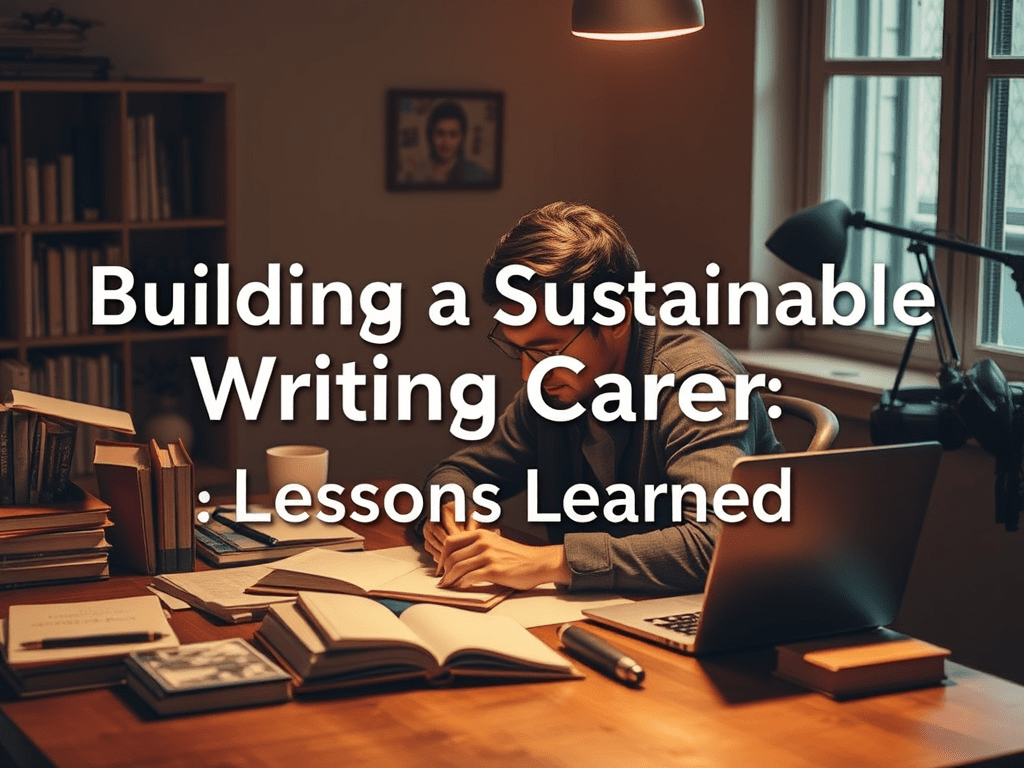
My Non-Linear Journey to a Sustainable Writing Career
When I embarked on my writing journey, I was brimming with enthusiasm and a naive conviction that my well-crafted content would effortlessly attract a devoted readership. I dedicated countless hours to producing articles, stories, and essays, pouring my heart and soul into each piece. However, my initial optimism was met with a harsh reality – a meager trickle of pennies trickling into my Medium account. It was a humbling experience, a stark reminder that the path to writing success was paved with challenges.
But instead of succumbing to discouragement, I resolved to learn from those who had achieved what I aspired to. I began to meticulously analyze the strategies and tactics of successful writers who had transformed their passion for writing into thriving businesses. I delved into their online presence, marketing efforts, engagement with their audience, and the ecosystem they had built around their craft.
This marked a turning point in my journey. I realized that while producing high-quality content was essential, it was only one piece of the puzzle. To truly succeed as a writer in the digital age, I needed to adopt a more entrepreneurial mindset. I needed to understand the nuances of audience building, platform optimization, and effective self-promotion.
I started experimenting with different approaches, learning from both my successes and failures. I refined my writing style, honed my niche, and actively sought out opportunities to connect with readers and fellow writers. It was a continuous process of learning, adapting, and evolving.
Through perseverance and a willingness to embrace the business side of writing, I gradually began to see progress. My readership grew, my income increased, and I started to establish myself as a recognized voice in my chosen field. The journey was far from easy, but the rewards were immeasurable.
Looking back, I am grateful for the initial setbacks that forced me to re-evaluate my approach. They taught me valuable lessons about resilience, adaptability, and the importance of a holistic approach to success in the ever-evolving landscape of digital writing. Here’s what I’ve learned so far on my journey:
1. Diversification: Showing Up Everywhere
Expanding on Content Distribution and Platform Optimization
In the early stages of my content creation journey, I made a crucial realization: simply producing high-quality content wasn’t sufficient. To truly make an impact, my work needed to be seen by a wide audience. This understanding led me to embrace a strategy of diversification. Rather than relying solely on a single platform like Medium, I started distributing my content across a variety of channels, including Instagram, Twitter, LinkedIn, Substack, and even emerging platforms like Threads and Bluesky.
Each of these platforms possesses its own unique atmosphere and user base. Consequently, I had to adapt my content to resonate with the specific characteristics of each platform. For instance, a detailed, long-form article that performed well on Medium might not be as effective on Twitter, where concise, attention-grabbing threads tend to thrive. Similarly, on Instagram, visually appealing content often generates higher engagement. By tailoring my content to suit the nuances of each platform, I observed a significant expansion in my audience. Not only did my follower count increase, but the diversity of my audience also grew.
This multi-platform approach allowed me to connect with individuals from various backgrounds, interests, and demographics. It also helped me to establish a more robust online presence, ensuring that my content reached a wider spectrum of potential readers and followers.
Furthermore, diversifying my content distribution channels provided a level of resilience. If one platform experienced a decline in engagement or underwent algorithmic changes, I still had other avenues to reach my audience. This approach mitigated the risk of relying too heavily on a single platform and ensured the continued growth and visibility of my content.
The decision to diversify my content distribution strategy and tailor my content to suit different platforms proved to be instrumental in expanding my reach and cultivating a diverse and engaged audience. It’s a strategy that I continue to employ and refine as I navigate the ever-evolving landscape of content creation and online engagement.
2. Early Adoption: Staying Ahead of the Curve
One of the most impactful lessons I’ve learned on my writing journey is the power of early adoption. When I started actively embracing new technologies and trends, it was like a light bulb went off. Tools like AI, in particular, fascinated me. I dove headfirst into exploring how these cutting-edge technologies could enhance and streamline my writing process. The results were remarkable. Not only did I become significantly more efficient and productive, but I also found myself at the forefront of the industry.
By actively using and experimenting with these new tools, I gained firsthand experience and insights that most other writers didn’t have. This unique perspective allowed me to start writing about these tools and trends, positioning myself as a thought leader and early adopter. I wasn’t just writing about the past or present; I was writing about the future.
I quickly discovered that being an early adopter of new platforms or technologies generates a natural sense of curiosity and excitement among readers. People are inherently interested in what’s new and what’s next. They want to know how to use these tools effectively, and they’re eager to learn from someone who has already paved the way. By sharing my experiences, insights, and knowledge, I started attracting a growing audience of readers who were eager to learn and engage with my content.
This early adopter mindset created a snowball effect. As I continued to explore and embrace new technologies, my reputation as a forward-thinking writer grew. I became a go-to resource for those seeking information and guidance on the latest trends. This not only expanded my readership but also opened up new opportunities for collaboration, speaking engagements, and other exciting ventures.
In today’s rapidly evolving digital landscape, the ability to adapt and embrace change is essential for success. By actively seeking out and experimenting with new tools and technologies, writers can position themselves at the forefront of the industry, attract a loyal audience, and unlock a world of opportunities. Remember, the early bird catches the worm.
3. Creating Real Value: Shifting Focus from Self to Audience
For a considerable period, my growth was stagnant. The reason? I was primarily focused on writing content that catered to my interests and passions, neglecting the needs and desires of my audience. It was a difficult realization, but a necessary one. My perspective shifted dramatically once I started prioritizing the creation of content that was genuinely helpful, insightful, and relevant to my readers.
This meant a fundamental change in my approach. Now, before I even begin drafting a piece, I ask myself a crucial question: “How will this benefit my audience?” This change in mindset has led to a more purposeful and impactful content creation process.
Moreover, I’ve adopted a strategy of repurposing content to extend its reach and effectiveness. For instance, if I write a comprehensive, in-depth article, I’ll distill the key points into shorter summaries, social media posts, or email newsletters. These condensed pieces always include links back to the original article, driving traffic and encouraging deeper engagement. In essence, I’m building an interconnected network of content where each piece supports and reinforces the others.
This approach not only benefits my audience by providing them with valuable information in various formats but also helps me establish myself as a thought leader and build a loyal following. It’s a win-win situation that underscores the importance of prioritizing the needs of the audience in any content creation endeavor.
Remember, the key to success in content creation lies in providing genuine value to your readers. By shifting your focus from yourself to your audience and creating content that solves problems, inspires ideas, or answers questions, you can build a thriving and impactful platform.
4. Cross-Promotion: Connecting the Dots
One of the most impactful lessons I’ve learned in content creation is the power of cross-promotion. It’s not just about creating content; it’s about strategically distributing it to reach the widest possible audience. I realized that every piece of content I create is an opportunity to connect with a new set of eyes, and cross-promotion is the key to unlocking that potential.
I started experimenting with different platforms, adapting my content to suit each one. Snippets of my articles became engaging tweets, data points were transformed into eye-catching infographics for Instagram, and my insights sparked thought-provoking discussions on LinkedIn. This multi-platform approach allowed me to tap into diverse audiences, each with its unique preferences and behaviors.
However, the real magic happened when I embraced consistency. By showing up regularly across these platforms, I built a sense of familiarity and trust with my audience. People who discovered me on Twitter became curious about my Instagram content, and LinkedIn connections were drawn to my articles. This created a ripple effect, where my audience not only grew but also became interconnected across different platforms.
Cross-promotion isn’t just about broadcasting your content; it’s about fostering a sense of community. By engaging with my audience across various platforms, I was able to build deeper relationships and cultivate a loyal following. It’s about creating a network of touchpoints where people can connect with my work and with each other.
Moreover, cross-promotion has a compounding effect. The more I shared my content across platforms, the more visibility it gained. This increased visibility led to more engagement, which in turn fueled further growth. It became a self-sustaining cycle that propelled my content to new heights.
In today’s fragmented media landscape, cross-promotion is no longer optional; it’s essential. It’s about meeting your audience where they are, speaking their language, and building a cohesive brand presence across multiple channels. It’s about creating a symphony of content that resonates with people on a deeper level and fosters a sense of belonging.
The lesson is clear: don’t just create content, connect the dots. Embrace cross-promotion, be consistent, and watch your audience grow and thrive. Remember, it’s not just about reaching more people; it’s about building a community that supports and amplifies your work.
The Journey to Profit: A Work in Progress
The path to a profitable writing career is rarely a straight line. It’s a winding road filled with twists, turns, and unexpected detours. Building a sustainable income from writing takes time, patience, and a willingness to adapt. Throughout my journey, I’ve learned that success isn’t about a single viral article or a lucky break. It’s about consistently showing up, providing value to your audience, and reaching the right people.
The Power of Consistency and Value
In the early days, I often felt discouraged by the slow progress. I’d pour my heart and soul into an article, only to see it receive a lukewarm response. But I kept reminding myself that building an audience takes time. It’s about consistently creating high-quality content that resonates with your readers.
One of the most important lessons I’ve learned is the importance of adding value. It’s not enough to simply write well; you need to provide your readers with something useful, insightful, or entertaining. Whether it’s sharing your expertise, offering a unique perspective, or simply telling a compelling story, your content should leave your readers feeling like they’ve gained something valuable.
Reaching the Right People
Another key factor in building a successful writing career is reaching the right audience. This means understanding who your ideal readers are and where they hang out online. It’s about strategically sharing your content on the platforms where your target audience is most likely to see it.
For me, this has involved a combination of social media marketing, guest posting on relevant blogs, and building relationships with other writers and influencers in my niche. It’s been a process of trial and error, but over time, I’ve been able to build a loyal following of readers who appreciate my work.
The Seed-Planting Analogy
If I could offer one piece of advice to aspiring writers, it would be this: Start with what you have, share it everywhere, and keep learning. Every piece of content you create is like a seed. Plant enough of them in the right places, and eventually, they’ll start to sprout and grow.
It’s important to remember that not every seed will blossom into a towering tree. Some may wither and die, while others may take longer than expected to bear fruit. But if you keep planting seeds consistently and strategically, you’ll eventually cultivate a thriving garden of content that attracts and engages your audience.
Moving Beyond Pennies
I’m still on this journey, but for the first time, I feel like I’m moving beyond the “pennies” stage and toward something much bigger. I’m starting to see the fruits of my labor in the form of increased traffic, engagement, and income.
While the road to a profitable writing career is undoubtedly challenging, it’s also incredibly rewarding. It’s a journey of self-discovery, creativity, and connection. And for those who are willing to put in the time and effort, it can lead to a fulfilling and sustainable career doing what they love.
Key Takeaways:
Building a profitable writing career is a non-linear journey that requires patience, consistency, and adaptability.
Success isn’t about a single viral article; it’s about consistently showing up, adding value, and reaching the right people.
Every piece of content is a seed. Plant enough of them in the right places, and they’ll eventually grow into something sustainable.
By focusing on providing value, reaching the right audience, and consistently creating high-quality content, writers can build a thriving and profitable career.
Remember, the journey to a successful writing career is a marathon, not a sprint. It’s about taking small steps every day, learning from your mistakes, and never giving up on your dreams.
What positive events have taken place in your life over the past year?
If you had told me a year ago that my life would flip like a coin—head-side hopeful, tail-side tumultuous—I would have laughed in disbelief. Back then, I was stuck in a cycle of sameness, skimming the surface of existence without diving deep. But the past year? It’s been nothing short of transformative. The kind of year where you stop scrolling and start living, where clichés like “what doesn’t kill you makes you stronger” stop being empty words and start feeling like your personal mantra.
Let me take you back to where it all started. I’d just lost my job—no dramatic storming out, no thrilling exit, just a polite email and a pitiful severance package. On paper, it seemed like a career-ending catastrophe. In reality? It was the push I didn’t know I needed. With nothing to tether me to a routine, I suddenly had the time and headspace to rediscover the person I’d buried under deadlines and corporate jargon.
First came the writing. I had dabbled in journaling before, jotting down random thoughts when life got messy, but now it became my lifeline. Pages turned into chapters, chapters into stories. Somewhere between pouring out my heart and re-reading my scribbles, I realized I was doing more than venting—I was healing.
One particular entry hit me hard. I had written about a fling with a man whose words and actions were as mismatched as socks on laundry day. It was a story of heartbreak, yes, but also one of resilience. As I wrote, I saw patterns emerge—the breadcrumbs I had followed, the boundaries I hadn’t set, the strength I had underestimated in myself. It wasn’t just a diary entry anymore; it was a lesson.
And then came the book. Diary of Clichés started as a quiet idea, a whisper in the back of my mind: What if my stories could help someone else? What if the laughter, the tears, the mistakes, and the triumphs I’d lived through could resonate with someone scrolling through their own messy timeline?
As I wrote, I didn’t shy away from the ugly parts—the heartbreaks, the failures, the moments when I felt like I was unraveling. But I also celebrated the beauty: the friendships that held me together, the joy of dancing alone in my kitchen, the strength I found in the small, ordinary victories.
But the transformation didn’t stop there. Somewhere along the way, I began to travel again—not just to physical places but within myself. I revisited dreams I had shelved for “later,” like hiking Upper Yosemite and camping under a star-drenched sky. I discovered the thrill of public speaking, turning my once-awkward pauses into moments of connection with an audience.
And oh, the books I devoured! Sylvia Plath’s poetry became a salve for my grief; Women Who Run with the Wolves awakened a wild, untamed part of me I had forgotten. I discovered the concept of bibliotherapy and started seeing books as companions, as mirrors, as guides.
The best part? These changes weren’t grand or dramatic. They were subtle, like the slow unfolding of a flower. A decision to write a chapter one day. A decision to say no the next. A thousand tiny choices that built a life I’m proud of.
So here I am, a year later, inviting you to join me on this journey. Diary of Clichés isn’t just my story; it’s a space for yours too. It’s about learning to embrace the messy, beautiful contradictions of life. It’s about finding meaning in the clichés we often roll our eyes at—because sometimes, they hold the deepest truths.
If you’ve ever felt stuck, if you’ve ever wondered if change is possible, if you’ve ever laughed at your own missteps and cried at your resilience, then this book is for you. Because if there’s one thing the past year has taught me, it’s this: life doesn’t wait for perfect moments. It happens in the chaos, the quiet, and the courage to keep going.
And now, as you turn the page, I hope you’ll find a piece of yourself in these stories. After all, isn’t that what a good diary is for?
If I had to pick a favorite place, Upper Yosemite Falls would take the crown—no competition. But let me warn you, this isn’t one of those glamorous, Instagram-perfect trips where everything goes smoothly, and you come back looking like a model. Oh no, this was sweaty, achy, and downright humbling. Yet, somehow, it became one of the most rewarding experiences of my life.
Let’s start with the hike. Upper Yosemite Falls is not for the faint of heart. It’s the kind of trail that starts off charming, luring you in with gentle slopes and picturesque views, only to turn into a relentless uphill battle that makes you question every choice you’ve ever made. Every switchback had me muttering, This has to be the last one, only to round the corner and find another one waiting for me. It’s like the mountain was playing an elaborate prank.
But then you reach the top, and it all makes sense. The view is nothing short of magical—a sweeping panorama of Yosemite Valley, with the waterfall roaring beside you like nature’s own applause. It’s the kind of moment where you forget about the burning in your thighs and just stand there, soaking in the grandeur.
The Gear Chronicles: Lessons from the Trail
Now, let me talk about gear. If you’re planning to hike to Upper Yosemite Falls, let me save you some trouble: get the right shoes. I made the rookie mistake of wearing my trusty sneakers, the ones I’ve had since college. They’ve been with me through thick and thin—gym sessions, casual strolls, even a few dance floors—but they were not prepared for this. About halfway up, I could feel every rock, every pebble, and every ounce of regret. My toes were staging a mutiny, and I was pretty sure I’d lose at least one by the time I got back down.
Proper hiking shoes are not just a luxury; they’re a necessity. You need something with good grip, solid ankle support, and enough cushioning to make you feel like you’re walking on clouds, even when you’re really trudging through dirt and rocks.
And then there’s the backpack situation. I thought I was so prepared. I packed water bottles, trail mix, sunscreen, and an overly ambitious paperback (because clearly, I thought I’d have time to ponder Dostoevsky on the trail). Spoiler: I didn’t. Instead, every ounce in that backpack felt like a lead weight by the time I hit the steep sections. Lesson learned: pack light but smart. Bring what you need, leave what you don’t, and for the love of all things sacred, don’t skip the snacks. Trail mix is a hiker’s best friend.
Now, let’s talk about the camping part—specifically, camping in bear country. When they tell you to store your food properly, they mean business. I followed every rule: kept my food in bear canisters, hung them away from my tent, and resisted the urge to sneak a granola bar under my pillow. Because let’s be honest, waking up to a bear rifling through your midnight snacks is not the kind of encounter I was looking for.
That night, as I lay in my tent, I became hyperaware of every sound. A twig snapped. Bear. A gust of wind rustled the leaves. Definitely a bear. My own stomach growled, and for a second, even that felt suspicious. It’s funny in hindsight, but at the time, it was like being in a live-action thriller where the villain could sniff out your peanut butter crackers from a mile away.
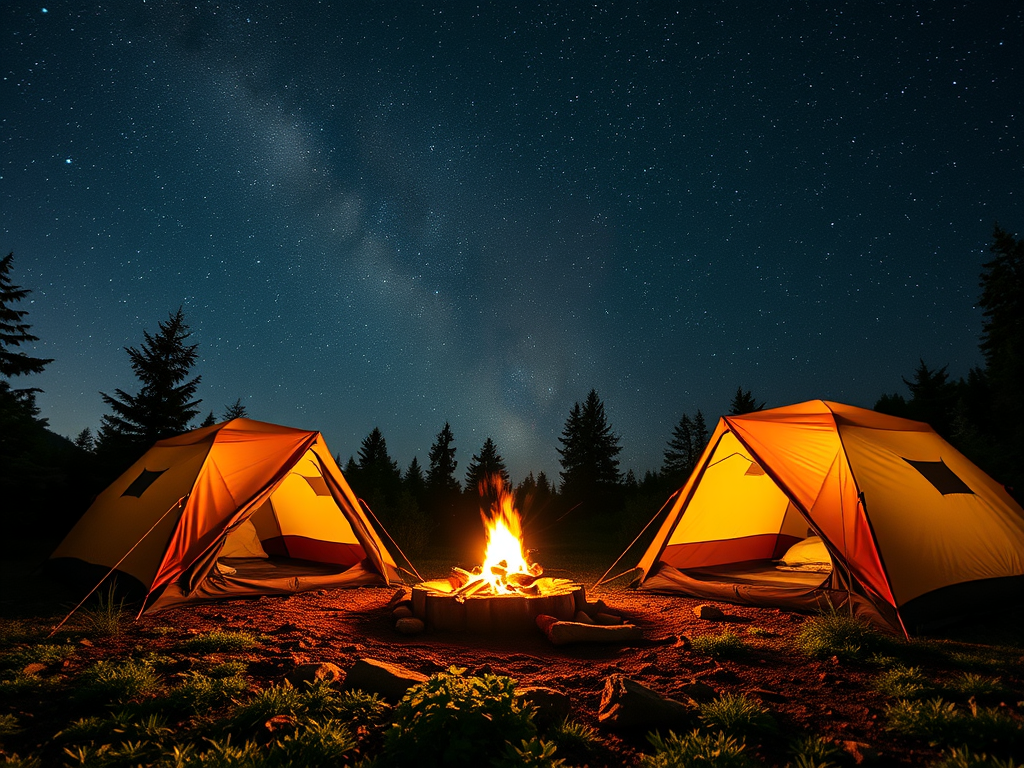
But here’s the thing: despite the anxiety, there was something deeply grounding about being out there, surrounded by nature. The stars above were so vivid they didn’t look real, like someone had sprinkled glitter across the sky. The air was crisp and cool, carrying the faint scent of pine. And for the first time in a long time, I felt completely present.
So, why is Upper Yosemite my favorite place? It’s not just because of the views (though they’re stunning) or the sense of accomplishment (though it’s real). It’s because this hike taught me things about myself.
I learned the importance of preparation—because good shoes and a well-packed backpack can make or break an adventure. I learned to laugh at my own paranoia—because, spoiler alert, I did not get mauled by a bear. And I learned that sometimes, the best moments come after the hardest climbs.
This hike was a perfect metaphor for life: full of challenges, surprises, and the occasional misstep, but ultimately rewarding. It reminded me that even when the path seems steep and never-ending, there’s beauty waiting at the top.
Would I do it again? Absolutely. But next time, I’ll make sure my shoes don’t feel like medieval torture devices.
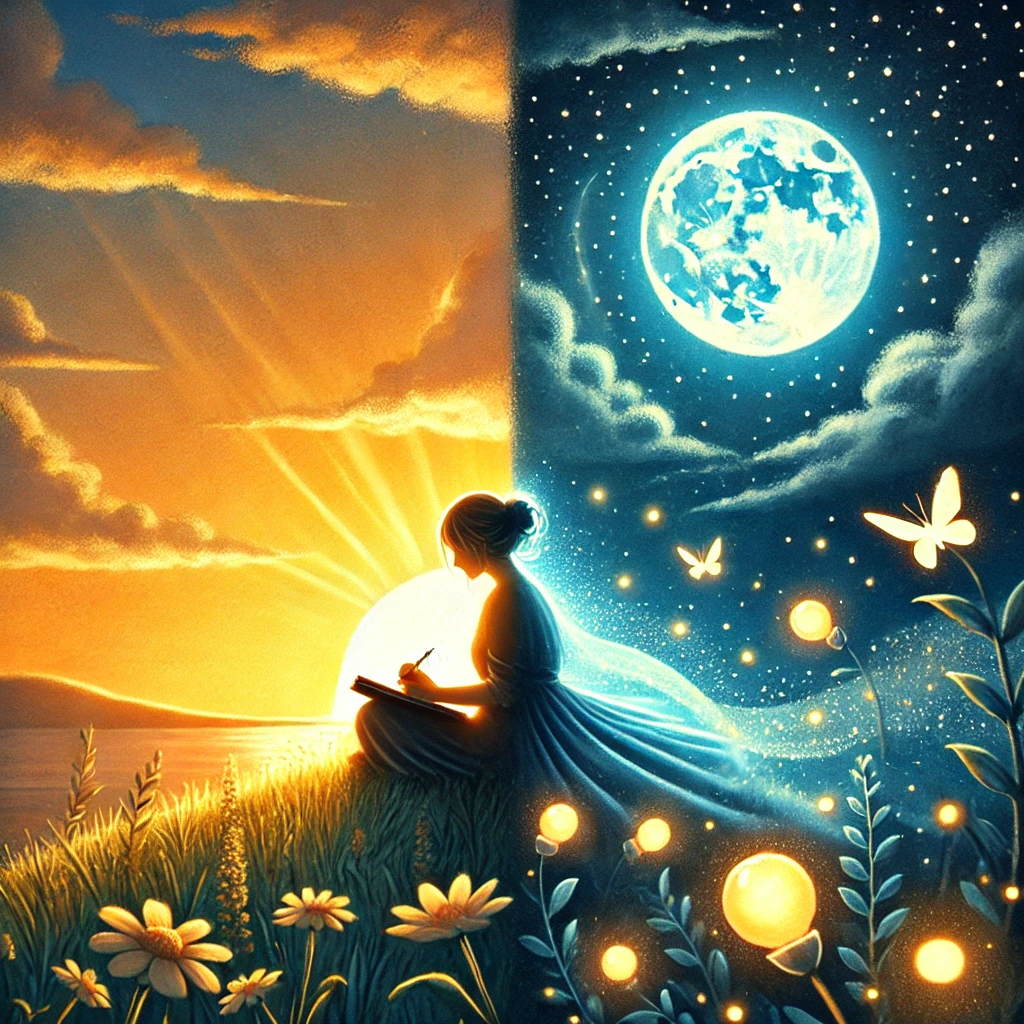
Are you more of a sunrise poet or a midnight philosopher? For me, it’s less about the time of day and more about the energy it brings. Mornings are like a clean slate, a quiet promise of possibility where I can sip my coffee and dream of conquering the world (or at least my to-do list). But nights—oh, nights—they’re a different kind of magic. That’s when the overthinking kicks in, but so does the creativity. It’s like the stars are whispering all the ideas I didn’t have time to hear during the chaos of the day.
So, maybe I’m neither and both—a morning person in spirit but a night owl in practice. Or perhaps I just exist in that liminal space where dreams turn into ideas, whether it’s 7 a.m. or 2 a.m.
I’ve realized it’s not about picking sides—morning or night—but about finding those golden moments where your mind feels alive, your heart feels full, and your soul feels curious. Sometimes it’s watching the sunrise with a notebook in hand, and other times it’s chasing inspiration under the moonlight with a half-forgotten idea that suddenly demands attention.
If I had to choose, I’d say I’m a “whenever-the-muse-strikes” person. Because let’s be honest, life doesn’t always align with a clock, and creativity? That’s a rebel with no curfew.
What technology would you be better off without, why?
I’d leave behind the Snooze Button. It’s a deceptive little piece of technology, enabling the illusion of “more time” while actually stealing your most productive hours. Think about it—how many world-changing ideas, quiet reflections, or early morning epiphanies have been obliterated by those extra 9 minutes? Without it, we might be forced to confront the day head-on, embracing the discomfort of waking up as a metaphor for all the other challenges we shy away from. Plus, let’s face it, no one ever really feels better after snoozing. It’s a tiny time thief we’ve let live rent-free in our lives for too long.
The Technology That Silently Steals Our Potential
At first glance, the snooze button appears harmless—a small convenience for the sleep-deprived, a comforting bridge between the harsh reality of waking up and the softness of slumber. Yet, this unassuming piece of technology has quietly embedded itself into our lives as an accomplice in procrastination and missed potential. It’s time to confront its true nature and consider what life could look like without it.
The Deceptive Allure of “Just 9 More Minutes”
The snooze button thrives on one seductive promise: “just a little more time.” But what does it really offer? The extra minutes it grants us are rarely restful. Sleep experts have long debunked the myth of the “second snooze.” Those fragmented bits of sleep fail to provide the deep restorative cycles our brains need. Instead, they deliver grogginess and, ironically, more fatigue—a phenomenon known as sleep inertia.
But the problem runs deeper than biology. The snooze button doesn’t just delay our mornings; it sets a tone for the entire day. By indulging in the snooze, we’re practicing avoidance. We’re allowing hesitation and resistance to gain the upper hand before we’ve even taken our first conscious step.
The Ripple Effect of Hesitation
Habits are powerful forces, shaping the trajectory of our lives in ways we don’t often realize. The act of snoozing is no exception. When we repeatedly choose to hit snooze, we reinforce the habit of delay. The simple act of rolling over instead of rising becomes a subconscious declaration: “I’m not ready to face the world.”
This decision reverberates throughout the day. Maybe we put off responding to an important email, delay starting that passion project, or avoid an uncomfortable conversation. The snooze button teaches us, in small but consistent ways, that it’s okay to defer the things that matter.
What Could We Gain by Letting Go?
Imagine a world without the snooze button. Without the option to delay, we might finally embrace the discomfort of waking up as an opportunity for growth. Mornings would become a time of clarity and action rather than hesitation and fogginess. The challenge of getting out of bed could transform into a daily exercise in resilience—a microcosm of the larger battles we face in life.
By abandoning the snooze, we’d reclaim our mornings. Those early hours, often untouched by the chaos of the day, are fertile ground for creativity, reflection, and productivity. It’s no coincidence that many of history’s most influential figures—from Benjamin Franklin to Maya Angelou—practiced disciplined morning routines. They understood that the way we start the day shapes its entirety.
A Metaphor for Bigger Battles
Leaving the snooze button behind isn’t just about mornings; it’s about mindset. It’s about confronting life head-on, without the crutch of delay. It’s about waking up—literally and metaphorically—to the opportunities and challenges before us.
In a world obsessed with innovation, we often focus on what new technologies we can create, but perhaps it’s equally important to consider what we should leave behind. The snooze button, a relic of avoidance, has no place in a life driven by purpose and intention.
So tomorrow, when the alarm rings, resist the urge to hit snooze. Get up, take a deep breath, and step into the day with courage. You might be surprised by what those first few moments of action can spark—not just in your morning, but in your life.
I generally don’t have the patience to sit down and read a book cover to cover.
I take my time absorbing it, breathing in it and completely internalizing it.. that is.. if I really like the book.
Here I am only talking about non-fiction. That’s been my genre lately.
So going back to this book I am reading – Focused Manifesting.
I picked this book around a time when nothing was working for me. No power of attraction. No amount of meditations. No amount of mindfulness techniques. To an extent where I had completely given up on life and had even stopped trying to push through my dreams.
It’s usually these times when a good book finds you. And that’s how Focused Manifesting found Me.
A few things that resonated in this book that have not really been written about anywhere else:
Effect of Pendulums – These are social, economic and existential factors whose combined effect acts as a moving pendulum that could affect our better judgements during our manifestations for ourselves. Eg: Family pressure, peer pressure, etc. This resonated with me a ton given I had just changed my living situation from living by myself to living with my family. Because of this change the social pendulum s had started acting against me.
Emotional Inertia – This one was a game-changer for me. I was caught in a past that was non-existential. But the emotions that I had gathered and stored into my psyche (emotions from the past) still had a combined effect on my present which was a huge obstacle in manifesting my dreams for the future.
I am still reading the book. But one thing I know for sure.. the right book had finally found me.
If you could live anywhere in the world, where would it be?
There is something about this city that draws you in. She takes her time with you. Tests you patience and puts you through her own path for you. But she does grow on you.
I have lived in this city for over a decade and in this time I walked through the uphill downhill streets of my life exactly like the streets of San Francisco.
While I was not made to feel welcome by its people right away her and me had a thing of our own. She showed me the world through her own lenses.
There were times when she made me feel lonely, but even then she made me feel absolutely connected and in love with her.
There is no other place I’d want to be as much as I’d want to be San Francisco.
In the globalized chaos of the modern Indian household, the kitchen is less a room and more a cultural relic—like the rotary phone or the fax machine. It exists somewhere in that grey area between ritual and nuisance, a place where familial relationships are fermented alongside homemade pickles, even as everyone involved wishes they could outsource the whole thing to Swiggy or Uber Eats. The old adage that “too many cooks spoil the broth” remains relevant, though the cooks in question have evolved. Today, the battlefield of the kitchen is occupied not by stay-at-home mothers but by tech-driven, jet-setting bicoastal families who divide their time—and cuisine—between Mumbai and San Francisco.
In this scenario, the mother is a high-powered executive managing a team spread across four time zones while fielding calls from various boards. Her laptop hums on the granite countertop, surrounded by the detritus of half-finished spreadsheets and hastily chopped garlic. The daughter, a product of private international schooling, lounges nearby, multitasking between her Stanford coursework on AI ethics and managing the family’s social calendar. The son—a culinary enthusiast and self-proclaimed foodie who’s recently returned from an artisanal bread-making workshop in Copenhagen—stands by the stove with a sous-vide machine he bought online after watching one too many episodes of Chef’s Table.
Naturally, conflicts arise. The son, emboldened by his newfound passion for Nordic cuisine, starts ranting about how traditional Indian cooking methods are “so unscientific.” He scoffs at the idea of tempering spices in hot oil. “Do you know how much smoke that releases into the air? We should think about the carbon footprint.” He’s been on a sustainability kick ever since reading an article on The Guardian that argued vegetarianism alone won’t save the planet.
The mother, still half on her 10 a.m. Zoom with the New York office, manages to roll her eyes without taking them off the screen. “Beta, people have been tempering spices for centuries, and the planet has managed just fine,” she says, clicking through a slideshow of quarterly growth metrics. “Focus on making the dal without turning it into a manifesto on climate change.”
Meanwhile, the daughter smirks behind her MacBook. “This is why I only eat plant-based,” she adds, never missing an opportunity to plug her lifestyle as an extension of her identity. “Why don’t we make quinoa khichdi instead?” She knows full well that the very suggestion of quinoa will incite a low-level riot among the more traditional family members. Her grandfather, whose time in the kitchen is limited to making chai, is quick to chime in. “Quinoa is for rabbits,” he grumbles from the living room, not bothering to look up from NDTV, where the latest political debate features the merits of an India-US trade deal. “Rice has fed us for centuries.”
The debate over ingredients mirrors the family’s identity struggle: are they more Mumbai or San Francisco? More masala or microgreens? It’s not just a question of taste; it’s a question of allegiance. The mother’s kitchen cabinet is stocked with spices sourced from a local Indian grocer in the Bay Area, but the refrigerator contains a fair share of cold-pressed juices and kale. Somewhere between the ground turmeric and the Greek yogurt lies the heart of the problem: nobody knows exactly what they’re cooking anymore, least of all the son, whose attempts at culinary fusion mostly consist of drizzling sriracha over everything.
Tensions escalate when the grandmother—a formidable presence who divides her time between dispensing free medical advice and WhatsApp gossip—enters the fray. She insists on giving everyone a crash course in the Ayurvedic properties of fenugreek, although no one asked. “This is why your digestion is terrible,” she declares, pointing a wooden spoon at her grandchildren like a sword. “Eating all this pizza and sushi. And now, you want to add quinoa to khichdi?” She shakes her head, resigned to the fact that her children and grandchildren may be able to discuss the latest developments in global tech policy, but not the proper way to peel ginger.
And, of course, the men—having embraced the spirit of modernity—are no longer the distant critics of old, appearing only to comment on the level of spice in the curry. Oh no, they’re far more “aspirational” now. The father has a YouTube cooking channel, where he attempts to combine Michelin-level plating with Mumbai street food classics, all while delivering philosophical reflections on India’s G20 presidency and the latest economic policies. He posts videos tagged #fusionfood and #kitchensofinstagram, despite not fully understanding what these hashtags mean. His recipe for “avocado bhel” went viral for all the wrong reasons.
To complicate things further, the family’s bicoastal lifestyle adds logistical wrinkles. When in San Francisco, the ingredients must be Whole Foods compliant: organic, fair trade, with packaging that reassures you about the sustainable future of the planet. In Mumbai, however, it’s a return to the familiar chaos of local markets, where there are no labels, no guarantees, and no end to the haggling. The produce vendor’s response to the question “Are these free-range?” is a blank stare that implies: “Madam, they’re chickens, not political prisoners.”
In the midst of this culinary confusion, attempts are still made to honor some semblance of tradition. The family decides to prepare a Diwali meal together, which turns out to be an exercise in project management, more akin to coordinating a UN climate summit than making pakoras. The mother, who’s recently taken an online course in mindfulness to deal with stress, suggests that everyone should “set an intention” before cooking. The son, who spent a semester abroad in Paris, insists on adding a cheese course because “it’s an important part of the meal in Europe.” The daughter starts making a spreadsheet to track ingredients, sourcing, and—naturally—the carbon footprint of each dish.
Ultimately, the kitchen becomes a metaphor for everything that goes right and wrong in this bicoastal life. It is a space where global politics meets ghar ka khana (home-cooked food), where debates about sustainability are conducted over kadhi, and where familial love is served in the form of imperfect, sometimes inedible fusion dishes. No one really knows what they’re doing, but that’s okay because the food, like the family, is a work in progress. Yes, the khichdi might end up tasting faintly of quinoa, or the bhel might feature suspicious chunks of avocado, but they’ll eat it together. And at the end of the day, that’s what really matters.
Or so they’ll tell themselves, as they sneakily open their delivery apps under the table.















 Kay’s Odyssey