Category: Diary of Cliches

  • Understanding Book Marketing: Why Is Nobody Buying It?

    Understanding Book Marketing: Why Is Nobody Buying It?

    “I Accidentally Became an Author. The Marketing Part Remains Unclear.”

    I didn’t set out to become an author in the way people imagine authors do. There was no lifelong declaration, no dramatic vow made in a notebook at age twelve. I wrote because something kept insisting on being written. Because stories have a way of piling up when ignored, and eventually they demand structure, titles, and ISBNs.

    What no one prepared me for was the moment after the book existed.

    The quiet shock of realizing that writing a book and having people read it are two entirely different skill sets. That passion does not automatically translate into discoverability. That the world does not pause, lean in, and say, Ah yes, we were waiting for this. Instead, it refreshes its feed and keeps scrolling.

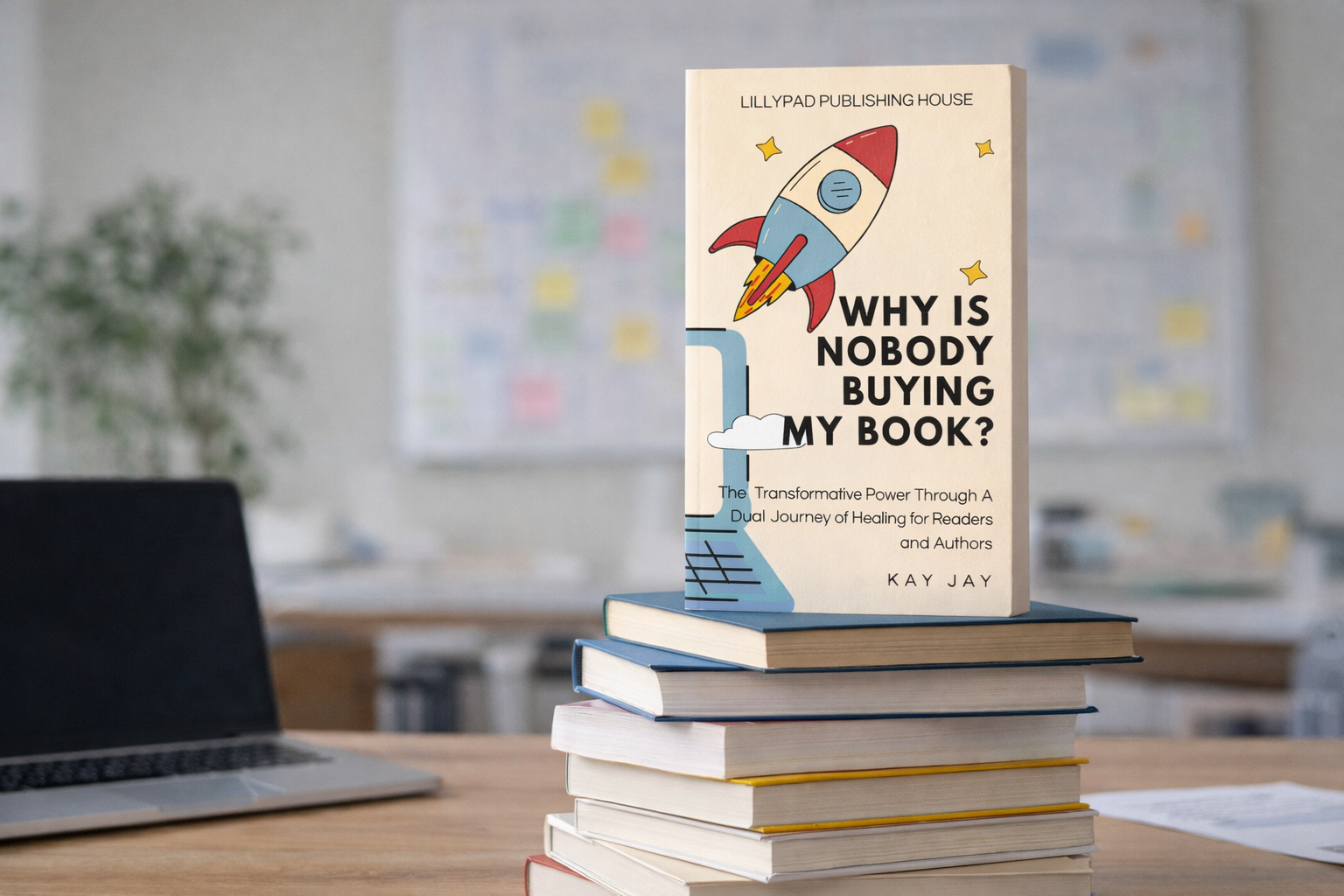
    Why Is Nobody Buying My Book was born out of that uncomfortable gap—between creative inevitability and commercial invisibility. It’s the space where vulnerability meets analytics, where you oscillate between believing deeply in your work and wondering if you’ve misunderstood the assignment entirely. The question in the title is funny because it’s true, and dangerous because it’s personal.

    This book isn’t a complaint disguised as a manifesto. It’s an inquiry. What does it mean to create earnestly in an ecosystem that rewards noise, certainty, and repetition? How do you market something personal without flattening it into a slogan? At what point does self-promotion stop feeling like advocacy and start feeling like performance?

    I wrote this book for anyone who has ever poured themselves into something meaningful and then stared at the numbers, baffled. For the artists who were told to “just be authentic” and then handed a spreadsheet. For the writers who discovered—slightly too late—that visibility is a craft of its own, and not a particularly romantic one.

    If the earlier books were about making sense of life and language, this one is about reckoning with the systems that sit quietly underneath our creative dreams. It’s about learning to ask better questions than Why isn’t this working? and resisting the urge to let silence rewrite your self-worth.

    I’m still an author, whether or not the numbers agree. The stories are still coming. The learning hasn’t stopped. And if nothing else, this book stands as proof that confusion, too, can be documented—and sometimes, that documentation is the most honest work you can offer.

  • The Myth of Having It All Figured Out

    The Myth of Having It All Figured Out

    There’s a strange, pervasive pressure we absorb somewhere along the way—a silent, societal contract that dictates by a certain age, stage, or milestone, the chaotic mess of life should magically resolve itself. It’s the insidious idea that adulthood is synonymous with clarity, that the universe owes us a perfectly legible map once we cross the threshold of 30, or get that degree, or achieve that promotion.

    The expectation is that the pieces should fall neatly into place, interlocking like a complex, satisfying puzzle. That the profound, existential confusion should stop. That the relentless, sometimes paralyzing, torrent of questions should finally quiet down into a comfortable hum of certainty.

    They simply don’t.

    What does happen, though, is infinitely more valuable: we get better at living inside the questions. We evolve from seekers of answers to masterful inhabitants of ambiguity.

    For years, like so many others, I operated under the delusion that clarity was a finite resource you arrived at—a fixed destination. It was the next job title on LinkedIn. It was a specific city with a rent-controlled apartment. It was the tidy, easily defined relationship status. I treated uncertainty not as a natural state of human existence, but as a personal flaw I needed to fix—a temporary, embarrassing glitch in my life’s code that I desperately tried to hide or speed past.

    But life, in its infinite wisdom and gentle cruelty, has a way of violently interrupting that polished, linear narrative.

    It manifests in the big, jarring pivots: Moves that weren’t planned, necessitated by instinct or circumstance rather than a five-year strategy. Choices that looked entirely wrong on paper—defying the logic of every mentor and spreadsheet—but felt undeniably right and resonant in the body. Detours that didn’t come with tidy explanations, logical rationales, or a guaranteed outcome—only the messy, necessary gift of experience.

    Somewhere between the exhaustion of starting over and the profound relief of finally letting go of the need to explain and justify myself to the external world, I realized this essential, liberating truth: not knowing isn’t a failure of process or character. It is simply a phase of becoming. It is the fertile soil required for the next iteration of self.

    We rarely afford ourselves or others the grace to talk honestly about the quiet middle—the vast, murky space between who we were when we started this journey and who we are presently in the turbulent process of becoming. It is inherently uncomfortable. It is non-linear. It doesn’t photograph well for Instagram stories; it resists being condensed into neat, motivational captions.

    But it is precisely where the real, transformative work happens. It is the unglamorous, often lonely, crucible of growth.

    Reflection, I’ve learned, doesn’t demand a grand, sudden revelation delivered on a lightning bolt. Sometimes it’s just the quiet discipline of writing one honest sentence at a time, excavating the truth from beneath layers of performance. It’s about learning to ask better questions—questions that open doors instead of slamming them shut with premature conclusions. It’s about letting the old, tired clichés—like “trust the process” or “it takes time”—become genuine mirrors reflecting our reality, instead of just tired, dismissive punchlines.

    What if we collectively stopped treating uncertainty like an existential enemy to be conquered and instead started treating it like an invitation?

    An invitation to slow down the relentless pace. An invitation to write things out, not for an audience, but for the clarity of our own witness. An invitation to make profound sense of our own repeating patterns and complex contradictions, in our own language, on our own terms.

    That is where the most potent, most enduring growth hides—not in the smug satisfaction of having it all figured out, but in the radical vulnerability of being willing to sit quietly and patiently with what isn’t figured out.
    And in a world that constantly demands answers and certainty, maybe that willingness to simply be in the uncertainty is more than enough for today.

  • I complain about numbers.

    I complain about numbers.

    What do you complain about the most?

    Diary Of Cliches

    What I Complain About the Most

    I complain about numbers.

    Which is inconvenient, considering I’m a data scientist.

    Not loudly. Not in dashboards or quarterly reviews. More in the private way one complains about the weather—aware it isn’t personal, yet feeling persistently misrepresented by it.

    Numbers have never been hostile to me. They’ve simply been incomplete.

    In 2016, my life required constant accounting. Energy was finite. Health came with caveats. Every decision demanded a calculation: cost versus capacity, intention versus aftermath. Chronic illness has a way of turning existence into a ledger, and you learn quickly how narrow the margins are.

    That was the year I began running.

    Running was irrational by most metrics. The projections didn’t support it. The baseline was shaky. So I removed analysis from the process. I woke up before my mind had time to assemble hypotheses, put on my shoes, and ran while my thoughts were still offline.

    The routine became automatic. Wake. Shoes. Run.

    I ran on good days and on days that barely qualified as functional. Over time, the act stopped feeling exceptional and started feeling ordinary—which, I would later realize, is how meaningful change usually enters.

    At some point, I wrote that I had run a marathon.

    I hadn’t. It was three kilometers. Approximately 7.11% of one.

    The number is correct. It’s also beside the point.

    Here’s what the subconscious understood—what no model could capture: repetition creates identity. Consistency reshapes narrative. The mind does not require statistical significance to change; it requires evidence, accumulated quietly.

    I wasn’t optimizing distance. I was retraining trust—with my body, with effort, with the idea of forward motion.

    That three-kilometer run did something the data could not yet explain. It shifted the dominant variable in the system. I stopped being someone primarily managing limitation and became someone rehearsing possibility.

    I became a runner—not because the distance justified the label, but because the behavior had already earned it.

    This is why I complain about numbers.

    They are indispensable. I build my professional life on them. They bring rigor, clarity, accountability. But they are poor witnesses to transformation. They report outcomes without observing the interior work—the courage, the repetition, the decision to continue without proof.

    Words, on the other hand, are how we transmit meaning to the subconscious.

    Calling it a marathon wasn’t an error. It was a translation. A narrative strong enough to carry change across the gap before the metrics caught up.

    So yes, I complain about numbers.

    Not because they are wrong—but because even the best ones arrive late to the truth.

  • The Myth of the Dream Job

    The Myth of the Dream Job

    Daily writing prompt
    What’s your dream job?

    The question is deceptively simple. It appears at dinner parties, on application forms, in coaching sessions, and in the quiet corners of our own minds. What’s your dream job?

    Most people answer with a title. Author. Founder. Artist. Consultant. Professor. Something that fits neatly into a LinkedIn headline and earns polite nods of approval. But the longer I sit with this question, the more I realise that job titles are a convenient distraction. They are placeholders for something deeper we are often afraid to name.

    Because what most of us are really searching for is not a job.
    It is meaning with momentum.
    It is expression without invisibility.
    It is work that matters—and is seen to matter.

    This is where the question becomes uncomfortable.

    The Myth of the Dream Job

    The modern myth suggests that if you find your dream job, everything else falls into place. Fulfilment. Recognition. Financial stability. Validation. The market, we’re told, will reward authenticity.

    But anyone who has tried to build something original—especially in the creative or intellectual economy—knows how fragile this myth is.

    You can do work that is thoughtful, rigorous, emotionally honest—and still be ignored.

    You can write a book that carries years of lived experience and deep insight—and watch it disappear into the algorithmic abyss.

    The silence that follows is not just professional. It is existential.

    This is the moment most people don’t talk about when they talk about dream jobs.

    When Passion Meets the Market

    A dream job today often involves creating rather than merely occupying. Writing books. Building platforms. Offering ideas, frameworks, perspectives. We are told to “share our voice” and “put our work out there.”

    What we are rarely taught is how the market listens.

    The gap between creative intent and market response is where many dream jobs quietly die. Not because the work lacks quality, but because its creator mistakes depth for visibility, sincerity for resonance, and effort for alignment.

    This is especially true in publishing.

    Writing a book feels like the ultimate expression of intellectual authority. It is slow work. Solitary work. Honest work. And when the book doesn’t sell, the conclusion many authors draw is painfully personal: Maybe my work isn’t good enough.

    In reality, the failure is rarely artistic. It is structural.

    Authority Is Not What We Think It Is

    We often assume authority comes from expertise alone. From knowing more. From having lived more. From having something “important” to say.

    But authority, in the real world, emerges at the intersection of three forces:

    • Clarity of message
    • Emotional resonance
    • Market positioning

    Miss one, and even the most intelligent work struggles to survive.

    This is the uncomfortable truth behind many dream jobs that stall. We learn the craft. We refine the thinking. We do the inner work. But we never learn how value is perceived, not just created.

    And perception, whether we like it or not, is shaped by psychology, language, and money.

    The Silent Education Gap

    No one tells you that selling a book—or an idea—is not a betrayal of integrity. It is an act of translation.

    The market does not reject nuance; it rejects confusion. It does not punish depth; it punishes obscurity. And it does not reward effort; it rewards connection.

    This gap—between what creators believe should matter and what actually reaches people—is what inspired Why Is Nobody Buying My Book? Not as a marketing manual, but as a mirror.

    Because the real crisis isn’t unsold books. It’s the quiet erosion of confidence that follows. The slow decoupling of self-worth from work. The temptation to either shout louder or disappear entirely.

    Neither leads to a dream job.

    Redefining the Dream

    A dream job, I’ve come to believe, is not one where you are endlessly inspired. It is one where your work travels. Where it finds its readers, users, clients, or audience without requiring you to become someone you are not.

    It is work that understands the emotional economy it operates in. That respects attention as a scarce resource. That speaks with people, not at them.

    It is also work that allows you to remain whole when outcomes fluctuate.

    Because markets are unpredictable. Algorithms shift. Sales dip. Silence returns. The dream job is not immune to these realities—it is resilient in the face of them.

    The Question Beneath the Question

    So when someone asks, What’s your dream job? I no longer answer with a role.

    I answer with a condition.

    To create meaningful work.
    To understand how it lands.
    To bridge the gap between inner truth and outer traction.
    To remain intact when the market responds slowly.

    That, ultimately, is what most creators are searching for—whether they are writing books, building businesses, or offering ideas to the world.

    And that is the conversation we need to have more honestly.

    Not just about dreams—but about what it takes for them to survive contact with reality.
  • The Invisible Clutter Of Burden

    The Invisible Clutter Of Burden

    Where Can You Reduce Clutter in Your Life?

    For the longest time, I believed clutter was a physical problem. Too many books on the shelf. Too many cables in drawers whose original purpose no one remembered. Too many mugs for a person who drinks tea from exactly one favorite cup.

    So I did what most of us do. I organized. I donated. I folded. I labeled.

    And yet, the noise remained.

    It took a life reset—one I didn’t plan, didn’t ask for, and certainly didn’t romanticize—to realize that the real clutter in my life wasn’t visible. It lived elsewhere. In decisions postponed. In identities I carried long after they stopped fitting. In the quiet pressure to explain myself to everyone but me.

    When I moved back to India after two decades in the U.S., I arrived with two suitcases and an unsettling amount of emotional excess. Jet lag peeled me open. The airport smelled like disinfectant, overripe fruit, and familiarity I wasn’t ready to embrace. Everyone moved fast. I moved cautiously. I had less stuff than I’d ever owned—and more mental clutter than ever before.

    Clutter, I learned, doesn’t announce itself as chaos. It disguises itself as responsibility.

    I had cluttered my life with “shoulds.”
    I should stick it out a little longer.
    I should aim higher.
    I should be grateful, not confused.
    I should already know who I am by now.

    These thoughts piled up quietly, like unopened mail. Each one harmless on its own. Together, overwhelming.

    Career clutter was the heaviest. Titles I no longer believed in. Definitions of success that felt borrowed. Resumes that flattened entire decades of living into bullet points that read like a stranger’s life. I kept polishing them, convinced clarity would arrive in the next version. It didn’t.

    Then there was relational clutter—the conversations replayed in my head long after they had ended. The people I kept holding space for while standing in the dark myself. The breadcrumbs I mistook for nourishment.

    At some point, exhaustion does what discipline cannot. It forces honesty.

    I stopped trying to optimize my life and began subtracting instead.

    I reduced clutter by letting go of the need to justify my choices. By accepting that not every pothole needs a lesson immediately. By allowing my days to be quieter, slower, less impressive.

    I reduced clutter by trusting my body—its hunger, its fatigue, its instinct to pause. By fasting not to purify, but to listen. By realizing that I didn’t need a diagnosis to explain my sensitivity or restlessness. I didn’t need a label to be allowed to be me.

    And perhaps most importantly, I reduced clutter by loosening my grip on certainty.

    Life didn’t become simpler overnight. But it became lighter.

    Clutter isn’t always about excess. Sometimes it’s about holding on too tightly to a version of yourself that once made sense.

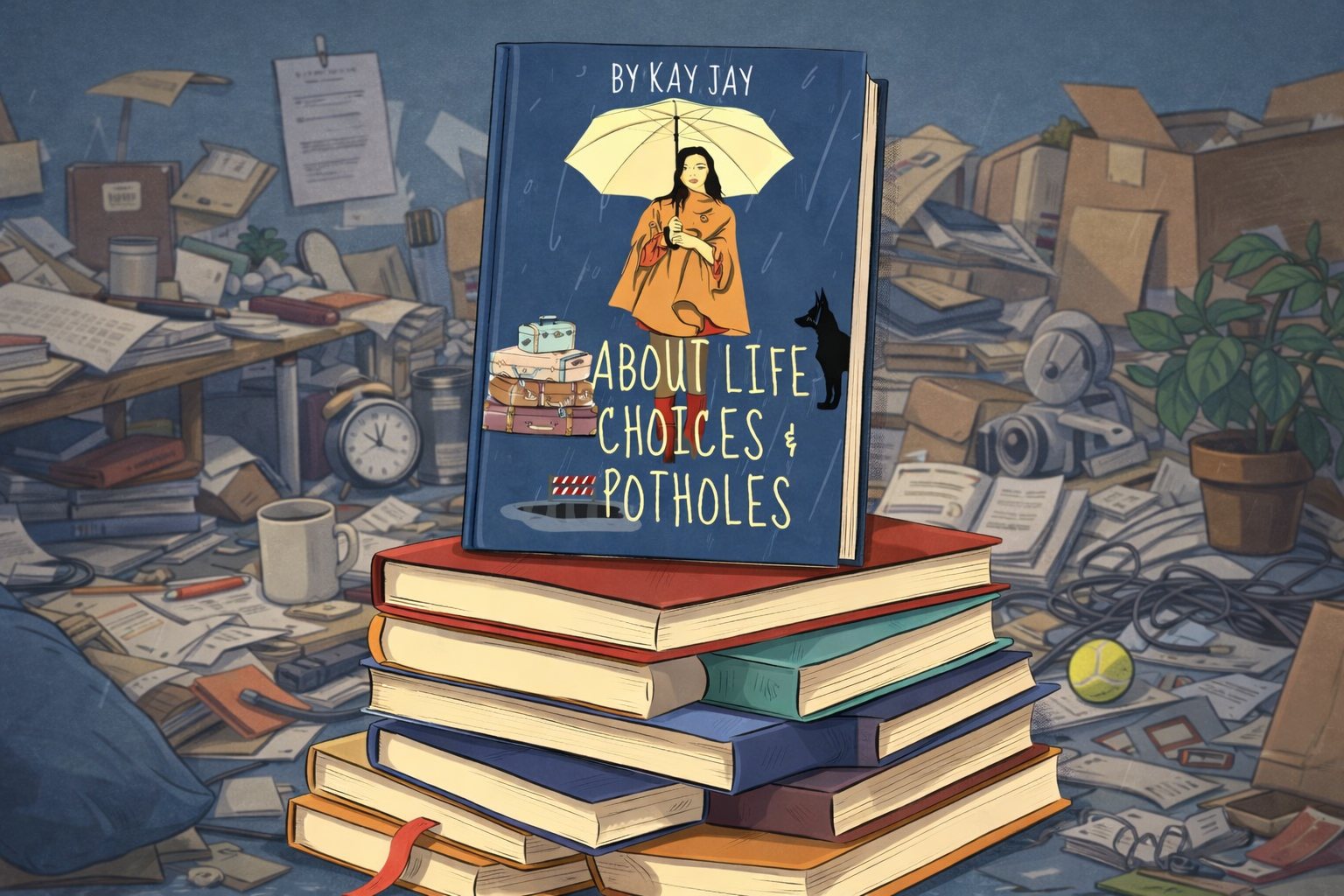
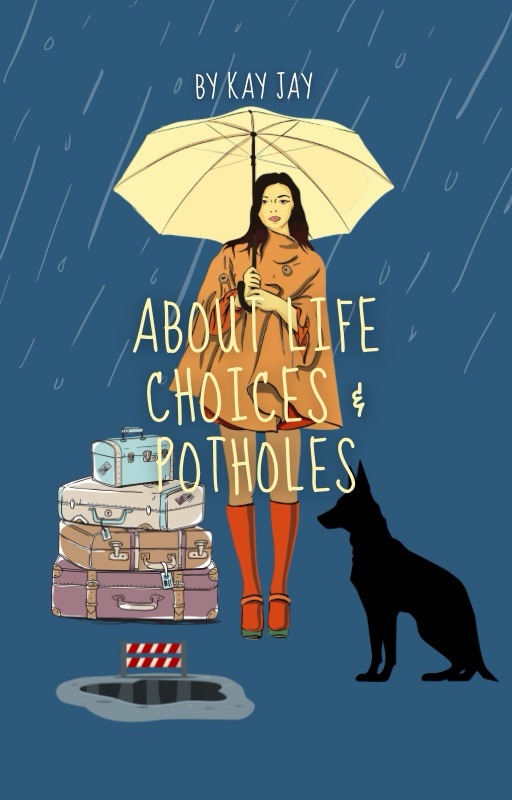
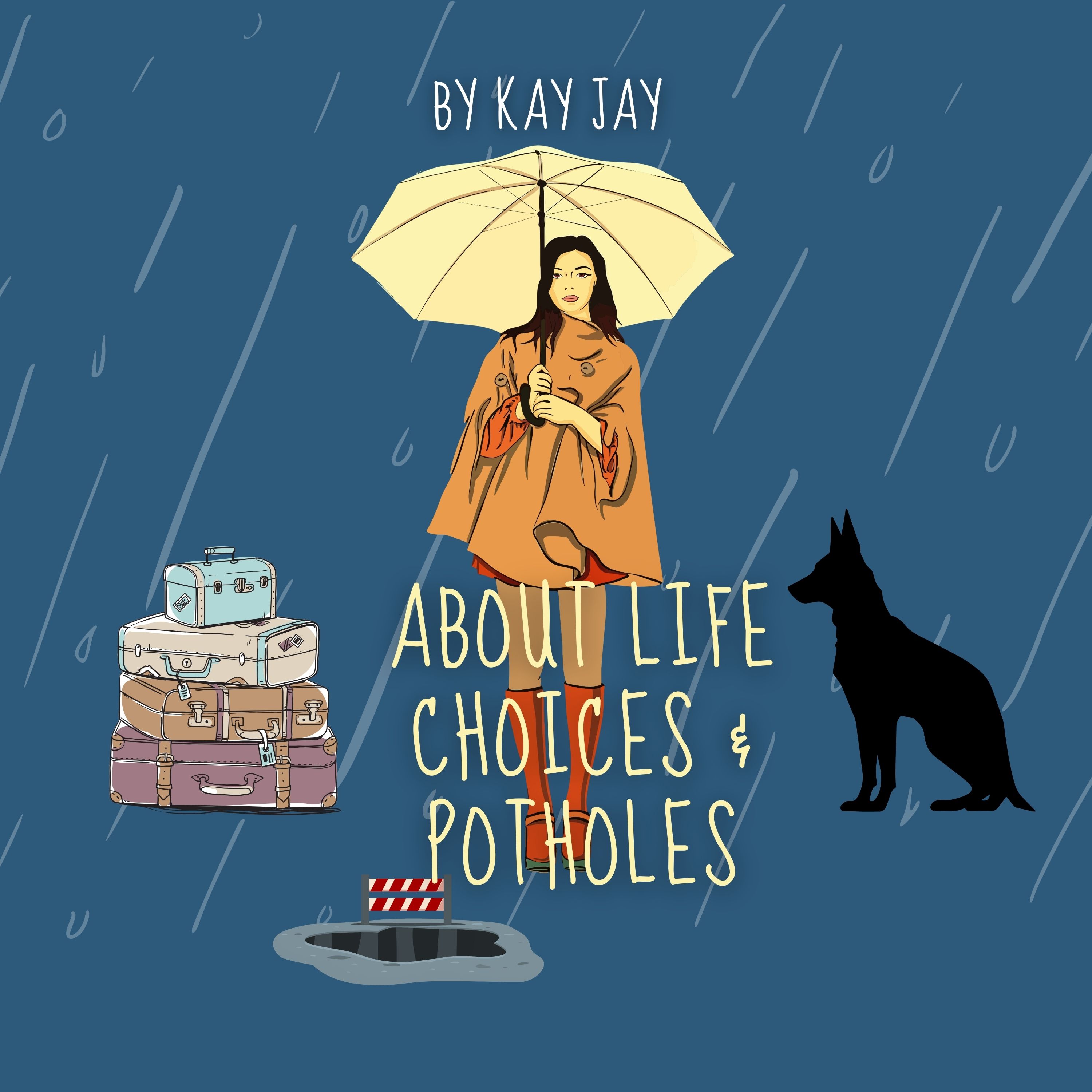
    About Life Choices & Potholes is a story about those moments—when subtraction becomes survival, and letting go becomes the bravest decision you make.

    If you’re feeling overwhelmed, maybe the question isn’t what you need to add.

    Maybe it’s what you’re finally ready to release.

  • Learning After Impact

    Learning After Impact

    What is your mission?

    About Life Choices and Potholes

    I wish I could say I saw it coming.

    That there was a moment of hesitation, a quiet instinct ignored, a clear sign misread. But most of the decisions that shaped me arrived without warning and unfolded without commentary. They felt reasonable at the time. Defensible. Sometimes even brave.

    The consequences arrived later.

    About Life Choices and Potholes begins with that delayed realization—the distance between choice and comprehension. It is written from the understanding that wisdom rarely precedes action. More often, it trails behind it, attempting to make sense of what has already occurred.

    This book is not a guide to better decision-making. It does not offer frameworks, heuristics, or corrective strategies. It is an examination of how insight is actually formed: through collision, through aftermath, through the slow, often uncomfortable work of reflection.

    We are encouraged to believe that good outcomes result from good choices, and bad outcomes from poor ones. This book complicates that assumption. It explores how context, limited information, emotional readiness, and survival instincts shape our decisions far more than rational foresight ever could.

    Potholes, in this sense, are not failures of intelligence. They are features of movement.

    My mission here is intellectual honesty—to resist the temptation of neat narratives that retrofit intention and clarity onto experiences that were, in real time, opaque. The book refuses the comfort of hindsight bias. It acknowledges that understanding is not always available when it would be most useful.

    Rather than judging past selves for what they did not know, About Life Choices and Potholes practices a different discipline: humility. The recognition that learning is often retroactive. That comprehension arrives only after the impact has already occurred.

    This book is written for readers who are weary of advice that assumes foresight. For those who are tired of being told what they should have known. It sits with the reader not before the decision, but after it—amid the debris, the recalibration, the slow reorientation that follows.

    There is no promise of mastery here. Only the quieter assurance that understanding does not require perfection—only attention.

    If you find yourself looking back, learning forward, and resisting the urge to rewrite your past into something more coherent than it was, this book is already speaking your language.

    It does not offer answers.

    It offers companionship—after the fall.

    About Life Choices & Potholes
  • Doorun Dongar Saajre

    Doorun Dongar Saajre

    Mountains Look Beautiful From Afar.

    What are your biggest challenges?

    The phrase comes from a folk song I grew up hearing without ever stopping to translate. Doorun dongar saajre. From a distance, the mountains look beautiful.

    I didn’t know then that it was a warning disguised as poetry.

    We met the way modern connections often do—through words first. Messages that arrived with intention. Conversations that stretched longer than planned. A sense of recognition that felt less like discovery and more like inevitability. It wasn’t romance in the traditional sense; it was something more flattering to the intellect. A meeting of minds, or so it seemed. He saw my work. I saw his hunger. We spoke the same language of pattern, meaning, depth.

    Distance helped. Distance always helps at the beginning.

    From far away, everything aligns. The rough edges blur. Silence reads as mystery. Intensity passes for intimacy. I could step into the connection without the burden of the body—without having to negotiate pace, presence, or consequence. From that vantage point, the mountain looked exquisite.

    Saajre.

    What drew me in was not charm so much as vulnerability. He spoke from a place of longing that felt raw, unedited. There was an ache beneath his words, a sense of having been misunderstood by the world and—perhaps for the first time—seen. I know now how dangerous that feeling can be: to be cast as the witness to someone else’s becoming.

    At first, I mistook that role for closeness.

    The trouble with being deeply empathic is that it doesn’t announce itself as risk. It arrives as responsibility. I could feel his emotional weather before he named it. His agitation registered in my chest. His anticipation showed up as restlessness in my body. I began to calibrate myself around him—slowing here, softening there—without quite realizing I was doing it.

    Still, from a distance, it worked.

    The mountain remained beautiful as long as I didn’t try to climb it.

    The shift came when abstraction gave way to reality. When the possibility of proximity entered the frame. Plans, however tentative, have a way of revealing fault lines. The ground beneath the poetry began to tremble. What I experienced as saturation, he experienced as withdrawal. What I felt as the need for space, he felt as threat.

    That is often how scripts flip.

    I became quieter. He became louder. My pauses grew careful; his words grew urgent. I found myself explaining feelings I hadn’t yet finished having. The connection, once expansive, began to narrow. I was no longer meeting him; I was managing him.

    From up close, the mountain was no longer ornamental. It was unstable.

    There is a particular confusion that sets in when you are told—repeatedly—that your gentleness is cruelty. That your boundary is abandonment. That your attempt to leave without harm is, in fact, harm itself. You begin to doubt your internal compass. You replay conversations looking for evidence of malice you don’t remember feeling.

    I stayed longer than I should have, not out of love exactly, but out of a familiar sense of duty. The idea that if I could just explain myself clearly enough, softly enough, the landscape would settle.

    It didn’t.

    Distance, once protective, had become impossible.

    The end did not arrive as a clean break. It came as an unraveling. Words sharpened. Meaning distorted. What had once been admiration curdled into accusation. The same intensity that once felt intoxicating now felt volatile. I watched, almost clinically, as the mountain revealed its true terrain: steep, unforgiving, prone to collapse.

    When it finally ended, it did so without poetry.

    Just silence. And the dull thud of something idealized coming apart.

    It took time for the grief to register—not for the relationship itself, but for the fantasy it had supported. I had believed, perhaps naively, that depth alone could sustain connection. That mutual insight was enough. That distance was a neutral condition rather than an amplifier.

    The phrase returned to me then, not as lyric but as diagnosis.

    Doorun dongar saajre.

    Beauty at a distance is not deception. It’s perspective. But perspective has limits. What enchants from afar can overwhelm up close. What feels like destiny when untested can become danger when embodied.

    I think often now about how many connections are born and sustained in abstraction. How easy it is to confuse intensity for intimacy when the body is not yet involved. How many of us fall in love not with a person, but with the version of ourselves we get to be in their gaze.

    Distance gives us that gift. It also withholds the truth.

    The mountains are still beautiful. I don’t deny that. But I have learned to ask a different question before moving closer.

    Not Is it stunning from here?

    But:

    What will it cost me to stand at its base?

    The answer, I’ve learned, is what decides everything.

    Author Kay Jay

  • Finding Noir

    Finding Noir

    What could you do differently?

    I remember the moment I realized nothing was going to happen.

    Not the dramatic kind of nothing.

    No explosion. No goodbye.

    Just the quiet violence of unanswered messages and a body that knew before the mind admitted it: this is it.

    I replayed every sentence. Every pause. Every almost.

    I told myself I could have spoken differently. Softer. Braver. Less available. Less intense. More mysterious. More patient. Less honest. Less me.

    That’s when the question appeared—not as self-help, not as advice, but as an ache:

    What could I have done differently?

    It’s a seductive question. It implies control. It suggests that love is a chessboard, not a collision. That if we just move the right piece, the ending changes.

    But here’s the truth most people don’t want to hear:

    Sometimes the only thing you could have done differently

    was leave the story earlier—

    before it taught you everything it came to teach.

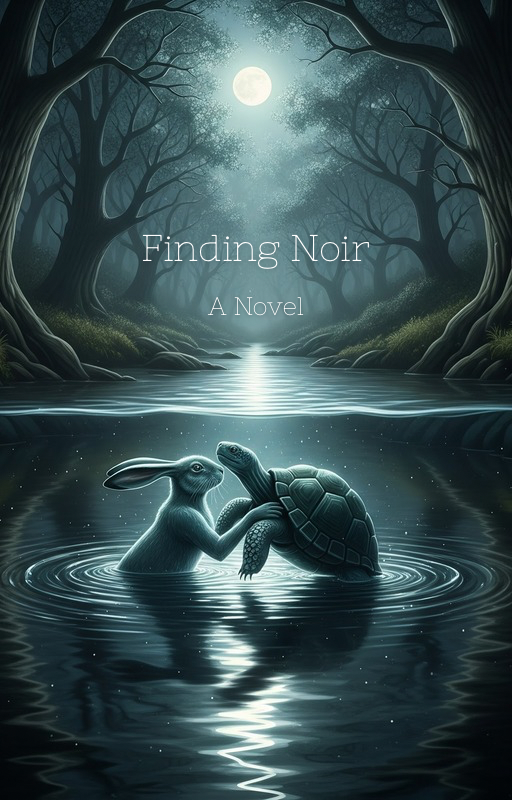
    Finding Noir is not a book about how to get it right next time.

    It’s a book about what happens when you stop editing yourself for an outcome that was never available.

    It traces a connection that lived vividly in the interior world and failed spectacularly in the physical one. It explores twin flames, projection, longing, somatic memory, and the way absence can feel more intimate than presence. It refuses to tell you whether the connection was real, spiritual, imagined, karmic, or psychological—because the body doesn’t care what we name the wound.

    This book doesn’t offer closure.

    It offers recognition.

    For anyone who has loved someone who never fully arrived.

    For anyone who felt chosen in private and abandoned in reality.

    For anyone who wonders whether depth itself is a liability in modern intimacy.

    Finding Noir asks a quieter, more dangerous question:

    What if you didn’t do anything wrong—

    what if you were simply brave enough to feel everything?

    And if that question unsettles you,

    you might already be standing at the edge of this book.

    Finding Noir
  • A Space Where Magic Is Born

    A Space Where Magic Is Born

    You get to build your perfect space for reading and writing. What’s it like?

    If I could build my perfect space for reading and writing, it wouldn’t look like a productivity hack or a Pinterest board. It would look like a life—one that made room for thinking, feeling, wandering, and returning.

    The room would have windows that open wide, not just to let light in, but to remind me that the world exists beyond the page. Outside, there would be trees—old ones, the kind that have seen cycles come and go. They would keep me honest while I worked on A Song and Dance for Mother Earth, grounding my words in gratitude and reverence, reminding me that stories, like ecosystems, need care more than control.

    There would be a writing desk scarred with use, not aesthetic, just familiar. That’s where About Life Choices and Potholes would live—pages written after wrong turns, pauses, and those moments when life teaches you something by first knocking you flat.

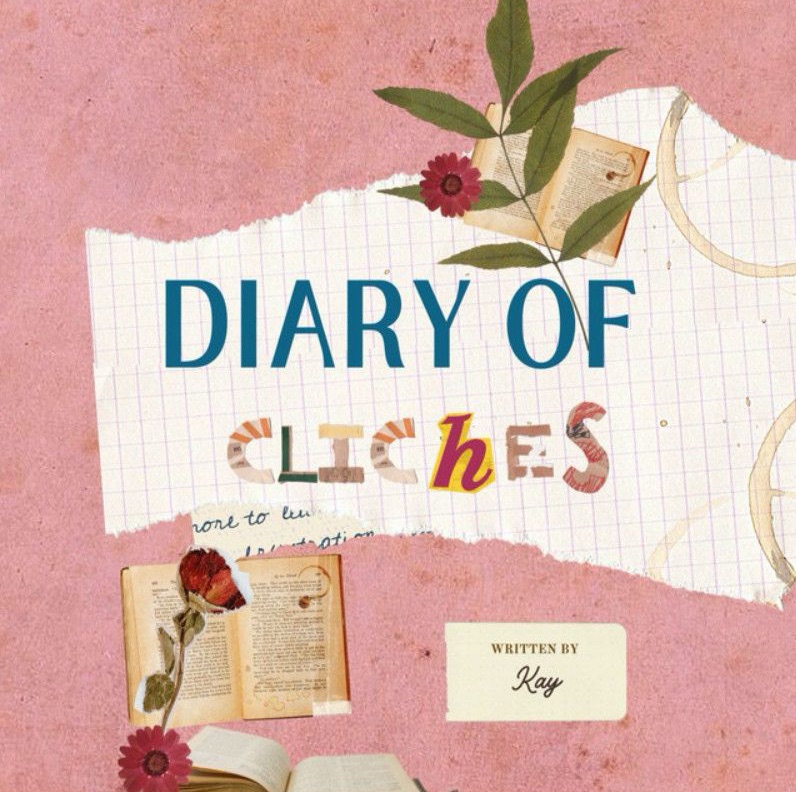
    Nearby, a stack of half-filled notebooks would belong to Diary of Clichés, because some realizations arrive only after you swear you’ll never become that person… and then quietly do.

    This space would have a couch meant for staring at the ceiling. Not resting—thinking. That’s where Fever Dreams would be written, in the liminal hours when exhaustion softens the edges of truth and clarity arrives without explanation. In those moments, the room would feel slightly unreal, as if it were breathing along with me.

    There would be a door that opens onto a street or a park. I’d leave it ajar while working on Beautiful Men: The Dog Walker, letting life pass by—footsteps, chance encounters, fleeting glances that remind me that softness still exists, that sometimes the universe doesn’t instruct, it flirts. The kitchen would matter just as much as the desk, because Beautiful Men: The Chef would be written between meals and memories, where nourishment is not just consumed but received.

    At my feet, always, would be a dog. Muddy paws, restless energy, unconditional presence. Adventures of Sauli the Rescue Pup could only be written in a space that allows chaos and joy to coexist—where healing shows up unannounced and insists on being played with.

    The quietest corner of the room would belong to Finding Noir. No distractions. No mirrors, except the internal ones. That book would demand stillness, the kind that forces you to sit with what you’re really looking for, long after you realize it isn’t another person.

    There would also be a shelf that makes me laugh at myself. That’s where Why Is Nobody Buying My Book would sit—right next to hope and self-doubt, art and algorithms, reminding me that creativity is both sacred and absurd, and that both can be true at the same time.

    Most importantly, this space wouldn’t be about selling stories. It would be about telling them. Every chair, window, and corner would exist to support honesty—whether the result is a book, a sentence, or just a moment of understanding.

    Because the truth is, all these books were written in spaces that already existed: borrowed rooms, kitchen tables, hospital waiting areas, long walks, sleepless nights. My perfect space is simply one that allows me to keep doing what these stories taught me how to do—

    Pay attention.

    Tell the truth.

    And trust that the right readers will find their way in.

    Author Profile
  • The Quiet Strength of My Father

    The Quiet Strength of My Father

    Describe a family member.

    (A reflection inspired by my book About Life, Choices, and Potholes)

    If I had to describe my father, I wouldn’t start with his profession or his habits — though I could. He was an engineer by training, a man of tools and precision, but his real craft was patience. The kind that doesn’t make noise, doesn’t demand recognition, but stays steady like the background hum of a ceiling fan on a humid night — always there, always working.

    Growing up, I used to think he was too quiet. He didn’t express affection in words; he showed it in ways you’d miss unless you were really paying attention — an extra roti on my plate before I sat down, the car tank always full, the lights left on when I returned late. His love language was logistics.

    When I moved to the US, I thought I was leaving that world behind — the world of early mornings, the smell of oil and diesel from his workshop, the steady rhythm of his tools. I was chasing independence, identity, a new story. But years later, when life hit a wall — job loss, immigration uncertainty, heartbreak — it was his voice, calm and undramatic, that steadied me again.

    In About Life, Choices, and Potholes, I write about that moment — when he cleaned up after my mess despite just recovering from spine surgery, even as eviction threats and house-hunting chaos unfolded around us. He didn’t complain. Didn’t remind me of sacrifices. Just did what needed to be done.

    It took me years to understand that kind of strength — the quiet resilience of doing what life demands, not because it’s fair or easy, but because someone has to.

    He’s the kind of man who believes in roads — in building them, fixing them, walking them. And maybe that’s why the book carries the word potholes in its title. Because life, as he taught me, is just that — a long, uneven road you keep driving on, knowing you’ll hit bumps, but trusting you’ll reach home.

    If there’s one thing my father has taught me, it’s this:

    Love doesn’t always arrive wrapped in words.

    Sometimes, it’s in the quiet act of showing up — again and again — even when no one’s watching.