Category: finding noir

  • The Woman Behind the Keyboard: Why I’d Choose to Live in My Own Book

    The Woman Behind the Keyboard: Why I’d Choose to Live in My Own Book

    If I had to switch lives with a fictional character for a week, I know exactly who I would choose. I would choose the woman in my own book, The Dog Walker, which is probably a slightly unconventional answer because most people would reach for someone whose life comes with a castle, a superpower, a famous surname, or at the very least a handsome man waiting for them in a drawing room. I, on the other hand, would like to climb into the life of a woman I created myself. I have spent enough time writing her, putting words in her mouth, making her fall for things she probably shouldn’t, and watching her navigate the complicated business of being attracted to a man to whom she cannot simply hand over a user manual. After all that, I think I have earned the right to find out what it actually feels like to be her.

    There is something strange about creating a fictional woman. In the beginning, you think you are in complete control. You decide what she looks like, where she lives, what she wants, what she fears and, most importantly, what she is going to do next. Then, somewhere along the way, she becomes inconveniently human. She starts making choices that you didn’t plan for. You put a perfectly sensible option in front of her and she walks straight toward the complicated one. You give her a man she should probably avoid and, somehow, she finds a reason to stay interested. You tell yourself that you are writing the story, but there are moments when it feels as though you are merely taking dictation.

    That is the part of writing women that fascinates me. I can invent a situation, but I cannot always predict how a woman will experience it once she is inside it. If I were her for a week, I would want to know what she notices that I missed while writing her. I would want to know what happens inside her head when she first sees the beautiful man at the center of her story. Is she immediately attracted to him, or does she resist it? Does she notice his face first, or his manner, or something so small that even he might not realize he is doing it? When he looks at her, does she believe what she sees, or does she immediately begin questioning it? These are the things I find far more interesting than simply deciding that two people are attracted to each other.

    I have always been fascinated by the little theatre that happens between men and women when attraction enters the room. We rarely meet another person without bringing our own history along with us. We arrive with old relationships, old disappointments, fantasies, insecurities and expectations that the other person knows nothing about. A woman can meet a man for ten minutes and unconsciously begin filling in the blanks. She can decide that he is confident, complicated, kind, unavailable, dangerous or secretly wonderful without having enough evidence for any of it. Men do exactly the same thing. We are all remarkably talented at writing biographies for strangers.

    That is part of what I wanted to explore through Beautiful Men. The men may be beautiful, but beauty is only the surface of the story. What interests me is what happens after the first impression has done its damage. What happens when attraction collides with reality, when two people bring their expectations into the same relationship and discover that the person standing in front of them is not necessarily the person they imagined? Sometimes we fall for a person, and sometimes we fall for the possibility of who that person might become. There are also times when we fall for the version of ourselves that seems to emerge when we are with them, which can be even more difficult to walk away from.

    If I could actually become the woman in The Dog Walker for seven days, I suspect I would spend very little of that time simply enjoying her life. I would be far too curious about her decisions. I would want to see the beautiful man through her eyes rather than through mine as the person who created him. I would want to understand what made her trust him, what made her doubt him, what she told her friends and what she kept to herself. I would want to know whether the things that seemed obvious to me as the writer were obvious to her at all. Most of all, I would want to discover what she understood about herself that I had not yet understood while writing her.

    Perhaps that is why I find fictional characters so compelling. We spend so much time trying to understand other people in real life, but we rarely get the privilege of knowing what is happening behind their eyes. Fiction gives us a strange kind of intimacy. We can hear the thoughts that a character would never say aloud, understand the fear behind an apparently confident decision, and see the contradiction between what someone wants and what they are actually capable of choosing. We get to witness the private negotiations that make people human.

    There is also something slightly embarrassing about realizing that when you write a woman, you inevitably leave pieces of yourself behind. You may give her a different childhood, a different job, a different relationship and a completely different wardrobe, but somewhere in her there is usually a little bit of you. It might be a fear you recognize but would rather not discuss, a romantic fantasy you have never admitted to having, an irrational stubbornness, or the particular kind of curiosity that makes you ask questions you probably shouldn’t. Sometimes you don’t even notice what you have put into a character until she says something on the page and you sit back thinking, “Oh, apparently I believe that.”

    That may be the real reason I would choose her if I had the chance to switch lives for a week. I have spent so much time looking at her from the outside that I would like to experience her world from within. I would like to understand the moments I wrote without fully understanding them myself. I would like to know whether the choices I gave her feel as complicated from inside her life as they looked from mine. And after putting her through all the emotional complications that come with being a woman in a story called The Dog Walker, I suppose she deserves a week in which somebody else has to make the decisions.

    I might even come back from those seven days with a little more compassion for her. More importantly, I might come back with a little more compassion for myself, because perhaps that is what fiction does when it works well. We think we are inventing other lives so we can escape our own, but somewhere along the way those imaginary lives begin holding up mirrors. They show us the things we desire, the choices we fear, the people we are drawn toward and the stories we tell ourselves about why we are drawn to them.

    So if I had to trade lives with a fictional character for a week, I would choose the woman in The Dog Walker. I have already given her the beautiful man, the complicated feelings and the story. After all these years of being the woman behind the keyboard deciding what happens to her, I think it would be interesting to hand her the pen for a change and see what she does with me.

  • The Allure of Complicated Characters in Fiction

    The Allure of Complicated Characters in Fiction

    I have always had a slightly questionable taste in fictional men.

    Give me the perfectly decent hero, and I will probably admire him. He is kind, responsible, and emotionally available. He calls when he says he will, remembers birthdays and probably owns matching luggage. Wonderful.

    Now give me the man who walks into the story with three unresolved childhood issues, a complicated relationship with commitment, questionable communication skills and the emotional availability of a Mumbai BEST bus during peak hour, and suddenly I am interested.

    This is not necessarily a quality I am proud of.

    There is something about the complicated character that pulls me in: the person who doesn’t quite fit the moral categories, who makes terrible decisions but has a reason for making them, and who can be selfish and tender in the same chapter. Maybe that is because I have never found people particularly easy to classify.

    I learned this long before I started writing about them.

    I have spent enough of my life looking at people I loved and thinking, Surely there is a perfectly reasonable explanation for this.

    Sometimes there was. Sometimes the explanation was simply that I was in love, which, as explanations go, has historically been responsible for some of humanity’s worst decision-making.

    There is a particular kind of foolishness that arrives when you are emotionally invested in someone. You can be an intelligent, independent, reasonably accomplished adult who can make decisions involving data, money, careers and international travel, and then one person sends you a vaguely affectionate message and suddenly your entire analytical framework collapses.

    You begin interpreting punctuation.

    Why did they use a full stop? Why did they say “okay” instead of “okay :)”? Why did they take four hours to respond? Why did they respond in four minutes? Why did they respond at all?

    At some point, you realize you are conducting a forensic investigation into a text message from somebody who probably typed it while standing in line for coffee.

    I have been there. More than once.

    And the embarrassing thing is that when you are inside the story, you don’t experience the person as a villain. You experience them as complicated.

    You know their tenderness. You know the stories they don’t tell everybody. You know the version of them that appears when nobody is watching. You know what they are afraid of and what they have survived. You also know they can hurt you, and somehow the two facts manage to sit beside each other.

    That is what I find fascinating about villains. The good ones don’t feel like villains to themselves. They have explanations, just as all of us do.

    The villain thinks he is protecting himself. The hero thinks he is doing the right thing. The lover thinks she is following her heart. The friend thinks she is being honest. Meanwhile, somebody else is standing in the corner thinking, Can all of you please stop making such complicated decisions?

    Real life would be much easier if people came with labels: HERO, VILLAIN, BAD IDEA, DO NOT TEXT AFTER MIDNIGHT, or EMOTIONALLY UNAVAILABLE BUT VERY ATTRACTIVE.

    Unfortunately, nobody does.

    We meet people without instructions, fall for them without reading the terms and conditions, and then spend an unreasonable amount of time trying to understand what happened.

    Perhaps that is why I have always been drawn to characters who live somewhere in the grey area. Heroes can sometimes feel like aspirations; villains feel like confessions. They show us the parts of ourselves we would prefer not to discuss over dinner: jealousy, possessiveness, anger, vanity, the need to be chosen, and the ridiculous human desire to believe that if someone loves us enough, they will eventually become the person we need them to be.

    That last one has probably caused more emotional damage than most actual villains.

    I don’t think being fascinated by a villain means wanting to excuse them. Understanding somebody is not the same as forgiving them. Understanding why someone behaves badly doesn’t require you to volunteer for another round.

    That distinction took me a while to learn.

    There were people in my life I tried very hard to understand. I examined their histories, wounds, circumstances and fears. I became so good at understanding other people that I occasionally forgot to ask the most inconvenient question of all: What is this doing to me?

    That question doesn’t make for particularly romantic storytelling. It does, however, make for a much better life.

    Sometimes we are so busy trying to explain somebody else’s behaviour that we don’t notice our own. We overlook how long we have been waiting, how much we are hoping, how many excuses we are making, and how often we remain at an emotional bus stop long after the bus has left.

    And perhaps that is where my fascination with the villain eventually became something more personal. I stopped wondering only, Why did they do that? I started wondering, Why did I stay?

    That question is much harder because it doesn’t allow us to put the entire story on another person. It makes us look at our own choices, our own patterns, our capacity for hope and our occasionally spectacular ability to confuse intensity with love.

    That is probably why, when I began writing Finding Noir, I wasn’t interested in creating a straightforward hero and villain.

    Noir emerged from a much messier place. He belongs to that uncomfortable territory where attraction, attachment, longing, and self-preservation don’t line up neatly.

    There are people who enter our lives and somehow occupy more space than their actual presence should allow. They leave the room, the city, the relationship, sometimes even the life we once imagined with them, and yet they remain strangely present.

    You can move on geographically and remain completely stationary emotionally. You can know something isn’t good for you and still miss it. You can understand that a relationship has reached its natural ending and still wish the ending had been different.

    And eventually you can learn that loving someone does not give you the right to keep them, change them, or save them.

    Those are much harder truths than “the villain was bad and the hero won.”

    Because sometimes there is no villain to defeat. There are simply two people who could not give each other what they needed. Sometimes the person you thought you had to save is the person who teaches you something about yourself. And sometimes the great act of courage is not staying, but leaving without turning the other person into a monster simply so you can make sense of your own decision.

    That is what makes me like complicated characters. They don’t always give us clean endings. They make us sit with contradictions and accept that someone can love you and still hurt you, that someone can be wounded without being your responsibility, and that someone can be fascinating without being good for you.

    Most importantly, they remind us that we don’t have to hate somebody to let them go.

    So, have I ever liked a villain more than the hero?

    Absolutely.

    But these days, I am less interested in whether the villain gets the girl, the hero gets the girl, or everybody gets on a plane and moves to Paris for some reason.

    I am more interested in what happens after the story ends. Who are we when the person we were trying so hard to understand is no longer in front of us? What do we do with all that love? Where does the longing go? And who do we become when we finally stop trying to turn another complicated human being into the ending we wanted?

    Maybe the villain was never the most interesting character.

    Maybe the most interesting character was always the person who finally learned she didn’t have to stay in the story.

    That is where Finding Noir began for me: somewhere between fascination and foolishness, between holding on and letting go, and, as usual, somewhere between knowing better and doing better.

  • More Than a Menu: The Unvarnished Reality of Digital Longing

    More Than a Menu: The Unvarnished Reality of Digital Longing

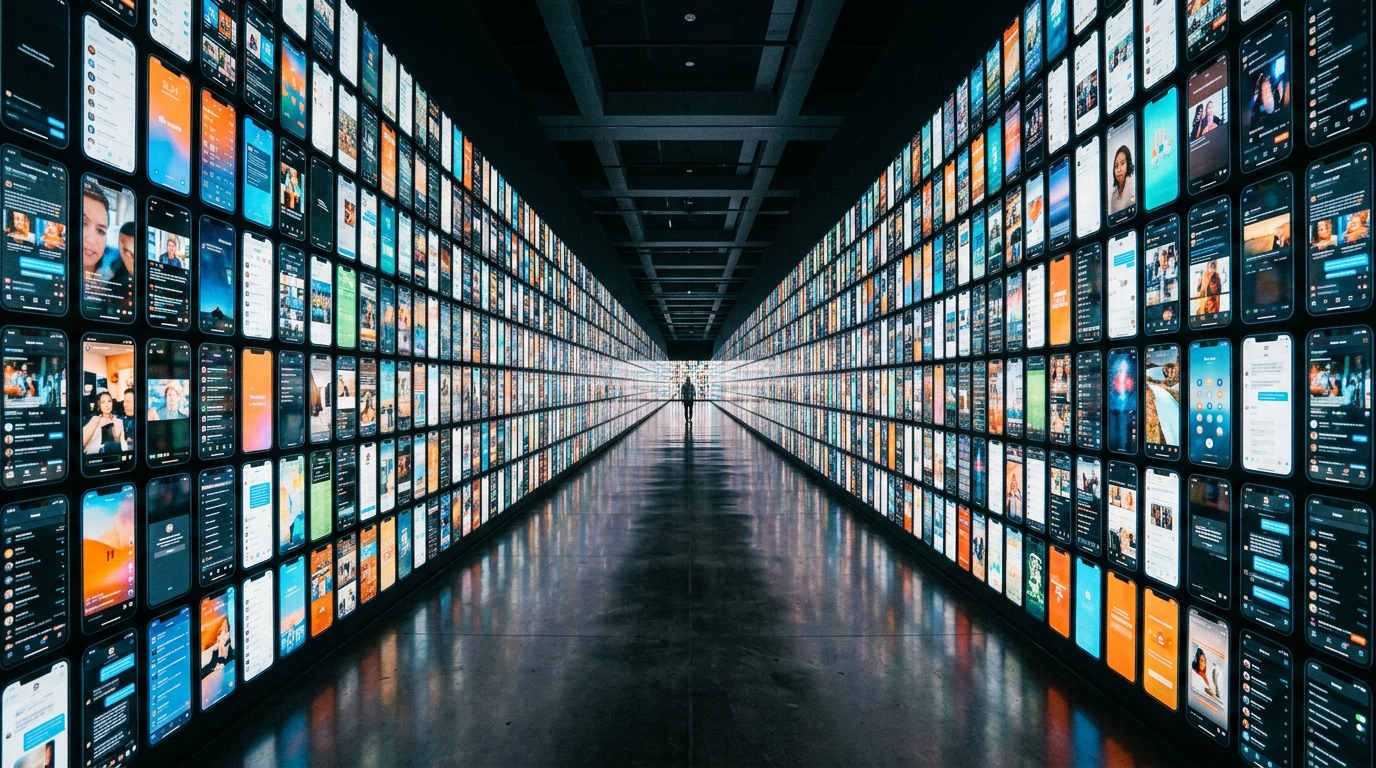
    As I sit here in my San Francisco apartment, watching the fog roll over the hills, I’m often struck by the blue glow reflecting off the windows of the buildings around me. It’s the light of a million solitary worlds—the “solitary digital worlds” of people like Kevin and Tammy, scrolling through a labyrinth of pixels and potential.

    I’ve always written for the thinkers, feelers, and the ones who never stopped wondering. And lately, I’ve been wondering why we’ve allowed our search for love to feel so much like ordering from a menu.

    The Prison of Choice

    In my novel The Chef, I used the metaphor of a skilled chef selecting ingredients to describe Kevin’s journey through digital dating. But there is a darker side to that metaphor that I explore in Fever Dreams. When Dev sifts through images of strangers, he realizes that endless choice can feel like a prison.

    We are taught to swipe as if we are browsing a catalog, looking for the “perfect match” with the right “flavor profile”. But humans aren’t ingredients to be balanced; we are complex, contradictory, and often “absolutely nuts”. The “shimmering mirage of belonging” offered by these apps often only deepens the very solitude it seeks to bury.

    The Mask and the Machine

    There is a profound fragility of identity in the digital realm. We present curated snippets of ourselves—a magical weave of words and images—while our inner world is crumbling. As a writer, I don’t want to see your manufactured smiles or your fleeting bios. I want to see what is raw, unfiltered, and humiliating.

    In Fever Dreams, Mira and Dev find a fragile sanctuary behind their screens where they can be their purest thoughts. But this sanctuary is also a cage. It’s a space where reality feels slippery, and they begin to wonder if they are just echoes of themselves, or even if the person on the other side is an invention of their own mind.

    The Delayed Tomorrow

    One of the most uncomfortable themes I weave into my stories is the perpetual postponement of meeting. In Fever Dreams, the word tomorrow becomes a flickering mirage that perpetually recedes.

    Why are we so afraid to step out of the digital abyss and into the light of a café?. It’s because the physical world is where the illusion of perfection shatters. It’s where system glitches don’t just sever a chat, but where we have to face the gnawing emptiness of another human being without the filter of a screen.

    Embracing the Cringe

    I know my characters can be polarizing. Critics have called my protagonists messy or disappointing failures. But I actually smile when I hear that, because discomfort is the art and awkwardness is the honesty.

    Digital dating shouldn’t be a seamless performance or a polished menu. True intimacy is the quiet courage to show up—hungry, imperfect, and willing to be fed. It’s about the shared imperfection of two people who recognize that while they are spectators in [their]own lives, they don’t have to be alone in the void.

    So, the next time you find yourself in that nightmarish purgatory of endless scrolling, remember that you aren’t looking for a dish to be served. You’re looking for another soul lost in the same maze. And sometimes, the most cringeworthy moments are the only ones that are actually real.

    Listen to the latest episode of Beautiful Men!

  • Navigating Love’s Messy Realities

    Navigating Love’s Messy Realities

    Romance is Watching You Fall Apart

    I’ve always believed that true romance isn’t found in a “neat little package” tied with a perfect bow. To me, romance is something much grittier and more profound; it is the quiet, often terrifying courage of watching someone you love fall apart and choosing to stay anyway.

    Beyond the Michelin-Starred Facade

    When I wrote The Chef, I wanted to explore what happens when the “Michelin-starred” success of a man like Kevin collides with the “lead apron” of depression. In the world of romance, we often want the hero to be untouchable, but Kevin is haunted by a “gnawing emptiness” that makes even answering a text feel like a “Herculean effort”.

    Real intimacy in that story isn’t just about the “alchemy of flame, butter, garlic, and wine” they share in the kitchen. It’s the moment Tammy looks past his professional prestige to see the man whose “inner world was crumbling”. I believe that intimacy is not about a “flawless performance”; it is the raw honesty of showing up “hungry, imperfect, and willing to be fed”.

    The Honesty of the “Nuts” and the Messy

    Book cover of Beautiful Men with bold, visually striking cover artwork.
    Book cover for Beautiful Men: The Dog Walker.

    I know that my approach to storytelling can be polarizing. When The Dog Walker was released, a reviewer called my protagonist, Sarah, “absolutely nuts” for her humiliating, grief-stricken attempts to connect with Andy. I actually smiled when I read that. Why? Because I didn’t set out to write a flattering story; I set out to write about longing that is “raw, unfiltered and humiliating”.

    If Sarah’s journey made you uncomfortable, it’s because “discomfort is the art” and “awkwardness is the honesty” of the human condition. Romance is being messy. It is the “cringeworthy moments” we usually try to hide, laid bare before another person who doesn’t turn away.

    Navigating the Digital Abyss

    In Fever Dreams, I took this theme into the “digital labyrinth”. Dev and Mira are two souls who find a “fragile sanctuary” through a screen, yet they are paralyzed by the fear that a physical meeting will shatter their “shimmering mirage of belonging”.

    They are “spectators in their own lives,” wondering if their connection is a genuine bond or just a “projection of their own desires”. Romance, in their world, is the agonizing wait for a “tomorrow” that perpetually recedes. It is the willingness to confront the “void” together, even when reality feels “slippery” and unaligned with your desires.

    Choosing the Shared Imperfection

    Ultimately, I write for the “thinkers, feelers, and the ones who never stopped wondering”. We live in an age of curated profiles and “manufactured smiles,” but my stories insist that we are more than our masks.

    True connection is born out of “shared imperfection”. It is the realization that while we are all navigating our own “urban mazes” of loneliness, there is a “pathway to connection” found in the very things that make us fall apart. Thank you for having the courage to walk with me through these shadows.

    Watch the latest episode of the Beautiful Men Podcast