Category: love

  • Understanding Energetic Cords: Unbreakable Connections Explained

    Understanding Energetic Cords: Unbreakable Connections Explained

    Why Energetic Cords Between Deep Connections Feel Unbreakable

    Some relationships leave an imprint so intense that even when the other person is absent, you feel them.

    It isn’t fantasy.
    It isn’t codependency.
    It isn’t just memory.

    It’s the way two lives can become intertwined on an energetic level—so subtle, so intimate, that ordinary separation doesn’t undo it.


    Recognition versus attachment

    At the core of this experience is recognition.

    Some connections bypass the usual filters of personality and social norms. They tap into something older, deeper—patterns, energies, and truths that predate words.

    When recognition is mutual, the nervous system responds.
    Even without physical presence, the body remembers.
    Even without daily interaction, the mind cannot fully forget.

    This is why energetic cords can feel unbreakable—they’re not chains. They’re living signals that a deep mirror exists, constantly recalibrating your awareness of yourself.


    Why intensity persists

    The stronger the mirror, the more it activates your internal world.

    • Old wounds surface.
    • Triggers flare.
    • Longings rise and fall like tides.

    Each surge of energy is a chance to witness the self more fully.
    Each pull, each echo, is a reflection of what hasn’t yet been integrated.

    The cords aren’t about control.
    They’re about awareness.


    Absence as a magnifier

    Physical or emotional distance doesn’t sever the connection—it clarifies it.

    Without constant interaction, the energy of the other acts like a lens:

    • It reveals patterns you were blind to.
    • It exposes attachments you didn’t realize you carried.
    • It encourages a deeper relationship with yourself.

    In my life, periods of absence weren’t just empty—they were catalytic.
    They compressed years of growth into months, forcing confrontation with what I had been avoiding.

    In Finding Noir, this dynamic is reflected subtly. The characters’ bond persists across distance and silence, not as obsession, but as a mirror that fosters internal expansion.


    What it teaches

    Energetic cords are unbreakable because they are not meant to be broken—they are meant to teach.

    • They show where you’re divided from yourself.
    • They show where attachment arises.
    • They show where love can exist beyond expectation, possession, or outcome.

    Once you recognize this, the connection transforms.
    It stops being a source of longing or fear.
    It becomes a guide, subtle and persistent, pointing toward inner alignment.

    The unbreakable cord isn’t a trap.
    It’s an invitation: to witness, to integrate, and ultimately, to expand.

  • Navigating Life’s Potholes: Notes on Progress and Growth

    Navigating Life’s Potholes: Notes on Progress and Growth

    “I Thought I Was Making Progress. Turns Out I Was Just Taking Notes.”

    For a long time, I believed progress had a shape. It was linear. It moved forward. It came with milestones, approvals, and the quiet satisfaction of knowing you were doing life correctly. I mistook motion for momentum and optimism for clarity. When things didn’t work out, I told myself I was almost there—as if life were a badly signposted highway and I’d missed the exit by a few feet.

    What I didn’t account for were potholes.

    Not the dramatic kind—the ones that make for good stories later—but the small, daily craters that jolt you just enough to make you question your alignment. The job that seemed right until it wasn’t. The relationship that taught you more through its ending than its duration. The choice that looked sensible on paper and absurd in practice. None of these felt like failures at the time. They felt like detours. Temporary inconveniences. Notes I didn’t realize I was taking.

    I was convinced that if I just chose better—worked harder, waited longer, trusted sooner, trusted less—life would smooth itself out. That wisdom was something you acquired before the mess, not because of it. But hindsight has a cruel sense of humor. It reveals that the mess was the curriculum. The potholes weren’t interruptions to the journey; they were the journey, quietly shaping how I moved, what I noticed, and when I finally slowed down enough to listen.

    This book was not written from the vantage point of arrival. There is no triumphant before-and-after, no clean arc from confusion to certainty. It was written from the middle—from the place where you realize that every confident step you took was also a footnote in a longer story. A story about trying, recalibrating, and learning that progress is often only visible in reverse.

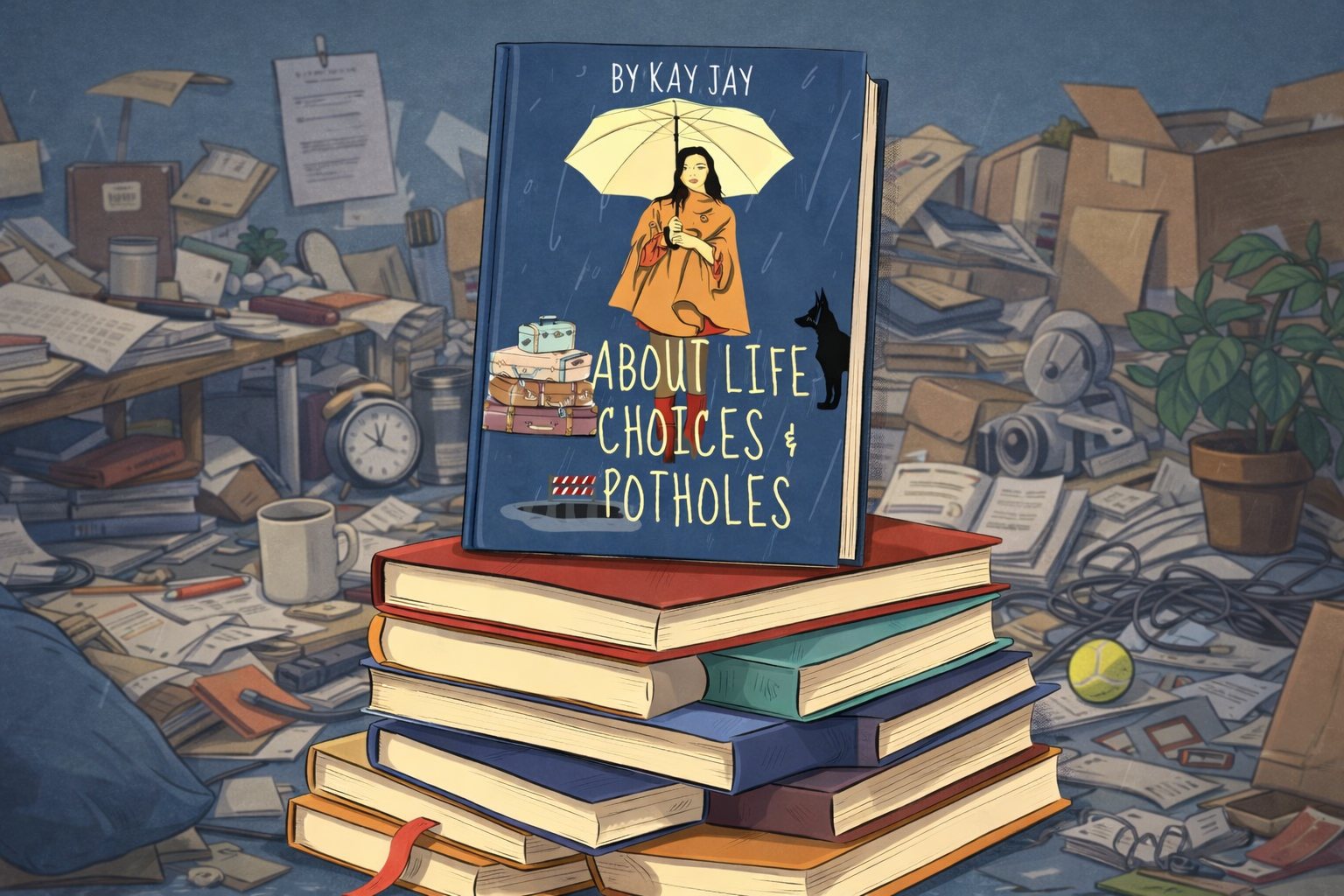
    Life Choices and Potholes is a record of those notes. Some are thoughtful. Some are sarcastic. Some were scribbled in moments when clarity felt wildly overrated. Together, they form a map—not of where I was going, but of how I learned to stay present while not knowing. And if there’s any progress worth claiming, it’s this: I no longer rush to pave over the potholes. I slow down, take better notes, and keep going anyway.

  • The Dilemma In Aging

    The Dilemma In Aging

    What are your thoughts on the concept of living a very long life?

    I used to think a very long life sounded like a gift.

    More time to fix things.

    More chances to get it right.

    More room for love to eventually find its footing.

    But after a while, I realized longevity only matters if you’re not dragging unfinished stories behind you like ghosts.

    What exhausts us isn’t aging—it’s repetition.

    The same emotional loops.

    The same patterns dressed up as fate.

    The same almosts that never quite cross into being.

    A long life, lived unconsciously, just gives you more years to rehearse the same wound.

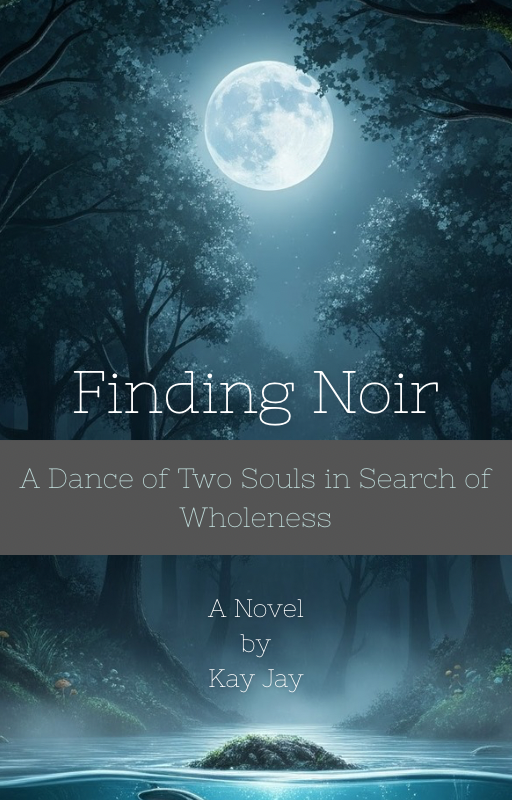
    Finding Noir doesn’t argue against time. It questions how we use it. It explores what happens when a connection burns bright but doesn’t anchor—when intimacy happens in the psyche, the body, the language, but never stabilizes in reality. That kind of experience doesn’t age well unless it’s metabolized.

    Because when something remains unresolved, it doesn’t stay in the past.

    It stretches itself across decades.

    The danger of a very long life isn’t boredom.

    It’s carrying emotional archaeology you never excavated.

    This book is about choosing depth over duration. About finishing what life didn’t. About understanding that some connections aren’t meant to last long—but they’re meant to last true.

    And once you stop living for “more time,” something unexpected happens:

    You start living for precision.

    For presence.

    For endings that are real.

    For futures that aren’t built on deferred clarity.

    If you’re going to live a long life,

    make sure you’re not spending it waiting for a story that already ended to finally continue.

    Finding Noir is for anyone who suspects that immortality without truth would be its own kind of prison—and is ready, instead, to live fewer years with their eyes open.

    Finding Noir
  • The Gift Of Presence

    The Gift Of Presence

    What is the greatest gift someone could give you?

    The greatest gift someone could give me is not love.

    Not devotion.

    Not consistency.

    Not even honesty, though we pretend it’s rare.

    The greatest gift would be presence without performance.

    I learned this the hard way.

    There was a time when words were abundant—beautiful, intelligent, almost spiritual. They opened doors inside me I didn’t know existed. I mistook that opening for arrival. I believed intimacy lived in articulation, that depth itself was a promise.

    But presence is quieter than language.

    It doesn’t announce itself.

    It doesn’t need metaphors.

    Presence stays when the conversation gets ordinary.

    When desire isn’t poetic.

    When no one is being impressive.

    What broke me wasn’t loss—it was the slow realization that someone could access my inner world without ever stepping into my real one. That connection can be felt intensely and still be functionally absent. That chemistry can exist without care. That meaning can be shared without responsibility.

    Finding Noir was born from that fracture.

    It’s not a book about asking for more.

    It’s a book about recognizing what was never offered.

    The greatest gift isn’t someone who understands you.

    It’s someone who shows up after they understand you.

    And if you’ve ever been deeply seen but never chosen—

    if you’ve confused resonance for reliability—

    if you’ve loved in a space where presence was always implied but never embodied—

    This book doesn’t promise healing.

    It offers clarity.

    Because once you know what the gift actually is,

    you stop mistaking the wrapping for the thing itself.

    And you stop calling absence love.

    Finding Noir
  • Where Earth Meets The Sky

    Where Earth Meets The Sky

    Daily writing prompt
    Write about your first name: its meaning, significance, etymology, etc.

    My first name, Kshitija, comes from Sanskrit. It means that which is born of the earth—the horizon where sky and land meet, a liminal line that exists not as a thing you can touch, but as a promise you keep walking toward. It is a word rooted in soil and sky at once, carrying the weight of belonging and the ache of longing. A name that suggests expansion without arrival, grounding without stagnation. From the beginning, it implies a life lived in between: between places, between selves, between what is and what could be.

    That is where Kayra was born—from the same threshold. Though her name travels a different linguistic road, its spirit mirrors mine. Kayra, in many cultures, is associated with creation, continuity, and the unseen force that moves through nature rather than dominates it. Where Kshitija is the horizon, Kayra is the wind that moves toward it—not hurried, not fixed, but inevitable. Both names carry a quiet resilience, a femininity that does not perform itself loudly but endures, observes, holds.

    In Finding Noir, Kayra does not chase meaning; she recognizes it as something that unfolds through presence. Much like my name, her journey is not about conquest or arrival but about learning to stay—with uncertainty, with love, with absence. Kshitija taught me early that I would never be just one thing or belong to just one place. Kayra lives that truth on the page. She is not the destination of my story; she is its horizon.

    In that way, writing Kayra felt less like invention and more like translation. Of taking the essence of my name—its earthiness, its quiet vastness, its eternal in-between—and letting it walk, speak, love, and lose. Both Kshitija and Kayra stand at the edge of something immense, not to cross it, but to witness it. And perhaps to invite the reader to stand there too.

    And standing there—at that edge—does something subtle but irreversible. It strips away the urgency to define, to label, to arrive. The horizon teaches patience. It teaches that distance is not denial, and waiting is not weakness. Kshitija, as a name, carries this lesson quietly: you do not collapse into what you love, nor do you possess it. You remain present, rooted, and receptive.

    Kayra inherits this wisdom not as philosophy, but as instinct. When Noir runs, when silence replaces certainty, she does not shrink to fill the void. She expands around it. This is the inheritance of the horizon—to hold vastness without panic. To understand that what leaves is not always lost, and what stays is not always visible. Kayra’s strength is not in pursuit, but in her capacity to remain open without self-erasure.

    There is a particular loneliness in being named after a threshold. People expect decisiveness, arrival, resolution. But Kshitija—and Kayra—know better. They know that some lives are meant to be lived in motion, not forward, but inward. That love can be real even when it is unconsummated, unfinished, or unreturned in the ways stories usually demand.

    In writing Finding Noir, I realized that Kayra was not my alter ego; she was my echo. She spoke the parts of me that learned to trust the unseen—to trust that meaning does not always announce itself with permanence. Sometimes it appears as a fleeting glance, a shared stillness, a resonance that survives separation.

    If Kshitija is the place where earth meets sky, then Kayra is the act of standing there without asking the horizon to come closer. And Noir—perhaps—was never meant to be held, only encountered. A reminder that some connections exist not to anchor us, but to awaken us.

  • The Invisible Clutter Of Burden

    The Invisible Clutter Of Burden

    Where Can You Reduce Clutter in Your Life?

    For the longest time, I believed clutter was a physical problem. Too many books on the shelf. Too many cables in drawers whose original purpose no one remembered. Too many mugs for a person who drinks tea from exactly one favorite cup.

    So I did what most of us do. I organized. I donated. I folded. I labeled.

    And yet, the noise remained.

    It took a life reset—one I didn’t plan, didn’t ask for, and certainly didn’t romanticize—to realize that the real clutter in my life wasn’t visible. It lived elsewhere. In decisions postponed. In identities I carried long after they stopped fitting. In the quiet pressure to explain myself to everyone but me.

    When I moved back to India after two decades in the U.S., I arrived with two suitcases and an unsettling amount of emotional excess. Jet lag peeled me open. The airport smelled like disinfectant, overripe fruit, and familiarity I wasn’t ready to embrace. Everyone moved fast. I moved cautiously. I had less stuff than I’d ever owned—and more mental clutter than ever before.

    Clutter, I learned, doesn’t announce itself as chaos. It disguises itself as responsibility.

    I had cluttered my life with “shoulds.”
    I should stick it out a little longer.
    I should aim higher.
    I should be grateful, not confused.
    I should already know who I am by now.

    These thoughts piled up quietly, like unopened mail. Each one harmless on its own. Together, overwhelming.

    Career clutter was the heaviest. Titles I no longer believed in. Definitions of success that felt borrowed. Resumes that flattened entire decades of living into bullet points that read like a stranger’s life. I kept polishing them, convinced clarity would arrive in the next version. It didn’t.

    Then there was relational clutter—the conversations replayed in my head long after they had ended. The people I kept holding space for while standing in the dark myself. The breadcrumbs I mistook for nourishment.

    At some point, exhaustion does what discipline cannot. It forces honesty.

    I stopped trying to optimize my life and began subtracting instead.

    I reduced clutter by letting go of the need to justify my choices. By accepting that not every pothole needs a lesson immediately. By allowing my days to be quieter, slower, less impressive.

    I reduced clutter by trusting my body—its hunger, its fatigue, its instinct to pause. By fasting not to purify, but to listen. By realizing that I didn’t need a diagnosis to explain my sensitivity or restlessness. I didn’t need a label to be allowed to be me.

    And perhaps most importantly, I reduced clutter by loosening my grip on certainty.

    Life didn’t become simpler overnight. But it became lighter.

    Clutter isn’t always about excess. Sometimes it’s about holding on too tightly to a version of yourself that once made sense.

    About Life Choices & Potholes is a story about those moments—when subtraction becomes survival, and letting go becomes the bravest decision you make.

    If you’re feeling overwhelmed, maybe the question isn’t what you need to add.

    Maybe it’s what you’re finally ready to release.

  • The Hare And The Tortoise

    The Hare And The Tortoise

    What’s your favorite animal?

    For the longest time, I didn’t have an answer. Or rather, I had many—changing with the season, with the mood, with the version of myself I happened to be inhabiting that year. But if I’m honest, the answer that has followed me most faithfully is this: the tortoise and the hare.

    Not as animals in the wild, but as archetypes. As ways of moving through the world.

    The tortoise knows something the world keeps forgetting. That life is not a sprint. That arrival is less important than attention. That wisdom accumulates quietly, like sediment, invisible until it becomes unshakeable. The tortoise doesn’t rush toward meaning; she lets meaning meet her where she stands. She carries her home on her back. She doesn’t abandon herself to be loved.

    And then there is the hare. Brilliant, restless, dazzling in motion. The hare is desire incarnate—speed, charm, urgency. He lives in the future tense, always chasing the next horizon, always one step ahead of his own fear. The world applauds the hare. He looks like freedom. But what no one tells you is that speed is often a disguise. Sometimes, the fastest ones are running from something they don’t yet know how to hold.

    Finding Noir was born from this tension.

    Kayra is the tortoise—not because she is slow, but because she is deliberate. She stays. She listens. She holds space even when it costs her something. Noir is the hare—quick to love, quicker to flee. He runs not because he doesn’t care, but because caring asks him to stop.

    This is not a fable about who wins. It is a story about what happens when two ways of being collide. When stillness meets velocity. When love asks not to be chased, but to be endured.

    So if you ask me today, “What’s your favorite animal?”
    I’ll tell you this: I love the one who stays.
    And I love the one who runs—until he learns why.

    Finding Noir is a meditation on love that isn’t tidy, timing that isn’t kind, and connection that doesn’t disappear just because someone leaves. It’s for anyone who has ever loved across different speeds, different fears, different readiness.

    Some of us are born tortoises.
    Some of us are hares.
    And sometimes, loving is learning how to meet each other on the same path—without asking either to become something they’re not.

  • The Liminal Space In-Between Moments

    The Liminal Space In-Between Moments

    Do you spend more time thinking about the future or the past? Why?

    Most of us like to believe we’re future-oriented.

    We talk about growth, next chapters, manifestation, moving on. It sounds healthier.

    But if I’m honest, I’ve learned this:

    We don’t spend more time in the past because we’re nostalgic.

    We do it because something there didn’t finish.

    I used to think I was imagining the future—what could have been, what might still happen. But when I looked closely, I wasn’t actually ahead of myself. I was standing in the wreckage of a moment that never got an ending, asking it to explain itself.

    The past isn’t memory.

    It’s unfinished business.

    The future, by contrast, is clean. It hasn’t disappointed us yet. That’s why we borrow it as a fantasy when the present can’t hold our longing. We don’t want the future—we want relief from the unanswered.

    Finding Noir lives in that exact in-between space: where the past keeps intruding not because it was better, but because it was incomplete. A connection that felt inevitable inside but never materialized outside. A bond that existed in language, sensation, and silence—but not in follow-through.

    This book doesn’t argue for staying stuck. It asks a harder question:

    What if revisiting the past isn’t regression, but an attempt at truth?

    Not to relive it.

    Not to romanticize it.

    But to finally see it clearly—without hope doing the editing.

    If you find yourself oscillating between memory and possibility, wondering why neither feels stable, this isn’t a failure of imagination. It’s a signal.

    Some stories don’t ask to be continued.

    They ask to be understood.

    And once they are, the future stops feeling like an escape—and starts feeling like a choice.

    Finding Noir
  • That Which Grows Between Bytes

    That Which Grows Between Bytes

    In what ways do you communicate online?

    Fever Dreams

    I communicate online in fragments. In pauses. In messages typed, erased, rewritten, and sometimes never sent.

    Online, I say the things I hesitate to say out loud. I confess more easily. I reveal faster. There’s a strange safety in the screen—the illusion that distance makes honesty less dangerous. I can be vulnerable without being fully seen. Present, but protected.

    And yet, that same screen distorts everything.

    Tone becomes guesswork. Silence becomes a language of its own. A delayed reply can feel like rejection; a typing bubble can feel like hope. Online, I don’t just communicate—I interpret. I read between lines that may not exist. I attach meaning to punctuation, timing, and absence.

    This is the paradox that led me to write Fever Dreams.

    Because online, intimacy doesn’t unfold through touch or shared space. It unfolds through words. Through voice notes replayed late at night. Through conversations that stretch past midnight, where two people meet in the dark glow of their screens and believe—briefly—that this is what closeness feels like.

    I’ve felt that closeness. I’ve also felt how quickly it can dissolve.

    Online, we build people in our minds. We imagine their expressions. Their silences. We fill the gaps with our own longing. We construct entire emotional realities from text, and sometimes, those realities feel more vivid than the physical world around us.

    In Fever Dreams, Dev and Mira communicate the way many of us do now—through messages, calls, and digital confessions that feel intense and real, yet fragile. Their connection deepens not because they share space, but because they share vulnerability. But the deeper they go, the more uncertain everything becomes. Is this intimacy real—or is it a projection of need, loneliness, and hope?

    That question isn’t fictional. It’s personal.

    I’ve communicated online while sitting alone in crowded cities. I’ve felt deeply understood by someone I’ve never met. I’ve waited for replies that never came. I’ve watched “tomorrow” turn into a horizon that keeps moving further away.

    Online communication amplifies emotion. It sharpens longing. It gives us access to each other’s inner worlds—but rarely the full truth. What’s missing is the body language, the shared silence, the reality check of physical presence. What remains is intensity without grounding.

    And still, we keep coming back.

    Because despite everything, we want to be seen. We want to be chosen. We want to believe that words can carry us across distance and make us whole.

    Fever Dreams was born out of that tension—the beauty and the unease of loving through a screen. It’s about what happens when connection feels real, but reality never quite arrives.

    So how do I communicate online?

    Carefully.

    Hopefully.

    And always with the quiet fear that what feels intimate today might become silence tomorrow.

    If that sounds familiar, Fever Dreams might feel uncomfortably close to home.

    Fever Dreams
  • Becoming What You Once Dismissed

    Becoming What You Once Dismissed

    What is your mission?

    Diary of Clichés

    I used to believe clichés were for people who hadn’t thought hard enough.

    Then I lived them.

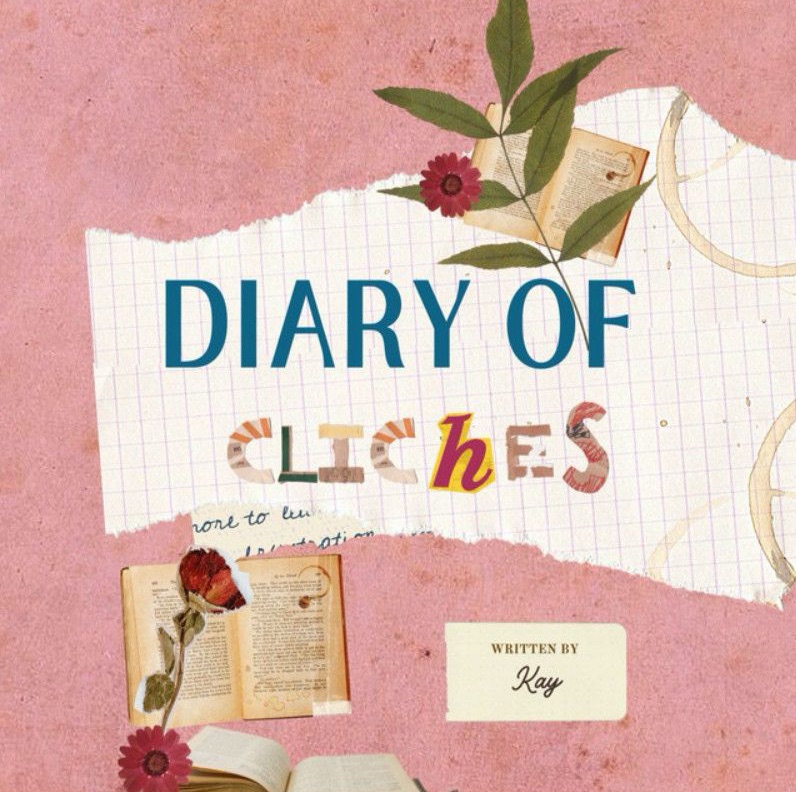
    Diary of Clichés is written from the uncomfortable space of recognition—when irony gives way to empathy, and judgment softens into understanding. It examines why certain patterns repeat, not because we lack imagination, but because we are human.

    This book treats clichés as data points rather than embarrassments. Evidence of shared experience rather than personal failure.

    My mission here is to replace self-contempt with curiosity. To suggest that becoming “that person” may be less about hypocrisy and more about growth.

    If a line in this book makes you wince before it makes you laugh, you’re reading it correctly.

    Diary of Cliches