This book exists at the intersection of creativity and capitalism, sincerity and visibility. It examines what it means to make work that matters to you in systems that reward what performs best.
Rather than rejecting ambition or romanticizing obscurity, this book stays with the tension. It asks how to remain truthful while participating in economies that demand translation.
My mission here is not reassurance. It is companionship—for artists navigating the quiet despair of metrics, algorithms, and unanswered effort.
If you’ve ever wondered whether integrity has a place in public life, this book does not answer the question. It sits with it.
The phrase comes from a folk song I grew up hearing without ever stopping to translate. Doorun dongar saajre. From a distance, the mountains look beautiful.
I didn’t know then that it was a warning disguised as poetry.
We met the way modern connections often do—through words first. Messages that arrived with intention. Conversations that stretched longer than planned. A sense of recognition that felt less like discovery and more like inevitability. It wasn’t romance in the traditional sense; it was something more flattering to the intellect. A meeting of minds, or so it seemed. He saw my work. I saw his hunger. We spoke the same language of pattern, meaning, depth.
Distance helped. Distance always helps at the beginning.
From far away, everything aligns. The rough edges blur. Silence reads as mystery. Intensity passes for intimacy. I could step into the connection without the burden of the body—without having to negotiate pace, presence, or consequence. From that vantage point, the mountain looked exquisite.
Saajre.
What drew me in was not charm so much as vulnerability. He spoke from a place of longing that felt raw, unedited. There was an ache beneath his words, a sense of having been misunderstood by the world and—perhaps for the first time—seen. I know now how dangerous that feeling can be: to be cast as the witness to someone else’s becoming.
At first, I mistook that role for closeness.
The trouble with being deeply empathic is that it doesn’t announce itself as risk. It arrives as responsibility. I could feel his emotional weather before he named it. His agitation registered in my chest. His anticipation showed up as restlessness in my body. I began to calibrate myself around him—slowing here, softening there—without quite realizing I was doing it.
Still, from a distance, it worked.
The mountain remained beautiful as long as I didn’t try to climb it.
The shift came when abstraction gave way to reality. When the possibility of proximity entered the frame. Plans, however tentative, have a way of revealing fault lines. The ground beneath the poetry began to tremble. What I experienced as saturation, he experienced as withdrawal. What I felt as the need for space, he felt as threat.
That is often how scripts flip.
I became quieter. He became louder. My pauses grew careful; his words grew urgent. I found myself explaining feelings I hadn’t yet finished having. The connection, once expansive, began to narrow. I was no longer meeting him; I was managing him.
From up close, the mountain was no longer ornamental. It was unstable.
There is a particular confusion that sets in when you are told—repeatedly—that your gentleness is cruelty. That your boundary is abandonment. That your attempt to leave without harm is, in fact, harm itself. You begin to doubt your internal compass. You replay conversations looking for evidence of malice you don’t remember feeling.
I stayed longer than I should have, not out of love exactly, but out of a familiar sense of duty. The idea that if I could just explain myself clearly enough, softly enough, the landscape would settle.
It didn’t.
Distance, once protective, had become impossible.
The end did not arrive as a clean break. It came as an unraveling. Words sharpened. Meaning distorted. What had once been admiration curdled into accusation. The same intensity that once felt intoxicating now felt volatile. I watched, almost clinically, as the mountain revealed its true terrain: steep, unforgiving, prone to collapse.
When it finally ended, it did so without poetry.
Just silence. And the dull thud of something idealized coming apart.
It took time for the grief to register—not for the relationship itself, but for the fantasy it had supported. I had believed, perhaps naively, that depth alone could sustain connection. That mutual insight was enough. That distance was a neutral condition rather than an amplifier.
The phrase returned to me then, not as lyric but as diagnosis.
Doorun dongar saajre.
Beauty at a distance is not deception. It’s perspective. But perspective has limits. What enchants from afar can overwhelm up close. What feels like destiny when untested can become danger when embodied.
I think often now about how many connections are born and sustained in abstraction. How easy it is to confuse intensity for intimacy when the body is not yet involved. How many of us fall in love not with a person, but with the version of ourselves we get to be in their gaze.
Distance gives us that gift. It also withholds the truth.
The mountains are still beautiful. I don’t deny that. But I have learned to ask a different question before moving closer.
Not Is it stunning from here?
But:
What will it cost me to stand at its base?
The answer, I’ve learned, is what decides everything.
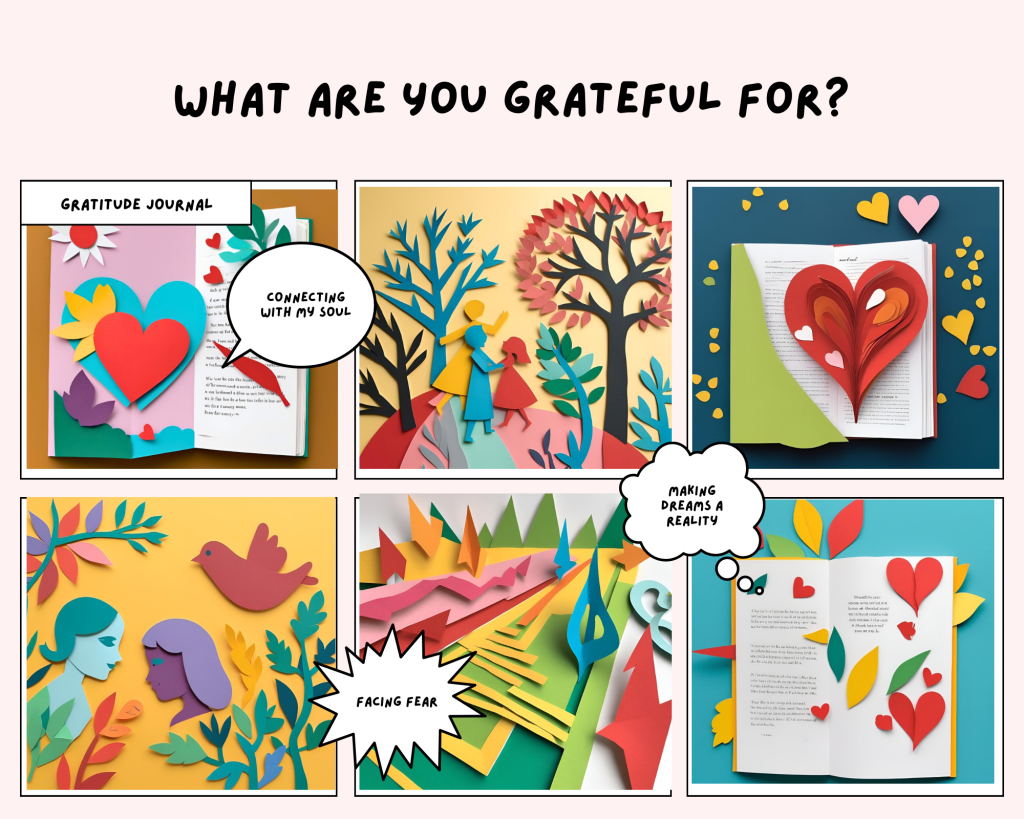
Life often feels like a balancing act between what we fear and what we dream of achieving. On one side is the weight of self-doubt, fear of failure, and the unknown. On the other is the shining promise of our ambitions and aspirations. How do we bridge the gap? For me, the answer has always been through reflection, gratitude, and journaling.
Journaling is more than just scribbling words on a page. It’s a practice that allows us to sit with our fears, explore the whispers of our dreams, and uncover the truths that lie within us. When we take the time to write, we create a safe space to navigate life’s challenges and cultivate the courage to move forward.
Facing Fear with Gratitude
Fear often stems from the unknown. We fear we’re not good enough, that we’ll fail, or that we’ll be judged. But fear loses its power when we meet it with gratitude.
Gratitude shifts our focus from what we lack to what we have. It reminds us of the strength we’ve gained from past challenges, the people who’ve supported us, and the small victories we’ve achieved. When I sit down to write in my journal, I start with gratitude. I list the things that light me up—big or small. It might be the comfort of a morning cup of coffee, a kind word from a friend, or the way writing has helped me heal.
Gratitude doesn’t erase fear, but it gives us a solid foundation to stand on. It reminds us of what we’re capable of and makes the journey ahead feel less daunting.
Journaling Your Dreams into Reality
Dreams can feel distant and overwhelming, but journaling helps to bring them closer. Writing about your dreams makes them tangible—it transforms a vague idea into something you can visualize, plan, and act upon.
Start by asking yourself: What do I truly want? Write it down without judgment or hesitation. Let your pen flow, capturing the essence of your aspirations.
Next, break those dreams into smaller, actionable steps. If your dream is to write a book, your journal might include a timeline for finishing the first draft or a list of topics you’d like to explore. If your dream is to travel the world, jot down destinations, savings goals, or ways to learn a new language.
Journaling not only helps you map out your dreams but also allows you to track your progress. It’s a way of holding yourself accountable while celebrating every milestone along the way.
Overcoming Fear Through Writing
When fear creeps in—and it will—your journal becomes your confidant. Write about your fears honestly and openly. What’s holding you back? What’s the worst that could happen? More often than not, putting your fears on paper diminishes their power.
But don’t stop there. After you’ve named your fears, write about the strengths you already possess. What challenges have you overcome in the past? What resources and skills do you have to face this new challenge?
For me, writing through fear has been transformative. It’s a way to acknowledge the discomfort while also reminding myself that I am more resilient than I often realize.
The Soul Connection of Journaling
Journaling isn’t just a tool for productivity—it’s a way to connect with your soul. It’s where your deepest truths emerge, where your fears and dreams coexist, and where you find clarity in the chaos of life.
This is why I created Diary of Clichés. It’s not just a book; it’s a companion for those who are ready to embrace their stories, reflect on their journeys, and rewrite the narratives that no longer serve them. It’s a space for dreamers, thinkers, and anyone looking to connect with their authentic selves.
When we take the time to journal, we’re not just writing words; we’re laying the foundation for a life that aligns with our truest desires.
Your Turn
If you’ve never tried journaling, now is the time to start. Find a quiet space, grab a notebook, and let your thoughts flow. Write about your fears, your dreams, and the things you’re grateful for. Let your journal become your sanctuary—a place where you can dream boldly, confront your fears, and build the life you’ve always imagined.
And if you’re looking for inspiration, pick up a copy of Diary of Clichés. Let it guide you through the process of self-reflection and transformation. Together, we can turn fears into lessons and dreams into realities.
Because life is too short to let fear win—and your dreams are far too beautiful to wait.
Relationships that have a positive impact on me are those that feel like safe havens and secure bases—a delicate balance of comfort and challenge. They’re the connections that allow me to stay rooted in the rhythm of the ordinary while also encouraging me to dream beyond it. These relationships don’t demand perfection or performance; instead, they celebrate authenticity, resilience, and growth.
I think of the people who have shaped me in ways both profound and subtle. My parents, with whom I share a complex dance of tradition and individuality, have taught me the strength in cultural roots. Then there are friends like Loretta, who enter your life like a warm cup of tea on a rainy day, offering a quiet kind of wisdom that reshapes your understanding of love and support. Even the stories I’ve written—fictional characters like Noir and Kayra—feel like relationships in their own way, teaching me lessons about vulnerability, self-discovery, and spiritual connection.
But perhaps the most impactful relationship is the one I’ve built with myself. It hasn’t been easy; there were times I felt invisible or unheard, times when self-doubt crowded out self-love. Yet, through journaling, writing, and introspection, I’ve learned to treat myself with the same kindness and curiosity I offer to others. This relationship has taught me that I’m allowed to evolve, to dream of lives that feel far from my current reality, and to embrace every cliché along the way.
These relationships—be they with family, friends, fictional creations, or myself—aren’t about grand gestures or perfect harmony. They’re about showing up, being present, and holding space for growth. They’re about finding the people and moments that make you feel both grounded and limitless. And that’s exactly the kind of connection I hope to inspire through Diary of Clichés—because sometimes, the most impactful relationships start with a simple story.
Through the pages of Diary of Clichés, I invite readers to examine the relationships in their own lives—those with others, with their dreams, and most importantly, with themselves. We often overlook the quiet, everyday connections that shape us in profound ways, just as we dismiss clichés as trivial. But within those seemingly mundane expressions and encounters lie universal truths, the kind that make you pause, reflect, and perhaps even smile knowingly.
For me, the act of writing became a bridge between who I was and who I wanted to be. It gave me permission to explore the dichotomy of my dreams and reality—the Silicon Valley high-rise life I once imagined versus the cultural rootedness of my middle-class existence in India. It helped me reconcile the feelings of being torn between wanting adventure and craving stability, between daring to embrace the extraordinary and finding peace in the ordinary.
And isn’t that what relationships, at their best, do for us? They challenge us to grow while reminding us of where we came from. They hold up a mirror, showing us our potential even as they ground us in our flaws. They allow us to be both dreamers and doers, to straddle the line between ambition and contentment.
Some relationships feel fleeting yet transformative, like my brief encounters with new friends or even strangers who left a lasting impression. Others are steady and enduring, like the bond I’ve built with my family and closest confidants. And then there’s the complex, layered relationship I have with myself—a work in progress, but one that grows richer with each page I write, each story I tell.
Through this journey, I’ve learned that relationships with a positive impact are not always easy or straightforward. They can be messy, imperfect, and sometimes even painful. But they’re also where we find our strength, our joy, and our purpose. Whether it’s the parent who teaches resilience, the friend who listens without judgment, or the diary that silently absorbs your thoughts, these relationships shape the story of who we are.
So, when I think about the question, “What relationships have a positive impact on you?” I realize it’s not about the grand gestures or dramatic declarations. It’s about the quiet moments of connection, the spaces where you feel seen, heard, and valued. It’s about the people and experiences that help you uncover your authentic self, even if that journey takes you through heartbreak, healing, and a healthy dose of clichés.
And as I continue to write, dream, and reflect, I hope that Diary of Clichés becomes a positive relationship for others—a companion to those navigating the twists and turns of life, offering solace, laughter, and perhaps a new way of seeing the world. Because at the heart of it all, that’s what relationships are meant to do: remind us that we’re never alone, that our stories matter, and that there’s always beauty to be found in the chaos of life.
Today I feel nostalgic about food, Julia the show and Julie and Julia the movie and the numerous hours I have spent with Mrs. Child watching her do her magic in her beautiful kitchen.
Julia Child has a very special place in my heart. She was my post-Covid late-night go-to haven. I remember those nights after a long day of remote work and a nice meal inspired by Mrs. Child, I used to go to the movie Julie and Julia, my favorite late-night watch, and fall asleep somewhere in the middle of the scene where she spoke to her favorite lobster, Lou…
I got hit by Covid really bad. It was so bad that amidst the cognitive confusion and the brain fog, my taste buds forgot to taste. For me, the recovery from all the things I lost in COVID-19—my taste buds, my curves, my creativity—was a long road. That’s when I discovered the show Julia on HBO. And Julia brought me back on track—one recipe at a time.
I started my mornings trying to make eggs the way she did, pouring coffee the way she did, and tossing and twirling in the kitchen as she did.
Julia became my support system, my food guru, and my creative confidante during my COVID recovery days. Maybe I sound like Julie from the movie, but maybe I had watched the movie so much—especially my subconscious mind—that I became the movie.
There was something profoundly comforting about Julia Child’s voice, her mannerisms, her unapologetic love for butter and cream. She wasn’t perfect in the traditional sense, and that imperfection was her magic. It was what made me, in my vulnerable and battered state, feel seen.
When you’re recovering from something as intense as Covid, there’s an odd loneliness that accompanies the process. Even if you’re surrounded by loved ones, it’s easy to feel detached—like a part of you is stuck somewhere else, struggling to catch up. Watching Julia Child whip up soufflés, debone ducks, and laugh at her own blunders reminded me that life is a series of imperfect attempts. And that trying, even when it feels messy, is worth it.
I started small. One day, it was a simple omelet. Another, it was crepes. Slowly, my taste buds began to return, one dish at a time. I remember the moment I first tasted the rich, velvety warmth of her boeuf bourguignon recipe—it was like my taste buds were welcoming me home after a long absence.
But it wasn’t just about food. Julia gave me permission to embrace creativity again. In her kitchen, there were no rules, no rigid standards—just joy, curiosity, and a willingness to make a mess in pursuit of something beautiful. I found myself not just cooking but writing again, sketching ideas, and tinkering with projects I had abandoned long ago.
Julia wasn’t just teaching me how to cook; she was teaching me how to live. How to find joy in the mundane, how to laugh at my mistakes, how to embrace the process instead of fixating on the result.
There’s a moment in Julia where she talks about the power of food to bring people together, to nurture and heal. That message hit me deeply. In a time when I felt disconnected from myself and the world, cooking Julia’s recipes became my way of rebuilding those connections. It was my love letter to myself, my family, and the little joys I had overlooked.
Even now, long after my recovery, I find myself returning to Julia’s world. Her voice is a constant reminder that life is better when it’s seasoned with laughter, butter, and a pinch of perseverance.
So, here’s to Julia—my late-night haven, my culinary muse, and my unexpected guide through the fog. In her own words, “Bon appétit!”
As the world slows down, the air fills with laughter, the glow of twinkling lights warms every heart, and the smell of freshly baked treats wafts through cozy homes—it’s Christmas.
This season is a gentle reminder of all that truly matters:
✨ Kindness that lights up someone’s world.
✨ Generosity that expects nothing in return.
✨ Love that bridges gaps and brings us closer.
Let’s celebrate not just with gifts but with moments—shared stories, hearty laughs, and quiet gratitude for the people who make life meaningful. Whether it’s a call to a distant friend, a hug to a loved one, or a simple act of care for someone in need, let’s spread the magic of this season far and wide.
Wishing you a Christmas filled with joy, peace, and the warmth of togetherness. 🌟
A year ago, I had just moved back to my hometown, Mumbai, and was living with my parents after spending two decades in the United States, mostly in San Francisco.
It was a tough time. Many factors influenced my decision to move back in with my parents. They had just left our family home of 40 years for redevelopment purposes and had taken refuge in a rental, assuming that our new house would be ready in a couple of years.
Unfortunately, the developer responsible for redeveloping our apartment community backed out. To make matters worse, the landlord of the rental asked my parents to vacate the house prematurely.
Around this time, I lost my job in the United States. Given my job loss and the need to support my parents, moving in with them made sense.
During this period, my father began experiencing health issues due to the stress of moving and the loss of security at his age.
I had to expedite my relocation due to my job loss and limited resources to assist my parents. I also had to leave my beloved dog in the U.S. while I figured out my living situation; the rental we were living in was temporary, and relocating my big dog wasn’t feasible at that time.
By November 2023, I had moved back in with my parents. We were living in a rental, and the landlord was constantly calling us to vacate the house, while my father struggled with stress-related health problems. As a family, we had no sense of security other than being there for one another and taking each day as it came.
With the arrival of 2024 came new hope.
My father underwent surgery and began his recovery process. I found a way to transport my bundle of joy, my dog Sauli, from San Francisco to Mumbai.
While we still faced uncertainty regarding our living situation, things began to fall into place.
One day, my parents discovered their dream house while searching for a new place to live. However, it was beyond our purchasing capacity.
We came together to figure out how to make it work. My father had some assets, and I had some savings and other resources we could use.
It took time to liquidate assets, find the right buyers, and generate the funds needed for our dream house.
But we made it work.
As I write this, I’m sitting in our new house with my parents asleep in the next room. I pray they are sleeping peacefully after the stress of the past couple of years.
My beloved dog is curled up and sleeping soundly at my feet.
It is December 2024.
Did I picture this a year ago?
Not really. But I did pray for it, and my prayers were answered.
What is something others do that sparks your admiration?
What sparks admiration in others for me is their ability to embrace life’s messy, unpredictable nature and still find beauty in it. It’s not about perfection or having it all figured out—it’s about resilience, humor, and the willingness to stumble, fall, and laugh at yourself as you get back up.
I admire the friend who wears her heart on her sleeve, unafraid to share her vulnerabilities. I admire the coworker who turns challenges into stepping stones, reminding me that failure isn’t the end—it’s part of the journey. I admire the stranger who offers kindness, proving that even the smallest gestures can light up the darkest day.
It’s this raw, human spirit that inspired Diary of Clichés. Each chapter celebrates these universal truths, those little sparks of admiration we find in ourselves and others, illuminating the common threads that bind us as human beings. It’s about seeing clichés not as tired sayings, but as reflections of our shared struggles and triumphs, revealing the underlying emotions that resonate with our experiences. By revisiting these well-worn expressions, we uncover new meanings and insights, allowing us to embrace our vulnerabilities and connect more deeply with one another. Through these narratives, we can find solace and inspiration in the collective journey of life, reminding us that even the simplest phrases carry profound significance when woven into the fabric of our everyday interactions.
If you’re someone who admires resilience, humor, and finding meaning in the chaos, Diary of Clichés is your companion. Dive in, and let’s navigate this beautifully imperfect life together as we explore the ups and downs, discovering the silver linings that often elude us in our everyday hustle. With each turn of the page, you’ll encounter reflections and stories that resonate deeply, offering insights into overcoming obstacles while embracing the humor that life presents. Let’s embark on this journey of self-discovery and laughter, one cliché at a time, as we unravel the complexities of our experiences and celebrate the art of living authentically amidst the beautiful chaos.
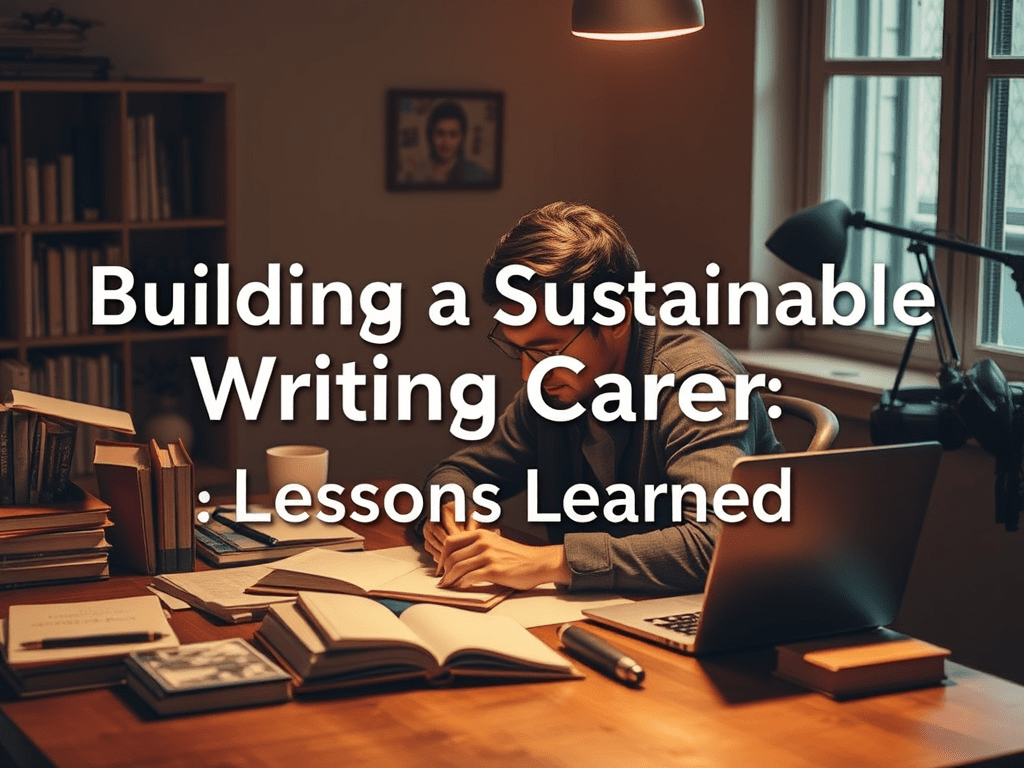
My Non-Linear Journey to a Sustainable Writing Career
When I embarked on my writing journey, I was brimming with enthusiasm and a naive conviction that my well-crafted content would effortlessly attract a devoted readership. I dedicated countless hours to producing articles, stories, and essays, pouring my heart and soul into each piece. However, my initial optimism was met with a harsh reality – a meager trickle of pennies trickling into my Medium account. It was a humbling experience, a stark reminder that the path to writing success was paved with challenges.
But instead of succumbing to discouragement, I resolved to learn from those who had achieved what I aspired to. I began to meticulously analyze the strategies and tactics of successful writers who had transformed their passion for writing into thriving businesses. I delved into their online presence, marketing efforts, engagement with their audience, and the ecosystem they had built around their craft.
This marked a turning point in my journey. I realized that while producing high-quality content was essential, it was only one piece of the puzzle. To truly succeed as a writer in the digital age, I needed to adopt a more entrepreneurial mindset. I needed to understand the nuances of audience building, platform optimization, and effective self-promotion.
I started experimenting with different approaches, learning from both my successes and failures. I refined my writing style, honed my niche, and actively sought out opportunities to connect with readers and fellow writers. It was a continuous process of learning, adapting, and evolving.
Through perseverance and a willingness to embrace the business side of writing, I gradually began to see progress. My readership grew, my income increased, and I started to establish myself as a recognized voice in my chosen field. The journey was far from easy, but the rewards were immeasurable.
Looking back, I am grateful for the initial setbacks that forced me to re-evaluate my approach. They taught me valuable lessons about resilience, adaptability, and the importance of a holistic approach to success in the ever-evolving landscape of digital writing. Here’s what I’ve learned so far on my journey:
1. Diversification: Showing Up Everywhere
Expanding on Content Distribution and Platform Optimization
In the early stages of my content creation journey, I made a crucial realization: simply producing high-quality content wasn’t sufficient. To truly make an impact, my work needed to be seen by a wide audience. This understanding led me to embrace a strategy of diversification. Rather than relying solely on a single platform like Medium, I started distributing my content across a variety of channels, including Instagram, Twitter, LinkedIn, Substack, and even emerging platforms like Threads and Bluesky.
Each of these platforms possesses its own unique atmosphere and user base. Consequently, I had to adapt my content to resonate with the specific characteristics of each platform. For instance, a detailed, long-form article that performed well on Medium might not be as effective on Twitter, where concise, attention-grabbing threads tend to thrive. Similarly, on Instagram, visually appealing content often generates higher engagement. By tailoring my content to suit the nuances of each platform, I observed a significant expansion in my audience. Not only did my follower count increase, but the diversity of my audience also grew.
This multi-platform approach allowed me to connect with individuals from various backgrounds, interests, and demographics. It also helped me to establish a more robust online presence, ensuring that my content reached a wider spectrum of potential readers and followers.
Furthermore, diversifying my content distribution channels provided a level of resilience. If one platform experienced a decline in engagement or underwent algorithmic changes, I still had other avenues to reach my audience. This approach mitigated the risk of relying too heavily on a single platform and ensured the continued growth and visibility of my content.
The decision to diversify my content distribution strategy and tailor my content to suit different platforms proved to be instrumental in expanding my reach and cultivating a diverse and engaged audience. It’s a strategy that I continue to employ and refine as I navigate the ever-evolving landscape of content creation and online engagement.
2. Early Adoption: Staying Ahead of the Curve
One of the most impactful lessons I’ve learned on my writing journey is the power of early adoption. When I started actively embracing new technologies and trends, it was like a light bulb went off. Tools like AI, in particular, fascinated me. I dove headfirst into exploring how these cutting-edge technologies could enhance and streamline my writing process. The results were remarkable. Not only did I become significantly more efficient and productive, but I also found myself at the forefront of the industry.
By actively using and experimenting with these new tools, I gained firsthand experience and insights that most other writers didn’t have. This unique perspective allowed me to start writing about these tools and trends, positioning myself as a thought leader and early adopter. I wasn’t just writing about the past or present; I was writing about the future.
I quickly discovered that being an early adopter of new platforms or technologies generates a natural sense of curiosity and excitement among readers. People are inherently interested in what’s new and what’s next. They want to know how to use these tools effectively, and they’re eager to learn from someone who has already paved the way. By sharing my experiences, insights, and knowledge, I started attracting a growing audience of readers who were eager to learn and engage with my content.
This early adopter mindset created a snowball effect. As I continued to explore and embrace new technologies, my reputation as a forward-thinking writer grew. I became a go-to resource for those seeking information and guidance on the latest trends. This not only expanded my readership but also opened up new opportunities for collaboration, speaking engagements, and other exciting ventures.
In today’s rapidly evolving digital landscape, the ability to adapt and embrace change is essential for success. By actively seeking out and experimenting with new tools and technologies, writers can position themselves at the forefront of the industry, attract a loyal audience, and unlock a world of opportunities. Remember, the early bird catches the worm.
3. Creating Real Value: Shifting Focus from Self to Audience
For a considerable period, my growth was stagnant. The reason? I was primarily focused on writing content that catered to my interests and passions, neglecting the needs and desires of my audience. It was a difficult realization, but a necessary one. My perspective shifted dramatically once I started prioritizing the creation of content that was genuinely helpful, insightful, and relevant to my readers.
This meant a fundamental change in my approach. Now, before I even begin drafting a piece, I ask myself a crucial question: “How will this benefit my audience?” This change in mindset has led to a more purposeful and impactful content creation process.
Moreover, I’ve adopted a strategy of repurposing content to extend its reach and effectiveness. For instance, if I write a comprehensive, in-depth article, I’ll distill the key points into shorter summaries, social media posts, or email newsletters. These condensed pieces always include links back to the original article, driving traffic and encouraging deeper engagement. In essence, I’m building an interconnected network of content where each piece supports and reinforces the others.
This approach not only benefits my audience by providing them with valuable information in various formats but also helps me establish myself as a thought leader and build a loyal following. It’s a win-win situation that underscores the importance of prioritizing the needs of the audience in any content creation endeavor.
Remember, the key to success in content creation lies in providing genuine value to your readers. By shifting your focus from yourself to your audience and creating content that solves problems, inspires ideas, or answers questions, you can build a thriving and impactful platform.
4. Cross-Promotion: Connecting the Dots
One of the most impactful lessons I’ve learned in content creation is the power of cross-promotion. It’s not just about creating content; it’s about strategically distributing it to reach the widest possible audience. I realized that every piece of content I create is an opportunity to connect with a new set of eyes, and cross-promotion is the key to unlocking that potential.
I started experimenting with different platforms, adapting my content to suit each one. Snippets of my articles became engaging tweets, data points were transformed into eye-catching infographics for Instagram, and my insights sparked thought-provoking discussions on LinkedIn. This multi-platform approach allowed me to tap into diverse audiences, each with its unique preferences and behaviors.
However, the real magic happened when I embraced consistency. By showing up regularly across these platforms, I built a sense of familiarity and trust with my audience. People who discovered me on Twitter became curious about my Instagram content, and LinkedIn connections were drawn to my articles. This created a ripple effect, where my audience not only grew but also became interconnected across different platforms.
Cross-promotion isn’t just about broadcasting your content; it’s about fostering a sense of community. By engaging with my audience across various platforms, I was able to build deeper relationships and cultivate a loyal following. It’s about creating a network of touchpoints where people can connect with my work and with each other.
Moreover, cross-promotion has a compounding effect. The more I shared my content across platforms, the more visibility it gained. This increased visibility led to more engagement, which in turn fueled further growth. It became a self-sustaining cycle that propelled my content to new heights.
In today’s fragmented media landscape, cross-promotion is no longer optional; it’s essential. It’s about meeting your audience where they are, speaking their language, and building a cohesive brand presence across multiple channels. It’s about creating a symphony of content that resonates with people on a deeper level and fosters a sense of belonging.
The lesson is clear: don’t just create content, connect the dots. Embrace cross-promotion, be consistent, and watch your audience grow and thrive. Remember, it’s not just about reaching more people; it’s about building a community that supports and amplifies your work.
The Journey to Profit: A Work in Progress
The path to a profitable writing career is rarely a straight line. It’s a winding road filled with twists, turns, and unexpected detours. Building a sustainable income from writing takes time, patience, and a willingness to adapt. Throughout my journey, I’ve learned that success isn’t about a single viral article or a lucky break. It’s about consistently showing up, providing value to your audience, and reaching the right people.
The Power of Consistency and Value
In the early days, I often felt discouraged by the slow progress. I’d pour my heart and soul into an article, only to see it receive a lukewarm response. But I kept reminding myself that building an audience takes time. It’s about consistently creating high-quality content that resonates with your readers.
One of the most important lessons I’ve learned is the importance of adding value. It’s not enough to simply write well; you need to provide your readers with something useful, insightful, or entertaining. Whether it’s sharing your expertise, offering a unique perspective, or simply telling a compelling story, your content should leave your readers feeling like they’ve gained something valuable.
Reaching the Right People
Another key factor in building a successful writing career is reaching the right audience. This means understanding who your ideal readers are and where they hang out online. It’s about strategically sharing your content on the platforms where your target audience is most likely to see it.
For me, this has involved a combination of social media marketing, guest posting on relevant blogs, and building relationships with other writers and influencers in my niche. It’s been a process of trial and error, but over time, I’ve been able to build a loyal following of readers who appreciate my work.
The Seed-Planting Analogy
If I could offer one piece of advice to aspiring writers, it would be this: Start with what you have, share it everywhere, and keep learning. Every piece of content you create is like a seed. Plant enough of them in the right places, and eventually, they’ll start to sprout and grow.
It’s important to remember that not every seed will blossom into a towering tree. Some may wither and die, while others may take longer than expected to bear fruit. But if you keep planting seeds consistently and strategically, you’ll eventually cultivate a thriving garden of content that attracts and engages your audience.
Moving Beyond Pennies
I’m still on this journey, but for the first time, I feel like I’m moving beyond the “pennies” stage and toward something much bigger. I’m starting to see the fruits of my labor in the form of increased traffic, engagement, and income.
While the road to a profitable writing career is undoubtedly challenging, it’s also incredibly rewarding. It’s a journey of self-discovery, creativity, and connection. And for those who are willing to put in the time and effort, it can lead to a fulfilling and sustainable career doing what they love.
Key Takeaways:
Building a profitable writing career is a non-linear journey that requires patience, consistency, and adaptability.
Success isn’t about a single viral article; it’s about consistently showing up, adding value, and reaching the right people.
Every piece of content is a seed. Plant enough of them in the right places, and they’ll eventually grow into something sustainable.
By focusing on providing value, reaching the right audience, and consistently creating high-quality content, writers can build a thriving and profitable career.
Remember, the journey to a successful writing career is a marathon, not a sprint. It’s about taking small steps every day, learning from your mistakes, and never giving up on your dreams.
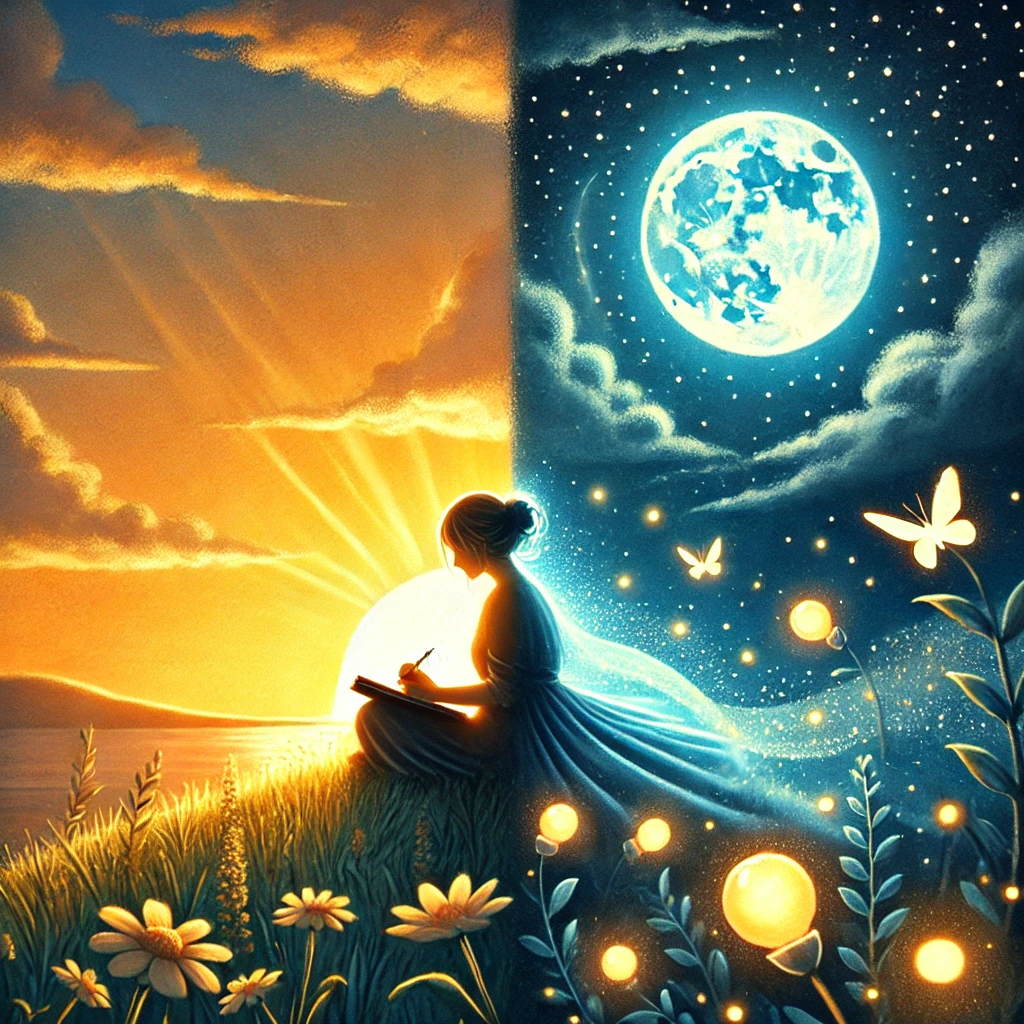
Are you more of a sunrise poet or a midnight philosopher? For me, it’s less about the time of day and more about the energy it brings. Mornings are like a clean slate, a quiet promise of possibility where I can sip my coffee and dream of conquering the world (or at least my to-do list). But nights—oh, nights—they’re a different kind of magic. That’s when the overthinking kicks in, but so does the creativity. It’s like the stars are whispering all the ideas I didn’t have time to hear during the chaos of the day.
So, maybe I’m neither and both—a morning person in spirit but a night owl in practice. Or perhaps I just exist in that liminal space where dreams turn into ideas, whether it’s 7 a.m. or 2 a.m.
I’ve realized it’s not about picking sides—morning or night—but about finding those golden moments where your mind feels alive, your heart feels full, and your soul feels curious. Sometimes it’s watching the sunrise with a notebook in hand, and other times it’s chasing inspiration under the moonlight with a half-forgotten idea that suddenly demands attention.
If I had to choose, I’d say I’m a “whenever-the-muse-strikes” person. Because let’s be honest, life doesn’t always align with a clock, and creativity? That’s a rebel with no curfew.














 Kay’s Odyssey