Category: Noir

  • Where Earth Meets The Sky

    Where Earth Meets The Sky

    Daily writing prompt
    Write about your first name: its meaning, significance, etymology, etc.

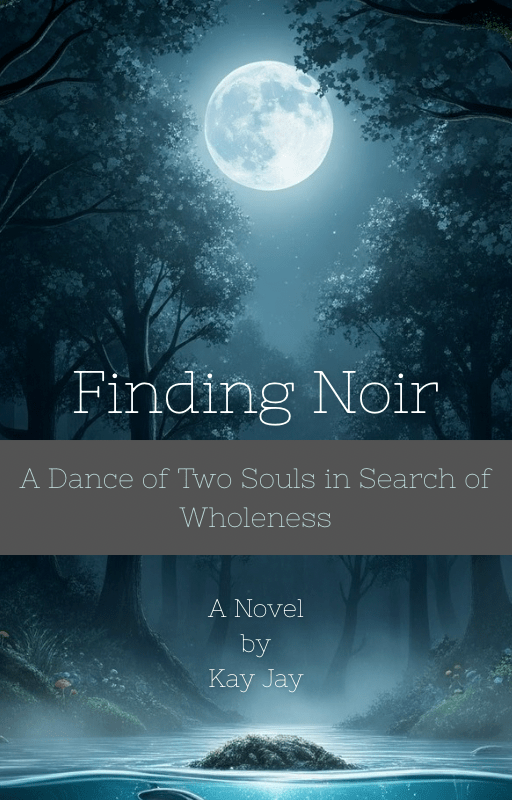
    My first name, Kshitija, comes from Sanskrit. It means that which is born of the earth—the horizon where sky and land meet, a liminal line that exists not as a thing you can touch, but as a promise you keep walking toward. It is a word rooted in soil and sky at once, carrying the weight of belonging and the ache of longing. A name that suggests expansion without arrival, grounding without stagnation. From the beginning, it implies a life lived in between: between places, between selves, between what is and what could be.

    That is where Kayra was born—from the same threshold. Though her name travels a different linguistic road, its spirit mirrors mine. Kayra, in many cultures, is associated with creation, continuity, and the unseen force that moves through nature rather than dominates it. Where Kshitija is the horizon, Kayra is the wind that moves toward it—not hurried, not fixed, but inevitable. Both names carry a quiet resilience, a femininity that does not perform itself loudly but endures, observes, holds.

    In Finding Noir, Kayra does not chase meaning; she recognizes it as something that unfolds through presence. Much like my name, her journey is not about conquest or arrival but about learning to stay—with uncertainty, with love, with absence. Kshitija taught me early that I would never be just one thing or belong to just one place. Kayra lives that truth on the page. She is not the destination of my story; she is its horizon.

    In that way, writing Kayra felt less like invention and more like translation. Of taking the essence of my name—its earthiness, its quiet vastness, its eternal in-between—and letting it walk, speak, love, and lose. Both Kshitija and Kayra stand at the edge of something immense, not to cross it, but to witness it. And perhaps to invite the reader to stand there too.

    And standing there—at that edge—does something subtle but irreversible. It strips away the urgency to define, to label, to arrive. The horizon teaches patience. It teaches that distance is not denial, and waiting is not weakness. Kshitija, as a name, carries this lesson quietly: you do not collapse into what you love, nor do you possess it. You remain present, rooted, and receptive.

    Kayra inherits this wisdom not as philosophy, but as instinct. When Noir runs, when silence replaces certainty, she does not shrink to fill the void. She expands around it. This is the inheritance of the horizon—to hold vastness without panic. To understand that what leaves is not always lost, and what stays is not always visible. Kayra’s strength is not in pursuit, but in her capacity to remain open without self-erasure.

    There is a particular loneliness in being named after a threshold. People expect decisiveness, arrival, resolution. But Kshitija—and Kayra—know better. They know that some lives are meant to be lived in motion, not forward, but inward. That love can be real even when it is unconsummated, unfinished, or unreturned in the ways stories usually demand.

    In writing Finding Noir, I realized that Kayra was not my alter ego; she was my echo. She spoke the parts of me that learned to trust the unseen—to trust that meaning does not always announce itself with permanence. Sometimes it appears as a fleeting glance, a shared stillness, a resonance that survives separation.

    If Kshitija is the place where earth meets sky, then Kayra is the act of standing there without asking the horizon to come closer. And Noir—perhaps—was never meant to be held, only encountered. A reminder that some connections exist not to anchor us, but to awaken us.
  • The Hare And The Tortoise

    The Hare And The Tortoise

    What’s your favorite animal?

    For the longest time, I didn’t have an answer. Or rather, I had many—changing with the season, with the mood, with the version of myself I happened to be inhabiting that year. But if I’m honest, the answer that has followed me most faithfully is this: the tortoise and the hare.

    Not as animals in the wild, but as archetypes. As ways of moving through the world.

    The tortoise knows something the world keeps forgetting. That life is not a sprint. That arrival is less important than attention. That wisdom accumulates quietly, like sediment, invisible until it becomes unshakeable. The tortoise doesn’t rush toward meaning; she lets meaning meet her where she stands. She carries her home on her back. She doesn’t abandon herself to be loved.

    And then there is the hare. Brilliant, restless, dazzling in motion. The hare is desire incarnate—speed, charm, urgency. He lives in the future tense, always chasing the next horizon, always one step ahead of his own fear. The world applauds the hare. He looks like freedom. But what no one tells you is that speed is often a disguise. Sometimes, the fastest ones are running from something they don’t yet know how to hold.

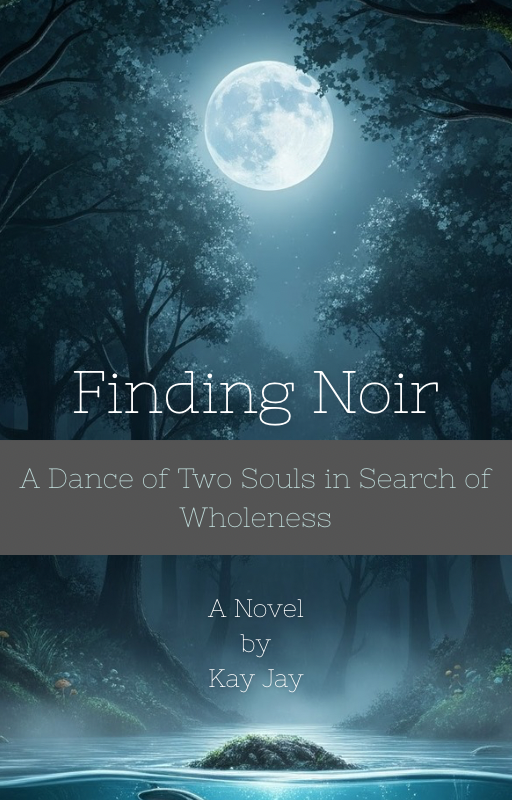
    Finding Noir was born from this tension.

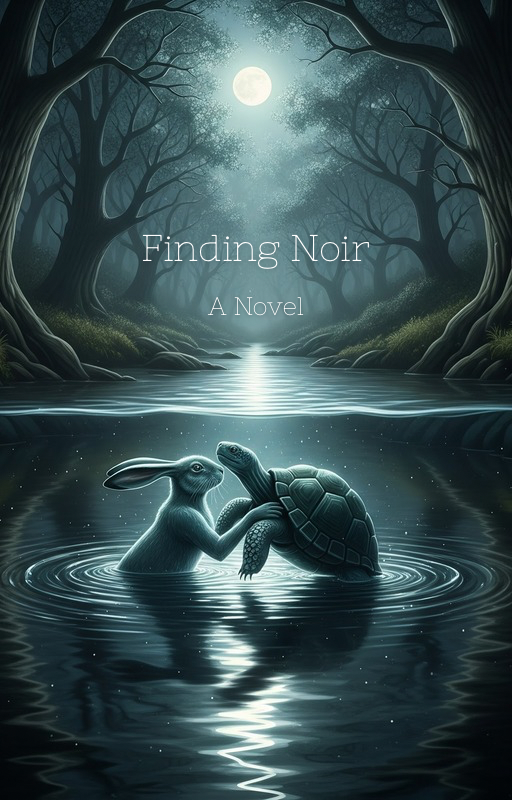
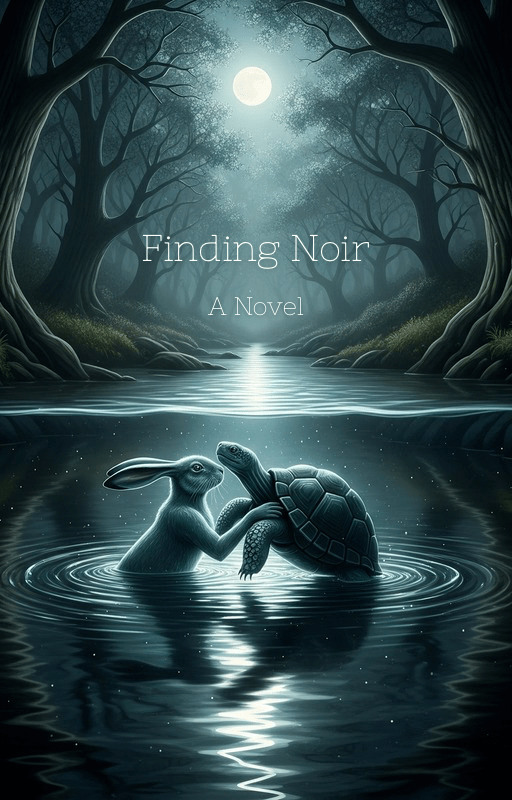
    Kayra is the tortoise—not because she is slow, but because she is deliberate. She stays. She listens. She holds space even when it costs her something. Noir is the hare—quick to love, quicker to flee. He runs not because he doesn’t care, but because caring asks him to stop.

    This is not a fable about who wins. It is a story about what happens when two ways of being collide. When stillness meets velocity. When love asks not to be chased, but to be endured.

    So if you ask me today, “What’s your favorite animal?”
    I’ll tell you this: I love the one who stays.
    And I love the one who runs—until he learns why.

    Finding Noir is a meditation on love that isn’t tidy, timing that isn’t kind, and connection that doesn’t disappear just because someone leaves. It’s for anyone who has ever loved across different speeds, different fears, different readiness.

    Some of us are born tortoises.
    Some of us are hares.
    And sometimes, loving is learning how to meet each other on the same path—without asking either to become something they’re not.

  • The Liminal Space In-Between Moments

    The Liminal Space In-Between Moments

    Do you spend more time thinking about the future or the past? Why?

    Most of us like to believe we’re future-oriented.

    We talk about growth, next chapters, manifestation, moving on. It sounds healthier.

    But if I’m honest, I’ve learned this:

    We don’t spend more time in the past because we’re nostalgic.

    We do it because something there didn’t finish.

    I used to think I was imagining the future—what could have been, what might still happen. But when I looked closely, I wasn’t actually ahead of myself. I was standing in the wreckage of a moment that never got an ending, asking it to explain itself.

    The past isn’t memory.

    It’s unfinished business.

    The future, by contrast, is clean. It hasn’t disappointed us yet. That’s why we borrow it as a fantasy when the present can’t hold our longing. We don’t want the future—we want relief from the unanswered.

    Finding Noir lives in that exact in-between space: where the past keeps intruding not because it was better, but because it was incomplete. A connection that felt inevitable inside but never materialized outside. A bond that existed in language, sensation, and silence—but not in follow-through.

    This book doesn’t argue for staying stuck. It asks a harder question:

    What if revisiting the past isn’t regression, but an attempt at truth?

    Not to relive it.

    Not to romanticize it.

    But to finally see it clearly—without hope doing the editing.

    If you find yourself oscillating between memory and possibility, wondering why neither feels stable, this isn’t a failure of imagination. It’s a signal.

    Some stories don’t ask to be continued.

    They ask to be understood.

    And once they are, the future stops feeling like an escape—and starts feeling like a choice.

    Finding Noir
  • The Dark Night

    The Dark Night

    On the Kind of Love That Rearranges You

    Finding Noir

    I didn’t know I was looking for myself when I first mistook it for love.

    The moment itself was unremarkable. A conversation that lingered longer than it should have. Not because of anything extraordinary that was said, but because of what surfaced in the pause between sentences. A sense of familiarity without history. Recognition without proof. The kind of encounter that leaves no evidence, only residue.

    It wasn’t comforting. It was clarifying.

    For a long time, I believed connection was something to be secured—defined by continuity, reciprocation, and effort. I measured its legitimacy by outcomes: longevity, commitment, return. Love, I thought, was something you earned by staying, choosing correctly, wanting carefully enough.

    Finding Noir emerged when that framework began to collapse.

    I began to notice a different category of connection—one that didn’t orient itself toward resolution at all. These encounters didn’t soothe or stabilize; they destabilized. They rearranged the internal furniture. They made familiar beliefs suddenly feel provisional. They asked questions instead of offering futures.

    This book is not interested in romance as resolution. It treats love as a mirror rather than a promise. A reflective surface that shows you not who the other person is, but who you become in their presence. What they activate. What they expose. What you mistake for destiny when it is, in fact, revelation.

    Noir is not a person in the traditional sense. Noir is a catalyst. A placeholder for the kind of connection that arrives without invitation and leaves without explanation. The kind that intensifies quickly, not because it is meant to endure, but because it is meant to reveal.

    There is a particular danger in these connections. Intensity can masquerade as alignment. Recognition can feel indistinguishable from belonging. The nervous system confuses activation with intimacy. Projection fills in the gaps that reality does not yet occupy.

    Finding Noir does not romanticize this confusion. It sits inside it.

    The book asks difficult, often uncomfortable questions:

    What are we really responding to when someone feels familiar?

    What parts of ourselves are we trying to reclaim through another?

    At what point does longing become a refusal to see clearly?

    Rather than offering answers, the book traces patterns—emotional, psychological, somatic. It examines how unhealed hunger can dress itself up as fate. How longing can borrow the language of spirituality. How the desire to be seen can override the willingness to see.

    And yet, this is not a book that dismisses these connections as mistakes.

    Some encounters are not meant to last because their purpose is not companionship, but consciousness. They arrive to interrupt, not to accompany. To destabilize the architecture of who you think you are, so something truer has a chance to emerge.

    My mission in writing Finding Noir is not to instruct readers on what love should look like. It is to sit with them in the discomfort of asking what love is doing to them. To invite a more rigorous, compassionate form of inquiry—one that does not rush toward narrative closure.

    This is a book for readers who are willing to look at their own projections without flinching. For those who suspect that the most powerful connections are not always the healthiest, but are often the most revealing. For those who are less interested in happy endings than in honest ones.

    If this story leaves you unsettled, that may be the point.

    Some books don’t want to be finished.

    They don’t want to be consumed, resolved, or put away.

    They want to be recognized.

    Finding Noir
  • Finding Noir

    Finding Noir

    What could you do differently?

    I remember the moment I realized nothing was going to happen.

    Not the dramatic kind of nothing.

    No explosion. No goodbye.

    Just the quiet violence of unanswered messages and a body that knew before the mind admitted it: this is it.

    I replayed every sentence. Every pause. Every almost.

    I told myself I could have spoken differently. Softer. Braver. Less available. Less intense. More mysterious. More patient. Less honest. Less me.

    That’s when the question appeared—not as self-help, not as advice, but as an ache:

    What could I have done differently?

    It’s a seductive question. It implies control. It suggests that love is a chessboard, not a collision. That if we just move the right piece, the ending changes.

    But here’s the truth most people don’t want to hear:

    Sometimes the only thing you could have done differently

    was leave the story earlier—

    before it taught you everything it came to teach.

    Finding Noir is not a book about how to get it right next time.

    It’s a book about what happens when you stop editing yourself for an outcome that was never available.

    It traces a connection that lived vividly in the interior world and failed spectacularly in the physical one. It explores twin flames, projection, longing, somatic memory, and the way absence can feel more intimate than presence. It refuses to tell you whether the connection was real, spiritual, imagined, karmic, or psychological—because the body doesn’t care what we name the wound.

    This book doesn’t offer closure.

    It offers recognition.

    For anyone who has loved someone who never fully arrived.

    For anyone who felt chosen in private and abandoned in reality.

    For anyone who wonders whether depth itself is a liability in modern intimacy.

    Finding Noir asks a quieter, more dangerous question:

    What if you didn’t do anything wrong—

    what if you were simply brave enough to feel everything?

    And if that question unsettles you,

    you might already be standing at the edge of this book.

    Finding Noir
  • Cultivating Meaningful Connections: A Personal Journey

    Cultivating Meaningful Connections: A Personal Journey

    What relationships have a positive impact on you?

    Relationships that have a positive impact on me are those that feel like safe havens and secure bases—a delicate balance of comfort and challenge. They’re the connections that allow me to stay rooted in the rhythm of the ordinary while also encouraging me to dream beyond it. These relationships don’t demand perfection or performance; instead, they celebrate authenticity, resilience, and growth.

    I think of the people who have shaped me in ways both profound and subtle. My parents, with whom I share a complex dance of tradition and individuality, have taught me the strength in cultural roots. Then there are friends like Loretta, who enter your life like a warm cup of tea on a rainy day, offering a quiet kind of wisdom that reshapes your understanding of love and support. Even the stories I’ve written—fictional characters like Noir and Kayra—feel like relationships in their own way, teaching me lessons about vulnerability, self-discovery, and spiritual connection.

    But perhaps the most impactful relationship is the one I’ve built with myself. It hasn’t been easy; there were times I felt invisible or unheard, times when self-doubt crowded out self-love. Yet, through journaling, writing, and introspection, I’ve learned to treat myself with the same kindness and curiosity I offer to others. This relationship has taught me that I’m allowed to evolve, to dream of lives that feel far from my current reality, and to embrace every cliché along the way.

    These relationships—be they with family, friends, fictional creations, or myself—aren’t about grand gestures or perfect harmony. They’re about showing up, being present, and holding space for growth. They’re about finding the people and moments that make you feel both grounded and limitless. And that’s exactly the kind of connection I hope to inspire through Diary of Clichés—because sometimes, the most impactful relationships start with a simple story.

    Through the pages of Diary of Clichés, I invite readers to examine the relationships in their own lives—those with others, with their dreams, and most importantly, with themselves. We often overlook the quiet, everyday connections that shape us in profound ways, just as we dismiss clichés as trivial. But within those seemingly mundane expressions and encounters lie universal truths, the kind that make you pause, reflect, and perhaps even smile knowingly.

    For me, the act of writing became a bridge between who I was and who I wanted to be. It gave me permission to explore the dichotomy of my dreams and reality—the Silicon Valley high-rise life I once imagined versus the cultural rootedness of my middle-class existence in India. It helped me reconcile the feelings of being torn between wanting adventure and craving stability, between daring to embrace the extraordinary and finding peace in the ordinary.

    And isn’t that what relationships, at their best, do for us? They challenge us to grow while reminding us of where we came from. They hold up a mirror, showing us our potential even as they ground us in our flaws. They allow us to be both dreamers and doers, to straddle the line between ambition and contentment.

    Some relationships feel fleeting yet transformative, like my brief encounters with new friends or even strangers who left a lasting impression. Others are steady and enduring, like the bond I’ve built with my family and closest confidants. And then there’s the complex, layered relationship I have with myself—a work in progress, but one that grows richer with each page I write, each story I tell.

    Through this journey, I’ve learned that relationships with a positive impact are not always easy or straightforward. They can be messy, imperfect, and sometimes even painful. But they’re also where we find our strength, our joy, and our purpose. Whether it’s the parent who teaches resilience, the friend who listens without judgment, or the diary that silently absorbs your thoughts, these relationships shape the story of who we are.

    So, when I think about the question, “What relationships have a positive impact on you?” I realize it’s not about the grand gestures or dramatic declarations. It’s about the quiet moments of connection, the spaces where you feel seen, heard, and valued. It’s about the people and experiences that help you uncover your authentic self, even if that journey takes you through heartbreak, healing, and a healthy dose of clichés.

    And as I continue to write, dream, and reflect, I hope that Diary of Clichés becomes a positive relationship for others—a companion to those navigating the twists and turns of life, offering solace, laughter, and perhaps a new way of seeing the world. Because at the heart of it all, that’s what relationships are meant to do: remind us that we’re never alone, that our stories matter, and that there’s always beauty to be found in the chaos of life.

  • Loving Noir: A Meeting of Souls

    Loving Noir: A Meeting of Souls

    Loving Noir

    The streets of Chicago pulsed with life, but Kayra hardly noticed the thrumming energy around her. Dressed in a flowing golden saree, her heels clicked softly against the pavement of the Riverwalk. The warm breeze danced along her skin, lifting the edges of her pallu as her husband, Maes, draped his jacket over her shoulders. His gesture was comforting, grounding, yet her heart beat erratically, stirred by an undercurrent she couldn’t name.

    She looked up at him, his warm, kind eyes gazing back with unwavering devotion. “What are you thinking?” he asked, his voice steady and reassuring.

    “Just… how far we’ve come,” she replied, smiling faintly. It was true. Maes had been her anchor, her safe harbor. He was her now, her always. And yet…

    Her thoughts scattered as they reached the bridge overlooking the shimmering water. For a moment, time seemed to still. A man stood at the edge of the walkway, his silhouette sharp against the backdrop of the city lights. Her breath caught, her hand instinctively clutching Maes’s arm.

    “Noir,” she whispered before she could stop herself.

    The man turned at the sound of his name, his dark eyes locking onto hers. The air between them crackled, as if the universe itself held its breath. Kayra felt her knees weaken, her past rushing to the forefront of her mind. His gaze was the same—piercing, magnetic, and devastatingly familiar.

    “Kayra,” he murmured, his voice barely audible over the distant hum of the city, yet it echoed through her entire being.

    Maes glanced between them, his brow furrowing. “You know him?”

    Kayra hesitated, but Noir stepped forward, extending a hand to Maes with an ease that belied the tension crackling around them. “Noir,” he said smoothly. “An old friend.”

    Friend. The word lingered in the air like smoke, taunting her. Noir’s hand was firm as Maes shook it, and Kayra’s heart ached at the sight of them together—a man who held her present and a man who had once held her soul.

    “We should go,” Kayra said quickly, pulling Maes’s arm. She couldn’t endure this. Not here. Not now.

    But Maes was nothing if not gracious. “Nonsense. Join us for a drink, Noir.”

    Kayra froze, her mind racing. Noir’s lips curved into a faint smile as he nodded. “It would be my pleasure.”

    The bar was intimate, dimly lit with flickering candles casting shadows on the walls. Kayra sat stiffly, her fingers wrapped around her glass of wine as Maes and Noir exchanged pleasantries. She barely heard the conversation, too aware of Noir’s presence, the way his eyes lingered on her, burning through the space between them.

    “Chicago suits you,” Noir said suddenly, his voice low, directed at her.

    Her throat tightened. “Does it?” she replied, her voice barely steady.

    Maes glanced at her, then at Noir, sensing the tension but unable to decipher it. “So, how do you two know each other?”

    Kayra opened her mouth, but Noir spoke first. “We met years ago. A chance encounter.” His gaze held hers, unflinching. “One I’ve never forgotten.”

    Her chest constricted, her breath shallow. The wine in her glass rippled as her hand trembled. “We should leave. It’s late.”

    Maes frowned, concerned, but Noir stood, his movements smooth and deliberate. “I should be going anyway,” he said, his tone calm but his eyes telling another story entirely.

    Maes extended a hand once more. “It was good to meet you, Noir.”

    Noir shook it, his fingers brushing hers as he reached for his coat. The touch was brief, but it sent a shiver down her spine. As he walked away, he turned back once, his gaze lingering on her. It was a look that spoke volumes—of unfinished stories, of love unspoken yet deeply felt.

    Kayra watched him go, her chest heavy with emotions she couldn’t name. She felt Maes’s hand on hers, grounding her, anchoring her. But her soul—it was still with Noir, somewhere in the space between what was and what could have been.

    This was just the beginning. A collision of past and present. A spark reignited.

    Would Kayra surrender to the safety of her now or risk everything for the fire of a love she thought she’d lost forever?

    The answer lay in the pages ahead.