The smartphone has become our most intimate “pocket-sized portal,” a gateway into a “fragile sanctuary” where we share our “purest thoughts” and digital confessions through a “flicker of electric messages”. Yet, as explored in Kay Jay’s Fever Dreams, this portal is often a “cage” that reinforces a profound “digital paradox”: we are technologically hyper-connected yet fundamentally isolated.
In this “digital abyss,” the screen acts as a filter, tempting us to build people in our minds and fall in love with a “projection of our own desires” rather than the full, messy truth of a tangible human being. Within this portal, the promise of “tomorrow” often becomes a “flickering mirage” that perpetually recedes into a “heavy fog,” leaving us as “spectators in our own lives”.
While this portal offers “intensity without grounding,” it ultimately leaves us wondering if we are truly being seen or if we are merely “echoes of ourselves” lost in a labyrinth of pixels. True intimacy, the sources suggest, requires the “quiet courage” to step out from behind the screen and embrace the “raw, unfiltered, and humiliating” honesty of physical presence
Online, the screen acts as a “fragile nook” that distorts reality, turning simple messages into a disorienting labyrinth of potential.
We hallucinate because, within this “digital abyss,” we build people in our minds, filling the gaps of silence and text with our own deep longing and unhealed hunger.
As explored in Fever Dreams, this medium allows us to communicate as our “purest thoughts” while paradoxically turning us into “spectators in our own lives”.
We often find ourselves falling in love not with a tangible human being, but with a “projection of our own desires” and a “shimmering mirage of belonging”. This internal fiction is reinforced by the “delayed tomorrow” loop, where the promise of meeting becomes a flickering mirage that perpetually recedes into a “heavy fog”.
We hallucinate online because the digital realm offers a protected space to reveal our inner worlds without the “raw, unfiltered, and humiliating” honesty required by physical presence
In the world of high-achievers, we are taught that patience is a moral virtue and that composure is rewarded. We tell ourselves that “good things come to those who wait,” internalizing a “quiet meritocracy” where we expect our excellence to eventually be “interpreted correctly” by an authority or a system.
But here is the provocative truth: Resentment is the receipt for the time you spent waiting for someone else to validate your worth.
When you outsource your agency to the clock, you aren’t practicing “emotional intelligence”—you are practicing passive resignation. While you stay quiet to keep the peace and play the role of the “strong one,” you are privately paying for that “forced pleasantness” with a slow erosion of your self.
The cost of this script is a life that feels “coherent—and still constrained,” where you are “repeating fluently” the habit of endurance instead of choosing freely to assert your value. True evolution begins when you realize that “good” things come faster and more accurately to those who define what “good” looks like before they ever begin waiting.
Stop waiting for the universe to reward your silence. Authorship begins when you stop calling your resentment “patience” and start calling it data
In the literary world of Kay Jay (me…..sometimes I like to refer to myself like this!), romance is stripped of its “neat little package” and reimagined as a profound act of endurance.
In the latest episode of the Beautiful Men podcast, we explore what it means by Romance is Resilience! Is it defined not by grand, cinematic gestures? Or just by the “quiet, often terrifying courage” of watching someone you love fall apart and choosing to stay anyway!
This perspective challenges the “flawless performance” often expected in modern dating, suggesting instead that true intimacy requires the raw honesty of showing up “hungry, imperfect, and willing to be fed“. Whether it is looking past a “Michelin-starred facade” to see a soul struggling under the “lead apron” of depression or navigating the “digital abyss” of a relationship that feels like a “flickering mirage,” resilience is the anchor. It is the “gift of presence“—a commitment that stays when the conversation becomes ordinary and the “shimmering mirage of belonging” begins to fade.
I want to argue (through my stories) that we are more than our curated masks. True connection is forged within our “shared imperfection,” proving that the very things that make us fall apart are the same things that create the most authentic “pathway to connection.”
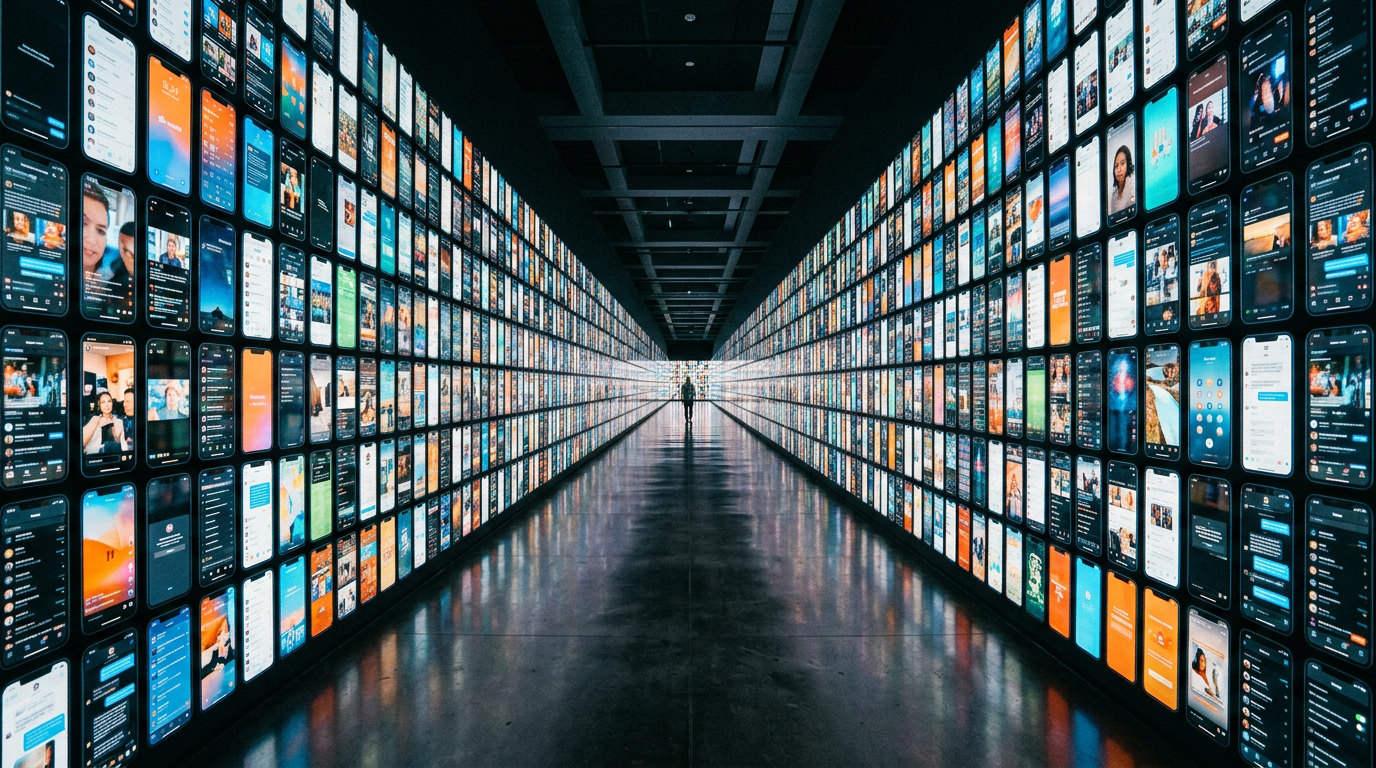
As I sit here in my San Francisco apartment, watching the fog roll over the hills, I’m often struck by the blue glow reflecting off the windows of the buildings around me. It’s the light of a million solitary worlds—the “solitary digital worlds” of people like Kevin and Tammy, scrolling through a labyrinth of pixels and potential.
I’ve always written for the thinkers, feelers, and the ones who never stopped wondering. And lately, I’ve been wondering why we’ve allowed our search for love to feel so much like ordering from a menu.
The Prison of Choice
In my novel The Chef, I used the metaphor of a skilled chef selecting ingredients to describe Kevin’s journey through digital dating. But there is a darker side to that metaphor that I explore in Fever Dreams. When Dev sifts through images of strangers, he realizes that endless choice can feel like a prison.
We are taught to swipe as if we are browsing a catalog, looking for the “perfect match” with the right “flavor profile”. But humans aren’t ingredients to be balanced; we are complex, contradictory, and often “absolutely nuts”. The “shimmering mirage of belonging” offered by these apps often only deepens the very solitude it seeks to bury.
The Mask and the Machine
There is a profound fragility of identity in the digital realm. We present curated snippets of ourselves—a magical weave of words and images—while our inner world is crumbling. As a writer, I don’t want to see your manufactured smiles or your fleeting bios. I want to see what is raw, unfiltered, and humiliating.
In Fever Dreams, Mira and Dev find a fragile sanctuary behind their screens where they can be their purest thoughts. But this sanctuary is also a cage. It’s a space where reality feels slippery, and they begin to wonder if they are just echoes of themselves, or even if the person on the other side is an invention of their own mind.
The Delayed Tomorrow
One of the most uncomfortable themes I weave into my stories is the perpetual postponement of meeting. In Fever Dreams, the word tomorrow becomes a flickering mirage that perpetually recedes.
Why are we so afraid to step out of the digital abyss and into the light of a café?. It’s because the physical world is where the illusion of perfection shatters. It’s where system glitches don’t just sever a chat, but where we have to face the gnawing emptiness of another human being without the filter of a screen.
Embracing the Cringe
I know my characters can be polarizing. Critics have called my protagonists messy or disappointing failures. But I actually smile when I hear that, because discomfort is the art and awkwardness is the honesty.
Digital dating shouldn’t be a seamless performance or a polished menu. True intimacy is the quiet courage to show up—hungry, imperfect, and willing to be fed. It’s about the shared imperfection of two people who recognize that while they are spectators in [their]own lives, they don’t have to be alone in the void.
So, the next time you find yourself in that nightmarish purgatory of endless scrolling, remember that you aren’t looking for a dish to be served. You’re looking for another soul lost in the same maze. And sometimes, the most cringeworthy moments are the only ones that are actually real.
What happens when the “Monkey Mafia” hijacks your dessert table—and your entire 20-year life plan hits a Mumbai-sized pothole?
In this raw, satirical, and deeply provocative narrative, Kay Jay dives into the unfiltered truth of hitting a crater so deep it swallows your entire identity. From the high-stakes tech world of San Francisco to a rain-drenched Mumbai wedding invaded by cake-thieving primates, she explores the messy middle of reinvention after a sudden layoff reduces a two-decade career to a terrifying 60-day visa countdown.
Through generational clashes over “digital nonsense” and the soulful anchor of a rescue dog named Sauli, Kay Jay shares the hard-won wisdom that life’s detours are often the real story. This is more than a memoir; it is an invitation to the slow, patient work of belonging to yourself—a state found only after external labels like job titles and visas are stripped away.
If your corporate “badge of honor” was revoked tomorrow, who is the person left standing in the rubble?
For two decades, your identity was a fortress built on corporate efficiency, a high-stakes software career, and the heavy “badge of honor” of a government-issued visa stamp. Then, a single corporate email unplugs the console, reducing twenty years of building to a terrifying 60-day countdown.
In Who Would You Be Without Labels?, Kay Jay strips away the “shimmering mirage of belonging” to expose the raw, unfiltered truth of a total identity collapse. From the “digital abyss” of professional rejection to the “reverse culture shock” of returning to a home that no longer feels like yours, she navigates the messy middle of reinvention with sharp, satirical wit. This narrative challenges the societal scripts we are handed—the ones where success is measured by job titles and “real” work is only what can be touched, like bridges or dams.
Through the lens of life’s deepest “potholes,” Kay Jay shares the hard-won wisdom that these detours are not failures of intelligence, but profound invitations to find a new definition of success. It is an exploration of “presence without performance” and the slow, patient work of finally belonging to yourself.
If everything you use to define yourself was stripped away tomorrow, who is the person left standing in the rubble?
In our hyper-connected era, the person you message most often occupies a “fragile sanctuary” in your pocket, but do they actually exist in your real world? Drawing on the themes of my latest book Fever Dreams, this exploration dives into the “digital abyss” where the lines between reality and illusion constantly blur.
Whether it is a romantic partner, a distant friend, or a digital confidant, the act of messaging creates a pulse of its own—a “heartbeat heard only between two people”. However, as the sources suggest, these connections often risk becoming an “elaborate fiction” where we fall in love with a “projection of our own desires” rather than a tangible human being.
The latest episode of the Beautiful Men Podcast investigates the psychological weight of the “delayed tomorrow” loop, questioning why we find it safer to hide behind a screen than to face the raw, “humiliating” honesty of physical presence. If you have ever felt more real in a chat window than in your own living room, this is your “authority of clarity”—an unvarnished look at the beauty and the “existential claustrophobia” of modern digital longing.
I’ve always believed that true romance isn’t found in a “neat little package” tied with a perfect bow. To me, romance is something much grittier and more profound; it is the quiet, often terrifying courage of watching someone you love fall apart and choosing to stay anyway.
Beyond the Michelin-Starred Facade
When I wrote The Chef, I wanted to explore what happens when the “Michelin-starred” success of a man like Kevin collides with the “lead apron” of depression. In the world of romance, we often want the hero to be untouchable, but Kevin is haunted by a “gnawing emptiness” that makes even answering a text feel like a “Herculean effort”.
Real intimacy in that story isn’t just about the “alchemy of flame, butter, garlic, and wine” they share in the kitchen. It’s the moment Tammy looks past his professional prestige to see the man whose “inner world was crumbling”. I believe that intimacy is not about a “flawless performance”; it is the raw honesty of showing up “hungry, imperfect, and willing to be fed”.
The Honesty of the “Nuts” and the Messy
Book cover for Beautiful Men: The Dog Walker.
I know that my approach to storytelling can be polarizing. When The Dog Walker was released, a reviewer called my protagonist, Sarah, “absolutely nuts” for her humiliating, grief-stricken attempts to connect with Andy. I actually smiled when I read that. Why? Because I didn’t set out to write a flattering story; I set out to write about longing that is “raw, unfiltered and humiliating”.
If Sarah’s journey made you uncomfortable, it’s because “discomfort is the art” and “awkwardness is the honesty” of the human condition. Romance is being messy. It is the “cringeworthy moments” we usually try to hide, laid bare before another person who doesn’t turn away.
Navigating the Digital Abyss
In Fever Dreams, I took this theme into the “digital labyrinth”. Dev and Mira are two souls who find a “fragile sanctuary” through a screen, yet they are paralyzed by the fear that a physical meeting will shatter their “shimmering mirage of belonging”.
They are “spectators in their own lives,” wondering if their connection is a genuine bond or just a “projection of their own desires”. Romance, in their world, is the agonizing wait for a “tomorrow” that perpetually recedes. It is the willingness to confront the “void” together, even when reality feels “slippery” and unaligned with your desires.
Choosing the Shared Imperfection
Ultimately, I write for the “thinkers, feelers, and the ones who never stopped wondering”. We live in an age of curated profiles and “manufactured smiles,” but my stories insist that we are more than our masks.
True connection is born out of “shared imperfection”. It is the realization that while we are all navigating our own “urban mazes” of loneliness, there is a “pathway to connection” found in the very things that make us fall apart. Thank you for having the courage to walk with me through these shadows.
I have a confession to make: I don’t write to flatter my readers. I don’t set out to craft love stories dressed in “neat little packages” or polished bows. Instead, I am drawn to the raw, messy edges of emotion—the places where longing feels “raw, unfiltered, and humiliating.” In my literary world, I have come to believe a singular truth: discomfort is the art.
The Honesty in the “Nuts”
Book cover for Beautiful Men: The Dog Walker.
When my first book, The Dog Walker, was released, it sparked quite a divide. One critic famously called the protagonist, Sarah, “absolutely nuts” for her humiliating attempts to connect with a man while navigating her grief. They labeled the book a “narrative failure.”
When I read those words, I actually smiled. That reaction meant the story had done exactly what I intended. Sarah’s flaws, her delusions, and her awkwardness weren’t mistakes; they were the story. I believe that awkwardness is the honesty of the human condition. If you felt uncomfortable reading Sarah’s journey, it’s because real longing—the kind that isn’t sanitized for a movie screen—is inherently cringeworthy and painful.
Sitting with the “Lead Apron”
This philosophy of intentional discomfort followed me into the kitchen in The Chef. Here, the discomfort isn’t just about social awkwardness; it’s about the “lead apron” of depression. I wanted to force readers to sit with Kevin as he performs the role of a confident, Michelin-starred chef while his “inner world was crumbling.”
There is a profound unease in watching someone we want to root for disappear or fail to answer a message because the weight of their own mind is too heavy. But I refuse to tidy that away. True connection doesn’t happen in spite of our brokenness; it happens because of it. Intimacy is not a “flawless performance”; it is the quiet courage to show up—hungry, imperfect, and willing to be fed.
The Labyrinth of “Tomorrow”
In Fever Dreams, I explored a more modern form of discomfort: the “existential claustrophobia” of the digital age. I wanted to capture that “shimmering mirage” of belonging we feel through dating apps, which often only deepens our solitude.
The discomfort in Dev and Mira’s story comes from the blurring of reality and illusion. I purposefully created a “delayed tomorrow,” a loop where meeting in person is a mirage that perpetually recedes. It’s an unsettling space to inhabit, both for the characters and the reader. It asks a question we are often afraid to answer: Is our “online self” an accurate reflection of identity, or just another mask that keeps us from being truly known?
Embracing the Cringe
As an author, I am basically daring you to embrace the cringe. I want you to squirm a little, to recognize the unvarnished parts of yourself in my characters’ humiliations and their “nuts” behavior.
We live in a world obsessed with digital validation and curated perfection. By leaning into discomfort, I hope to create a “pathway to connection” based on our shared human imperfection. Thank you for having the courage to walk with me into these shadows; I hope that in the awkwardness, you find a spark of recognition for your own quiet courage.