Category: Uncategorized

  • Is Your Digital Connection Real Love or Just Longing?

    Is Your Digital Connection Real Love or Just Longing?

    When was the last time you felt loved in a positive way?

    I don’t mean noticed.
    I don’t mean liked, admired, validated, or briefly chosen.

    I mean loved—in a way that softened you instead of tightening you. In a way that didn’t ask you to perform, impress, or disappear parts of yourself to stay worthy.

    For me, that question used to be uncomfortable.

    For a long time, love arrived in fragments. In attention that felt intoxicating but unstable. In conversations that went deep too fast. In connections that burned bright and vanished quietly. I mistook intensity for intimacy. I mistook longing for love. And because I’m good with words, because I live in my head, because I exist comfortably in digital spaces, I learned how to feel close to someone without ever being held by them.

    Online, love is easy to simulate.

    You can craft sentences that sound like devotion. You can show up at 2 a.m. with the perfect reply. You can be endlessly available without being fully present. You can feel wanted without being known. And for a while, that feels like enough—especially if you’re lonely, especially if you’re searching, especially if you’ve learned to survive on crumbs of connection.

    But positive love—real love—does something quieter.

    It doesn’t spike your nervous system.
    It doesn’t make you anxious about timing or tone.
    It doesn’t leave you staring at your phone, rereading messages, wondering if you imagined everything.

    Positive love feels steady. It feels safe in your body. It doesn’t rush you toward a future that never arrives. It doesn’t live only in “tomorrow.”

    I didn’t fully understand that until I started writing Fever Dreams.

    Dev and Mira were born out of that question—when was the last time you felt loved in a good way? Their connection begins the way so many modern connections do: online, intense, emotionally naked, intoxicating. They say the things people don’t usually say out loud. They share fears, loneliness, desire. And for a while, it feels profound. It feels rare. It feels like love.

    But slowly, something fractures.

    The waiting stretches. The meeting is postponed. “Tomorrow” becomes a promise that never quite arrives. What once felt like closeness starts to feel like absence. The love that was supposed to save them begins to hollow them out instead.

    Fever Dreams isn’t a romance about happy endings. It’s a story about emotional intimacy without physical grounding. About how digital connection can make us feel deeply seen—and deeply alone at the same time. About how longing can masquerade as love when we’re starved for tenderness.

    Writing this book forced me to confront my own patterns. The ways I romanticized emotional distance. The ways I accepted uncertainty as passion. The ways I confused being chosen in words with being held in reality.

    And somewhere along the way, my answer to that question changed.

    The last time I felt loved in a positive way wasn’t dramatic.
    It wasn’t overwhelming.
    It didn’t arrive in a flurry of messages or promises.

    It felt calm. It felt grounded. It didn’t leave me questioning my worth or waiting for proof. It didn’t live only in my head.

    That’s what Fever Dreams is really asking its readers to sit with:

    Is the love you’re holding onto expanding you—or consuming you?
    Does it bring you closer to yourself—or further away?
    Does it exist in reality—or only in possibility?

    If you’ve ever loved someone you never quite touched.
    If you’ve ever waited for a “tomorrow” that kept moving.
    If you’ve ever felt deeply connected and profoundly alone at the same time—

    This book was written for you.

    And maybe, by the end of it, you’ll have a clearer answer to that question too.
  • Learning After Impact

    Learning After Impact

    What is your mission?

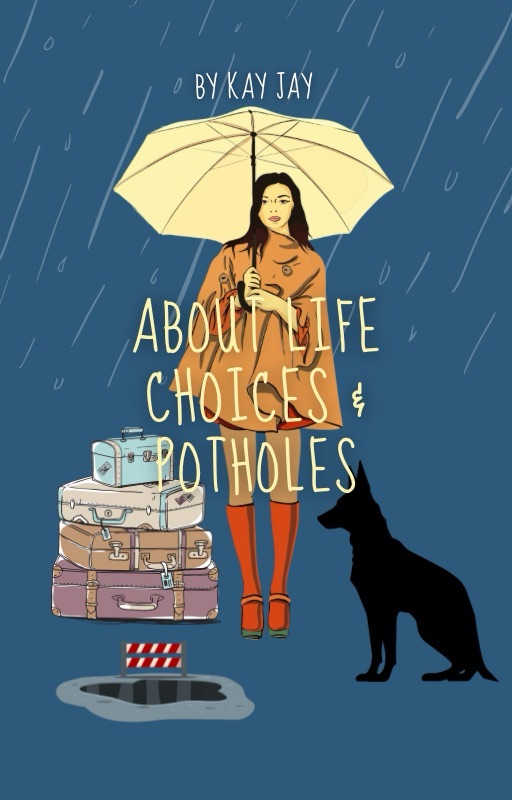
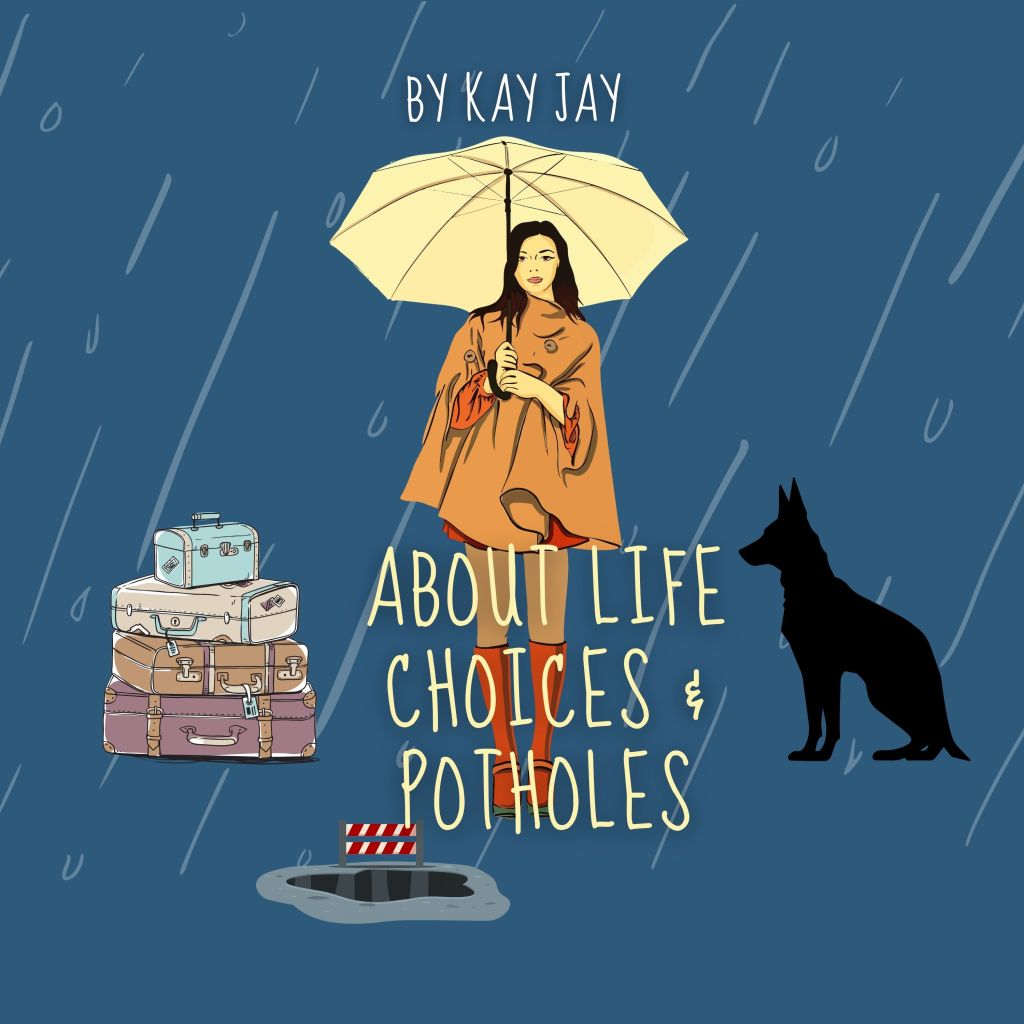
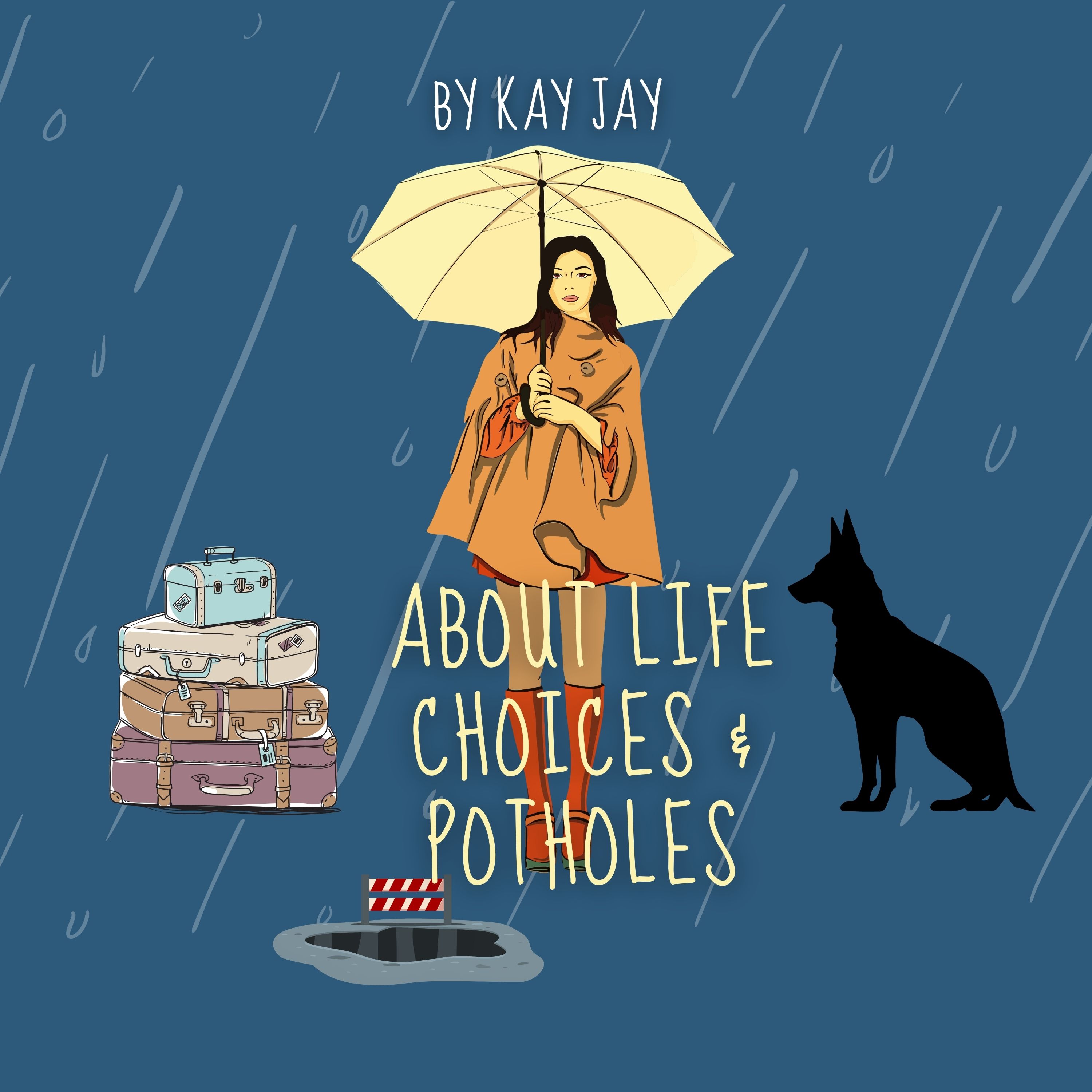
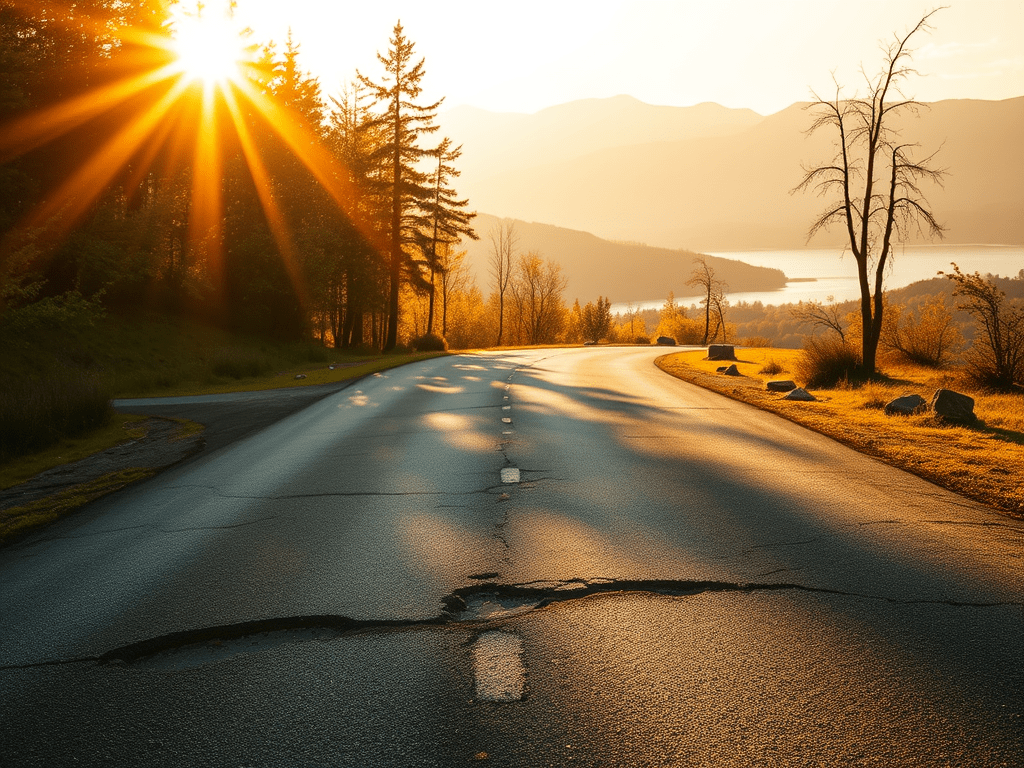
    About Life Choices and Potholes

    I wish I could say I saw it coming.

    That there was a moment of hesitation, a quiet instinct ignored, a clear sign misread. But most of the decisions that shaped me arrived without warning and unfolded without commentary. They felt reasonable at the time. Defensible. Sometimes even brave.

    The consequences arrived later.

    About Life Choices and Potholes begins with that delayed realization—the distance between choice and comprehension. It is written from the understanding that wisdom rarely precedes action. More often, it trails behind it, attempting to make sense of what has already occurred.

    This book is not a guide to better decision-making. It does not offer frameworks, heuristics, or corrective strategies. It is an examination of how insight is actually formed: through collision, through aftermath, through the slow, often uncomfortable work of reflection.

    We are encouraged to believe that good outcomes result from good choices, and bad outcomes from poor ones. This book complicates that assumption. It explores how context, limited information, emotional readiness, and survival instincts shape our decisions far more than rational foresight ever could.

    Potholes, in this sense, are not failures of intelligence. They are features of movement.

    My mission here is intellectual honesty—to resist the temptation of neat narratives that retrofit intention and clarity onto experiences that were, in real time, opaque. The book refuses the comfort of hindsight bias. It acknowledges that understanding is not always available when it would be most useful.

    Rather than judging past selves for what they did not know, About Life Choices and Potholes practices a different discipline: humility. The recognition that learning is often retroactive. That comprehension arrives only after the impact has already occurred.

    This book is written for readers who are weary of advice that assumes foresight. For those who are tired of being told what they should have known. It sits with the reader not before the decision, but after it—amid the debris, the recalibration, the slow reorientation that follows.

    There is no promise of mastery here. Only the quieter assurance that understanding does not require perfection—only attention.

    If you find yourself looking back, learning forward, and resisting the urge to rewrite your past into something more coherent than it was, this book is already speaking your language.

    It does not offer answers.

    It offers companionship—after the fall.

    About Life Choices & Potholes
  • The Cost of Going to the Moon: A Journey of Self-Discovery

    The Cost of Going to the Moon: A Journey of Self-Discovery

    How much would you pay to go to the moon?

    (A reflection inspired by my book About Life, Choices, and Potholes)

    I’ve often wondered what it would feel like to leave everything behind — not metaphorically, but literally. To board a spacecraft, strap in, and watch Earth shrink into a soft blue marble, carrying within it every joy, heartbreak, and unanswered email I’ve ever known.

    If you asked me how much I’d pay to go to the moon, my first instinct would be: everything I own. Not because I’m obsessed with space, but because the idea of distance — of being far enough to see life clearly — has always fascinated me.

    You see, sometimes we don’t need to fly to the moon to realize how much we’ve been orbiting things that don’t really matter.

    When I wrote About Life, Choices, and Potholes, I was in my own kind of launch sequence — leaving behind a career, a country, and a version of myself that no longer fit. I wasn’t chasing adventure; I was chasing clarity. I wanted to look at my life the way astronauts look at Earth — with awe, distance, and a touch of melancholy.

    The truth is, the moon is a metaphor.

    For that dream we’ve shelved.

    For that risk we’ve postponed.

    For that version of us we’ve never had the courage to meet.

    And just like a lunar mission, the journey costs something — not in dollars, but in comfort, predictability, and the illusion of control.

    Leaving the life I built in the US and starting over in India felt, in many ways, like stepping into space. Weightless. Directionless. Terrifying. But also — breathtakingly free. It forced me to question what “home” meant, what success really looked like, and what I was willing to lose in order to find myself again.

    So if you ask me now, how much would I pay to go to the moon?

    Maybe not everything — because I’ve learned the real magic isn’t up there. It’s right here, in the messy middle of life, where the ground is uneven, the potholes deep, but the view — when you look up — just as vast.

    In About Life, Choices, and Potholes, I write about these earthly moons — the leaps that cost us something but bring us closer to who we truly are. Maybe we don’t all get to walk on the moon. But if we’re lucky, we get to walk ourselves home.

  • Trying Something for the First Time

    Trying Something for the First Time

    If you had asked me a few years ago what I’d like to try for the first time, I might have said something lighthearted — skydiving, maybe salsa dancing, or learning French so I could order coffee in Paris without fumbling. Trying something new used to mean chasing excitement. Something that gave a rush, an escape, a new story to tell.

    But then life happened — not the kind of cinematic, neatly tied-up life that changes in a single scene, but the slow unraveling kind, where everything you’ve built starts to loosen, one invisible thread at a time.

    For me, the real “first” came not with adventure, but with loss.

    After nearly two decades in the U.S., the place that had quietly become home, I was told I didn’t belong anymore. Not in the cruel way of words, but in the sterile language of documents and visa clauses. It’s strange how one email, one legal update, one government notice can undo years of roots, relationships, and routines.

    I had a good life there — the kind of “good” that’s ordinary but comforting. A job that kept me busy, a dog who believed the world revolved around me, friends who didn’t look like me but understood me better than anyone ever had. There were grocery store runs in the rain, early morning drives with steaming coffee cups, and lazy Sundays that smelled of pancakes and peace.

    And then, just like that, it was over.

    When I landed back in India — my so-called home — I carried two suitcases and an ache that had no name. The walls looked familiar, the smells were nostalgic, but I was a stranger in my own story. Everything that once defined me was gone.

    So I did something I had never done before — I stopped pretending I had it all figured out.

    That was the first time I truly tried something new.

    I tried waking up without a plan. I tried cooking breakfast for myself instead of rushing through emails. I tried fasting — not for weight loss, but for clarity. I tried sitting with silence, even when it was unbearable. And most of all, I tried forgiving myself — for not being where I thought I should be, for losing things I once clung to, for falling apart.

    In About Life Choices and Potholes, I wrote about this phase — not as a story of triumph, but as one of transformation. Because life doesn’t hand out medals for surviving. It offers mirrors instead — asking us to look closer, to peel away the layers of identity we once thought were permanent.

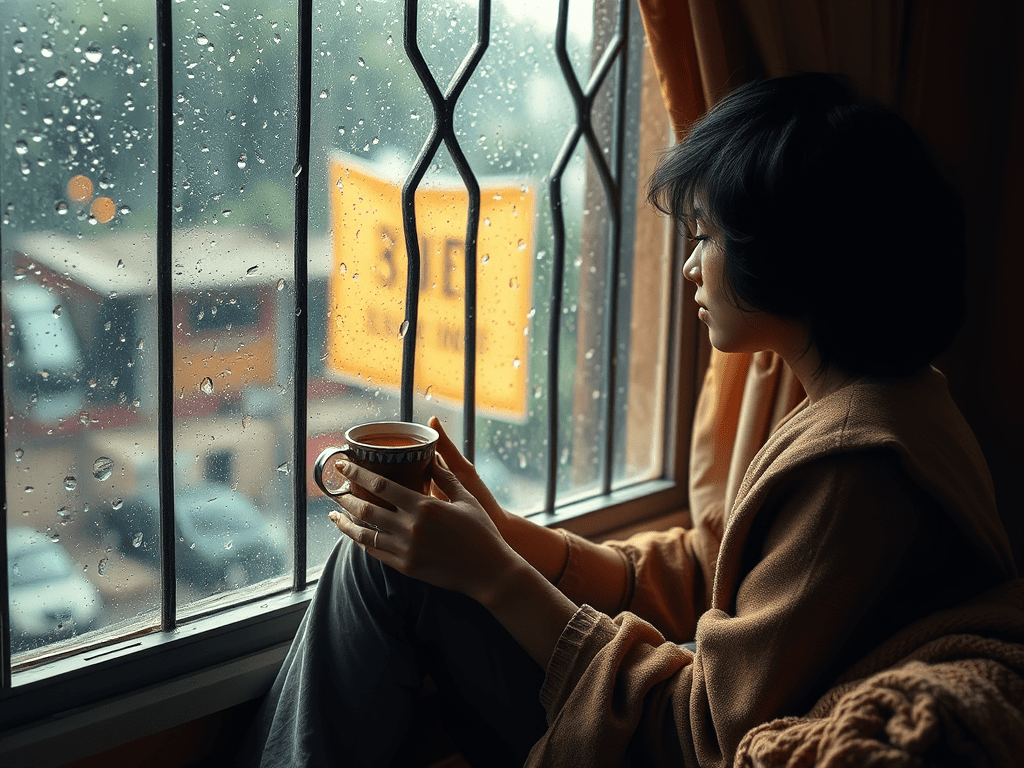
    I remember one afternoon vividly. The monsoon had just started, and I was sitting by the window with a cup of chai, watching the first raindrops gather on the grill. There was something achingly simple about it — the smell of wet earth, the distant honking of cars, the cool air brushing against my skin. For the first time in years, I wasn’t rushing anywhere. I wasn’t chasing goals, or visas, or dreams. I was just being.

    That was new. That was terrifying. That was freedom.

    Trying something for the first time doesn’t always look like learning a new skill or checking something off your bucket list. Sometimes, it’s learning to live without certainty. To embrace pauses instead of fearing them. To understand that home is not a pin on a map, but a feeling that travels with you.

    And maybe that’s what I want this book to remind people of — that every so-called “pothole” in life isn’t a setback; it’s an invitation. An invitation to try again. To rebuild. To become.

    So, if you ask me today what I could try for the first time, I’d say —
    I’d like to try trusting life completely.
    Even when it reroutes me.
    Even when I don’t understand where it’s taking me.

    Because maybe, just maybe, that’s where all the magic begins.

  • What principles define how you live?

    What principles define how you live?

    (From my latest book About Life Choices and Potholes)


    I’ve learned that life doesn’t come with a rulebook — just a series of choices and the occasional pothole to remind you that you’re human.

    If I had to define the principles I live by, they’d sound something like this:

    1. Choose truth, even when it’s uncomfortable.

    For a long time, I wore masks — the successful professional, the good daughter, the woman who “had it all figured out.” Then life stripped those layers away. Losing my job, moving back home, sitting in the stillness of uncertainty — it all forced me to be brutally honest with myself. Now, I don’t chase perfection; I chase alignment. If it doesn’t feel like truth, it’s not for me.

    2. Trust the potholes.

    Every detour I once cursed — every heartbreak, every failure, every delay — has led me somewhere better. About Life Choices and Potholes was born out of one such unexpected turn. What I thought was an ending became the beginning of something real. The potholes teach you patience, humility, and perspective — the kind that no smooth road ever could.

    3. Don’t confuse stillness with stagnation.

    There were days when doing “nothing” felt like failing — when the silence after leaving a fast-paced life in the U.S. was deafening. But that stillness became fertile ground for reflection. Growth doesn’t always announce itself with motion; sometimes, it whispers through pause.

    4. Live gently, even in chaos.

    I used to think resilience meant being tough, armored, unshakable. Now I know it’s the opposite. It’s about staying soft — holding your ground without hardening your heart. Whether it’s dealing with family expectations, societal pressure, or self-doubt, I remind myself: gentleness is not weakness. It’s grace under uncertainty.

    5. Lead with curiosity.

    When nothing makes sense, I ask “Why?” — not to control, but to understand. Curiosity has been my compass through confusion, helping me turn every misstep into meaning.

    These aren’t commandments carved in stone — they’re more like post-it notes on the dashboard of my life. Some days I forget them; other days, they save me.

    About Life Choices and Potholes is built on these principles — that every fall has wisdom, every detour has direction, and every choice, even the messy ones, carries you closer to who you truly are.

    So yes, my principles are simple:
    Be honest. Be gentle. Trust the potholes.

    Because that’s where the real story begins.

  • What Was the Hardest Personal Goal You’ve Set for Yourself?

    What Was the Hardest Personal Goal You’ve Set for Yourself?

    The hardest personal goal I’ve ever set for myself wasn’t climbing a mountain, running a marathon, or even finishing my book (though that came close).
    It was this: learning to stay.

    Not in one place, necessarily — but in my own life.

    For years, I was always chasing the next thing — a new city, a better job, another version of “success.” I moved countries, switched careers, reinvented myself like clockwork. The hustle was familiar, comforting even. It kept me from sitting still long enough to feel what wasn’t working.

    And then life — as it does — threw me a pothole the size of a crater.

    The day I lost my tech job in the US, I thought I’d lost everything. My visa status collapsed overnight, my carefully curated plans scattered like confetti. I remember standing in my half-packed apartment, staring at my dog, Sauli, who looked up at me with that calm, unbothered wisdom dogs seem born with — as if to say, “So… what now?”

    What now, indeed.

    That was the beginning of a goal I never knew I needed: to rebuild my life — not by running, but by staying. By sitting with uncertainty long enough to see what it was trying to teach me.

    Back in India, surrounded by noise, opinions, and my father’s engineering lectures about “real jobs” that involved bridges, not code, I had to face the silence inside. There were no shiny titles to hide behind, no external validation to chase. Just me — a woman trying to figure out who she was when all the old definitions fell away.

    And let me tell you, staying put in that chaos was far harder than moving continents.

    There were days when I wanted to escape — through travel, through work, through distractions that looked a lot like “productivity.” But I learned that healing isn’t about motion. It’s about presence. It’s about waking up in your childhood home with a migraine, drinking too-sweet chai with your mother, and realizing that even in the most ordinary of mornings, life is still happening — quietly, patiently, waiting for you to notice.

    The hardest goal I’ve set — and keep setting — is to stop running from myself.

    To be still long enough to listen.
    To forgive the detours.
    To embrace the potholes.

    Because About Life Choices and Potholes — my story, in all its imperfect turns — isn’t just about moving countries or careers. It’s about finding your footing after every stumble. It’s about realizing that the road doesn’t need to be smooth for the journey to be worthwhile.

    And sometimes, the hardest personal goal is simply to look at your life — exactly as it is — and say, “I’m staying.”

    Even when you don’t know what comes next.

  • Do Lazy Days Make You Feel Rested or Unproductive?

    Do Lazy Days Make You Feel Rested or Unproductive?

    Honestly? Both.

    Lazy days are confusing creatures. They begin like a warm hug and end like an existential crisis. At first, you feel gloriously human — sprawled across the bed, sipping masala chai that’s just the right kind of hot, scrolling aimlessly with no guilt in sight. But then, sometime around noon, your brain whispers: “You’re wasting time.”

    I used to live on the other end of that spectrum — all hustle, no pause. My days in the US were a blur of deadlines, meetings, and microwaved meals eaten over Slack notifications. Even weekends came with to-do lists. Rest felt like rebellion. But when I moved back to India after losing my job — the so-called “American dream” crumbling beneath immigration paperwork and HR emails — I found myself with an overabundance of time.

    You’d think that would feel freeing. It didn’t.

    I remember one particular week after returning — jet-lagged, disoriented, sitting on my childhood bed surrounded by suitcases I didn’t have the will to unpack. I had nowhere to be, no job to rush to, no calls on my calendar. Just me, my thoughts, and a very confused dog named Sauli, who couldn’t understand why her human had stopped moving. Those were lazy days, but not restful ones. They were full of potholes — the kind that didn’t exist on roads but in my own mind.

    Then, somewhere between the migraines and the monsoon chai, I started noticing how life was quietly rebuilding itself. Lazy mornings became long walks with Sauli. Cooking — something I once dismissed as a chore — became a small ritual of control and care. I started writing again. Not for performance or productivity, but because the silence demanded a voice.

    And of course, there were the chaotic “lazy” days that were anything but peaceful — like my cousin’s wedding, when I was supposed to play the role of the dutiful Karauli while simultaneously chasing monkeys off the buffet table, hunting down the groom’s forgotten outfit, and nursing a migraine that could have powered a small city. There was nothing “productive” about those moments — but they were life in motion, the kind you only notice later, when you’ve stopped rushing through them.

    Or the lazy day that turned into an accidental adventure — when a simple breakfast outing with my then-fiancé in New York became an unplanned road trip to nowhere. We kept missing exits until we ended up surrounded by snow, mountains, and silence — but no breakfast in sight. It should’ve been romantic, but it wasn’t. We were starving for different things — and that day, somewhere between the missed exits and the empty stomachs, our relationship started to crumble. Lazy days have a way of revealing what’s already falling apart.

    Over time, I realized that rest doesn’t always look like lying still. Sometimes it’s walking through uncertainty, sometimes it’s rebuilding life from scratch, and sometimes it’s letting your dog drag you into the park because she doesn’t care that you’re having an existential crisis — she just wants to chase pigeons.

    Lazy days, I’ve learned, are where your internal engine cools enough for the truth to surface.

    In About Life Choices and Potholes, that truth shows up in small moments: between fasting rituals and career pivots, visa rejections and homecomings, flings and forgiveness. It’s about realizing that you don’t have to be constantly building something to be becoming someone. That stillness, uncomfortable as it is, can be its own kind of progress.

    So yes, lazy days make me feel both rested and unproductive. But maybe that’s the point. Maybe rest isn’t about recovering from work — it’s about remembering who you are when the noise stops.

    And sometimes, it takes doing absolutely nothing to finally hear that answer.

  • The One Thing I’ve Been Putting Off: Letting Go

    (A reflective essay inspired by the novel Fever Dreams)

    I’ve been holding on for too long—to people, to memories, to stories that have already written their final chapters. Maybe that’s the one thing I’ve been putting off: letting go.

    Letting go isn’t always about erasing someone from your life; sometimes, it’s about making peace with the way they still exist inside you. There are loves that don’t end with anger, only distance. Connections that don’t fade, only transform into something quieter, softer—like the echo of a song you once knew by heart. And yet, for some reason, we keep revisiting those echoes, convincing ourselves that if we listen long enough, the song might start again.

    In Fever Dreams, Mira does what so many of us are guilty of doing—she keeps replaying a story that has already ended. Her connection with Alex is deep, raw, and real, but it’s also bound by timing and circumstance. They find each other, they lose each other, and somewhere between those two moments lies everything unsaid. Mira’s journey is not about chasing closure; it’s about understanding that closure is not something we receive from others—it’s something we learn to create within ourselves.

    When we hold on to something that’s gone, it isn’t because we’re weak. It’s because we’re human. We crave meaning, patterns, and continuity. We tell ourselves that the love we felt must serve a purpose, that the people who crossed our path were meant to stay. But Fever Dreams asks a quieter question—what if they were meant to leave? What if their role in our story was to awaken something in us, and not to walk beside us forever?

    Letting go doesn’t mean forgetting. It means learning to live with memory in a way that no longer hurts. It’s realizing that the ache you carry is also proof that you’ve felt deeply, that you’ve lived fully. Mira learns that love can exist even after it ends, not as longing, but as gratitude—for having known it, for having been changed by it.

    In my own life, I’ve spent too long resisting that truth. I’ve held on to conversations, messages, people—hoping that the past would somehow resolve itself into the present. But like Mira, I’ve come to see that love isn’t always meant to return. Sometimes it’s meant to leave a mark, a quiet reminder that you are capable of feeling something extraordinary.

    So yes, the one thing I’ve been putting off is letting go. Letting go of what I thought love should be. Letting go of the version of myself that lived in those memories. Letting go of the need for every story to have a perfect ending.

    Because the truth is, Fever Dreams isn’t just a story about love—it’s about transformation. It’s about finding beauty in the spaces between what was and what could have been. It’s about realizing that even the most fleeting connections can shape us in ways that last a lifetime.

    And maybe that’s what letting go really means—not losing something, but finally allowing yourself to move forward without carrying its weight.


    💭 Fever Dreams is a story for anyone who’s ever loved deeply, lost quietly, and learned to find peace in the aftermath.
    It’s not just about saying goodbye—it’s about learning how to live beautifully after you do.

  • What Does It Mean to Be Successful? A Reflection on Love, Food, and the Art of Being Human

    What Does It Mean to Be Successful? A Reflection on Love, Food, and the Art of Being Human

    When I think of the word “successful,” I no longer picture the polished faces on magazine covers, or the well-timed applause echoing through boardrooms. I think of someone standing alone in a quiet kitchen, sleeves rolled up, tears and garlic indistinguishable as they blend into a simmering pot — someone who has walked through heartbreak, chaos, and self-doubt, and still chooses to create something beautiful.

    That, to me, is success.

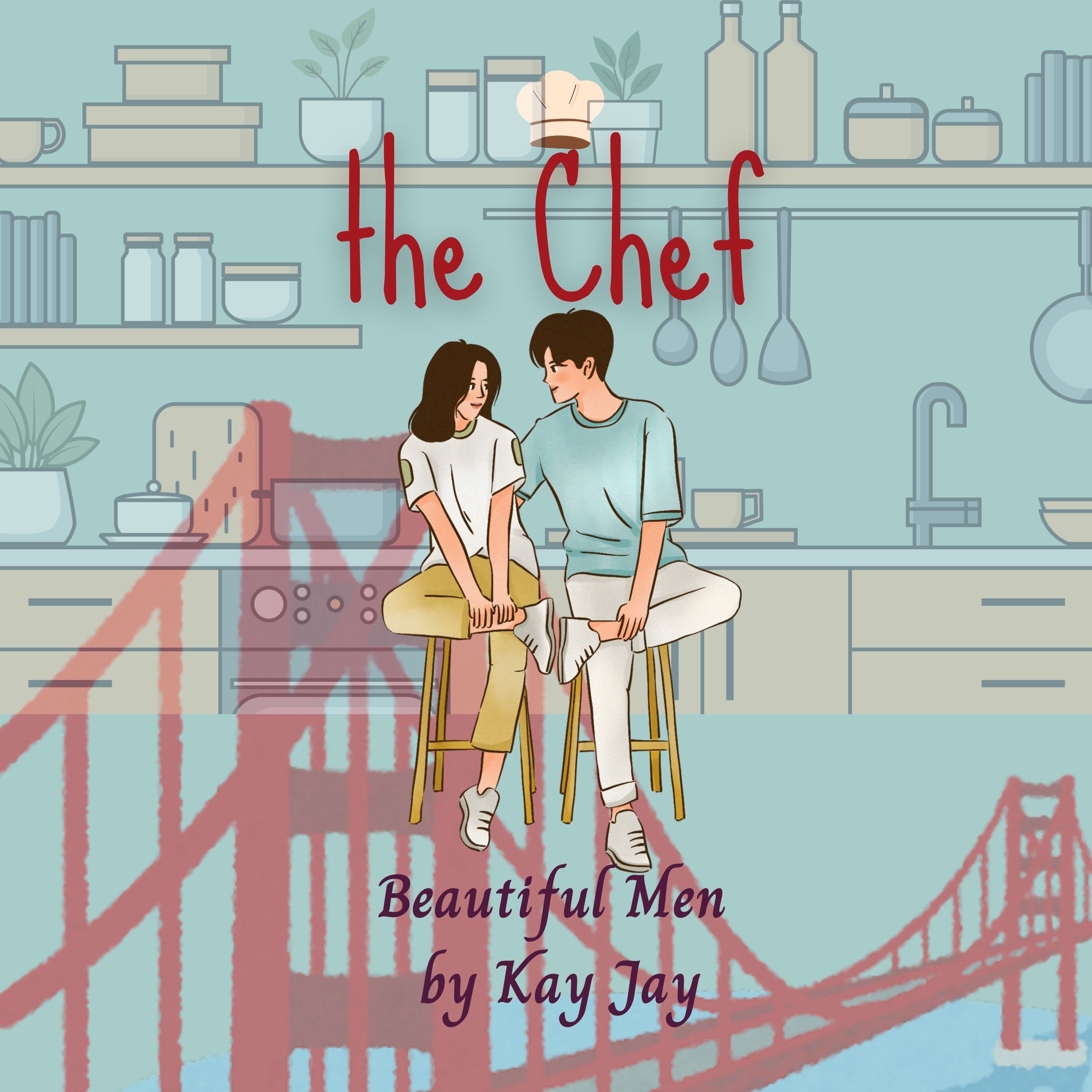
    It is the heartbeat behind Beautiful Men: The Chef, the second book in my Beautiful Men series — a world where love isn’t perfect, but real, and healing comes not in straight lines but through the alchemy of the ordinary.

    The first book, Beautiful Men: The Dog Walker, began with a simple, almost cinematic image — two strangers crossing paths on a city street, their dogs in tow, their lives unraveling and intertwining in unexpected ways. Some readers called it tender; others called it uncomfortable. One even called the protagonist “nuts.” And yet, isn’t that what love feels like sometimes — messy, inexplicable, slightly mad?

    I wanted to capture the ache that comes with wanting deeply — the way modern love stretches between digital screens, algorithms, and silent prayers for connection.

    But The Chef moves differently.

    It’s less about the longing for someone and more about learning to create with them — in the same way two hands knead dough together, or two hearts share silence over a simmering pan.

    Kevin, the protagonist of The Chef, isn’t a perfect man. He’s a chef with a restless soul, haunted by burnout and depression, trying to make sense of the noise within him through the quiet discipline of flavor. Tammy, his counterpart, is a woman of contrasts — logical yet impulsive, grounded yet drawn to passion like a moth to fire.

    Their story unfolds in the language of taste: the sweetness of connection, the bitterness of misunderstanding, the umami of growth. Together, they discover that love, much like cooking, isn’t about perfection — it’s about balance, patience, and surrendering to the process.

    Success, in this context, is no longer external.
    It’s internal — spiritual.

    It’s in Kevin choosing to get up after another failed recipe, to try again not just in the kitchen but in love. It’s in Tammy learning to stay open despite her fears. It’s in the courage to admit that vulnerability is not weakness — it’s the purest form of strength.

    When I wrote Beautiful Men: The Chef, I wasn’t just writing about food. I was writing about nourishment — the kind that feeds the soul. I wanted readers to taste the butter melting on warm bread and feel the ache of two people realizing that the meal, like love, is ephemeral — meant to be savored, not possessed.

    We live in a world obsessed with being seen, liked, and followed.
    But The Beautiful Men series invites readers to slow down, to feel again. To see beauty in imperfection, intimacy in silence, and meaning in the most ordinary of moments — a shared coffee, a dog’s wagging tail, a spoon dipped into soup prepared with care.

    True success, I’ve come to believe, isn’t measured by applause or accomplishment, but by how deeply we can live — how fully we can love despite knowing that everything we love will, one day, end.

    The Dog Walker asked: Can love exist without possession?
    The Chef asks: Can love heal what life breaks?

    And maybe, when all the noise fades and the lights go out, success is simply this — to have created something beautiful, no matter how temporary, and to have shared it with another soul who truly saw you.

    So when I think of the word “successful,” I think of Kevin standing in his kitchen, lost in the scent of garlic and thyme, or Tammy smiling at him across the counter, her heart steady for the first time in years. I think of their quiet triumph — not in grand gestures, but in showing up for each other through doubt, fatigue, and silence.

    That’s what the Beautiful Men series is all about — love that humbles, heals, and humanizes.
    Not the love that looks perfect in photographs, but the kind that smells of burnt toast, late-night confessions, and forgiveness.

    Because in the end, maybe success isn’t about how far we’ve come.
    Maybe it’s about how tenderly we’ve lived — and how beautifully we’ve loved.


    Read Beautiful Men: The Chef — a story of food, love, and the quiet courage it takes to begin again.

  • What Personality Trait in People Raises a Red Flag With You?

    What Personality Trait in People Raises a Red Flag With You?

    If I had to name just one red flag that makes me pause, it’s inconsistency.

    Not the harmless kind, like forgetting where you left your keys, or changing your dinner order at the last minute. I’m talking about the kind of inconsistency where people’s words and actions don’t line up—where promises float like balloons but never land, and where affection shows up only when it’s convenient.

    I’ve lived long enough, and tripped over enough potholes—both real and metaphorical—to know what that kind of inconsistency does. It confuses you. It makes you question your worth. And worst of all, it tempts you into following breadcrumb trails that lead absolutely nowhere.

    I’ve seen it in love. Like the man who could charm me on Zoom but turn into a stranger when we finally met in real life. Or the ex who reappeared at a family wedding, smiled sweetly at my aunt, and had her plotting our imaginary reunion while I stood there thinking, This is not the movie she’s writing in her head. Inconsistency has a way of dressing itself up as possibility, but really, it’s just another pothole on the road you didn’t ask to drive down.

    I’ve seen it in work, too. The interviews where big companies promise innovation, but what they really want is someone to follow instructions and color inside the lines. The leaders who ask for storytelling, then cut the story short the minute it gets uncomfortable.

    And I’ve even seen it in myself—those times I held light for others while hiding in my own darkness, or the moments I chased the “right” career because it looked good on paper, even though my heart was hungry for something else.

    Here’s the truth I’ve learned: consistency is not about being perfect. It’s about alignment. Do your actions align with your words? Does your presence align with your promises? Does your life align with what you say matters most to you?

    These days, I raise a quiet flag of my own when I sense inconsistency. It doesn’t have to be dramatic—just a gentle mental note that says, Pay attention. This may not be safe ground.

    And while I still stumble, I no longer follow every breadcrumb trail. Some paths are not meant for me. Some lessons I’ve already learned. And some red flags, once you’ve named them, no longer need to entangle you.

    That’s the kind of wisdom I explore in my memoir, Life Decisions and Potholes. Because life isn’t just about the roads you choose—it’s also about learning which detours aren’t worth your time.


    This is the story of my chaos, my pivots, my heartaches, and my laughter—if you’ve ever had life fall apart (and then laughed about it), this book’s for you.