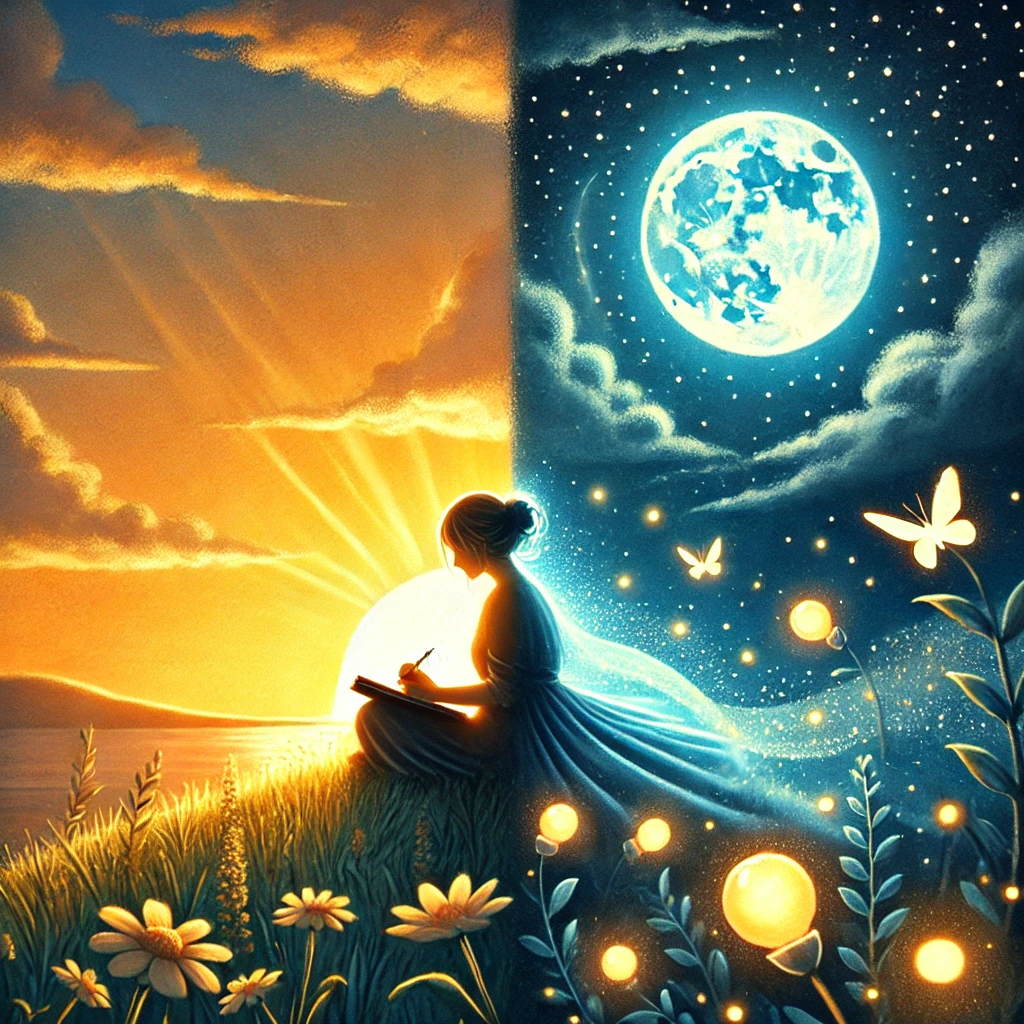
Are you more of a sunrise poet or a midnight philosopher? For me, it’s less about the time of day and more about the energy it brings. Mornings are like a clean slate, a quiet promise of possibility where I can sip my coffee and dream of conquering the world (or at least my to-do list). But nights—oh, nights—they’re a different kind of magic. That’s when the overthinking kicks in, but so does the creativity. It’s like the stars are whispering all the ideas I didn’t have time to hear during the chaos of the day.
So, maybe I’m neither and both—a morning person in spirit but a night owl in practice. Or perhaps I just exist in that liminal space where dreams turn into ideas, whether it’s 7 a.m. or 2 a.m.
I’ve realized it’s not about picking sides—morning or night—but about finding those golden moments where your mind feels alive, your heart feels full, and your soul feels curious. Sometimes it’s watching the sunrise with a notebook in hand, and other times it’s chasing inspiration under the moonlight with a half-forgotten idea that suddenly demands attention.
If I had to choose, I’d say I’m a “whenever-the-muse-strikes” person. Because let’s be honest, life doesn’t always align with a clock, and creativity? That’s a rebel with no curfew.
What technology would you be better off without, why?
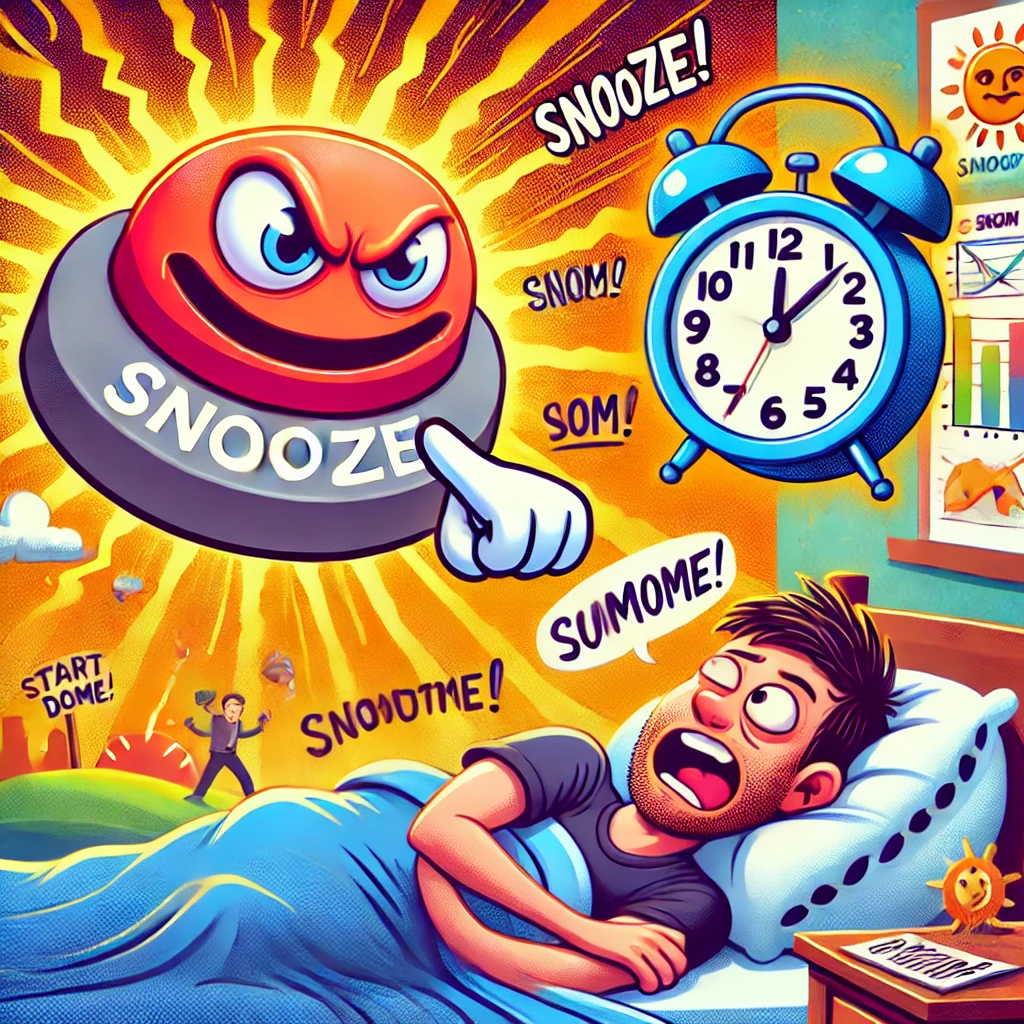
I’d leave behind the Snooze Button. It’s a deceptive little piece of technology, enabling the illusion of “more time” while actually stealing your most productive hours. Think about it—how many world-changing ideas, quiet reflections, or early morning epiphanies have been obliterated by those extra 9 minutes? Without it, we might be forced to confront the day head-on, embracing the discomfort of waking up as a metaphor for all the other challenges we shy away from. Plus, let’s face it, no one ever really feels better after snoozing. It’s a tiny time thief we’ve let live rent-free in our lives for too long.
The Technology That Silently Steals Our Potential
At first glance, the snooze button appears harmless—a small convenience for the sleep-deprived, a comforting bridge between the harsh reality of waking up and the softness of slumber. Yet, this unassuming piece of technology has quietly embedded itself into our lives as an accomplice in procrastination and missed potential. It’s time to confront its true nature and consider what life could look like without it.
The Deceptive Allure of “Just 9 More Minutes”
The snooze button thrives on one seductive promise: “just a little more time.” But what does it really offer? The extra minutes it grants us are rarely restful. Sleep experts have long debunked the myth of the “second snooze.” Those fragmented bits of sleep fail to provide the deep restorative cycles our brains need. Instead, they deliver grogginess and, ironically, more fatigue—a phenomenon known as sleep inertia.
But the problem runs deeper than biology. The snooze button doesn’t just delay our mornings; it sets a tone for the entire day. By indulging in the snooze, we’re practicing avoidance. We’re allowing hesitation and resistance to gain the upper hand before we’ve even taken our first conscious step.
The Ripple Effect of Hesitation
Habits are powerful forces, shaping the trajectory of our lives in ways we don’t often realize. The act of snoozing is no exception. When we repeatedly choose to hit snooze, we reinforce the habit of delay. The simple act of rolling over instead of rising becomes a subconscious declaration: “I’m not ready to face the world.”
This decision reverberates throughout the day. Maybe we put off responding to an important email, delay starting that passion project, or avoid an uncomfortable conversation. The snooze button teaches us, in small but consistent ways, that it’s okay to defer the things that matter.
What Could We Gain by Letting Go?
Imagine a world without the snooze button. Without the option to delay, we might finally embrace the discomfort of waking up as an opportunity for growth. Mornings would become a time of clarity and action rather than hesitation and fogginess. The challenge of getting out of bed could transform into a daily exercise in resilience—a microcosm of the larger battles we face in life.
By abandoning the snooze, we’d reclaim our mornings. Those early hours, often untouched by the chaos of the day, are fertile ground for creativity, reflection, and productivity. It’s no coincidence that many of history’s most influential figures—from Benjamin Franklin to Maya Angelou—practiced disciplined morning routines. They understood that the way we start the day shapes its entirety.
A Metaphor for Bigger Battles
Leaving the snooze button behind isn’t just about mornings; it’s about mindset. It’s about confronting life head-on, without the crutch of delay. It’s about waking up—literally and metaphorically—to the opportunities and challenges before us.
In a world obsessed with innovation, we often focus on what new technologies we can create, but perhaps it’s equally important to consider what we should leave behind. The snooze button, a relic of avoidance, has no place in a life driven by purpose and intention.
So tomorrow, when the alarm rings, resist the urge to hit snooze. Get up, take a deep breath, and step into the day with courage. You might be surprised by what those first few moments of action can spark—not just in your morning, but in your life.
I generally don’t have the patience to sit down and read a book cover to cover.
I take my time absorbing it, breathing in it and completely internalizing it.. that is.. if I really like the book.
Here I am only talking about non-fiction. That’s been my genre lately.
So going back to this book I am reading – Focused Manifesting.
I picked this book around a time when nothing was working for me. No power of attraction. No amount of meditations. No amount of mindfulness techniques. To an extent where I had completely given up on life and had even stopped trying to push through my dreams.
It’s usually these times when a good book finds you. And that’s how Focused Manifesting found Me.
A few things that resonated in this book that have not really been written about anywhere else:
Effect of Pendulums – These are social, economic and existential factors whose combined effect acts as a moving pendulum that could affect our better judgements during our manifestations for ourselves. Eg: Family pressure, peer pressure, etc. This resonated with me a ton given I had just changed my living situation from living by myself to living with my family. Because of this change the social pendulum s had started acting against me.
Emotional Inertia – This one was a game-changer for me. I was caught in a past that was non-existential. But the emotions that I had gathered and stored into my psyche (emotions from the past) still had a combined effect on my present which was a huge obstacle in manifesting my dreams for the future.
I am still reading the book. But one thing I know for sure.. the right book had finally found me.
Who is the most famous or infamous person you have ever met?
Ashton Kutcher!
I was attending a hackathon that he was hosting for human trafficking and victims of child abuse – causes close to my heart. I was (and still am) a nerdy Data Scientist and back then I was pretty new to the Silicon Valley culture.
A hackathon was usually a networking event where you socialized on booze and appetizers and made your two-minute pitches to the billionaires around. But I believed in sitting and CRUNCHING NUMBERS to win this effing thing.
While being at my nerdy best, I realized my head was bumping against something right behind me. So I turned to give an annoying look to whoever they were. And when I did, I froze! It was Ashton!
His butt kept bumping into my head as he rocked the chair that he was leaning against. MY CHAIR!
Well, although I froze and did not sleep that night, I did not say a word to him. I just continued crunching my numbers!
If you could live anywhere in the world, where would it be?
There is something about this city that draws you in. She takes her time with you. Tests you patience and puts you through her own path for you. But she does grow on you.
I have lived in this city for over a decade and in this time I walked through the uphill downhill streets of my life exactly like the streets of San Francisco.
While I was not made to feel welcome by its people right away her and me had a thing of our own. She showed me the world through her own lenses.
There were times when she made me feel lonely, but even then she made me feel absolutely connected and in love with her.
There is no other place I’d want to be as much as I’d want to be San Francisco.
You ever start watching a movie, and halfway through, realize you’re not even invested in the characters anymore? Nope, it’s not about the hero’s journey, the love triangle, or the big dramatic reveal—it’s about that plate of food that just casually strolls in and becomes the real star of the show. Let’s be honest, a perfect steak or a steaming bowl of ramen can outshine the most complex plot twist any day. Here’s a breakdown of those unforgettable movie food moments that had us all salivating and plotting our next meal.
1. The Ultimate Comfort Spread
There’s something magical about those scenes where someone returns to a kitchen full of dishes that taste like love. You know, that kind of spread that feels like a hug on a plate. Maybe it’s a bubbling pot of stew, maybe it’s fluffy rice paired with something rich and saucy. Whatever it is, it’s the food that says, “Hey, life is tough, but here’s something to make it a bit more bearable.” It’s the reason we all want a friend or relative who can whip up soulful dishes that heal more than hunger.
2. The Kitchen Showdown
Then there are those moments where two chefs go head-to-head, and it’s like a food version of an epic duel. One’s carefully plating a dish with tweezers, while the other is over there throwing spices into a pan like it’s a sport. These scenes are everything. They remind us that cooking isn’t just a skill—it’s an art, a competition, and a little bit of theater. And, of course, they leave us wondering why our version of “fine dining” usually involves whatever can be microwaved in under three minutes.
3. Tiny Kitchens, Big Ambitions
I love scenes where someone’s creating a masterpiece in a kitchen so small it’s practically a closet. Pots teetering on the edge, ingredients in every possible corner, and the character moving around like they’re trying to dance on a postage stamp. Then they pull out a perfectly browned roast or a gorgeous tart, and you’re just left wondering why your attempt at making toast ends with the smoke alarm going off.
4. Midnight Snack Therapy
The late-night kitchen scene is a personal favorite. It’s quiet, almost sacred—the fridge light flickers on, and the character begins their therapy session with a knife and cutting board. There’s a meditative quality to it as the sizzle starts, and by the time they’re twirling pasta or scooping rice into a bowl, you’re not sure if you’re inspired or just really, really hungry. These scenes always make me think I should put more effort into my 2 AM snacks than just grabbing chips and calling it a night.
5. Baking Magic 101
Let’s talk baking scenes, where flour seems to float like it’s in a dream and everyone’s hands stay mysteriously clean. Watching dough rise, icing drape over a cake, or seeing a perfect golden crust emerge from the oven is strangely hypnotic. It makes you want to rush into your kitchen and bake something, only to remember your last attempt ended with a loaf that could be used as a doorstop.
6. The Victory Bite
And finally, there’s that unbeatable moment when the dish is finished, served, and tasted. That first bite that makes everyone’s eyes widen, and forks hover mid-air. It’s like the taste is so good, time slows down for a second. It’s the kind of scene that makes you want to cheer, and then march to your kitchen thinking, “Tonight’s the night I make something incredible,” before inevitably resorting to cereal and calling it gourmet.
So, next time you watch a movie, don’t just reach for the popcorn. Get ready to fall in love with the food, root for it like it’s the underdog, and maybe even pause the movie to raid your pantry. Because in the end, it’s the food that steals the scene and stays in your memory long after the credits roll.
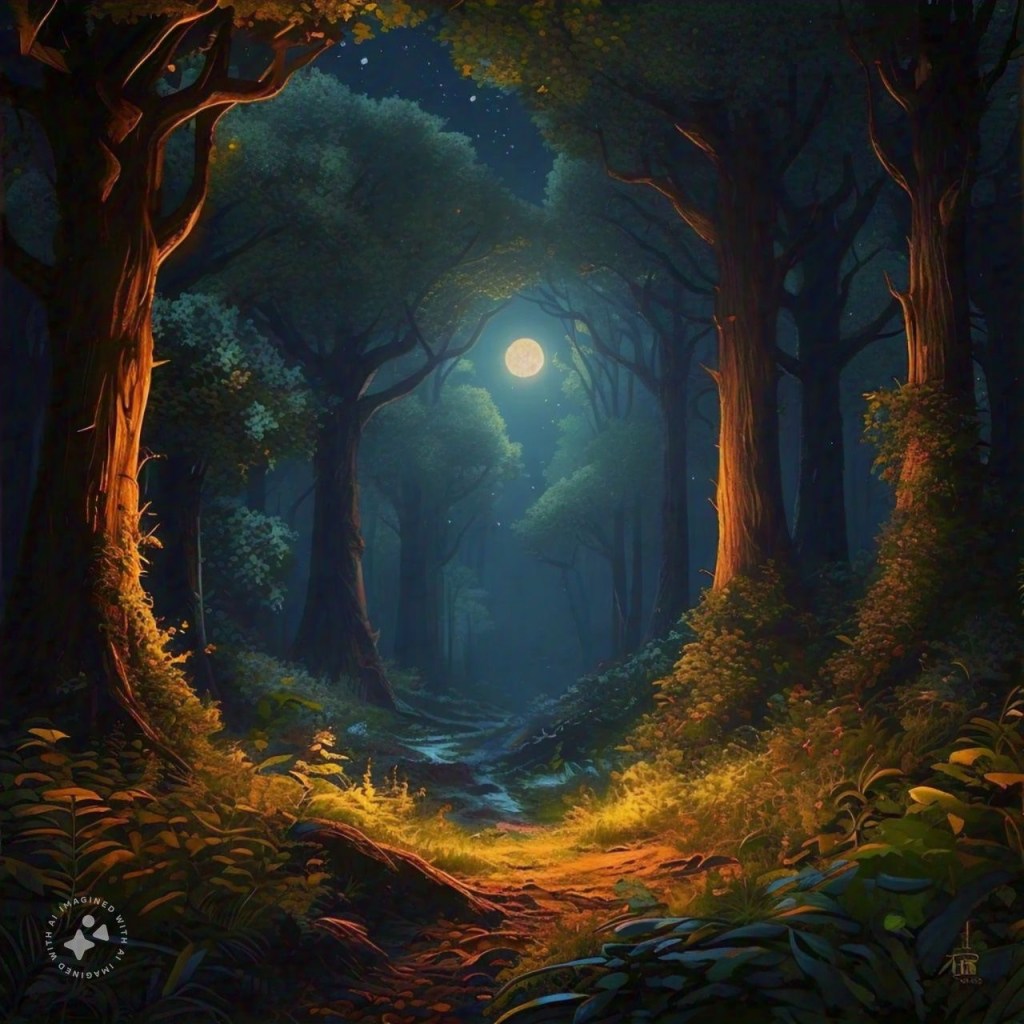
The night sky draped over the forest like a velvet cloak, its deep hues speckled with shimmering stars. The air was cool, humming with the subtle rustle of leaves as a gentle breeze threaded through the trees. Kayra, with her serene presence, moved gracefully along the path that led to the heart of the forest—a place where time seemed to pause and the ordinary was laced with magic.
Noir had always been an enigmatic presence in her life. Their first meeting was fleeting, like a shadow slipping past in the dark, yet it left an imprint on her soul. There was something about his eyes that spoke of distant storms and quiet nights; a depth that pulled at her own hidden corners. They walked separate paths, their lives brushing against each other only when the moon shone full and bright, casting silvery light across the world.
On this night, the moon was especially luminous, bathing the forest in an ethereal glow. Kayra paused by the ancient oak tree, its twisted roots clawing into the earth like a guardian of secrets. She ran her fingers along the bark, feeling its roughness against her skin—a grounding sensation. She was waiting, though she wouldn’t say it aloud. Waiting for the presence that seemed to always find her under this moon.
Then, she heard it—the barely perceptible sound of feet brushing against the undergrowth. A figure emerged from the shadows, taller and lean, moving with a kind of elegance that belonged more to the wind than to any being. Noir.
He stopped a few paces from her, his dark eyes catching the light. They stood in silence for a moment, the space between them thrumming with an unspoken recognition.
“Kayra,” he said, her name rolling off his tongue like a prayer. His voice was both familiar and foreign, like a song remembered from a past life.
“Noir,” she replied, a soft smile curving her lips.
There was no need for small talk. They knew the essence of each other, woven through glances and moments that spoke louder than words. Noir stepped closer, the warmth of him radiating through the space until it wrapped around her like a cocoon. She met his gaze, unflinching, as though daring him to read the uncharted depths of her heart.
He reached out, his fingers brushing against hers. The simple touch sent a shiver down her spine, a reminder of how raw their connection was. Time felt suspended, the night holding its breath as if afraid to disturb the sanctity of this encounter.
“You always come back,” Kayra whispered, the vulnerability in her voice betraying the guarded exterior she tried to maintain.
“I never really leave,” Noir replied, eyes darkening with a mixture of longing and melancholy. His hand traveled to her cheek, cupping it as if she were made of glass.
In that moment, the world seemed to dissolve. The worries, the fears, the questions that gnawed at the edges of their minds—all fell away. What remained was the magnetic force between them, undeniable and unyielding.
They stood there, under the watchful eyes of the ancient oak and the benevolent moon, two souls recognizing themselves in the other. The forest, their silent witness, whispered with approval as if it, too, knew that some connections were written into the fabric of the universe.
And as the first light of dawn threatened to spill over the horizon, Kayra lingered in the embrace of the night, their hearts silently vowing to find each other again.
Noir exhaled slowly, a breath that carried the weight of years, of lifetimes. His thumb brushed her cheekbone, lingering there as though memorizing the curve of her face. The shadows of the forest seemed to pulse, shifting around them as if protecting this stolen moment. Kayra leaned into his touch, eyes fluttering shut for just a second, savoring the electric warmth that passed between them.
“It’s always like this,” she said, opening her eyes to meet his. They shimmered with unshed emotion, a glistening edge that spoke of both joy and sadness. “I feel you even when you’re not here.”
Noir’s expression softened, the hard lines of his jaw easing as a wistful smile ghosted across his lips. “You and I, Kayra, we’re threads of the same story. Even when we’re pages apart, we’re still bound by the same spine.”
The poetic truth of his words stilled her. She had tried to convince herself that this connection was an illusion, a trick of the mind conjured by moonlight and the lonely whispers of the night. But every time he stood before her, flesh and blood, the undeniable truth resurfaced.
A sudden breeze stirred, carrying with it the scent of jasmine and wet earth, and Kayra shivered. Without thinking, Noir moved closer, his arms encircling her shoulders. The touch was firm yet gentle, a promise that he would hold her, even if only for this fleeting time. She felt his heart beat against her own, their rhythms aligning in a way that made the rest of the world seem silent.
“Tell me,” she said, her voice barely audible, “why does it hurt so much when you leave?”
Noir looked down, eyes shadowed with a torment he had never fully spoken. The moments of connection between them were always sweet, but the partings left a chasm that echoed long after. “Because every time I walk away, it feels like tearing apart something that was meant to be whole,” he admitted, his voice rough with emotion. “But I come back because I can’t stay away.”
Kayra closed her eyes again, this time to steady the surge in her chest. She knew this feeling—the intoxication of being known, of being seen. And she knew the ache that followed, the quiet void that expanded when he was gone. But tonight, she let herself bask in the moment. She tipped her head up and pressed a kiss to the corner of his mouth, a whisper of contact that spoke of acceptance, of an unspoken understanding.
The night continued to deepen around them, the moon now high in the sky, casting its silver light like a spotlight on two souls who had found each other in the labyrinth of life. The forest remained still, as if paying homage to a love that defied boundaries, a connection that felt as old as the stars themselves.
In that stolen space between heartbeats, between moonlight and shadow, Kayra and Noir held each other, knowing that whatever the dawn would bring, this moment was theirs. A fleeting eternity where neither needed words, where the language of touch, of breath, and of heartbeat spoke louder than anything else.
And so, as the first bird sang the arrival of morning, they stood entwined, caught in the delicate web of love, loss, and the inevitability of longing that defined their story.
I woke up this morning to the gentle glow of dawn, the light creeping through the curtains, and there it was—a message from Alex. “Morning sunshine… my Emma… hope you have a nice day today.” Simple words, but they hit me in that familiar way, like a soft pulse in my chest. It’s funny how a message can feel so warm yet so far away. He was thousands of miles away, juggling the chaos of his life—his demanding job, his army reserve duties, and yet, always making space for me.
It’s strange to think about how this all started. A Zoom call I hadn’t even planned on joining, just a casual get-together with friends, turned into late-night conversations that stretched into the early hours. Alex wasn’t like anyone I’d met before. There was something in the way he spoke, how his words carried weight without feeling heavy. The more we talked, the more I realized that behind his calm, thoughtful eyes was a mind brimming with stories and a heart full of contradictions. He was part engineer, part soldier, and all writer—a man who held discipline in one hand and emotion in the other.
We started planning to meet. The idea felt electric, a secret we whispered across phone lines and text bubbles. “The waterfront,” he’d said, picturing us walking by the pier, talking, laughing—finally breathing the same air. But life has its own plans, doesn’t it? Just days before he was supposed to come, a message from him appeared on my screen. “Babe, I’m not feeling well. Fever and aches. I don’t think we can meet.”
I read it over and over, trying to let the words settle. Part of me wanted to scream at the sky. The other part nodded in resigned acceptance. Timing, that fickle thing, had struck again. We kept talking, but it was different after that. My move back to Europe was getting closer, and the texts became shorter, less charged. He was busy writing and managing work; I was packing up my life and bracing myself for change. The connection that had once been our lifeline was fraying at the edges.
One night, surrounded by half-packed boxes and the echoes of our old conversations, I started typing a message to him. An invitation, a plea, maybe even a challenge to defy the odds and meet before I left. But the words just sat there, unfinished. I couldn’t hit send. The silence felt safer, less fragile than hope.
Back home, my life found new rhythms. The days were full, sometimes even fulfilling. I reconnected with my love for writing, pouring my emotions into essays and short stories that were published in local journals. The pull of mindfulness and meditation deepened, grounding me in ways that felt both new and familiar. But there were quiet nights when the world would fade, and I’d feel the ghost of Alex’s words, his laughter. The connection that had felt so real still lingered, a whisper on the wind.
Then, years later, my phone lit up with a message that made my heart skip, stumble even. “Hey Emma, it’s been a while. How have you been?” I stared at his name, my fingers hovering, unsure. A part of me wanted to leave it unread, keep the distance intact. But another part—curious, hopeful, reckless—told me to respond.
“Hi Alex, it really has been a long time. I’m doing well, thanks. How about you?” Simple words for a complicated past.
Our conversation was careful at first, polite updates about work and life. He told me he’d published a book, a collection of stories that he’d been working on for years. One of them, he said, was about us. I felt something catch in my chest when he sent it to me. I read it that night, the lamp casting warm light over the pages. It was like seeing our story reflected back at me through his eyes—two people who met by chance, connected deeply, and drifted apart because the world had other plans. The story ended with them walking away from each other, still carrying pieces of what they shared.
The next day, I wrote back, “Your story is beautiful, Alex. Thank you for sharing it.”
“Thank you for being my muse,” he replied, and I could almost hear the sigh in those words.
We started talking more after that, not as lost lovers but as friends who understood what it meant to have lived through something that mattered. The longing was gone, but what remained was warm, comforting—a testament to what we had been to each other.
Tonight, the air is heavy with the scent of the sea. I’m sitting on my balcony, the city lights flickering like old memories. And as I breathe it all in, I feel a sense of peace that’s been a long time coming. Not every story is meant to last forever, but some are worth keeping in the quiet corners of your heart. Alex will always be there, a whisper carried by the wind, woven into the story of who I am.
In the globalized chaos of the modern Indian household, the kitchen is less a room and more a cultural relic—like the rotary phone or the fax machine. It exists somewhere in that grey area between ritual and nuisance, a place where familial relationships are fermented alongside homemade pickles, even as everyone involved wishes they could outsource the whole thing to Swiggy or Uber Eats. The old adage that “too many cooks spoil the broth” remains relevant, though the cooks in question have evolved. Today, the battlefield of the kitchen is occupied not by stay-at-home mothers but by tech-driven, jet-setting bicoastal families who divide their time—and cuisine—between Mumbai and San Francisco.
In this scenario, the mother is a high-powered executive managing a team spread across four time zones while fielding calls from various boards. Her laptop hums on the granite countertop, surrounded by the detritus of half-finished spreadsheets and hastily chopped garlic. The daughter, a product of private international schooling, lounges nearby, multitasking between her Stanford coursework on AI ethics and managing the family’s social calendar. The son—a culinary enthusiast and self-proclaimed foodie who’s recently returned from an artisanal bread-making workshop in Copenhagen—stands by the stove with a sous-vide machine he bought online after watching one too many episodes of Chef’s Table.
Naturally, conflicts arise. The son, emboldened by his newfound passion for Nordic cuisine, starts ranting about how traditional Indian cooking methods are “so unscientific.” He scoffs at the idea of tempering spices in hot oil. “Do you know how much smoke that releases into the air? We should think about the carbon footprint.” He’s been on a sustainability kick ever since reading an article on The Guardian that argued vegetarianism alone won’t save the planet.
The mother, still half on her 10 a.m. Zoom with the New York office, manages to roll her eyes without taking them off the screen. “Beta, people have been tempering spices for centuries, and the planet has managed just fine,” she says, clicking through a slideshow of quarterly growth metrics. “Focus on making the dal without turning it into a manifesto on climate change.”
Meanwhile, the daughter smirks behind her MacBook. “This is why I only eat plant-based,” she adds, never missing an opportunity to plug her lifestyle as an extension of her identity. “Why don’t we make quinoa khichdi instead?” She knows full well that the very suggestion of quinoa will incite a low-level riot among the more traditional family members. Her grandfather, whose time in the kitchen is limited to making chai, is quick to chime in. “Quinoa is for rabbits,” he grumbles from the living room, not bothering to look up from NDTV, where the latest political debate features the merits of an India-US trade deal. “Rice has fed us for centuries.”
The debate over ingredients mirrors the family’s identity struggle: are they more Mumbai or San Francisco? More masala or microgreens? It’s not just a question of taste; it’s a question of allegiance. The mother’s kitchen cabinet is stocked with spices sourced from a local Indian grocer in the Bay Area, but the refrigerator contains a fair share of cold-pressed juices and kale. Somewhere between the ground turmeric and the Greek yogurt lies the heart of the problem: nobody knows exactly what they’re cooking anymore, least of all the son, whose attempts at culinary fusion mostly consist of drizzling sriracha over everything.
Tensions escalate when the grandmother—a formidable presence who divides her time between dispensing free medical advice and WhatsApp gossip—enters the fray. She insists on giving everyone a crash course in the Ayurvedic properties of fenugreek, although no one asked. “This is why your digestion is terrible,” she declares, pointing a wooden spoon at her grandchildren like a sword. “Eating all this pizza and sushi. And now, you want to add quinoa to khichdi?” She shakes her head, resigned to the fact that her children and grandchildren may be able to discuss the latest developments in global tech policy, but not the proper way to peel ginger.
And, of course, the men—having embraced the spirit of modernity—are no longer the distant critics of old, appearing only to comment on the level of spice in the curry. Oh no, they’re far more “aspirational” now. The father has a YouTube cooking channel, where he attempts to combine Michelin-level plating with Mumbai street food classics, all while delivering philosophical reflections on India’s G20 presidency and the latest economic policies. He posts videos tagged #fusionfood and #kitchensofinstagram, despite not fully understanding what these hashtags mean. His recipe for “avocado bhel” went viral for all the wrong reasons.
To complicate things further, the family’s bicoastal lifestyle adds logistical wrinkles. When in San Francisco, the ingredients must be Whole Foods compliant: organic, fair trade, with packaging that reassures you about the sustainable future of the planet. In Mumbai, however, it’s a return to the familiar chaos of local markets, where there are no labels, no guarantees, and no end to the haggling. The produce vendor’s response to the question “Are these free-range?” is a blank stare that implies: “Madam, they’re chickens, not political prisoners.”
In the midst of this culinary confusion, attempts are still made to honor some semblance of tradition. The family decides to prepare a Diwali meal together, which turns out to be an exercise in project management, more akin to coordinating a UN climate summit than making pakoras. The mother, who’s recently taken an online course in mindfulness to deal with stress, suggests that everyone should “set an intention” before cooking. The son, who spent a semester abroad in Paris, insists on adding a cheese course because “it’s an important part of the meal in Europe.” The daughter starts making a spreadsheet to track ingredients, sourcing, and—naturally—the carbon footprint of each dish.
Ultimately, the kitchen becomes a metaphor for everything that goes right and wrong in this bicoastal life. It is a space where global politics meets ghar ka khana (home-cooked food), where debates about sustainability are conducted over kadhi, and where familial love is served in the form of imperfect, sometimes inedible fusion dishes. No one really knows what they’re doing, but that’s okay because the food, like the family, is a work in progress. Yes, the khichdi might end up tasting faintly of quinoa, or the bhel might feature suspicious chunks of avocado, but they’ll eat it together. And at the end of the day, that’s what really matters.
Or so they’ll tell themselves, as they sneakily open their delivery apps under the table.
I once had a crush on a guy around the first year of High School.
We became friends. We even went to the same undergrad school. We have been together since as classmates, best friends, etc. We had the same group of friends in college. I still had the same feelings for him that I had since we first met. To an extent that I never really noticed anybody else. I made loads of friends around this time but my feelings were the same. For this guy. He was my eternal soulmate (in my head). The crush began when I was 16 and at 22 I still felt the same for him. We were still close friends. The very best of friends.
Did he know about my feelings? Yes, no, maybe. Maybe he did. I did tell him. But I pretended like it didn’t matter.
I did not want to act on my feelings. Why? Well, I had a laundry list of reasons why… and they all made sense to me then.
To be honest, it didn’t matter to me whether I had feelings for someone or not. I was a very focused student. I wanted to do well on my grades and have a good career.
And I did. I made a very good career for myself.
Then after graduating from college and getting myself a good job, I met someone, at 22.
I got into a relationship with this guy. My very first **real** relationship.
I felt then that all my “feelings” will now be transferred to this person, who was also a good friend. We connected on a lot of shared interests and hobbies. We had things in common.
So though I was not quite in love with this person, he felt like a ‘better match’.
I gave it time. I waited for love to happen.
Maybe it did to an extent. I did feel something for my now boyfriend. But it was not quite the same.
My “feelings” for my best friend were still intact. Maybe now I was more distracted towards my boyfriend but my feelings for my best friend never quite went away.
I finally married the boyfriend.
Things were not great with us before or even after marriage.
Our relationship turned sour and changed into downright abuse. In my attempt to do things right by me I had married a pathological narcissist who had abused me and battered my soul.
Somehow in those difficult times, my “feelings” for my best friend came haunting back to me.
In my troubled times when married, it was my feelings for my best friend that came to the rescue and maintained my sanity. We were oceans apart then and not as much in touch. But only my feelings came to the rescue.
They rescued me from depression, from the dark nights of the soul. From my abuse-ridden trauma.
It had almost been a decade since I had discovered my feelings for my best friend.
The good thing was, he was still my confidant when needed. We had maintained distance since my boyfriend and now husband came into the picture, but we still bonded like we used to. We were still best friends.
I shared titbits of my life with him whenever I got a chance.
When I eventually got divorced, he was there for me. He became my crutch around that period when getting up and meeting a real person felt like climbing a mountain.
He took care of me and still helped me maintain sanity. He became my family during those times when I was fending for myself after separating with my abusive husband.
I finally got out of that troubled period and went back to being a normal person again.
We were still good friends and I still had feelings for him.
One day he called me to tell me he had finally found his The One. I was super happy for him.
But I felt sad for some time.
That is when I sent him an email. In that email I expressed myself and all that I wanted to tell him for a decade.
But it was just a congratulatory email. I was Very Happy for him.
Now all of it just a beautiful memory.
So should you tell your best friend that you have a crush on him? Yes. You definitely should.




 Kay’s Odyssey