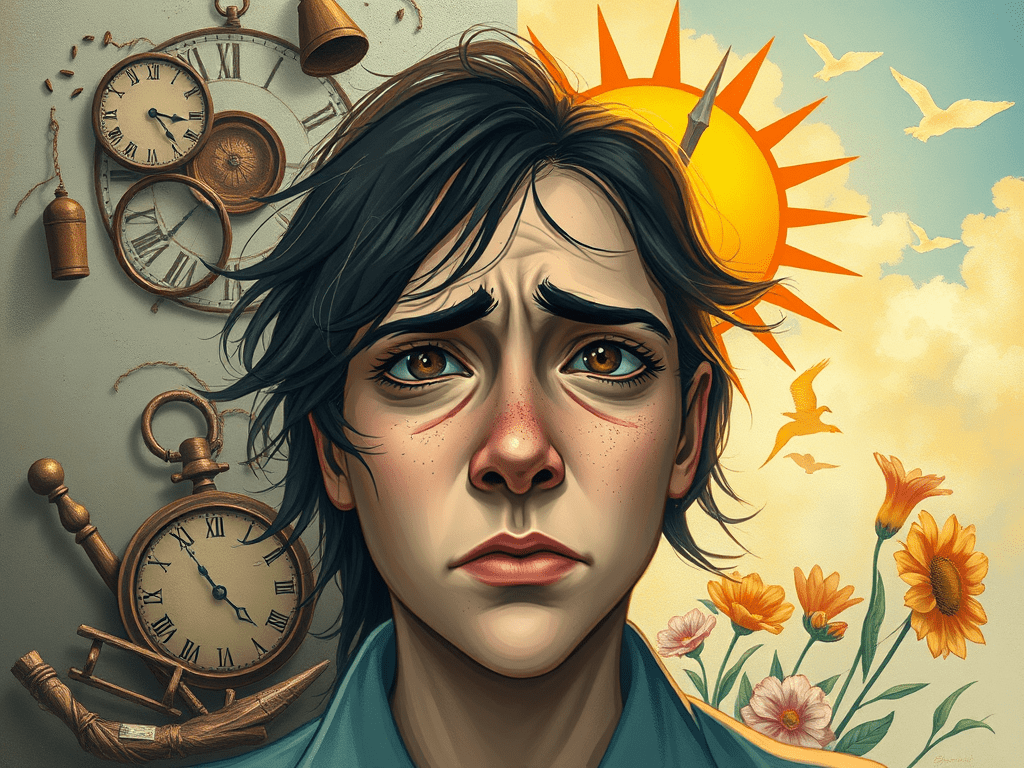
For a long time, I believed I had bad luck.
Not dramatic, headline-worthy bad luck—just the kind that shows up in careers, timing, and relationships. Opportunities that almost land. Conversations that seem promising and then quietly fade. Doors that stay half-open but never quite swing wide.
I told myself I was being realistic. Prepared. Sensible.
What I didn’t realize was that I was rehearsing disappointment so consistently that it began to feel inevitable.
Here’s the reframe that changed everything for me:
I wasn’t unlucky. I was a very effective—if pessimistic—manifestor.
Pessimism Isn’t a Lack of Belief. It’s Belief Pointed the Wrong Way.
We tend to think manifestation belongs to optimists. Vision boards. Big affirmations. Unshakeable faith.
But manifestation is really about focus.
And my focus was sharp.
I anticipated failure with detail.
I planned emotionally for outcomes that hadn’t happened yet.
I called it “being cautious,” but it was actually commitment—just to the wrong story.
Fear, it turns out, is not passive.
It is creative.
Patterns Don’t Lie. They Reveal.
When I looked back honestly, I noticed something uncomfortable:
Many of the things I worried about did happen.
Not because the world was against me—but because my nervous system expected things to fall apart. And expectations shape behavior, choices, energy, and timing more than we like to admit.
The universe didn’t misunderstand me.
It responded with precision.
The Hidden Superpower of the Pessimistic Mind
Here’s the part we rarely talk about:
Pessimists often have strengths optimists don’t.
We see patterns early.
We anticipate downstream consequences.
We imagine outcomes vividly.
We are emotionally fluent in complexity and risk.
That’s not weakness. That’s power.
The issue isn’t the mind—it’s the direction it’s pointed in.
What Changed (Without Pretending to Be “Positive”)
I didn’t become an optimist overnight. That would’ve been inauthentic.
What I did instead:
- I stopped fighting fear and started questioning its certainty
- I practiced neutral expectation instead of hope or doom
- I redirected my imagination toward outcomes where I wasn’t bracing for impact
- I noticed when things went right—and didn’t dismiss them as flukes
Small shifts. Measurable impact.
The Real Insight
Your superpower isn’t optimism.
It’s precision.
If you can unconsciously rehearse worst-case scenarios with accuracy, you can consciously draft better ones.
Not perfect.
Not naïve.
Just more spacious.
So if you’ve ever thought, “Why does this always happen to me?”
Try asking instead:
What am I consistently rehearsing?
Because rehearsal is manifestation in disguise.
And once you see that—you stop calling yourself unlucky.







 Kay’s Odyssey
Leave a comment