The greatest gift someone could give me is not love.
Not devotion.
Not consistency.
Not even honesty, though we pretend it’s rare.
The greatest gift would be presence without performance.
I learned this the hard way.
There was a time when words were abundant—beautiful, intelligent, almost spiritual. They opened doors inside me I didn’t know existed. I mistook that opening for arrival. I believed intimacy lived in articulation, that depth itself was a promise.
But presence is quieter than language.
It doesn’t announce itself.
It doesn’t need metaphors.
Presence stays when the conversation gets ordinary.
When desire isn’t poetic.
When no one is being impressive.
What broke me wasn’t loss—it was the slow realization that someone could access my inner world without ever stepping into my real one. That connection can be felt intensely and still be functionally absent. That chemistry can exist without care. That meaning can be shared without responsibility.
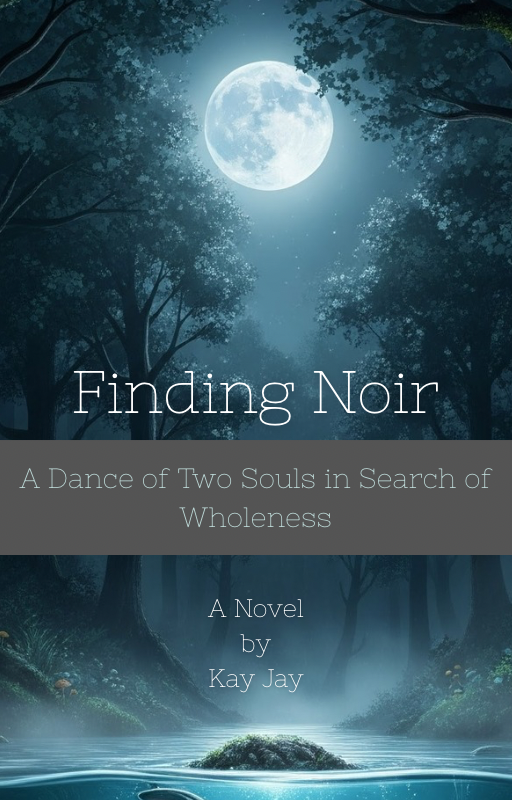
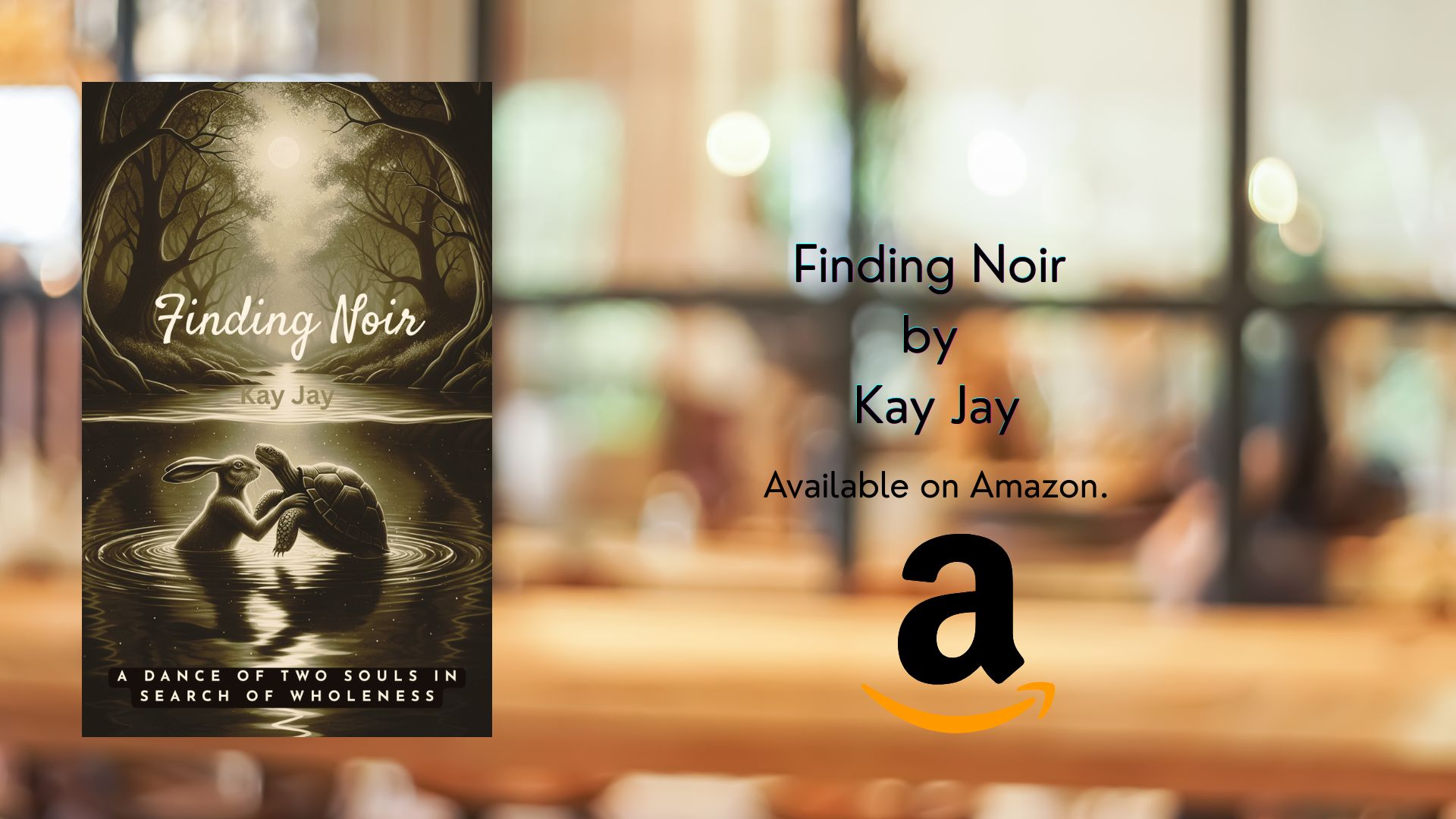
Finding Noir was born from that fracture.
It’s not a book about asking for more.
It’s a book about recognizing what was never offered.
The greatest gift isn’t someone who understands you.
It’s someone who shows up after they understand you.
And if you’ve ever been deeply seen but never chosen—
if you’ve confused resonance for reliability—
if you’ve loved in a space where presence was always implied but never embodied—
This book doesn’t promise healing.
It offers clarity.
Because once you know what the gift actually is,
you stop mistaking the wrapping for the thing itself.
Do you spend more time thinking about the future or the past? Why?
Most of us like to believe we’re future-oriented.
We talk about growth, next chapters, manifestation, moving on. It sounds healthier.
But if I’m honest, I’ve learned this:
We don’t spend more time in the past because we’re nostalgic.
We do it because something there didn’t finish.
I used to think I was imagining the future—what could have been, what might still happen. But when I looked closely, I wasn’t actually ahead of myself. I was standing in the wreckage of a moment that never got an ending, asking it to explain itself.
The past isn’t memory.
It’s unfinished business.
The future, by contrast, is clean. It hasn’t disappointed us yet. That’s why we borrow it as a fantasy when the present can’t hold our longing. We don’t want the future—we want relief from the unanswered.
Finding Noir lives in that exact in-between space: where the past keeps intruding not because it was better, but because it was incomplete. A connection that felt inevitable inside but never materialized outside. A bond that existed in language, sensation, and silence—but not in follow-through.
This book doesn’t argue for staying stuck. It asks a harder question:
What if revisiting the past isn’t regression, but an attempt at truth?
Not to relive it.
Not to romanticize it.
But to finally see it clearly—without hope doing the editing.
If you find yourself oscillating between memory and possibility, wondering why neither feels stable, this isn’t a failure of imagination. It’s a signal.
Some stories don’t ask to be continued.
They ask to be understood.
And once they are, the future stops feeling like an escape—and starts feeling like a choice.
I communicate online in fragments. In pauses. In messages typed, erased, rewritten, and sometimes never sent.
Online, I say the things I hesitate to say out loud. I confess more easily. I reveal faster. There’s a strange safety in the screen—the illusion that distance makes honesty less dangerous. I can be vulnerable without being fully seen. Present, but protected.
And yet, that same screen distorts everything.
Tone becomes guesswork. Silence becomes a language of its own. A delayed reply can feel like rejection; a typing bubble can feel like hope. Online, I don’t just communicate—I interpret. I read between lines that may not exist. I attach meaning to punctuation, timing, and absence.
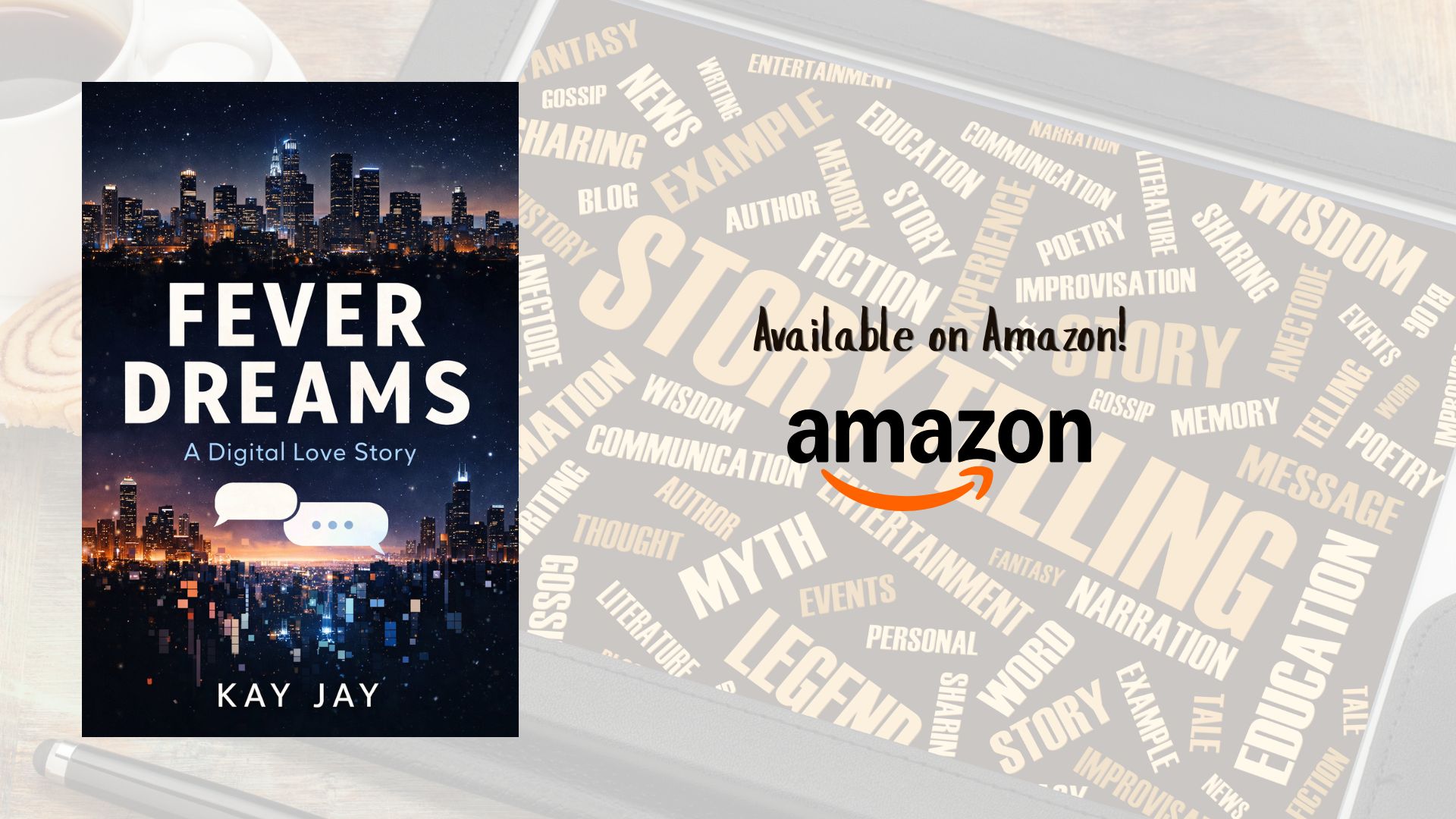
This is the paradox that led me to write Fever Dreams.
Because online, intimacy doesn’t unfold through touch or shared space. It unfolds through words. Through voice notes replayed late at night. Through conversations that stretch past midnight, where two people meet in the dark glow of their screens and believe—briefly—that this is what closeness feels like.
I’ve felt that closeness. I’ve also felt how quickly it can dissolve.
Online, we build people in our minds. We imagine their expressions. Their silences. We fill the gaps with our own longing. We construct entire emotional realities from text, and sometimes, those realities feel more vivid than the physical world around us.
In Fever Dreams, Dev and Mira communicate the way many of us do now—through messages, calls, and digital confessions that feel intense and real, yet fragile. Their connection deepens not because they share space, but because they share vulnerability. But the deeper they go, the more uncertain everything becomes. Is this intimacy real—or is it a projection of need, loneliness, and hope?
That question isn’t fictional. It’s personal.
I’ve communicated online while sitting alone in crowded cities. I’ve felt deeply understood by someone I’ve never met. I’ve waited for replies that never came. I’ve watched “tomorrow” turn into a horizon that keeps moving further away.
Online communication amplifies emotion. It sharpens longing. It gives us access to each other’s inner worlds—but rarely the full truth. What’s missing is the body language, the shared silence, the reality check of physical presence. What remains is intensity without grounding.
And still, we keep coming back.
Because despite everything, we want to be seen. We want to be chosen. We want to believe that words can carry us across distance and make us whole.
Fever Dreams was born out of that tension—the beauty and the unease of loving through a screen. It’s about what happens when connection feels real, but reality never quite arrives.
So how do I communicate online?
Carefully.
Hopefully.
And always with the quiet fear that what feels intimate today might become silence tomorrow.
If that sounds familiar, Fever Dreams might feel uncomfortably close to home.
That there was a moment of hesitation, a quiet instinct ignored, a clear sign misread. But most of the decisions that shaped me arrived without warning and unfolded without commentary. They felt reasonable at the time. Defensible. Sometimes even brave.
The consequences arrived later.
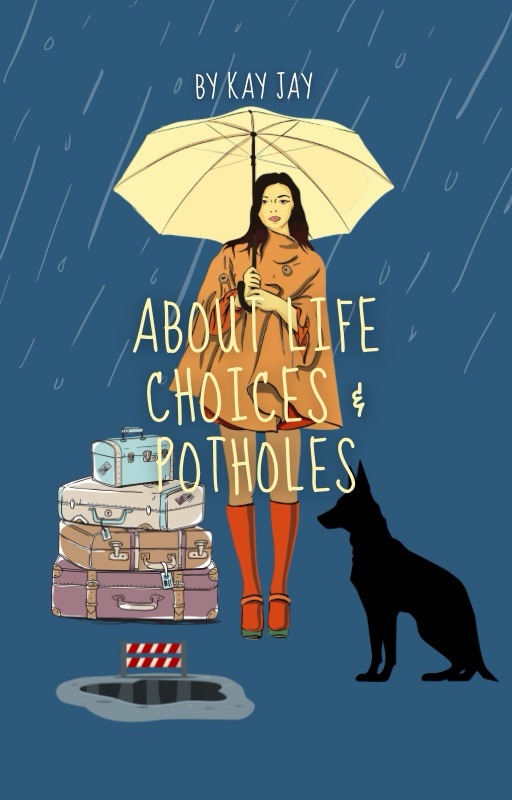
About Life Choices and Potholes begins with that delayed realization—the distance between choice and comprehension. It is written from the understanding that wisdom rarely precedes action. More often, it trails behind it, attempting to make sense of what has already occurred.
This book is not a guide to better decision-making. It does not offer frameworks, heuristics, or corrective strategies. It is an examination of how insight is actually formed: through collision, through aftermath, through the slow, often uncomfortable work of reflection.
We are encouraged to believe that good outcomes result from good choices, and bad outcomes from poor ones. This book complicates that assumption. It explores how context, limited information, emotional readiness, and survival instincts shape our decisions far more than rational foresight ever could.
Potholes, in this sense, are not failures of intelligence. They are features of movement.
My mission here is intellectual honesty—to resist the temptation of neat narratives that retrofit intention and clarity onto experiences that were, in real time, opaque. The book refuses the comfort of hindsight bias. It acknowledges that understanding is not always available when it would be most useful.
Rather than judging past selves for what they did not know, About Life Choices and Potholes practices a different discipline: humility. The recognition that learning is often retroactive. That comprehension arrives only after the impact has already occurred.
This book is written for readers who are weary of advice that assumes foresight. For those who are tired of being told what they should have known. It sits with the reader not before the decision, but after it—amid the debris, the recalibration, the slow reorientation that follows.
There is no promise of mastery here. Only the quieter assurance that understanding does not require perfection—only attention.
If you find yourself looking back, learning forward, and resisting the urge to rewrite your past into something more coherent than it was, this book is already speaking your language.
I’d probably reach for something that exists in two very different emotional universes at once.
In San Francisco, a “snack” meant artisanal. Almond-flour crackers, hummus with a backstory, kale chips that cost more than an actual meal and left you wondering if hunger was a personality flaw. Snacks were measured, optimized, eaten while standing at a kitchen counter, usually between Zoom calls.
In Mumbai, a snack is a full-bodied experience.
It crackles, drips, stains your fingers, and unapologetically demands your attention.
Right now, I’d choose a vada pav.
Not the Instagram kind. The real one. Wrapped in yesterday’s newspaper, green chutney leaking through the paper like a secret, garlic in the air, traffic honking in the background. A snack that doesn’t ask who you are or what you do—only whether you’re hungry.
Food, I’ve learned, mirrors the lives we’re living.
San Francisco taught me restraint. Efficiency. Eating for fuel.
Mumbai taught me comfort. Chaos. Eating for survival and joy.
Somewhere between protein bars and pavs, I realized snacks are never just snacks. They’re tiny reflections of where we belong—or where we’re trying to belong.
That tension—between worlds, tastes, choices, and identities—runs through About Life Choices & Potholes. It’s not about food, really. It’s about what we reach for when we’re tired, unsure, or standing at a crossroads.
Right now, I’d eat the vada pav.
Because some days, you don’t need something clean or curated.
I remember the moment I realized nothing was going to happen.
Not the dramatic kind of nothing.
No explosion. No goodbye.
Just the quiet violence of unanswered messages and a body that knew before the mind admitted it: this is it.
I replayed every sentence. Every pause. Every almost.
I told myself I could have spoken differently. Softer. Braver. Less available. Less intense. More mysterious. More patient. Less honest. Less me.
That’s when the question appeared—not as self-help, not as advice, but as an ache:
What could I have done differently?
It’s a seductive question. It implies control. It suggests that love is a chessboard, not a collision. That if we just move the right piece, the ending changes.
But here’s the truth most people don’t want to hear:
Sometimes the only thing you could have done differently
was leave the story earlier—
before it taught you everything it came to teach.
Finding Noir is not a book about how to get it right next time.
It’s a book about what happens when you stop editing yourself for an outcome that was never available.
It traces a connection that lived vividly in the interior world and failed spectacularly in the physical one. It explores twin flames, projection, longing, somatic memory, and the way absence can feel more intimate than presence. It refuses to tell you whether the connection was real, spiritual, imagined, karmic, or psychological—because the body doesn’t care what we name the wound.
This book doesn’t offer closure.
It offers recognition.
For anyone who has loved someone who never fully arrived.
For anyone who felt chosen in private and abandoned in reality.
For anyone who wonders whether depth itself is a liability in modern intimacy.
Finding Noir asks a quieter, more dangerous question:
What if you didn’t do anything wrong—
what if you were simply brave enough to feel everything?
And if that question unsettles you,
you might already be standing at the edge of this book.
You get to build your perfect space for reading and writing. What’s it like?
If I could build my perfect space for reading and writing, it wouldn’t look like a productivity hack or a Pinterest board. It would look like a life—one that made room for thinking, feeling, wandering, and returning.
The room would have windows that open wide, not just to let light in, but to remind me that the world exists beyond the page. Outside, there would be trees—old ones, the kind that have seen cycles come and go. They would keep me honest while I worked on A Song and Dance for Mother Earth, grounding my words in gratitude and reverence, reminding me that stories, like ecosystems, need care more than control.
There would be a writing desk scarred with use, not aesthetic, just familiar. That’s where About Life Choices and Potholes would live—pages written after wrong turns, pauses, and those moments when life teaches you something by first knocking you flat.
Nearby, a stack of half-filled notebooks would belong to Diary of Clichés, because some realizations arrive only after you swear you’ll never become that person… and then quietly do.
This space would have a couch meant for staring at the ceiling. Not resting—thinking. That’s where Fever Dreams would be written, in the liminal hours when exhaustion softens the edges of truth and clarity arrives without explanation. In those moments, the room would feel slightly unreal, as if it were breathing along with me.
There would be a door that opens onto a street or a park. I’d leave it ajar while working on Beautiful Men: The Dog Walker, letting life pass by—footsteps, chance encounters, fleeting glances that remind me that softness still exists, that sometimes the universe doesn’t instruct, it flirts. The kitchen would matter just as much as the desk, because Beautiful Men: The Chef would be written between meals and memories, where nourishment is not just consumed but received.
At my feet, always, would be a dog. Muddy paws, restless energy, unconditional presence. Adventures of Sauli the Rescue Pup could only be written in a space that allows chaos and joy to coexist—where healing shows up unannounced and insists on being played with.
The quietest corner of the room would belong to Finding Noir. No distractions. No mirrors, except the internal ones. That book would demand stillness, the kind that forces you to sit with what you’re really looking for, long after you realize it isn’t another person.
There would also be a shelf that makes me laugh at myself. That’s where Why Is Nobody Buying My Book would sit—right next to hope and self-doubt, art and algorithms, reminding me that creativity is both sacred and absurd, and that both can be true at the same time.
Most importantly, this space wouldn’t be about selling stories. It would be about telling them. Every chair, window, and corner would exist to support honesty—whether the result is a book, a sentence, or just a moment of understanding.
Because the truth is, all these books were written in spaces that already existed: borrowed rooms, kitchen tables, hospital waiting areas, long walks, sleepless nights. My perfect space is simply one that allows me to keep doing what these stories taught me how to do—
Pay attention.
Tell the truth.
And trust that the right readers will find their way in.
Here, every sip and every bite is more than just food for the body—it’s food for thought. We’ve taken those timeworn clichés you know so well, brushed off the dust, and turned them into something extraordinary. At The Cliché Café, we believe there’s wisdom in the familiar, beauty in the ordinary, and magic in the mundane.
It’s not just a café—it’s a living, breathing reflection of life’s ironies, truths, and lessons, served up with a sprinkle of humor and a dollop of heart.
Step Into a World of Stories
From the moment you walk through our doors, you’ll find yourself immersed in a space where clichés come to life. Each corner is designed to be more than just a backdrop—it’s an experience, a metaphor, a prompt waiting to spark something in you.
Every Cloud Has a Silver Lining
A dreamy space where soft clouds dangle from the ceiling and silver accents catch the light. Order a cup of our silver-tip tea, close your eyes, and remember that even the heaviest clouds eventually give way to blue skies.
Burning the Midnight Oil
This cozy nook is a haven for thinkers, dreamers, and creators. Dim lighting, shelves lined with books, and a table for one (or two) make this the perfect spot to work late into the night with a midnight snack by your side.
Don’t Put All Your Eggs in One Basket
A quirky, whimsical corner that’s all about celebrating risk and reward. Here, eggs are more than a breakfast staple—they’re the stars of unique dishes that remind you to diversify your dreams and savor the journey.
Clichés on a Plate
Every dish and drink on our menu tells its own story. It’s food for the body, yes—but also food for the soul, wrapped in lessons we’ve all heard but sometimes forget.
Food
• Have Your Cake and Eat It Too: A build-your-own cake platter because sometimes, life does let you have it all.
• Spill the Beans: A hearty chili served with thought-provoking conversation starters tucked into the napkins.
• The Grass is Greener on the Other Side: Plant-based dishes so vibrant and flavorful, they’ll make you rethink your perspective.
Drinks
• Spill the Tea: A rotating selection of rare teas paired with journaling prompts to help you spill your own thoughts onto paper.
• Wake Up and Smell the Coffee: Signature brews served with motivational cards—a little caffeine and a lot of inspiration to start your day right.
More Than a Café
The Cliché Café isn’t just about what you eat or drink—it’s about what you feel. It’s a space to reflect, create, and connect.
Interactive Experiences
• Journaling Stations: Every table comes with a writing prompt inspired by a cliché, plus stationery to capture your musings.
• Message Wall: Leave your thoughts, your wisdom, your humor on our giant board of shared insights.
• DIY Dessert Bar: At the “When Life Gives You Lemons” station, make your own lemony treats as a reminder to sweeten the sour moments.
• Cliché Challenges: Compete with friends to build “the perfect basket of eggs” or craft your own silver lining.
Events That Spark Inspiration
• Open Mic Nights: Share your stories, poems, or even comedic takes on life’s clichés.
• Book Readings: Dive into Diary of Clichés with live readings and intimate discussions.
• Cliché Improv Nights: Hilarious reimaginings of well-known sayings—because clichés are only boring if you let them be.
Take the Café Home
Love what you see? Take a little piece of The Cliché Café with you. From journals and mugs to “cliché kits” filled with recipes, prompts, and mini-moments of reflection, our merchandise corner has you covered.
And if you can’t visit in person, don’t worry—our Cliché-to-Go subscription boxes deliver the café magic straight to your doorstep.
Who’s This Café For?
• The dreamers who find beauty in the ordinary.
• The thinkers who love to ponder life’s quirks.
• The creatives searching for inspiration in unexpected places.
• The fans of Diary of Clichés who want to live the book’s themes in real life.
Looking Ahead
The Cliché Café is just the beginning. We dream of pop-up locations in new cities, workshops with local creators, and even a cookbook that lets you recreate our iconic dishes at home.
Taglines That Say It All
• “Where clichés come to life, one bite at a time.”
• “Sip. Reflect. Rewrite your story.”
• “Diary of Clichés, now served with your favorite latte.”
A Place to Rediscover the Everyday
At The Cliché Café, we take the overused, the obvious, the predictable—and we turn it into something meaningful. Here, you’ll find yourself laughing, reflecting, creating, and maybe even rewriting the story you’ve been telling yourself.
So come on in. Stay a while. Let’s turn those clichés into moments you’ll never forget.
And while I get ready to build on this World, why don’t you get back to Diary of Cliches and build on your world!
Exploring the Intersection of Money, NLP, and Healing
As a writer, pouring your heart and soul into a book only to face lackluster sales can be disheartening. The question looms large: Why is nobody buying my book? The answer might not lie solely in marketing strategies or pricing, but in deeper, more nuanced connections between the psychology of money, the principles of NLP (Neuro-Linguistic Programming), and the art of healing—both for the reader and the author.
Let us explore these intersections, offering insights into how aligning with your audience’s subconscious needs can transform your book from a product into a profound experience.
The Money Question: What Has Money Got to Do With It?
The Intricate Dance of Book Buying: A Deep Dive into the Psychology and Marketing of Books
Books have long been hailed as portals to knowledge, entertainment, and personal growth. However, the act of purchasing a book transcends the mere exchange of money for a physical object. It’s a complex emotional transaction where the perceived value of the book intertwines with the buyer’s individual needs and desires.
Unraveling the Buyer’s Psyche
The Value Proposition: At the heart of every book purchase lies a fundamental question: “Is this book worth my time and money?” In today’s fast-paced world, where attention is a precious commodity, readers seek books that promise a transformative experience, whether it’s through captivating storytelling, profound insights, or practical knowledge. If a book’s value proposition isn’t immediately clear or compelling, potential buyers are likely to hesitate.
The Battle for Attention: Books are no longer competing solely against other books. They’re vying for attention in a landscape saturated with streaming services, social media platforms, and a plethora of free online content. To entice readers away from these distractions, books must offer a unique and irresistible value proposition that transcends the allure of instant gratification.
The Price Tag Dilemma: The price of a book plays a significant role in the buyer’s decision-making process. Pricing a book too low can inadvertently signal a lack of confidence in its quality, while setting an exorbitant price without a clear justification can alienate potential readers. Striking the right balance is crucial. The book’s price should accurately reflect its unique value and resonate with the target audience’s expectations.
The Author’s Crucial Role
Pricing with Conviction: Authors must approach the pricing process with confidence and clarity. Thorough market research, understanding the target audience’s expectations, and a clear articulation of the book’s unique value proposition are essential for setting a price that instills confidence in both the author and the potential buyer.
The Emotional Connection: For many authors, the reception of their work is deeply intertwined with their sense of self-worth. However, this emotional attachment can create unnecessary pressure and hinder the marketing and sales process. By consciously cultivating a healthier relationship with their work, authors can view their book as a gift to the world rather than a validation of their identity. This shift in perspective can infuse the marketing and sales efforts with a sense of authenticity and generosity that resonates with readers.
Beyond the Transaction: Nurturing a Relationship
The journey doesn’t end with the purchase. Building a lasting relationship with readers is essential for long-term success. Authors can achieve this by:
Engaging with Readers: Actively participating in online communities, responding to reviews, and hosting Q&A sessions can foster a sense of connection and loyalty among readers.
Offering Additional Value: Providing bonus content, exclusive insights, or personalized recommendations can enhance the reader’s experience and deepen their engagement with the author’s work.
Building a Community: Creating a space where readers can connect with each other and share their thoughts and experiences can foster a sense of belonging and encourage repeat purchases.
The world of book buying is a complex and dynamic landscape where the emotional and psychological aspects of the transaction play a crucial role. By understanding the buyer’s psychology, pricing their books with confidence, and nurturing a genuine connection with their readers, authors can navigate this landscape successfully and build a thriving literary career.
NLP: Reprogramming Connections Between Words and Emotions
Neuro-Linguistic Programming (NLP) is the study of how language and behaviors influence our subconscious mind. For authors, it provides a toolkit to connect more deeply with readers by resonating with their inner worlds.
Applying NLP to Writing and Marketing
1. Crafting Emotional Hooks:
The opening lines of your book, blurb, or marketing copy are crucial for capturing the reader’s attention.
These initial words should evoke emotions, sparking curiosity, empathy, or a desire for transformation.
Instead of using generic phrases, employ language that resonates with the reader’s emotional state.
For example, instead of saying “Learn to manage stress,” consider a more evocative alternative like “Discover how to find calm in the chaos of life.” This phrasing creates a sense of possibility and speaks to the reader’s longing for peace.
2. Anchoring with Imagery:
Metaphors and sensory language are powerful tools for creating lasting impressions.
By using vivid imagery, you can transform your book from a mere collection of words into a memorable experience.
Consider the example, “The journey of healing is like learning to swim in stormy seas—you’ll struggle, but eventually, you’ll find your rhythm.” This metaphor not only paints a vivid picture but also conveys the challenges and ultimate triumph of the healing process.
3. Mirroring Reader’s Language:
To establish a connection with your target audience, it’s essential to understand their language.
Pay attention to the specific phrases and terms they use to describe their pain points, desires, and aspirations.
By incorporating this language into your book description and marketing materials, you demonstrate that you understand their needs and can offer solutions.
NLP in Author-Reader Relationships
Building trust with your readers is crucial for establishing a loyal following.
One effective way to foster trust is to align your language with the aspirations of your audience.
If your book is about healing, for instance, speak directly to their wounds, fears, and hopes in a way that feels personal and empathetic.
By acknowledging their struggles and offering guidance, you position yourself as a supportive guide on their journey.
Additional NLP Techniques for Writing and Marketing:
Utilizing Persuasive Language Patterns: Employing language patterns that resonate with the subconscious mind can enhance the persuasive power of your writing.
Incorporating Storytelling Elements: Stories are a powerful way to engage readers and convey messages. Use storytelling techniques to make your writing more compelling.
Establishing Rapport Through Language: Building rapport with your readers involves using language that creates a sense of connection and understanding.
Tailoring Your Message to Different Personality Types: Understanding the different personality types within your target audience can help you tailor your messaging for maximum impact.
By incorporating these NLP principles into your writing and marketing efforts, you can create a deeper connection with your readers and achieve greater success.
Remember, effective communication is about understanding your audience and using language that resonates with them on an emotional and psychological level.
Healing Through Storytelling: A Dual Journey
The Transformative Power of Books: A Dual Journey of Healing for Readers and Authors
Books have an extraordinary capacity to heal. They offer a refuge, a source of wisdom, and a mirror reflecting our own lives. This transformative power extends beyond the reader, reaching deep into the heart of the author. The process of writing itself can be a profound journey of self-discovery and healing.
The Reader’s Healing Journey
Connection with the Author: Readers yearn for authenticity. When authors share their struggles and triumphs, whether in fiction or non-fiction, they forge a connection with their audience. Readers see their own stories reflected in the author’s experiences, fostering a sense of belonging and understanding.
Actionable Insights: Books that offer guidance for self-improvement or personal growth can be particularly impactful. By incorporating actionable steps within compelling narratives, authors empower readers to make tangible changes in their lives. This sense of empowerment can lead to increased word-of-mouth recommendations and a wider audience for the book.
Emotional Catharsis: Stories have the power to evoke a wide range of emotions in readers. By experiencing these emotions within the safe confines of a book, readers can process their own feelings and experiences, leading to emotional release and healing.
Inspiration and Motivation: A well-written book can inspire readers to pursue their dreams, overcome challenges, and live more fulfilling lives. The stories of resilience and triumph found within the pages of a book can ignite a spark of motivation in readers, propelling them towards positive change.
The Author’s Healing Journey
Facing Vulnerabilities: Writing often requires authors to confront their deepest fears, insecurities, and vulnerabilities. This process of self-examination can be both challenging and therapeutic. By putting their thoughts and emotions into words, authors can gain a deeper understanding of themselves and their experiences.
Reframing Failure: The path to literary success is rarely smooth. Authors often face rejection, criticism, and slow sales. However, these setbacks can be reframed as opportunities for growth. Instead of dwelling on perceived failures, authors can ask themselves, “What lesson is this teaching me about connection, persistence, or humility?” This shift in perspective can lead to greater resilience and a deeper sense of purpose.
Growth Through Feedback: Engaging with readers through reviews, comments, and social media can provide valuable insights for authors. By actively listening to feedback, both positive and negative, authors can learn what resonates with their audience and what doesn’t. This feedback loop can be a powerful catalyst for growth and improvement.
Leaving a Legacy: For many authors, the act of writing is about more than just self-expression. It’s about leaving a lasting legacy. By sharing their stories and insights, authors can make a positive impact on the world, long after they are gone. This sense of purpose can be a powerful source of healing and fulfillment.
The Interconnectedness of the Journey
The healing journeys of readers and authors are deeply interconnected. Authors who are willing to be vulnerable and share their own struggles can create a space for readers to do the same. This shared experience of vulnerability and healing can foster a sense of community and connection, ultimately leading to a more compassionate and empathetic world.
Books have the power to heal both readers and authors. By embracing vulnerability, seeking feedback, and reframing challenges as opportunities for growth, authors can create works that resonate deeply with their audience. Through the shared experience of reading and writing, we can embark on a collective journey of healing and transformation.
Synergy: Aligning Money, NLP, and Healing for a Transformative Book Journey
The intersection of money, NLP (Neuro-Linguistic Programming), and healing offers a profound framework for reimagining your book’s journey. By understanding the energetic dynamics of money, harnessing the persuasive power of language, and positioning your book as a catalyst for healing, you can create a truly impactful and prosperous author experience.
1. The Energy of Abundance: Shifting Your Mindset
Money is more than just a medium of exchange; it’s a form of energy that carries your intentions and beliefs. Approaching book sales with scarcity or desperation can create a self-fulfilling prophecy of lack. Instead, cultivate an abundance mindset:
Generosity as a Marketing Strategy: Offer free sample chapters, bonus content, or exclusive access to online communities. This demonstrates your confidence in your book’s value and builds trust with potential readers.
Authentic Engagement: Foster genuine connections with your audience on social media. Share insights, stories, and inspiration related to your book’s themes. Focus on providing value and building relationships, rather than solely pushing sales.
Visualization and Affirmations: Use visualization techniques to imagine your book reaching a wide audience and making a positive impact. Affirm your belief in your book’s potential and your ability to achieve your goals.
2. Resonance Through Language: The Art of Persuasion
NLP provides powerful tools for crafting language that resonates deeply with your readers’ subconscious minds. By understanding their desires, motivations, and pain points, you can create marketing copy and book content that speaks directly to their needs.
Identify Your Ideal Reader: Create a detailed profile of your target audience. What are their challenges, aspirations, and values? What language and imagery will resonate most strongly with them?
Use Persuasive Language Patterns: Employ NLP techniques such as anchoring, reframing, and metaphors to guide readers towards positive associations with your book.
Evoke Emotions: Craft your writing to elicit emotions that motivate action. Inspire hope, curiosity, or a sense of urgency to encourage readers to take the next step.
3. Healing as a Shared Journey: Building a Community of Transformation
Position your book as a tool for healing and personal growth. Share your own journey of transformation and invite readers to embark on their own.
Authenticity and Vulnerability: Be open about your own struggles and triumphs. This builds trust and creates a deeper connection with your audience.
Empowerment and Inspiration: Offer practical guidance and insights that empower readers to overcome challenges and achieve their goals.
Community Building: Create spaces for readers to connect, share their experiences, and support each other on their healing journeys.
Integrating Money, NLP, and Healing: A Holistic Approach
By aligning your mindset, language, and intentions, you can create a book that not only generates financial abundance but also contributes to the well-being of your readers. Remember, your book is more than just a product; it’s a vehicle for transformation and a catalyst for positive change.
Embrace the synergy of money, NLP, and healing to create a book that truly makes a difference in the world. By approaching your author journey with authenticity, generosity, and a commitment to service, you can achieve both personal fulfillment and financial success.
Practical Steps for Moving Forward
1. Revisit Your Messaging:
Targeted Communication: Does your book description truly resonate with your ideal readers? Analyze the language you’re using. Does it address their specific pain points, desires, and aspirations? If not, it’s time for a rewrite.
NLP Techniques: Employ the power of Neuro-Linguistic Programming (NLP). Use words and phrases that evoke positive emotions and create a sense of connection. Consider the sensory language that will resonate most with your target audience.
Clarity and Conciseness: Ensure your message is clear, concise, and easy to understand. Avoid jargon or overly complex language that might alienate potential readers.
Call to Action: Include a clear and compelling call to action. What do you want your readers to do after reading your book description? Make it easy for them to take the next step, whether it’s purchasing your book, signing up for your newsletter, or following you on social media.
2. Analyze Your Audience:
Know Your Readers: Who are they? What are their interests, demographics, and psychographics? The more you know about your audience, the better you can tailor your messaging and marketing efforts.
Understand Their Values: What motivates your readers? What are their core values and beliefs? Align your messaging with these values to build trust and credibility.
Personalization: Consider segmenting your audience and creating targeted messaging for each group. This will help you connect with readers on a deeper level and increase engagement.
Market Research: Conduct surveys, polls, or interviews to gather insights about your audience. Use this information to refine your marketing strategies and better meet their needs.
3. Cultivate Authentic Connections:
Share Your Story: Be open and vulnerable about your own experiences. Share your struggles, triumphs, and lessons learned. This will help you build a deeper connection with your audience and establish yourself as a relatable and trustworthy figure.
Engage in Conversations: Participate in online communities, forums, and social media groups where your target audience hangs out. Answer questions, offer insights, and provide value.
Host Live Events: Consider hosting webinars, workshops, or Q&A sessions to connect with your audience in real-time. This is a great way to build relationships, generate excitement, and get feedback on your work.
Guest Blogging and Podcasts: Seek out opportunities to guest post on relevant blogs or appear as a guest on podcasts. This will help you reach a wider audience and establish yourself as an expert in your field.
4. Celebrate Small Wins:
Focus on Progress: Remember that success is a journey, not a destination. Celebrate every milestone, no matter how small. This will help you stay motivated and maintain a positive outlook.
Track Your Metrics: Keep track of your progress using relevant metrics, such as book sales, website traffic, social media engagement, and email subscribers. This will help you measure your success and identify areas for improvement.
Learn from Your Mistakes: Don’t be afraid to experiment and try new things. If something doesn’t work, learn from it and move on.
Stay Inspired: Surround yourself with positive people and resources that inspire and motivate you. Read books, listen to podcasts, and attend events that fuel your creativity and passion.
Remember, building a successful author platform takes time, effort, and dedication. By following these practical steps and consistently putting in the work, you can connect with your audience, build a loyal following, and achieve your goals.
The question, Why is nobody buying my book?, is less about the act of selling and more about the act of connecting. Money, NLP, and healing are threads that, when woven together, create a tapestry of authentic engagement. By aligning your writing, marketing, and self-perception with these principles, you transform your book into more than a product—it becomes an invitation, a transformation, and a shared journey.
Remember, every great success story begins with moments of doubt and reflection. Embrace the process, trust your vision, and continue writing the next chapter—not just of your book but of your growth as an author and human being.
What technology would you be better off without, why?
I’d leave behind the Snooze Button. It’s a deceptive little piece of technology, enabling the illusion of “more time” while actually stealing your most productive hours. Think about it—how many world-changing ideas, quiet reflections, or early morning epiphanies have been obliterated by those extra 9 minutes? Without it, we might be forced to confront the day head-on, embracing the discomfort of waking up as a metaphor for all the other challenges we shy away from. Plus, let’s face it, no one ever really feels better after snoozing. It’s a tiny time thief we’ve let live rent-free in our lives for too long.
The Technology That Silently Steals Our Potential
At first glance, the snooze button appears harmless—a small convenience for the sleep-deprived, a comforting bridge between the harsh reality of waking up and the softness of slumber. Yet, this unassuming piece of technology has quietly embedded itself into our lives as an accomplice in procrastination and missed potential. It’s time to confront its true nature and consider what life could look like without it.
The Deceptive Allure of “Just 9 More Minutes”
The snooze button thrives on one seductive promise: “just a little more time.” But what does it really offer? The extra minutes it grants us are rarely restful. Sleep experts have long debunked the myth of the “second snooze.” Those fragmented bits of sleep fail to provide the deep restorative cycles our brains need. Instead, they deliver grogginess and, ironically, more fatigue—a phenomenon known as sleep inertia.
But the problem runs deeper than biology. The snooze button doesn’t just delay our mornings; it sets a tone for the entire day. By indulging in the snooze, we’re practicing avoidance. We’re allowing hesitation and resistance to gain the upper hand before we’ve even taken our first conscious step.
The Ripple Effect of Hesitation
Habits are powerful forces, shaping the trajectory of our lives in ways we don’t often realize. The act of snoozing is no exception. When we repeatedly choose to hit snooze, we reinforce the habit of delay. The simple act of rolling over instead of rising becomes a subconscious declaration: “I’m not ready to face the world.”
This decision reverberates throughout the day. Maybe we put off responding to an important email, delay starting that passion project, or avoid an uncomfortable conversation. The snooze button teaches us, in small but consistent ways, that it’s okay to defer the things that matter.
What Could We Gain by Letting Go?
Imagine a world without the snooze button. Without the option to delay, we might finally embrace the discomfort of waking up as an opportunity for growth. Mornings would become a time of clarity and action rather than hesitation and fogginess. The challenge of getting out of bed could transform into a daily exercise in resilience—a microcosm of the larger battles we face in life.
By abandoning the snooze, we’d reclaim our mornings. Those early hours, often untouched by the chaos of the day, are fertile ground for creativity, reflection, and productivity. It’s no coincidence that many of history’s most influential figures—from Benjamin Franklin to Maya Angelou—practiced disciplined morning routines. They understood that the way we start the day shapes its entirety.
A Metaphor for Bigger Battles
Leaving the snooze button behind isn’t just about mornings; it’s about mindset. It’s about confronting life head-on, without the crutch of delay. It’s about waking up—literally and metaphorically—to the opportunities and challenges before us.
In a world obsessed with innovation, we often focus on what new technologies we can create, but perhaps it’s equally important to consider what we should leave behind. The snooze button, a relic of avoidance, has no place in a life driven by purpose and intention.
So tomorrow, when the alarm rings, resist the urge to hit snooze. Get up, take a deep breath, and step into the day with courage. You might be surprised by what those first few moments of action can spark—not just in your morning, but in your life.
The reading of all good books is like a couple conversation with the finest(people) of the past centuries. ~ Descartes
Robert Greene and his books “48 Laws of Power”, “Laws of Seduction”, “Mastery”, “Laws of human nature” – gave a whole new light to my cerebral world.
Robert Greene entered my life at a pivotal moment. I was hungry for knowledge, especially knowledge about the human condition. Greene’s controversial “48 Laws of Power.”, while some might scoff at its Machiavellian undertones, offered a fascinating, if ruthless, dissection of power dynamics. It wasn’t about blind manipulation, but about understanding the intricate dance of influence and persuasion.
Greene’s laws, presented as historical anecdotes and philosophical insights, became a thought experiment, a way to analyze the complexities of human interaction. This newfound awareness spilled over into “The Laws of Seduction.” Greene’s exploration of the art of seduction wasn’t just about romantic conquest; it was about understanding human desire and the power of influence in a broader sense. He dissected the tactics of historical figures, from Casanova to Cleopatra, offering a glimpse into the psychology of attraction and persuasion. Whether I agreed with his methods or not, Greene’s work forced me to confront my own blind spots, the ways I might be unknowingly wielding (or succumbing to) power in my daily interactions.
But Greene wasn’t just about power plays. His book “Mastery” offered a refreshing perspective on the pursuit of excellence. It wasn’t a quick-fix self-help manual, but a historical exploration of how great minds, from Leonardo da Vinci to Benjamin Franklin, honed their craft. Greene emphasized the importance of deliberate practice, lifelong learning, and a relentless pursuit of knowledge. This resonated deeply with my desire for self-improvement and a yearning to find my own path to mastery in whatever field I chose to pursue.
Robert Greene’s books weren’t always comfortable reading. They challenged my assumptions, forced me to question my motives, and exposed the darker sides of human nature. But within those challenges lay a wealth of knowledge, a new way of understanding myself and the world around me. His work wasn’t a rulebook for life; it was a thought-provoking conversation starter, a way to approach the human experience with a newfound sense of awareness and strategic thinking. It was a whole new light on my cerebral world, one that illuminated the complexities of power, seduction, and the relentless pursuit of mastery.
Sylvia Plath lifted me during a dark time and brought out the writer in me.
Sylvia Plath wasn’t just a poet; she was a kindred spirit, a voice that echoed the turmoil and raw emotions churning within me. I stumbled upon her work during a particularly dark time, a period where the world felt muted and devoid of color. But as I delved into her poems, a spark ignited within me.
Plath’s words weren’t sugar-coated comfort. They were brutally honest, laced with anger, despair, and a flicker of defiant hope that resonated deeply. Poems like “Daddy” and “Mad Girl’s Love Song” mirrored the tempestuous emotions I was grappling with – grief, rage, and a yearning to be heard. Yet, amidst the darkness, there was a searing beauty, a mastery of language that painted vivid pictures of the human experience in all its complexity.
Reading Plath wasn’t just cathartic; it was inspiring. Her ability to transform raw emotions into powerful poetry awakened a writer within me that I never knew existed. The way she wielded words, the imagery she conjured, ignited a fire in my own soul. Suddenly, the jumbled mess of emotions swirling inside me didn’t feel like a burden; it felt like potential, raw material waiting to be shaped into something meaningful.
Plath’s influence wasn’t about blind imitation. It was about finding my own voice, a voice that could express the complexities of being human, the darkness alongside the light. It was about channeling my experiences, both joyful and painful, into words that could resonate with others. She became a guiding light, a testament to the power of vulnerability and the transformative potential of art.
So, yes, Sylvia Plath lifted me during a dark time. But more importantly, she showed me a way to turn that darkness into something beautiful, something that could connect me to the world around me in a profound and lasting way.
But it was Women Who Run with the Wolves and the works of Dr. Estes who picked me up while at rock bottom.
Despite the fascinating insights gleaned from Robert Greene, there was a hollowness that his books couldn’t quite fill. They were brilliant, yes, but they felt detached from the raw, emotional core I was still grappling with. Then, like a beacon in the darkest night, I rediscovered Clarissa Pinkola Estés and her transformative work, “Women Who Run with the Wolves.” This book wasn’t just another self-help manual; it was a lifeline thrown to me at rock bottom.
Estés’ words resonated deep within my soul, weaving together myths, fairytales, and case studies to paint a powerful picture of the Wild Woman archetype within us all. This Wild Woman, the one who craved freedom, creativity, and a connection to instinct, had been buried beneath layers of societal expectations and past hurts. But Estés’ message was clear: the Wild Woman wasn’t something to be feared or suppressed; she was a vital part of my being, a source of strength and resilience waiting to be reawakened.As I devoured the book, a long-dormant fire ignited within me. Estés’ stories mirrored my own struggles – the yearning to break free from constraints, the desire to embrace my true, unfiltered self.
With each chapter, I felt a piece of the Wild Woman rise from the ashes, a flicker of defiance replacing the crippling self-doubt. This wasn’t just intellectual understanding; it was a visceral experience, a reconnection with the powerful, instinctual force that resided within me.Estés’ work wasn’t a quick fix, but a map – a map to reclaiming my wild nature, my creativity, and my voice. It was a reminder that even in the depths of despair, the Wild Woman waits, ready to guide us back to wholeness.
“Women Who Run with the Wolves” wasn’t just a book; it was a turning point, a catalyst for healing and self-discovery. It picked me up when I was at rock bottom and showed me the path towards becoming the woman I was always meant to be.
Empowered by “Women Who Run with the Wolves,” I dove headfirst into Clarissa Pinkola Estés’ other works, each one deepening my connection with my Wild Woman. In “The Gift of Story,” Estés explored the profound wisdom embedded in traditional tales, urging to listen not just to the plot, but to the whispers beneath the surface. These stories, passed down through generations, held the key to unlocking my own inner wisdom, the stories that only my soul could truly tell.
“Untie the Strong Woman” was a revelation. Estés painted a powerful portrait of the Blessed Mother archetype, a fierce protector and nurturer who resides within us all. This wasn’t about weakness or dependence; it was about the strength it takes to nurture ourself and others, to cultivate compassion alongside courage. Reading this book felt like a homecoming, a recognition of the nurturing spirit that had always been a part of me, but perhaps overshadowed by the Wild Woman’s roar.”The Faithful Gardener” offered a soothing balm during moments of doubt. Estés’ exploration of the cyclical nature of life, with its inevitable periods of growth and decay, provided solace. It was a reminder that hardship wasn’t a sign of failure; it was fertile ground for renewal. Like a faithful gardener tending to a beloved plot, I learned to cultivate resilience, to nurture my inner garden even in the harshest seasons.
With each book, Estés’ message resonated even deeper. The Wild Woman, the Blessed Mother, the Faithful Gardener – these weren’t separate entities; they were facets of the same powerful feminine force within me. I was learning to embrace all aspects of myself – the fierce independence, the nurturing compassion, and the unwavering faith in my own ability to grow and blossom.
Clarissa Pinkola Estés’ work became more than just a literary exploration; it became a lifelong companion on my journey of self-discovery. My words, woven with wisdom and empathy, offered a guiding light as I navigated the complexities of being a woman, a wild soul carving my own path in the world. And as I continued to explore the complex web of my inner landscape, I knew, with unwavering certainty, that the Wild Woman, forever awakened, would always be by my side.As my connection with my Wild Woman deepened through Estés’ teachings, the world around me began to shift. The spark of creativity she ignited fanned into a flame. I found myself drawn to artistic expression, perhaps dusting off an old paintbrush, enrolling in a writing class, or letting music flow freely through my fingers. This wasn’t just about creating something beautiful; it was about giving voice to the Wild Woman within, expressing the raw emotions and vibrant experiences that had shaped me.
The newfound confidence I gained wasn’t about arrogance or dominance. It stemmed from a deep sense of self-acceptance. I embraced my quirks, my flaws, and my unique perspective. The need for external validation began to fade, replaced by a quiet inner knowing, a trust in my own voice and intuition.
This newfound self-assuredness spilled over into my relationships. Boundaries, once blurry, became clear. I no longer tolerated disrespect or inauthentic connections. The Wild Woman within me craved genuine connections, built on mutual respect and shared passions. I started attracting people who valued my strength and authenticity, creating a support system that nurtured my growth.
The journey wasn’t always smooth sailing. There were days when doubt crept in, the whispers of insecurity trying to regain control. But I was equipped now. Estés’ words became a mental shield, reminding me of the Wild Woman’s strength and resilience. I learned to navigate these challenges with grace, using them as opportunities for further growth.
As I ventured further on this path of self-discovery, I realized the impact it had on others. The Wild Woman’s spirit, once dormant within me, was now a beacon for others. I became a source of inspiration, a testament to the transformative power of embracing one’s true self. I mentored the younger women in my family, shared my experiences through writing and art, and simply led by example, radiating authenticity and inner strength.
The journey with Clarissa Pinkola Estés wasn’t a destination; it was a continuous exploration. But with each step, I felt a deeper connection to myself, to the Wild Woman who roared within. I was no longer lost at sea, adrift in a current of self-doubt. I was the captain of my own ship, charting my course with newfound confidence, guided by the unwavering light of my Wild Woman’s spirit.
As my exploration of my Wild Woman deepened with each of Estés’ works, I discovered new dimensions to this powerful archetype. “The Creative Fire” ignited a passion for innovation and exploration. Estés delved into the cyclical nature of creativity, exploring periods of dormancy followed by bursts of inspiration. Learning to identify these cycles allowed me to nurture my creative spark, even when faced with creative blocks. It was a reminder that the Wild Woman craved not just self-expression, but the constant push to break boundaries and explore new frontiers.
“Seeing in the Dark” offered a different kind of strength – the courage to face the shadows within. Estés explored the power of dreams and intuition, guiding me to navigate the murky waters of the subconscious. This wasn’t about dwelling on darkness; it was about using it as a source of self-knowledge. By acknowledging my fears and vulnerabilities, I learned to integrate them into my wholeness, emerging with a newfound sense of inner peace.
“The Power of the Crone” challenged societal perceptions of aging. Estés painted a powerful portrait of the Crone archetype – the wise woman, the keeper of stories, the one who embraces the natural cycle of life. Reading this book felt like a liberation, a rejection of the pressure to cling to youth. Instead, I embraced the wisdom and strength that came with experience, the Crone within becoming a source of guidance and inner power.
Estés’ lesser-known works, like “How to Be an Elder” and “The Radiant Coat,” offered further pearls of wisdom. “How to Be an Elder” explored the responsibility that comes with experience, the importance of mentoring younger generations and sharing my hard-won knowledge. “The Radiant Coat” delved into the concept of crossing thresholds, the courage it takes to step into new phases of life, leaving behind the familiar and embracing the unknown.
With each book, Estés’ message resonated even deeper. The Wild Woman, the Blessed Mother, the Faithful Gardener, the Crone – these weren’t separate entities; they were a harmonious orchestra playing the symphony of my being. I learned to tap into each archetype as needed, a master conductor of my own inner world.
Clarissa Pinkola Estés’ work became my compass, a guiding light on my journey of self-discovery. Her words, woven with wisdom and empathy, offered a constant source of support as I navigated the complexities of life. And as I continued to explore the ever-evolving landscape within, I knew, with unwavering certainty, that the Wild Woman, forever awakened, would always be my fierce companion, leading me towards a life of authenticity, purpose, and ever-blooming growth.
Then “The One” found me. My love affair with Richard Bach’s books continues.Just when I thought my literary odyssey had reached its peak, fate, or perhaps the synchronicity of the universe, intervened.
On my visit home to my parents and family after a long period of isolation during the Covid lockdown, nestled amongst a stack of well-loved paperbacks in my parent’s house in my childhood room, was a title that sent a thrill through me: “The One” by Richard Bach. It felt like a homecoming, a reunion with a familiar voice after a transformative journey. After delving into Estés’ profound exploration of the feminine, I craved the soaring themes of purpose and connection that Bach had first ignited within me.
Cracking open the book, I was swept away by a story that transcended the boundaries of the physical world. The concept of a single, perfect soulmate resonated on a deep level, a yearning that mirrored my own search for connection. Bach’s lyrical prose and philosophical musings sparked a renewed sense of optimism within me. Perhaps, after all the introspection and self-discovery, I was finally ready to find “The One,” not just romantically, but in all aspects of my life – a soul connection, a teacher, a friend who resonated with the truest version of myself.
The book wasn’t just a fluffy fantasy; it was a call to action. Bach’s message about following your intuition, about recognizing signs and synchronicities, resonated deeply. He urged readers to shed societal expectations and embrace the extraordinary possibilities that awaited those who dared to believe. As I turned the final page, a newfound sense of purpose bloomed within me. My journey wasn’t over; it was just beginning. The one, in whatever form it took – a romantic partner, a creative project, a life-changing experience – was out there, waiting to be discovered.
With a heart brimming with anticipation and a spirit ignited by Bach’s words, I embarked on a new chapter. This time, I wasn’t just reading about love and connection; I was actively seeking it, eyes wide open to the possibilities that the universe held. And who knows, maybe somewhere along the way, I’d encounter not just “The One,” but countless “Ones” – soul connections, experiences, and opportunities that would continue to shape me into the person I was meant to be.Books haven’t just been entertainment; they’ve been mirrors reflecting my emotions, guides leading me towards growth, and comforters during difficult times.
This is just a glimpse into my literary adventures. As I continue on my path, I know there are countless more books waiting to be discovered, waiting to shape the next chapter of my story.
What about you? Share your own stories of how books have impacted your life in the comments below!
When I set out on the journey of writing ‘Diary of Cliches’, it began as more than just an attempt at creating another book. For me, this labor of love was an exploration of the self — a cathartic experience that unfolded into an interactive journey for all who turned its pages.
As we venture through each chapter, readers are met with snippets of my own transformation. At the core of this introspective memoir is my personal battle with relationships, emotions, and growth. They are not merely stories but lessons woven intricately into every word, making it not just my narrative but a saga that many may find comfortingly relatable.
“Dairy of Cliches” uniquely pivots around universal themes like self-discovery, personal evolution, navigating complex webs of relationships, coping with raw emotions such as anger, guilt, and most importantly, setting and refining life’s goals.
Each theme emerges from my chronicles sharply mirroring my own trials and triumphs. As I paint vivid portraits of my emotional battles, I infuse each passage with prompts, nudging readers towards self-reflection and presenting opportunities to dissect their feelings and aspirations just as I did, the Diary being my confidant, my companion, my partner in crime.
The brilliance of “Diary of Cliches” lies in its ability to inspire readers to embark on parallel journeys of self-discovery guided by my personal experiences while injecting their own path with their uniquely personalized discoveries. Its essence influxes elements such as identifying strengths and weaknesses and motivating person-specific goal setting.
In the realm of relationships, whether they are familial connections or romantic involvements, the Diary’s words serve as lucid guidance bolstered by my touching anecdotes. The Diary gently motivates the reader turned co-author to navigate these tricky terrains with newfound understanding and resilience.
Emotions – the most profound yet elusive aspect of our existence – find ample breathing space within “Diary of Cliches”. My explorations of my own anger and guilt pave the way for readers to confront and comprehend their own emotional patterns more effectively.
In today’s fast-paced world, where each of us is incessantly running a thousand miles, “Diary of Cliches” acts as a comforting pit-stop. It creates an inviting oasis of self-reflection, pushing pause on the rampant race outside to focus on the enriching journey within.
Whether you are at the precipice of self-discovery or have been steering through, “Diary of Cliches”
The key to unlocking your book’s irresistible signal.
The single biggest mistake authors make is confusing their book’s Topic with its Promise. Your topic is what your book is (e.g., productivity). Your promise is what your book does for the reader (e.g., moves them from busy-but-behind to clear-and-in-control).
When you try to sell a book, you are asking a distracted reader to invest their time and money. The only way to cut through the noise and make that sale inevitable is to articulate your Promise so clearly that it becomes an irresistible signal.
This can—and must—be done in one sentence.
This sentence is the key to escaping the Vague Promise Trap. It forces you to compress your entire book into a sharp, magnetic statement of transformation. The best way to construct it is to use the simple but powerful Who, Want, Struggle framework.
Your One Sentence must connect these three essential points of the reader’s journey:
WHO: The specific person/audience you are talking to.
WANT: The specific, emotional desire they are pursuing.
STRUGGLE: The specific, hidden pain/problem that is currently holding them back.
When you can articulate the promise as a bridge between the WHO + STRUGGLE and the WANT, you instantly create the perfect signal.
How to Build Your One Sentence
Let’s take a common book idea and see the transformation:
Vague Promise (Topic):A book about finding your purpose.
One Sentence (Promise):I help [overwhelmed corporate executives] who [are secretly terrified they’ve wasted their best years] to [finally transition to a life of meaning and impact].
Notice the change:
It’s not for “everyone”—it’s for the overwhelmed corporate executive.
It names a Hidden Fear—”secretly terrified they’ve wasted their best years.”
It promises a clear, emotional Transformation—”transition to a life of meaning and impact.”
This single sentence is the gravitational core of your entire signal. It is what your title, cover, description, and every promotional post must relentlessly communicate. The moment you define your book’s promise using the Who, Want, Struggle framework, you stop selling a generic topic. You start selling the clearest, most urgent map out of a specific, painful reality, and that is the only signal that sells books today.
For twenty years, I believed I was building a fortress, only to realize I had been building on rented land. This wasn’t just about the physical apartments I occupied in San Francisco or the temporary rental I moved into upon returning to Mumbai; it was a metaphor for my entire existence—my career, my legal status, and my very identity were all subject to the whims of landlords, immigration officers, and corporate algorithms.
In the United States, the land I stood on was literally rented from the government. I spent two decades building a life, paying taxes, and forging deep communities, only to be reminded by a “BOOM” moment from an immigration officer that I didn’t truly belong. Visa rules are not just immigration policy; they are life policy. They dictated whether I could keep my home, my stability, and my dignity. When that “rented” legal status was challenged, the two decades of sweat and heart I had invested felt like they counted for nothing.
My professional identity was similarly built on borrowed soil. I viewed my high-flying tech career as my “badge of honor” and the tangible evidence of my worth. I used my corporate title to justify everything from my San Francisco rent to my self-esteem. But when the “thunderbolt” of a layoff hit, I was thrust into an “existential abyss”. I realized I had been a mere “cog in a vast, impersonal machine,” and without the “life rafts” of meetings and KPIs, I was suddenly unmoored. I was an inhabitant of an “uncharted territory” of free time, mourning a person I no longer was.
Returning to India offered no immediate solid ground. I found that the house I grew up in—the silent witness to my entire childhood—had been demolished for redevelopment. My past was unceremoniously discarded to make way for a “shinier” future, and I was forced into a rental apartment that felt “borrowed” and sterile. Here, the “rented land” took the form of Mrs. D, the landlord from hell. Renting in India felt like entering a long-term relationship with someone I didn’t even like, where privacy was a myth and my family’s habits were under constant “psychological warfare”. Whether it was the “Crow-Feeding Incident” or unannounced inspections, I was treated like an “untrustworthy babysitter” in a space that was supposed to be my sanctuary.
The breaking point came when I realized I could no longer live at the mercy of others’ rules—whether they were the “Byzantine seller policies” of Amazon or the “eviction threats” of a petty landlord. I finally understood that I had spent years trying to outrun unpredictability, choosing the structure of the West over the “madness of home,” only to find that stability is often an illusion.
I am now learning to build on the only land I truly own: myself. Reinvention has taught me that “home” is not a zip code or a corporate title, but the “slow, patient work of belonging to yourself”. I am finding my footing through “small, inconsequential acts”—shared laughter during family meals, the “playful dinner-time negotiations” with my dog Sauli, and the simple pleasure of hot chai on a rainy day. The potholes I encountered were not just obstacles; they were “unanticipated mentors” guiding me toward a version of myself that can laugh at absurdities and find peace in the “messy middle”. I have stopped looking for a “guaranteed key” to someone else’s door and have started the work of finally building a home within.
I have a confession to make: I don’t write to flatter my readers. I don’t set out to craft love stories dressed in “neat little packages” or polished bows. Instead, I am drawn to the raw, messy edges of emotion—the places where longing feels “raw, unfiltered, and humiliating.” In my literary world, I have come to believe a singular truth: discomfort is the art.
The Honesty in the “Nuts”
Book cover for Beautiful Men: The Dog Walker.
When my first book, The Dog Walker, was released, it sparked quite a divide. One critic famously called the protagonist, Sarah, “absolutely nuts” for her humiliating attempts to connect with a man while navigating her grief. They labeled the book a “narrative failure.”
When I read those words, I actually smiled. That reaction meant the story had done exactly what I intended. Sarah’s flaws, her delusions, and her awkwardness weren’t mistakes; they were the story. I believe that awkwardness is the honesty of the human condition. If you felt uncomfortable reading Sarah’s journey, it’s because real longing—the kind that isn’t sanitized for a movie screen—is inherently cringeworthy and painful.
Sitting with the “Lead Apron”
This philosophy of intentional discomfort followed me into the kitchen in The Chef. Here, the discomfort isn’t just about social awkwardness; it’s about the “lead apron” of depression. I wanted to force readers to sit with Kevin as he performs the role of a confident, Michelin-starred chef while his “inner world was crumbling.”
There is a profound unease in watching someone we want to root for disappear or fail to answer a message because the weight of their own mind is too heavy. But I refuse to tidy that away. True connection doesn’t happen in spite of our brokenness; it happens because of it. Intimacy is not a “flawless performance”; it is the quiet courage to show up—hungry, imperfect, and willing to be fed.
The Labyrinth of “Tomorrow”
In Fever Dreams, I explored a more modern form of discomfort: the “existential claustrophobia” of the digital age. I wanted to capture that “shimmering mirage” of belonging we feel through dating apps, which often only deepens our solitude.
The discomfort in Dev and Mira’s story comes from the blurring of reality and illusion. I purposefully created a “delayed tomorrow,” a loop where meeting in person is a mirage that perpetually recedes. It’s an unsettling space to inhabit, both for the characters and the reader. It asks a question we are often afraid to answer: Is our “online self” an accurate reflection of identity, or just another mask that keeps us from being truly known?
Embracing the Cringe
As an author, I am basically daring you to embrace the cringe. I want you to squirm a little, to recognize the unvarnished parts of yourself in my characters’ humiliations and their “nuts” behavior.
We live in a world obsessed with digital validation and curated perfection. By leaning into discomfort, I hope to create a “pathway to connection” based on our shared human imperfection. Thank you for having the courage to walk with me into these shadows; I hope that in the awkwardness, you find a spark of recognition for your own quiet courage.
There is a specific kind of grief that lives in the realization that a story has reached its natural conclusion before you were ready to put it down. It isn’t always marked by a dramatic explosion or a final, cinematic goodbye. More often, it is the quiet violence of unanswered messages and a body that understands the truth long before the mind is willing to admit it: this is it.
In these moments, we are seduced by the question: “What could I have done differently?”. We replay the pauses, the “almosts,” and every sentence spoken, convincing ourselves that if we had moved a different piece on the chessboard, the ending would change. But love is a collision, not a game of strategy, and sometimes the only thing you could have done differently was leave the story earlier—before it taught you everything it came to teach.
The Failed Physicality vs. The Vivid Interior
We are taught to measure the legitimacy of a connection by its outcomes—longevity, commitment, and return. When a connection fails to manifest in the physical world, we label it a failure. However, my work explores the connections that live vividly in the interior world while failing spectacularly in the physical one.
When you know it won’t work, it is often because the encounter was never intended to be a “promise” of a shared future. Instead, it was a mirror—a reflective surface that showed you not who the other person was, but who you became in their presence. These connections don’t arrive to soothe or stabilize us; they arrive to rearrange the internal furniture and ask questions instead of offering futures.
Recognition Over Closure
The modern pursuit of “closure” is often just a disguised attempt to edit ourselves for an outcome that was never available. My mission is not to offer you closure, but recognition.
Activation is not Intimacy: Often, when we feel a connection is “fated” but impossible, it is because our nervous system is confusing activation with intimacy.
The Catalyst: The unreachable other is often a placeholder—a catalyst meant to reveal your own unhealed hunger rather than a partner meant to accompany you.
The Somatic Truth: Your body knows when a connection is meant for consciousness rather than companionship.
Finding the Strength to Stay Still
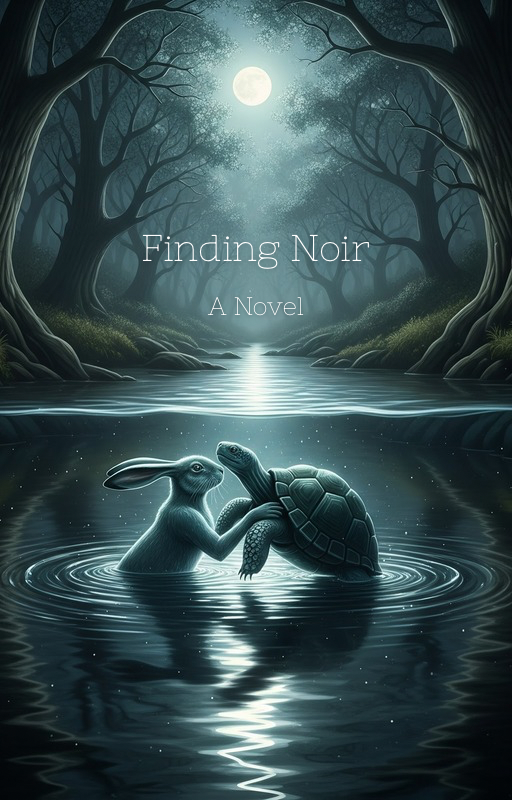
If you find yourself standing at the edge of this realization, understand that you didn’t do anything wrong; you were simply brave enough to feel everything. The “Hare” will always run, and the “Tortoise” must eventually realize that her stillness is not a passive wait for a return, but an active cessation of the need for external validation.
When you know it won’t work, the journey shifts. It is no longer about chasing a silhouette into the trees. It is about the Sacred Marriage of the self—finding the strength not to find someone else to complete you, but to complete yourself. The most powerful connections are not always the healthiest, but they are almost always the most revealing. When the mirror has shown you what you need to see, it is okay to let it break.
If you are holding this guide, you have almost certainly known the silence. You know the unique, isolating grief of pouring your heart, soul, and years into a manuscript, only to watch it disappear into the quiet, indifferent existence of the marketplace. You’ve asked yourself the dangerous, desperate questions: Was it not good enough? Was I not good enough?
After launching my first book, Diary of Cliches, I searched for the answer outside of myself. I scoured the internet for marketing tricks, sales hacks, and instant formulas that would solve the problem of zero sales. But the answer was never “out there.” The silence only deepened, and the shame of invisibility grew.
The true breakthrough—the one realization that changed the entire trajectory of my work and became the foundation of this book—came with a profound internal shift. I had to stop looking at the marketplace and start looking at my own mind.
I finally understood the simple, unshakeable truth: The problem was never the book itself. It was my relationship with visibility, value, and connection.
This realization was a moment of internal clarity that stretched my mind, allowing me to finally see the invisible barriers I had inadvertently created.
Visibility: I had focused on Performance (making noise) instead of Clarity (sending a resonant signal).
Value: I had fallen into the Hesitant Price Trap, communicating low value through my own discomfort with money.
Connection: I had tried to sell a product from an Expert’s Pedestal instead of offering a map as a Fellow Traveler.
This discovery—that selling a book is not just a technical process, but a deeply human one rooted in confidence, empathy, and service—changed everything. It was the moment I stopped battling the marketplace and started serving the reader. Understanding why your book is not selling is not the end of the journey; it is the true beginning of clarity.This book, 7 Reasons Nobody Is Buying Your Book And How to Fix It, is the map born from that realization. It explores the deeper forces that truly shape a book’s destiny—money, psychology, emotional resonance, and the authority of authenticity. Because once you understand that your book is a Living Entity and your signal is a service, everything changes, and your story finally gets the chance to travel.
For years, I believed that if my life hit a deep enough pothole, the only way out was a radical, cinematic pivot. When the “thunderbolt” of a corporate layoff shattered my Silicon Valley identity, I didn’t just want a new job; I wanted a completely new soul. I stepped into an “existential abyss” where my worth, previously measured by “KPIs and quarterly goals,” had vanished overnight. My immediate instinct was to perform a 180-degree turn, attempting to leap from high-level data strategy to selling holistic herbs on Amazon or hand-pouring artisanal candles. But as I navigated the “messy middle” of this transition, I realized why these radical pivots often fail: they are frequently a desperate attempt to satisfy someone else’s definition of success rather than our own.
My pivot into “tangible” businesses was largely fueled by my father, a mechanical engineer who dismissed software as “digital nonsense” and an “imaginary profession”. He believed “real engineers” built bridges and dams, not lines of code. In my vulnerability, I tried to bridge this generational chasm by dreaming up “real-tangible-products”—like matcha-infused chai lattes or gourmet paneer masala burgers—hoping that a physical product would finally make me a success in his eyes. Pivots fail when they are a reaction to external devaluation rather than an internal evolution. I was trying to build a “machinery” career to fix a feeling of invisibility, but the “Byzantine seller policies” and the “existential dread of inventory management” only added new layers of chaos to my already fractured life.
Another reason radical pivots falter is the expectation of a “montage moment.” We are conditioned by movies to believe that starting over comes with a sudden burst of clarity and a quick resolution. In reality, reinvention is a “perpetual pothole-ridden road trip” where the familiar signposts vanish and the road is rarely paved. I found myself sitting on a suitcase in an airport, mourning the person I used to be while having no idea who I was becoming. When we expect a clean break, we are unprepared for the “liminal space between darkness and light” where we feel like a visitor in our own lives.
Furthermore, radical pivots often fail because we use them to outrun our own unpredictability. I spent years trying to choose the structure of the West over the “madness of home,” only to realize that the “potholes” followed me across continents. Whether it was my dog Sauli’s dramatic “Mission Impossible” escape attempts or the “psychological warfare” of a landlord from hell, life refused to be neatly re-categorized into a new, efficient business plan. I learned that we often seek “comfort more than connection,” clinging to the illusion of a new career or a new city to avoid the “raw reality” of our own grief.
Ultimately, I discovered that my pivot from “code to copy”—from building digital systems to writing—was successful only because it wasn’t a total abandonment of myself. It was a “quiet recalibration of values” where I stopped trying to find a “guaranteed key to unlock any door” and instead focused on the “patient work of belonging to myself”. Radical pivots fail when we try to fly over the potholes; they succeed when we accept that the potholes are the very paths that lead us home. Success is not a final destination or a prestigious new title; it is the steady decision to keep showing up for yourself on the scenic, unpredictable route.
The most limiting belief an author holds is that their book is a one-time product. This perspective is a direct consequence of the sprint mindset: you pour your heart into the writing, hit ‘publish,’ and view the book as a final, static object ready to be sold in a single, urgent burst of promotion.
When the launch sprint fails and the silence hits, the author is left with a profound sense of finality. The product has failed. The work is done. This leads to burnout and retreat, mistakenly concluding that the book itself was a mistake.
To break the silence for good, you must make a profound shift in mindset: Your book is not a one-time product. It is a Living Entity—the starting point of a cumulative, career-long conversation.
A Living Entity requires sustained nourishment and continuous interaction. This shift in perspective transforms the entire post-launch journey:
From Product to Relationship: The book is not an object to be pushed; it is the physical manifestation of a core message that acts as the magnet for your ideal reader. The goal is no longer a single transaction, but the ongoing cultivation of a deep, trusting relationship with the person who needs your map.
From Finality to Iteration: The conversation doesn’t end on launch day. Every piece of content you create—every Service Post, every essay, every email—is an iteration of your book’s core truth. It is a continuous effort to clarify the signal, a new piece of the map, or a way to help one person feel seen today. This continuous clarity is the compounding force of the marathon.
From Scarce to Abundant: When you view the book as a static product, you hoard its ideas, fearing you’ll give too much away. When you view it as a Living Entity, you realize that every shared piece of its core message (the Purpose Post) only serves to prove the transformation and build the unshakeable trust that drives the eventual sale.
The silence breaks when you commit to this long-term view. Your book needs a clear, consistent signal over the course of a full year, not just a frantic burst in the first month. This commitment to a cumulative conversation—this steady, intentional nurturing of your book’s message as a Living Entity—is the only way to ensure your story finally travels and finds its true, lasting audience.
For two decades, my life was a carefully constructed fortress built on the bedrock of a corporate title. In the high-stakes tech world of San Francisco, my job was not merely a source of income; it was my “badge of honor” and the primary justification for every choice I made. I used my position to validate my existence, from the exorbitant rent on my apartment to the years of therapy and countless sleepless nights I endured to keep climbing the ladder. I was a creature of structure, finding safety in the “constant hum of work responsibilities” that acted as a protective layer, keeping deeper heartaches at bay through sheer busyness.
Then, the “thunderbolt” hit. A corporate layoff—delivered via a sterile email beginning with the dreaded “We regret to inform you”—shattered my foundation. Suddenly, I was standing at the edge of an “existential abyss,” an ominous void of uncertainty and doubt. I was forced to confront a terrifying question: who was I outside of “KPIs and quarterly goals”?. Without the “life rafts” of meetings, emails, and presentations, I felt unmoored and adrift, a mere visitor in my own life.
The process of looking for a new anchor only deepened the crisis. I entered a “soul-crushing ritual” where I felt reduced to a “keyword-optimized resume” or a series of checkboxes on an online form. I was fighting against “endless algorithms” that chose my fate before I could ever have a human conversation, making me feel like a disposable “cog in a vast, impersonal machine”. Even when I returned to my roots in India, the “absurdity of resumes” followed me; interviewers viewed my international success with suspicion, treating my return as a “red flag” rather than an asset.
My sense of professional legitimacy was further hollowed out by the “Real Engineer” debate with my father. A mechanical engineer by trade, he dismissed my entire career as “digital nonsense” and an “imaginary profession” because it lacked a physical manifestation like a bridge or a dam. In his eyes, I wasn’t an engineer; I was just someone doing a “programmer’s job,” and despite my years in Silicon Valley, I felt like a failure.
I am now navigating what I call the “messy middle” of reinvention. It is a liminal space where I am simultaneously mourning the person I was while trying to figure out who I might become. I have had to learn that rebuilding a life happens one “small, inconsequential act at a time”—setting up a new workspace, learning the layout of a new neighborhood, or finding the perfect cup of chai.
I’ve realized that the “potholes” of job loss and identity crisis weren’t just obstacles; they were “unanticipated mentors” guiding me toward a deeper understanding of my own resilience. I am slowly unlearning the idea that my worth is tied to a zip code or a corporate title. Instead, I am doing the quiet, patient work of belonging to myself. Success, I’ve found, is not a final destination on a freshly paved highway, but the steady decision to keep showing up for yourself on the scenic, pothole-ridden route.
The emotional work of staying present for the long game.
Every author knows the ritual: the quiet, late-night login to the sales dashboard. You scroll past the zeros, or the quiet, indifferent numbers, and in that moment, the exhaustion of the work hits. The mind immediately asks the most dangerous question: If I’m working this hard, why isn’t the needle moving?
The sales dashboard is not a tool for motivation; it is a profound risk to your energy. When you operate with a Sprint Mindset, you treat that dashboard as the finish line, demanding an instant, explosive reward for your effort. When the reward doesn’t materialize, the lack of immediate sales acts as an emotional vacuum, sucking all the creative energy out of you. This leads to burnout and retreat—the final failure of the invisible author.
To thrive in the long game of publishing, you must adopt the Marathoner’s Mindset toward the dashboard. This is a commitment to a sustainable, emotionally grounded approach that transforms the numbers from a judgment into an instruction.
The Shift: From Judgment to Instruction
The marathoner knows the race is won through consistent pacing and internal fortitude, not explosive bursts. The sales dashboard, therefore, is not a reflection of your worth, but a signal for clarity:
Detach Your Worth: The first step is to emotionally detach your personal value from the numbers. The Zero Sales figure is not a statement about your talent; it is simply a signal of disconnection. It means the bridge between your book and the person who needs it is not yet clear enough.
Focus on the Process, Not the Outcome: The marathoner focuses on the mile they are running right now. The author focuses on the Service Post they are creating today. The goal is not a massive spike; the goal is to maintain a clear, consistent signal (the Gravity of Meaning) every single week. Consistent clarity is the only thing that compounds over time.
Use It as a Compass, Not a Verdict: Check the dashboard only to inform your strategy, not to dictate your mood. If the numbers are low, it is an instruction to go back to your Position → Package → Signal sequence. It means: My signal needs to be clearer. I need to be more specific about the pain I solve. It is an instruction to recommit to your Purpose Post and speak to the Traveler who is still lost.
Your energy is finite. You cannot afford to lose it to the emotional turmoil of a transactional mindset. The Marathoner’s Mindset treats publishing as the starting line of a long, rewarding race. By using the sales dashboard as a dispassionate compass for clarity, and by relentlessly focusing on the emotional work of serving your reader, you protect your energy and ensure you stay present long enough for your clear, sustained signal to finally break the silence.
Setting expectations for sustained presence over time.
When a book launches, the author is often caught in a powerful, dangerous delusion: The False Hope of Impulse. This is the belief that one massive burst of promotional effort—a single, urgent, highly-visible event—will magically break the silence and catapult the book to success. It is the sprint mentality: If I just push hard enough for 7 days, I will win the attention lottery.
But the attention economy has rendered this impulse obsolete. A single, large impulse of volume will create a momentary spike, but it is instantly overwhelmed by the perpetual, relentless flow of distraction. That massive effort fades, leaving the author exhausted and the book exactly where it started: invisible.
The reality is that enduring success is a marathon won by sustained, small signals.
The attention economy does not reward the loudest voice; it rewards the most consistent and resonant frequency. A sustained, small signal is a Service Post—a concise, clear, and valuable piece of the map—that is delivered to the reader week after week, month after month.
Why Impulse Fails and Sustained Signals Win:
Impulse is Transactional; Sustained is Relational: An impulse signal (the sprint) is almost always urgent and focused on the transaction (“Buy now!”). This repels connection. A sustained signal (the marathon) is focused on consistent service, building an unbreakable relationship of trust and recognition over time.
Impulse is Easily Ignored; Sustained is Unavoidable: A single, loud burst can be missed during a busy day or filtered out as transactional noise. A steady, clear signal—a consistent presence that names the reader’s pain every week—becomes an unavoidable, dependable fixture in their world. It creates a cumulative effect that cuts through the distraction.
Impulse is Fragile; Sustained is Magnetic: The sales spike from an impulse post relies on a moment of persuasion. The steady stream of sustained, small signals relies on recognition. It compounds trust, making the eventual purchase an act of self-recognition that the reader initiates, rather than a sale the author has to force.
Your book is not a lottery ticket. It is a long-term asset that solves a perpetual problem. Stop chasing the emotional high and fleeting visibility of the impulse sprint. Commit to the emotional work of staying present and sending clear, consistent, small signals. That steady, relentless focus on service over impulse is the only force that breaks the silence for good.