Author: Kay’s Corner

  • The books we read and how they shape our lives – Part 2

    The books we read and how they shape our lives – Part 2

    Books that shape us!

    Ayn Rand might have left me reeling with “Atlas Shrugged,” but her influence lingered. I picked up “The Virtue of Selfishness,” intrigued by the title’s audacity.

    Here, Rand’s philosophy took a more self-help spin, advocating for rational self-interest as the key to personal growth. This resonated to a certain extent. In the throes of grief, self-care did feel essential. I couldn’t pour from an empty cup, and focusing on my own well-being, both mental and emotional, felt like a necessary first step. However, Rand’s brand of selfishness still felt a little…cold. It lacked the compassion and connection I craved.

    While taking care of myself was important, there was a whole world out there, and I wasn’t sure I wanted to navigate it alone. “The Virtue of Selfishness” offered a tool, but it didn’t quite capture the complexity of human relationships or the joy of giving back. I closed the book with a lingering question: was there a way to be strong and independent, while still fostering meaningful connections with others?

    Then there was Indira – this book found me when I was looking to be discovered. It pulled me out of some very stormy rivers and took me to shore. “Indira: A Biography” wasn’t just a biography, it was a lifeline. During that time, I felt utterly lost, adrift in a sea of grief and confusion. Then, as if by happenstance, I stumbled upon this book about Indira Gandhi, India’s powerful and controversial Prime Minister. The title alone held a strange allure, a promise of a woman who had navigated her own stormy waters. And it delivered. Indira Gandhi’s story resonated deep within me.

    Perhaps it was her rise to power in a male-dominated world, mirroring my own struggle to be heard and respected. Maybe it was her unwavering determination in the face of political turmoil, a quality I desperately needed to cultivate within myself. Whatever the reason, “Indira” became a beacon in the storm. As I devoured the pages, I felt a sense of calm washing over me. The book didn’t offer easy answers, but it provided a powerful example of resilience and strength in the face of adversity. With each chapter, I felt a piece of myself coming back together.

    Indira’s journey, filled with triumphs and tribulations, became intertwined with my own. Slowly, I began to see a way out of the darkness, a path towards self-discovery and the courage to forge my own path. By the time I finished the book, I wasn’t the same person who had started reading it. The challenges of life hadn’t vanished entirely, but “Indira” had shown me a role model, a woman who had weathered storms and emerged stronger. I emerged from the experience forever changed, forever grateful for the book that had found me when I needed it most.

    Then there was Life of Pi which kept me engaged while ashore. After the emotional intensity of “Indira,” I craved a story that would keep me engaged, yet offer a reprieve from the heavy themes I’d been grappling with.

    Life of Pi” walked into my life (or rather, sailed in) at the perfect moment. Yann Martel’s fantastical tale of a young man stranded on a lifeboat with a Bengal tiger was pure escapism, yet strangely profound. Pi Patel’s journey across the vast ocean, filled with fantastical creatures and philosophical musings, was a captivating adventure. The book didn’t shy away from difficult topics – the harsh realities of survival at sea, the complexities of human-animal relationships. However, it approached them with a sense of wonder and a surprising dose of humor.

    Pi’s unwavering optimism, even in the face of unimaginable challenges, was infectious. As I read, I felt a sense of calm settle over me. Sure, I was still “ashore” after the emotional storms I’d weathered, but “Life of Pi” reminded me of the beauty and wonder that still existed in the world.

    It was a reminder to keep an open mind, to embrace the fantastical alongside the real, and to find strength in the face of adversity, just like Pi. Something about Pi being stranded with a Tiger onboard resonated with my own powerful inner self stranded within a mere mortel existence calling for the non-comfirmist within me to break free.

    Life of Pi” wasn’t just a wild story; it hit a deep chord within me. Pi, this kid stranded with a tiger on a boat in the middle of nowhere – that felt weirdly symbolic. Like my own powerful inner self, stuck in this ordinary life, yearning to break free. And the tiger, this magnificent creature trapped in a tiny space? That was totally me, my nonconformist spirit clawing at the bars of expectation. This wasn’t just a fun read; it was a wake-up call. Pi’s story, with all its fantastical elements, was also about survival and determination. It sparked something inside me.

    My life felt so…routine. Work, sleep, repeat. It wasn’t bad, but it wasn’t me. I craved adventure, a chance to push myself and see what I was truly capable of. “Life of Pi” didn’t give me all the answers, but it did light a fire. It made me want to break free from the mold, to embrace the unknown and carve my own path. The tiger, a symbol of raw power, became a constant reminder – there was a wild, untamed spirit inside me, and it was time to set it loose.

    The book left me with a question that echoed in my mind: was I brave enough to step onto my own metaphorical lifeboat, even if it meant facing the vast ocean with just my inner tiger by my side?

    The Kite Runner gave me a confidence I never knew I had….

    The Kite Runner” wasn’t just another story; it was a gut punch that awakened a confidence I never knew I possessed. Khaled Hosseini’s heartbreaking tale of friendship, betrayal, and redemption resonated with something deep within me. Amir, the protagonist, grappled with guilt and a crippling sense of cowardice. Seeing him confront his past, take a stand for what he believed in, ignited a spark of courage within me.

    Perhaps it was the sheer rawness of the emotions, the unflinching portrayal of human flaws, or the unwavering hope that flickered even in the darkest corners of the story. Whatever it was, “The Kite Runner” challenged me to confront my own fears and self-doubt. It made me realize that even the most seemingly ordinary person has the potential for extraordinary acts of bravery.

    As I turned the final page, a shift occurred. I felt a newfound strength, a willingness to stand up for myself and the things I believed in. The voice of self-deprecation that had plagued me for so long seemed a little quieter. Amir’s journey, while deeply personal, became a universal call to action. It reminded me that courage isn’t the absence of fear; it’s the willingness to act in spite of it. And that, thanks to “The Kite Runner,” was a lesson I wouldn’t soon forget.

    (To be continued….)

  • The books we read and how they shape our lives – Part 1

    The books we read and how they shape our lives – Part 1

    Books that shape us!

    I started seriously reading at the age of 16 while going through depression. Back then I thought my depression was for unrequited love for a guy I had met on my first day in college.

    I was in an intense state of love and loss that year when the book found me. The book – Bridge Across Forever – felt like was looking to be read to me.

    “…Bridge Across Forever” felt like a warm hand reaching out into the darkness. The story, a love story, resonated deeply with the yearning and loss swirling inside me. It wasn’t just the plot, though; there was a certain energy, a hopeful message woven into the words that spoke directly to my soul. It was as if the book itself held a kind of magic, a power to mend and heal.

    As I devoured the pages, a shift began to occur. The raw ache of heartbreak softened, replaced by a glimmer of understanding. Maybe my intense feelings weren’t just about this one person, but about a deeper longing for connection, for something more. The book offered a glimpse of that “more,” a possibility of love that transcended the physical realm.

    “Bridge Across Forever” wasn’t a cure-all for my depression, but it was a turning point. It ignited a spark of curiosity within me, a desire to explore these deeper questions about love, loss, and the meaning of life. It was the first step on a long journey of self-discovery, a journey fueled by the words on the page.

    My soul journey took off after that book.

    Buoyed by the hopeful message of “Bridge Across Forever,” I dove headfirst into Paulo Coelho’s “The Alchemist.” This international phenomenon became my passport to a world of magic, personal journeys, and the pursuit of dreams. Unlike the introspective tone of “Bridge Across Forever,” “The Alchemist” pulsated with a vibrant energy, urging me to embrace adventure and follow my own personal legend. It felt like a call to action, a nudge towards leaving behind the comfort of the familiar and venturing out into the unknown.

    Energized by this newfound perspective, my reading choices became more eclectic. Spencer Johnson’s “Who Moved My Cheese?” offered a lighthearted yet profound parable about adapting to change, a skill I was actively trying to cultivate. Neale Donald Walsch’s “Conversations with God” scratched my newfound itch for spiritual exploration, presenting a thought-provoking dialogue about life’s big questions.

    But alongside these self-help and spiritual reads, I indulged in the comforting familiarity of Danielle Steel’s romance novels. Her stories provided a temporary escape from the complexities of my own life, offering happily-ever-after endings that soothed the part of me still healing from heartbreak.

    For pure, lighthearted fun, there were the classic “Archie” comics. These provided a welcome dose of nostalgia, reminding me of a simpler time and the power of laughter.

    This diverse reading list reflected the whirlwind of emotions and experiences I was navigating. I was grappling with heartbreak, searching for meaning, and cautiously stepping towards a new chapter in life. The books I chose mirrored my journey, offering comfort, guidance, and a touch of lighthearted fun along the way.

    The Road less traveled worked wonders in my journey toward spiritual growth and transformation at quite an early age. Picking up “The Road Less Traveled” at a young age was a testament to my burgeoning desire for self-discovery.

    M. Scott Peck’s no-nonsense approach to personal growth resonated deeply with me. Here wasn’t a book filled with empty promises or sugar-coated solutions. Instead, it offered a challenge, a call to take responsibility for my own happiness and well-being. Concepts like discipline, love, and delayed gratification, while initially daunting, felt like missing puzzle pieces finally clicking into place.

    “The Road Less Traveled” wasn’t a comfortable read. It pushed me to confront my own limitations and fears, but within that discomfort lay the promise of transformation. The book became a roadmap for my burgeoning spiritual journey, guiding me towards self-awareness, personal responsibility, and ultimately, a deeper sense of connection with myself and the world around me.

    However, this newfound seriousness wasn’t my only literary craving. Life, even on a path of self-discovery, required balance.

    Life, as they say, has a way of throwing curveballs. Mine came in the form of a relationship that felt like a dead end. Exhausted and suffocated, I sought solace in the pages of Ayn Rand’s “The Fountainhead.” This complex novel, with its celebration of individualism and unwavering pursuit of excellence, resonated with my yearning for something more. Rand’s protagonist, Howard Roark, became a symbol of strength and resilience, a stark contrast to the stifling environment I found myself in. “The Fountainhead” became a call to action, urging me to break free from the shackles of conformity and claim my own creative power.

    However, the journey with Ayn Rand took a sharp turn with “Atlas Shrugged.” While “The Fountainhead” empowered me, “Atlas Shrugged” plunged me into a state of “soul shock.” The novel’s extreme portrayal of individualism and its bleak depiction of a world without altruism left me feeling lost and questioning the very foundations of my being. The sheer nihilism of the story clashed with the glimmer of hope I had cultivated through my previous reads. It was a realization that Rand’s philosophy, while offering a compelling framework for individual achievement, lacked the empathy and human connection I craved.

    So, I stopped reading, left to grapple with the existential questions the book had raised.

    This experience highlighted the importance of discernment in my literary choices. While some books offered comfort and inspiration, others challenged my beliefs and forced me to confront uncomfortable truths. The journey of self-discovery, I realized, wasn’t always a linear path. It involved embracing new ideas, questioning established ones, and ultimately, finding my own unique perspective on the world.

    I tried reading Many Masters Many Souls in some deep intense moments of grief while dealing with the loss of a loved one, my very first encounter with death in a family. “Many Masters, Many Souls” just landed flat for me. I craved solace, a sense of something beyond the finality of death. The book promised past-life regression therapy and messages from the “space between lives,” but it felt clinical, almost sterile. Maybe the concept was too out there for me at that raw, grieving stage. All I wanted was my loved one back, and this book offered a theory, not a hug.

    Disappointed, I pushed it aside. There had to be something out there, some literary life raft to help me navigate this new, painful reality. The world felt so different now, a constant reminder of the absence I carried within me. I yearned for a story that acknowledged the pain, but also offered a flicker of hope, a whisper that life, even after loss, could still hold beauty.

    The virtue of selfishness got me a little further ahead in my spiritual journey.

    (To be continued…)

  • You can heal your Depression

    You can heal your Depression

    We can heal our depression

    We are in a second pandemic as an after-effect of the first one – Depression.

    There is no substitute for therapy and a steady inner dialogue with yourself.

    Here are some other ways that can help you get out of the hopelessness, jump out of your funk and get on with life. Most of these have worked for me.

    To start with…. keep your posture erect… and your head held high. Depression is not something to be ashamed of.

    Shame is neither created nor destroyed. It’s passed on from one to another.

    Shame on those who perpetuated this shame…

    1. Milk and Bananas

    I have a special connection to milk and bananas that correlates to my grandmother. But holistically speaking, bananas have the right amount of sugar and potassium to help regulate mood. Milk has calcium that helps strengthen bones, keep the spine erect and regulate energy flow throughout the body.

    2. Fragrances

    Fragrances reach sensory areas quickly and in magical ways. They bring out happy memories and quickly uplift the spirit.

    3. Flowers

    Flowers show beauty in simple and tender ways. A smile from your little bud in the morning can uplift your spirit instantly.

    4. Animals

    I sometimes go into a trance just watching my pup be. She has an aura about herself that spreads divine energy around her. Animals truly live for themselves and spread joy in its purest form just by being true to their nature.

    5. Yoga

    Yoga is often times misunderstood and treated like ‘exercise’.

    Yoga is a way to connect your mind to your body and make her talk. It’s surrendering to mother earth and releasing your energies in her. Letting her hold you and flow through you. Yoga does not just uplift the spirit, it awakens the soul.

    6. Meditation

    This one is tricky especially when depressed. To sit with your own rotten thoughts and make an attempt to quiet them, is the last thing you want to do.

    Affirmations and deep breathing help in such cases. They give you a jumpstart that is needed to jolt the mind out of the loops that it’s running in.

    “My mind is in my body. My heart is in my reality.”

    This affirmation quickly helps connect with the Now.

    Saying Om loudly and making it vibrate internally (mmmmmmmmm) will raise your vibrations and help get you moving.

    7. Foods

    Try foods that you loved as a child. Specific things that made you happy, mom/grandmom made a certain way, had a specific smell, texture, etc. Food is the quickest way to awaken your inner child and experience joy.

    8. Books

    When you are depressed, the last thing you want to do is read something that will invoke thoughts….make you do things that maybe you are not quite ready for.

    Here are some books that might feed the soul.

    ⁃ Mastery of Life by Ralph Waldo Emerson – This book has five essays that capture the profoundness of life. While his essay on Compensation is the most talked about to resolve money matters, I found his essay on Self-Reliance and Fate especially insightful.

    ⁃ Women who run with the wolves by Clarissa Pinkola Estes – If life or your existence does not make sense to you, or maybe you feel like an outsider in your own community do read this one.

    ⁃ Joyous body by Clarissa Pinkola Estes – This book helps understand the deep-rooted being called Body and how important her role is not just for us but also as a conscious being with its own intelligence that serves the entire planet. It refers to the body as your consort, your companion in the magical experience of Life.

    ⁃ The Kama Sutra of Vatsyayana by Sir Richard Francis Burton – This book talks about the science of sexuality through various feminine and masculine archetypes. It correlates sexuality to talents, hobbies, vocation, etc and helps understand the role of sex in your holistic being. A lot of emotional pain perpetuates into our Sacral Chakra which is the hub of our individuality (femininity/masculinity). We sometimes hold energy blocks in our Sacral Chakra that not just block us away from our inner experience but also block us from experiencing the World in its entirety.

    9. Last and not the least, having suicidal thoughts while depressed is very very common. Do not panic. Confide your thoughts in your trusted person beforehand and have their number on speed dial. If you don’t have a trusted person or a therapist, please have one.

    Let’s not die from depression. It can be cured.

    Let’s treat depression with the love it deserves. In my experience, depression is a blessing from Divine Timing…. a call for Transformation.

    ❤️

    #letsheal

    #everydayismentalhealthday

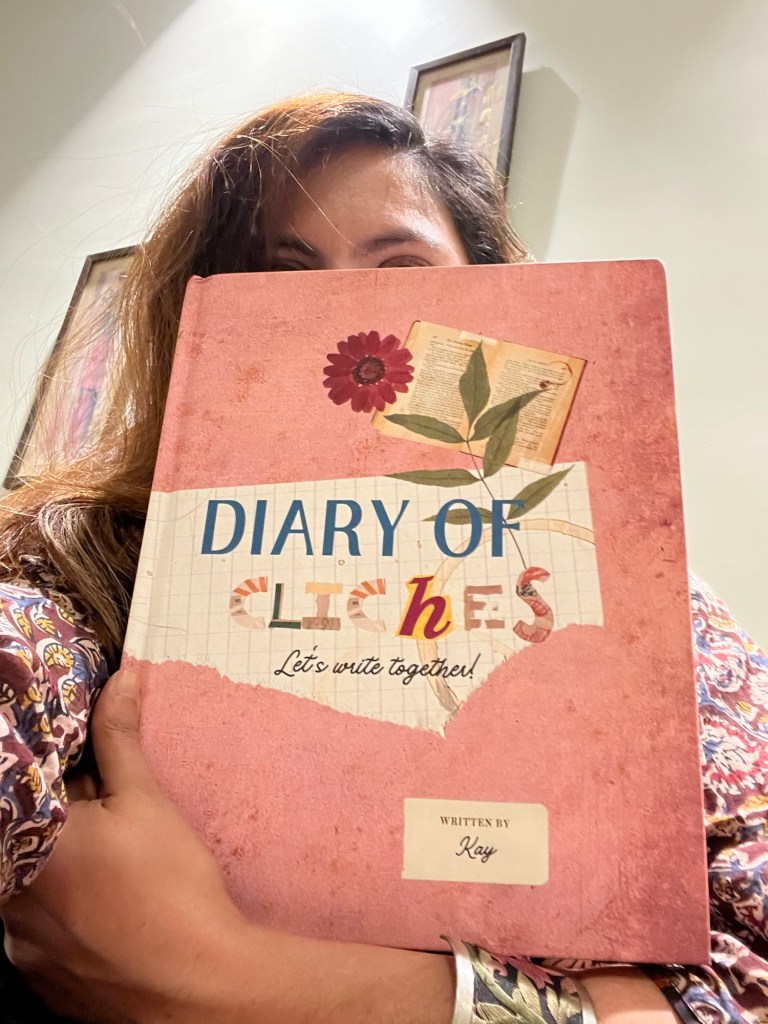
  • Behind The Pages: How My Personal Journey Inspired ‘Diary of Cliches’

    Behind The Pages: How My Personal Journey Inspired ‘Diary of Cliches’

    When I set out on the journey of writing ‘Diary of Cliches’, it began as more than just an attempt at creating another book. For me, this labor of love was an exploration of the self — a cathartic experience that unfolded into an interactive journey for all who turned its pages.

    As we venture through each chapter, readers are met with snippets of my own transformation. At the core of this introspective memoir is my personal battle with relationships, emotions, and growth. They are not merely stories but lessons woven intricately into every word, making it not just my narrative but a saga that many may find comfortingly relatable.

    “Dairy of Cliches” uniquely pivots around universal themes like self-discovery, personal evolution, navigating complex webs of relationships, coping with raw emotions such as anger, guilt, and most importantly, setting and refining life’s goals.

    Each theme emerges from my chronicles sharply mirroring my own trials and triumphs. As I paint vivid portraits of my emotional battles, I infuse each passage with prompts, nudging readers towards self-reflection and presenting opportunities to dissect their feelings and aspirations just as I did, the Diary being my confidant, my companion, my partner in crime.

    The brilliance of “Diary of Cliches” lies in its ability to inspire readers to embark on parallel journeys of self-discovery guided by my personal experiences while injecting their own path with their uniquely personalized discoveries. Its essence influxes elements such as identifying strengths and weaknesses and motivating person-specific goal setting.

    In the realm of relationships, whether they are familial connections or romantic involvements, the Diary’s words serve as lucid guidance bolstered by my touching anecdotes. The Diary gently motivates the reader turned co-author to navigate these tricky terrains with newfound understanding and resilience.

    Emotions – the most profound yet elusive aspect of our existence – find ample breathing space within “Diary of Cliches”. My explorations of my own anger and guilt pave the way for readers to confront and comprehend their own emotional patterns more effectively.

    In today’s fast-paced world, where each of us is incessantly running a thousand miles, “Diary of Cliches” acts as a comforting pit-stop. It creates an inviting oasis of self-reflection, pushing pause on the rampant race outside to focus on the enriching journey within.

    Whether you are at the precipice of self-discovery or have been steering through, “Diary of Cliches”

    Diary of Cliches now available on Amazon!

    Diary of Cliches: Let’s write together!

    Diary of Cliches: Let’s Write Together!

    Follow us on Instagram: Diary of Cliches

  • Diary of Cliches

    Diary of Cliches

    I had just landed the previous night. My boxes were all around the floor in my parents house. Everyone had finally gone to sleep after spending 2 sleepless nights tracking my flight and awaiting my arrival the third night. But sleep was nowhere in sight as far as I was concerned. 2023 had been a tumultuous year. And come October I had landed in my hometown Mumbai, with a life of the past eleven years packed in two suitcases that lay in an already cramped room which was going to be home for the next foreseeable future.

    As I sat amidst the chaos of unpacked boxes and familiar yet unfamiliar surroundings, a wave of emotions washed over me. The journey that led me back to Mumbai had been fraught with uncertainty and upheaval, yet here I was, back where it all began.

    Memories of the past eleven years flooded my mind, each one a chapter in the story of my life. From the bustling streets of the city to the quiet moments of reflection, Mumbai had been my constant companion through it all. And now, as I returned to its embrace, I couldn’t help but feel a sense of nostalgia mixed with apprehension.

    The room felt smaller than I remembered, the walls closing in on me as if to remind me of the weight of the decisions that had led me here. But amidst the chaos and uncertainty, there was also a glimmer of hope – a sense of possibility that whispered of new beginnings and fresh opportunities.

    As I unpacked my belongings and made this room my own, I knew that the road ahead would not be easy. There would be challenges to overcome and obstacles to face, but I was determined to embrace whatever the future held with courage and resilience.

    With each passing moment, the weight of the past began to lift, replaced by a renewed sense of purpose and determination. Mumbai may have changed in the years since I left, but one thing remained constant – its ability to inspire and challenge me in equal measure.

    And so, as the night stretched on and sleep continued to elude me, I found solace in the knowledge that I was exactly where I needed to be – back home in Mumbai, ready to embark on the next chapter of my life.

    At this time I picked up a diary. It felt worn with the pages of my past and looked at me as if wanting me to pick it up! It was trying to tell me something. Curiosity piqued, I reached out and gently lifted the diary from its resting place. As I ran my fingers over its weathered cover, I couldn’t help but wonder what secrets lay hidden within its pages. It was as if the diary held a silent invitation, urging me to unravel the mysteries of my past and explore the depths of my soul.

    With trembling hands, I opened the diary and was immediately greeted by the familiar scent of aged paper. Each page seemed to whisper a story of its own, a testament to the moments and memories that had shaped my life. As I turned the pages, I was transported back in time, reliving moments of joy, sorrow, and everything in between.

    There, amidst the ink-stained pages, I found fragments of myself – hopes, dreams, fears, and aspirations captured in delicate strokes of pen. It was as if the diary had been waiting patiently for my return, eager to reconnect me with the essence of who I once was and who I had yet to become.

    At that moment, I realized that the diary was more than just a collection of memories – it was a mirror reflecting the depths of my soul. It was a reminder of the journey I had undertaken, the lessons I had learned, and the person I had become along the way.

    With newfound clarity, I made a silent vow to honor the diary’s silent invitation – to embrace the past, live fully in the present, and embrace the future with open arms. In the pages of that worn diary, I found not only a connection to my past but also a roadmap for the journey ahead.

    As I embarked on this new journey with the old diary in hand, I felt a sense of liberation wash over me. It was as if the weight of the past had been lifted, and I was free to chart my course toward a brighter future. With each page I turned, I discovered new insights, unearthed forgotten dreams, and embraced the wisdom gleaned from years gone by.

    (more…)