What happens when the 20-year roadmap you meticulously followed leads you straight into a Mumbai-sized crater?
After two decades of building a powerhouse tech career in San Francisco, a single corporate email unplugs the console, reducing a seasoned software engineer to a “temporary guest” on a terrifying 60-day visa countdown. Forced into a “reverse culture shock” where your own father dismisses your life’s work as “digital nonsense,” you are left navigating a total identity collapse amidst missing luggage, bureaucratic nightmares, and a “Monkey Mafia” hijacking your cousin’s wedding desserts.
But within the “digital abyss” of professional rejection, a high-strung rescue dog named Sauli becomes the soulful anchor that proves home isn’t a government-issued visa stamp or a physical location. The Detour Became the Destination is a raw, satirical, and unflinching exploration of the “messy middle of reinvention,” where life’s deepest potholes are revealed not as failures of intelligence, but as profound invitations to discover the person left standing in the rubble.
If your corporate “badge of honor” was revoked tomorrow, would you finally have the courage to belong to yourself?
Two decades of building a fortress. Sixty days to watch it crumble.
In this raw and unflinching look at the high-stakes world of San Francisco tech, Kay Jay exposes the terrifying reality of the H-1B visa system. After twenty years of paying taxes, buying a home, and leveling up in her career, a single corporate email unplugs the console of her American life. Suddenly, a seasoned software engineer is reduced to a “temporary guest” with exactly 60 days to find a new corporate sponsor or face forced departure.
The 60-Day Countdown is more than a race against a ticking clock; it is a total identity collapse. It captures the psychological toll of realizing your legal presence is tethered to a corporate “badge of honor” that can be revoked in an instant. From the frantic search for a lifeline to the realization that her 20-year journey could be reduced to two suitcases, Kay Jay navigates the messy middle of reinvention with sharp, satirical wit.
This is the story of what happens when the smooth road of the American Dream hits a crater so deep it swallows your entire sense of self. It is an invitation to discover the person left standing in the rubble when the world unplugs your map and leaves you with a one-way ticket back to a home that no longer feels like yours.
If the clock started today, would you know who you are without your job title?
One of the deepest tensions in my professional life has been the gap between what is valuable and what is visible. Few fields embody that tension more sharply than software and technology, where immense effort, skill, and intelligence often produce outcomes that are powerful yet largely invisible. I know that code runs banks, hospitals, logistics systems, communication platforms, and the infrastructure of everyday life, but because it cannot be held in the hand or displayed on a skyline, it is often treated as less real than the work of building something physical. That tension becomes even more charged when viewed through the eyes of an older generation shaped by industries in which labor announced itself in steel, concrete, machinery, and scale.
My father’s skepticism that software is not “real engineering” has always represented more than a personal opinion; for me, it reflects an entire worldview about legitimacy, usefulness, and permanence. In that worldview, engineering is something you can point to: a bridge that carries traffic, a dam that redirects force, a machine that occupies space and performs a visible function. Its authority comes from physical proof. By contrast, software appears abstract, weightless, and elusive. It lives behind screens, disappears into interfaces, and performs its labor silently. To someone trained to respect what can be measured in material terms, software can seem strangely insubstantial, even when it powers the very systems on which modern life depends.
This is where the conflict becomes psychological, not merely professional. For me, the desire to create something tangible has not simply been entrepreneurial curiosity. It has often been a longing for validation. A physical object seems capable of settling an argument that digital labor never quite resolves. A product on a shelf, a package in someone’s hand, a storefront, a machine, even something as modest as a handmade candle or a bag of herbs can feel more defensible than years spent designing systems no one sees. Tangibility becomes a form of evidence: proof that my labor exists, that I have made something real, that my work cannot be dismissed as invisible manipulation of symbols.
Yet this longing reveals a paradox at the heart of my life in technology. Software is among the most materially consequential forms of labor in the modern world. It shapes economies, mediates relationships, organizes governments, distributes resources, and increasingly structures human attention itself. It may not leave behind a monument in the traditional sense, but its effects are everywhere. The invisibility of software is not evidence of triviality; it is often evidence of integration. The more seamlessly software functions, the less visible it becomes. Its success lies in disappearing into the background of ordinary life.
And still, the emotional force of my father’s criticism persists because I do not live by logic alone. I live, as most people do, by symbols, inheritance, and the standards that formed me before I had language to resist them. Because I grew up hearing that real work must be concrete, measurable, and externally legible, even significant digital success has sometimes felt strangely hollow. No promotion, salary, or corporate prestige fully quiets the suspicion that I have built a life on abstractions. In that sense, my hunger for tangible creation has been an attempt to bridge two incompatible systems of value: the contemporary economy, which rewards scale, information, and code, and the older moral imagination, which equates worth with what can be touched.
What makes this tension so compelling to me is that it is not only about my father and me, or about tradition and modernity. It points to a broader crisis in how I understand work itself. In knowledge economies, much of the most important labor is intangible: analysis, design, strategy, care, coordination, writing, modeling, programming. These forms of work can be intellectually rigorous and socially indispensable, yet they remain vulnerable to dismissal because they do not produce a visible artifact. The result is a deep and often unspoken insecurity among people like me, whose work is real in every meaningful sense except the symbolic one.
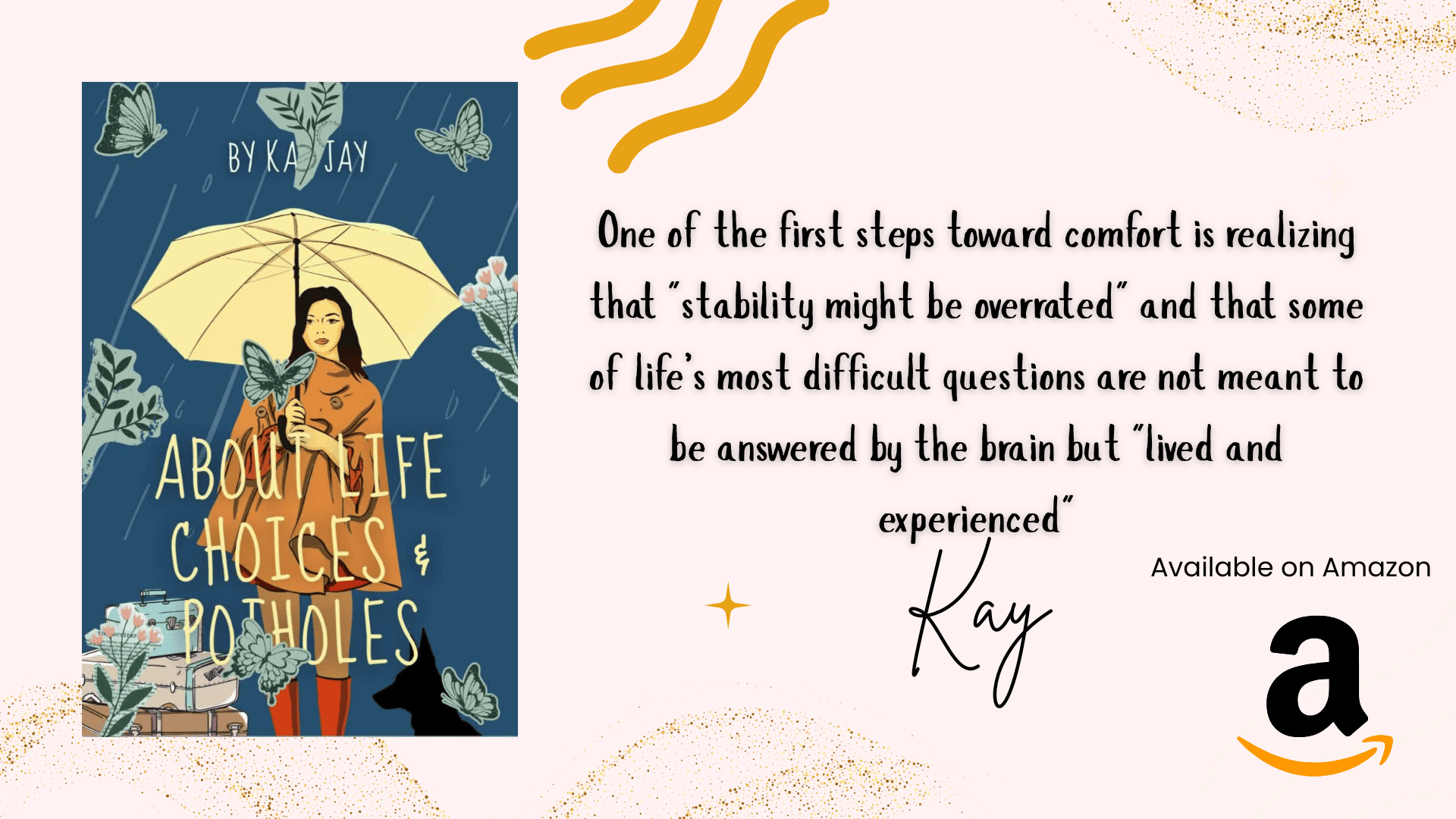
To long for tangible creation, then, is not necessarily to reject technology. For me, it has often been a desire to reconnect labor with embodiment, process with presence, and effort with visible consequence. It is a yearning to make meaning in a form that can be witnessed without explanation. But perhaps the deeper resolution lies not in abandoning software for physical products, but in expanding my idea of what counts as real. Engineering is not made legitimate by concrete alone. It is made legitimate by problem-solving, precision, imagination, and usefulness. A bridge and a distributed system are not opposites; they are expressions of the same human impulse to build structures that help others cross from one point to another.
My father’s skepticism, then, exposes an old question inside a new economy: if a thing cannot be touched, can it still carry weight? I believe the answer, increasingly, is yes. But the emotional difficulty of accepting that answer explains why I, and so many people in tech, continue to crave the handmade, the physical, and the visibly constructed. We are not merely seeking a new hobby or a side business. We are searching for a form of creation that feels undeniable. In that search lies both the wound and the wisdom of modern work.
For twenty years, I believed I was building a fortress, only to realize I had been building on rented land. This wasn’t just about the physical apartments I occupied in San Francisco or the temporary rental I moved into upon returning to Mumbai; it was a metaphor for my entire existence—my career, my legal status, and my very identity were all subject to the whims of landlords, immigration officers, and corporate algorithms.
In the United States, the land I stood on was literally rented from the government. I spent two decades building a life, paying taxes, and forging deep communities, only to be reminded by a “BOOM” moment from an immigration officer that I didn’t truly belong. Visa rules are not just immigration policy; they are life policy. They dictated whether I could keep my home, my stability, and my dignity. When that “rented” legal status was challenged, the two decades of sweat and heart I had invested felt like they counted for nothing.
My professional identity was similarly built on borrowed soil. I viewed my high-flying tech career as my “badge of honor” and the tangible evidence of my worth. I used my corporate title to justify everything from my San Francisco rent to my self-esteem. But when the “thunderbolt” of a layoff hit, I was thrust into an “existential abyss”. I realized I had been a mere “cog in a vast, impersonal machine,” and without the “life rafts” of meetings and KPIs, I was suddenly unmoored. I was an inhabitant of an “uncharted territory” of free time, mourning a person I no longer was.
Returning to India offered no immediate solid ground. I found that the house I grew up in—the silent witness to my entire childhood—had been demolished for redevelopment. My past was unceremoniously discarded to make way for a “shinier” future, and I was forced into a rental apartment that felt “borrowed” and sterile. Here, the “rented land” took the form of Mrs. D, the landlord from hell. Renting in India felt like entering a long-term relationship with someone I didn’t even like, where privacy was a myth and my family’s habits were under constant “psychological warfare”. Whether it was the “Crow-Feeding Incident” or unannounced inspections, I was treated like an “untrustworthy babysitter” in a space that was supposed to be my sanctuary.
The breaking point came when I realized I could no longer live at the mercy of others’ rules—whether they were the “Byzantine seller policies” of Amazon or the “eviction threats” of a petty landlord. I finally understood that I had spent years trying to outrun unpredictability, choosing the structure of the West over the “madness of home,” only to find that stability is often an illusion.
I am now learning to build on the only land I truly own: myself. Reinvention has taught me that “home” is not a zip code or a corporate title, but the “slow, patient work of belonging to yourself”. I am finding my footing through “small, inconsequential acts”—shared laughter during family meals, the “playful dinner-time negotiations” with my dog Sauli, and the simple pleasure of hot chai on a rainy day. The potholes I encountered were not just obstacles; they were “unanticipated mentors” guiding me toward a version of myself that can laugh at absurdities and find peace in the “messy middle”. I have stopped looking for a “guaranteed key” to someone else’s door and have started the work of finally building a home within.
For years, I believed that if my life hit a deep enough pothole, the only way out was a radical, cinematic pivot. When the “thunderbolt” of a corporate layoff shattered my Silicon Valley identity, I didn’t just want a new job; I wanted a completely new soul. I stepped into an “existential abyss” where my worth, previously measured by “KPIs and quarterly goals,” had vanished overnight. My immediate instinct was to perform a 180-degree turn, attempting to leap from high-level data strategy to selling holistic herbs on Amazon or hand-pouring artisanal candles. But as I navigated the “messy middle” of this transition, I realized why these radical pivots often fail: they are frequently a desperate attempt to satisfy someone else’s definition of success rather than our own.
My pivot into “tangible” businesses was largely fueled by my father, a mechanical engineer who dismissed software as “digital nonsense” and an “imaginary profession”. He believed “real engineers” built bridges and dams, not lines of code. In my vulnerability, I tried to bridge this generational chasm by dreaming up “real-tangible-products”—like matcha-infused chai lattes or gourmet paneer masala burgers—hoping that a physical product would finally make me a success in his eyes. Pivots fail when they are a reaction to external devaluation rather than an internal evolution. I was trying to build a “machinery” career to fix a feeling of invisibility, but the “Byzantine seller policies” and the “existential dread of inventory management” only added new layers of chaos to my already fractured life.
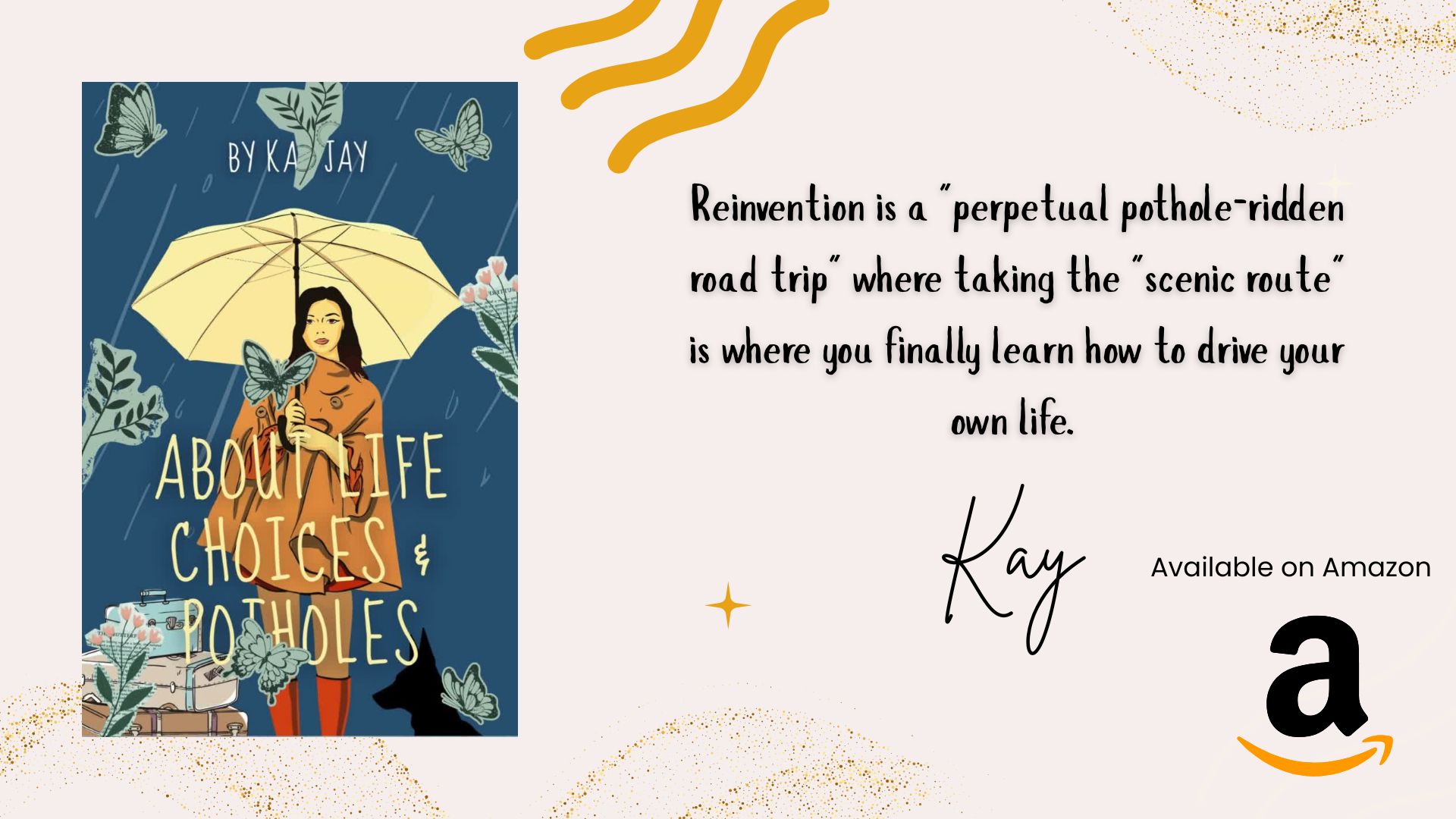
Another reason radical pivots falter is the expectation of a “montage moment.” We are conditioned by movies to believe that starting over comes with a sudden burst of clarity and a quick resolution. In reality, reinvention is a “perpetual pothole-ridden road trip” where the familiar signposts vanish and the road is rarely paved. I found myself sitting on a suitcase in an airport, mourning the person I used to be while having no idea who I was becoming. When we expect a clean break, we are unprepared for the “liminal space between darkness and light” where we feel like a visitor in our own lives.
Furthermore, radical pivots often fail because we use them to outrun our own unpredictability. I spent years trying to choose the structure of the West over the “madness of home,” only to realize that the “potholes” followed me across continents. Whether it was my dog Sauli’s dramatic “Mission Impossible” escape attempts or the “psychological warfare” of a landlord from hell, life refused to be neatly re-categorized into a new, efficient business plan. I learned that we often seek “comfort more than connection,” clinging to the illusion of a new career or a new city to avoid the “raw reality” of our own grief.
Ultimately, I discovered that my pivot from “code to copy”—from building digital systems to writing—was successful only because it wasn’t a total abandonment of myself. It was a “quiet recalibration of values” where I stopped trying to find a “guaranteed key to unlock any door” and instead focused on the “patient work of belonging to myself”. Radical pivots fail when we try to fly over the potholes; they succeed when we accept that the potholes are the very paths that lead us home. Success is not a final destination or a prestigious new title; it is the steady decision to keep showing up for yourself on the scenic, unpredictable route.
For two decades, my life was a carefully constructed fortress built on the bedrock of a corporate title. In the high-stakes tech world of San Francisco, my job was not merely a source of income; it was my “badge of honor” and the primary justification for every choice I made. I used my position to validate my existence, from the exorbitant rent on my apartment to the years of therapy and countless sleepless nights I endured to keep climbing the ladder. I was a creature of structure, finding safety in the “constant hum of work responsibilities” that acted as a protective layer, keeping deeper heartaches at bay through sheer busyness.
Then, the “thunderbolt” hit. A corporate layoff—delivered via a sterile email beginning with the dreaded “We regret to inform you”—shattered my foundation. Suddenly, I was standing at the edge of an “existential abyss,” an ominous void of uncertainty and doubt. I was forced to confront a terrifying question: who was I outside of “KPIs and quarterly goals”?. Without the “life rafts” of meetings, emails, and presentations, I felt unmoored and adrift, a mere visitor in my own life.
The process of looking for a new anchor only deepened the crisis. I entered a “soul-crushing ritual” where I felt reduced to a “keyword-optimized resume” or a series of checkboxes on an online form. I was fighting against “endless algorithms” that chose my fate before I could ever have a human conversation, making me feel like a disposable “cog in a vast, impersonal machine”. Even when I returned to my roots in India, the “absurdity of resumes” followed me; interviewers viewed my international success with suspicion, treating my return as a “red flag” rather than an asset.
My sense of professional legitimacy was further hollowed out by the “Real Engineer” debate with my father. A mechanical engineer by trade, he dismissed my entire career as “digital nonsense” and an “imaginary profession” because it lacked a physical manifestation like a bridge or a dam. In his eyes, I wasn’t an engineer; I was just someone doing a “programmer’s job,” and despite my years in Silicon Valley, I felt like a failure.
I am now navigating what I call the “messy middle” of reinvention. It is a liminal space where I am simultaneously mourning the person I was while trying to figure out who I might become. I have had to learn that rebuilding a life happens one “small, inconsequential act at a time”—setting up a new workspace, learning the layout of a new neighborhood, or finding the perfect cup of chai.
I’ve realized that the “potholes” of job loss and identity crisis weren’t just obstacles; they were “unanticipated mentors” guiding me toward a deeper understanding of my own resilience. I am slowly unlearning the idea that my worth is tied to a zip code or a corporate title. Instead, I am doing the quiet, patient work of belonging to myself. Success, I’ve found, is not a final destination on a freshly paved highway, but the steady decision to keep showing up for yourself on the scenic, pothole-ridden route.
“I Thought I Was Making Progress. Turns Out I Was Just Taking Notes.”
For a long time, I believed progress had a shape. It was linear. It moved forward. It came with milestones, approvals, and the quiet satisfaction of knowing you were doing life correctly. I mistook motion for momentum and optimism for clarity. When things didn’t work out, I told myself I was almost there—as if life were a badly signposted highway and I’d missed the exit by a few feet.
What I didn’t account for were potholes.
Not the dramatic kind—the ones that make for good stories later—but the small, daily craters that jolt you just enough to make you question your alignment. The job that seemed right until it wasn’t. The relationship that taught you more through its ending than its duration. The choice that looked sensible on paper and absurd in practice. None of these felt like failures at the time. They felt like detours. Temporary inconveniences. Notes I didn’t realize I was taking.
I was convinced that if I just chose better—worked harder, waited longer, trusted sooner, trusted less—life would smooth itself out. That wisdom was something you acquired before the mess, not because of it. But hindsight has a cruel sense of humor. It reveals that the mess was the curriculum. The potholes weren’t interruptions to the journey; they were the journey, quietly shaping how I moved, what I noticed, and when I finally slowed down enough to listen.
This book was not written from the vantage point of arrival. There is no triumphant before-and-after, no clean arc from confusion to certainty. It was written from the middle—from the place where you realize that every confident step you took was also a footnote in a longer story. A story about trying, recalibrating, and learning that progress is often only visible in reverse.
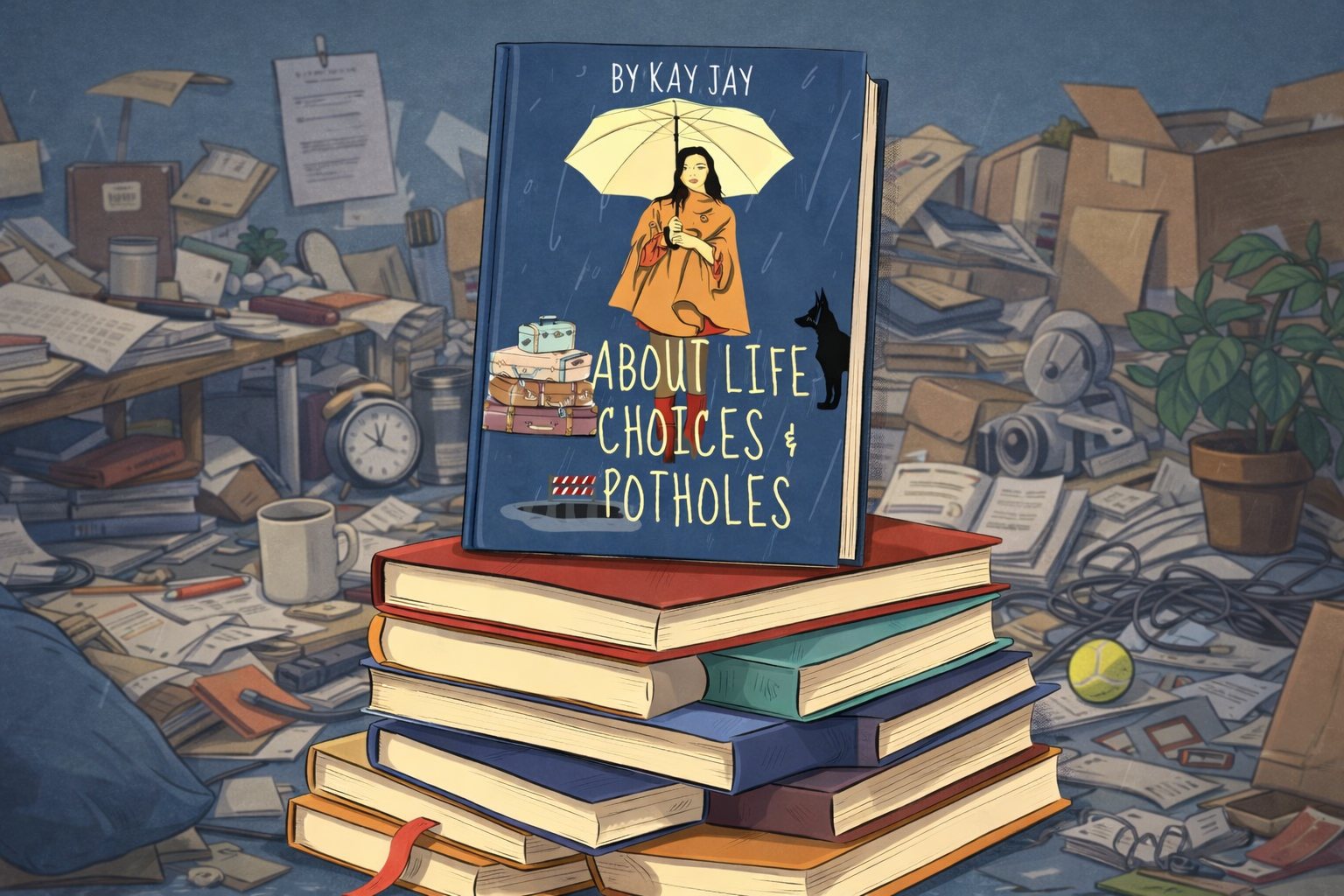
Life Choices and Potholes is a record of those notes. Some are thoughtful. Some are sarcastic. Some were scribbled in moments when clarity felt wildly overrated. Together, they form a map—not of where I was going, but of how I learned to stay present while not knowing. And if there’s any progress worth claiming, it’s this: I no longer rush to pave over the potholes. I slow down, take better notes, and keep going anyway.
“I Rolled My Eyes at Every Cliché. Then I Lived All of Them.”
I used to think clichés were for people who hadn’t thought deeply enough. They were shortcuts—phrases you reached for when you didn’t want to sit with complexity. Everything happens for a reason.Time heals all wounds.You’ll know when it’s right. I heard these lines the way one hears elevator music: vaguely familiar, mildly irritating, easily ignored.
And then life, with impeccable timing, handed me the full set.
There is a special kind of humiliation in realizing that the sentences you once mocked are now doing heavy emotional labor in your own head. That you have become the person nodding slowly, saying things like I needed that to happen or It taught me something. Worse, that these phrases—stripped of irony and said quietly—are sometimes… accurate. Not poetic. Not elegant. Just stubbornly true.
Diary of Clichés began as resistance. I wanted to interrogate the language we use to smooth over discomfort, to poke holes in the platitudes we lean on when we don’t know what else to say. But somewhere along the way, the diary turned its gaze back on me. Each cliché I examined wasn’t an abstraction; it was a lived moment. Loss that insisted on being processed in its own time. Growth that refused to announce itself. Love that arrived without clarity and left behind better questions.
What surprised me wasn’t that clichés exist, but that they endure. They survive because they are resilient containers for shared human experience. They show up when individuality fails us—when the feelings are too big, too common, or too old to belong to just one person. The problem isn’t that clichés are false. It’s that they’re incomplete. They flatten nuance. They skip the footnotes. They rarely admit how uncomfortable the truth feels while it’s happening.
This book is an attempt to put the footnotes back.
Diary of Clichés doesn’t try to retire these phrases; it holds them up to the light, rotates them slowly, and asks what they cost us—and what they give us—when we finally stop pretending we’re above them. If there’s humor here, it’s because self-awareness is funny in hindsight. If there’s tenderness, it’s because becoming a cliché usually means you’ve survived something.
I no longer roll my eyes when I hear these lines. I listen. Not because they’re profound, but because they remind me that whatever I’m going through has been rehearsed by millions before me. And somehow, that makes it easier to keep writing it honestly.
You get to build your perfect space for reading and writing. What’s it like?
If I could build my perfect space for reading and writing, it wouldn’t look like a productivity hack or a Pinterest board. It would look like a life—one that made room for thinking, feeling, wandering, and returning.
The room would have windows that open wide, not just to let light in, but to remind me that the world exists beyond the page. Outside, there would be trees—old ones, the kind that have seen cycles come and go. They would keep me honest while I worked on A Song and Dance for Mother Earth, grounding my words in gratitude and reverence, reminding me that stories, like ecosystems, need care more than control.
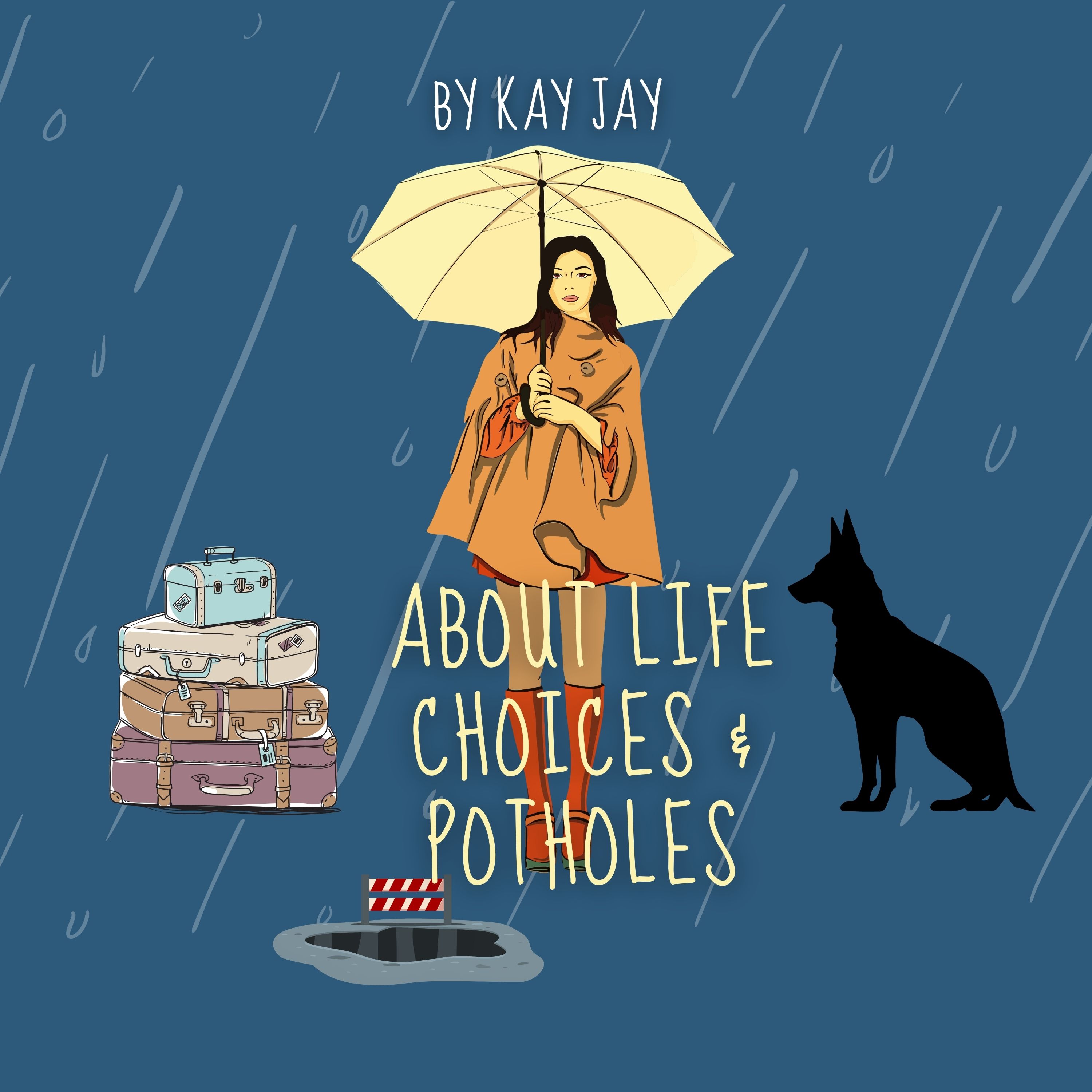
There would be a writing desk scarred with use, not aesthetic, just familiar. That’s where About Life Choices and Potholes would live—pages written after wrong turns, pauses, and those moments when life teaches you something by first knocking you flat.
Nearby, a stack of half-filled notebooks would belong to Diary of Clichés, because some realizations arrive only after you swear you’ll never become that person… and then quietly do.
This space would have a couch meant for staring at the ceiling. Not resting—thinking. That’s where Fever Dreams would be written, in the liminal hours when exhaustion softens the edges of truth and clarity arrives without explanation. In those moments, the room would feel slightly unreal, as if it were breathing along with me.
There would be a door that opens onto a street or a park. I’d leave it ajar while working on Beautiful Men: The Dog Walker, letting life pass by—footsteps, chance encounters, fleeting glances that remind me that softness still exists, that sometimes the universe doesn’t instruct, it flirts. The kitchen would matter just as much as the desk, because Beautiful Men: The Chef would be written between meals and memories, where nourishment is not just consumed but received.
At my feet, always, would be a dog. Muddy paws, restless energy, unconditional presence. Adventures of Sauli the Rescue Pup could only be written in a space that allows chaos and joy to coexist—where healing shows up unannounced and insists on being played with.
The quietest corner of the room would belong to Finding Noir. No distractions. No mirrors, except the internal ones. That book would demand stillness, the kind that forces you to sit with what you’re really looking for, long after you realize it isn’t another person.
There would also be a shelf that makes me laugh at myself. That’s where Why Is Nobody Buying My Book would sit—right next to hope and self-doubt, art and algorithms, reminding me that creativity is both sacred and absurd, and that both can be true at the same time.
Most importantly, this space wouldn’t be about selling stories. It would be about telling them. Every chair, window, and corner would exist to support honesty—whether the result is a book, a sentence, or just a moment of understanding.
Because the truth is, all these books were written in spaces that already existed: borrowed rooms, kitchen tables, hospital waiting areas, long walks, sleepless nights. My perfect space is simply one that allows me to keep doing what these stories taught me how to do—
Pay attention.
Tell the truth.
And trust that the right readers will find their way in.
(A reflection inspired by my book About Life, Choices, and Potholes)
If I had to describe my father, I wouldn’t start with his profession or his habits — though I could. He was an engineer by training, a man of tools and precision, but his real craft was patience. The kind that doesn’t make noise, doesn’t demand recognition, but stays steady like the background hum of a ceiling fan on a humid night — always there, always working.
Growing up, I used to think he was too quiet. He didn’t express affection in words; he showed it in ways you’d miss unless you were really paying attention — an extra roti on my plate before I sat down, the car tank always full, the lights left on when I returned late. His love language was logistics.
When I moved to the US, I thought I was leaving that world behind — the world of early mornings, the smell of oil and diesel from his workshop, the steady rhythm of his tools. I was chasing independence, identity, a new story. But years later, when life hit a wall — job loss, immigration uncertainty, heartbreak — it was his voice, calm and undramatic, that steadied me again.
In About Life, Choices, and Potholes, I write about that moment — when he cleaned up after my mess despite just recovering from spine surgery, even as eviction threats and house-hunting chaos unfolded around us. He didn’t complain. Didn’t remind me of sacrifices. Just did what needed to be done.
It took me years to understand that kind of strength — the quiet resilience of doing what life demands, not because it’s fair or easy, but because someone has to.
He’s the kind of man who believes in roads — in building them, fixing them, walking them. And maybe that’s why the book carries the word potholes in its title. Because life, as he taught me, is just that — a long, uneven road you keep driving on, knowing you’ll hit bumps, but trusting you’ll reach home.
If there’s one thing my father has taught me, it’s this:
Love doesn’t always arrive wrapped in words.
Sometimes, it’s in the quiet act of showing up — again and again — even when no one’s watching.