The Best Dish I Ever Ate Was Never Just About Food
People often ask me, “What’s the best local dish you’ve ever eaten while traveling?”
It sounds like a question about food. About flavors. About that one unforgettable meal that made you close your eyes and say, “Wow.”
But the older I get, the more I realize that the best dishes are rarely about the ingredients. They are about the people, the places, the memories, and the version of yourself that existed when you ate them.
I have eaten incredible food across the world — from the elegance of Copenhagen to the chaos and comfort of Mumbai, from the familiar streets of San Francisco to the hidden corners of cities that make you pause and wonder how many stories exist beyond your own.
But the meals I remember most are not necessarily the most expensive or the most famous.
They are the ones that carried a story.
A simple plate of food prepared by someone who had spent decades perfecting a recipe. A meal shared with strangers who became friends. A dish eaten while sitting somewhere unfamiliar, realizing that for a brief moment, you belonged there.
Travel has a strange way of doing that. It removes the labels we carry at home — our careers, our achievements, our failures, our identities. Suddenly, you are just another person sitting at a table, waiting for a plate of food to arrive.
And sometimes that plate teaches you more than any guidebook ever could.
One of my biggest realizations while writing About Life Choices & Potholes was that life itself is a journey of unexpected flavors. Some chapters are sweet. Some are bitter. Some leave a strange aftertaste that you only understand years later.
We spend so much of our lives searching for the perfect destination, the perfect career, the perfect relationship, the perfect version of ourselves.
But life is rarely a Michelin-starred experience.
It is street food.
Messy. Unpredictable. Sometimes confusing. Occasionally disappointing.
And yet, somehow, unforgettable.
The best dish I ever ate while traveling was not just a recipe. It was a reminder that every place has a story, every person has a history, and every moment has something to teach us.
Maybe that is why we travel.
Not just to see new places.
Not just to taste new food.
But to discover new versions of ourselves.
About Life Choices & Potholes is a collection of those discoveries — the unexpected turns, the wrong roads, the beautiful detours, and the lessons hidden inside the messiness of life.
Because eventually, we all realize the same thing:
The potholes were never interruptions in the journey.
There’s a specific guilt that shows up right around the third time you post some version of the same idea in one week, a little voice that sounds suspiciously like a teacher checking for plagiarism, asking whether you’re actually being lazy right now, dressed up as a system. I felt that voice constantly when I started multiplying instead of creating from scratch every time. I want to talk about it, because I don’t think I’m the only one who’s felt vaguely fraudulent doing this.
Where the guilt actually comes from
I think it comes from a rule nobody stated out loud but everyone absorbed anyway: new content is virtuous, and reused content is a shortcut, and shortcuts are for people who aren’t willing to put in the real work. I believed some version of that for a long time, which is strange in hindsight, because I don’t apply that standard to literally anything else. Nobody thinks a chef is cheating for cooking the same excellent dish twice. Nobody thinks a musician is cheating for playing the same song at two different shows. But post the same idea on two platforms, in two formats, and some part of your brain quietly files it under “getting away with something.”
I did the actual audit on this feeling and it did not survive contact with logic, but it survived contact with logic for a surprisingly long time regardless, because guilt doesn’t require evidence, just a comfortable, familiar shape.
The reframe that actually worked
Here’s what finally moved the needle for me: nobody experiences my content the way I do. I see the same idea nine times because I’m the one making all nine versions. My actual audience sees, at most, one or two of those nine — a clip here, an article there, a newsletter they happened to open. To them, it isn’t repetition. It’s just the one piece of content they encountered, doing its job, once, the way any single post is supposed to.
The guilt was a symptom of being the only person in the room who’d seen behind the curtain. Everyone else just sees the show.
What I had to actually admit to myself
The uncomfortable truth is that “new content every time” was never actually a virtue. It was a constraint I’d mistaken for a value, and a genuinely exhausting one. Making something new from scratch isn’t more honest than multiplying a good idea properly — it’s just more expensive, and I’d confused the expense for integrity, the way you might mistake a harder workout for a better one even when it’s just worse programming.
A good idea, treated with real care and turned into several honest, distinct pieces of work, isn’t a shortcut. Writing an actual standalone article instead of just slapping a transcript online, cutting a clip that stands on its own instead of just trimming for length — that’s still work, real work, just not work I have to invent fresh raw material for every single time.
Where I landed
I still get a flicker of the old guilt occasionally, usually late at night, usually right before I post the fifth thing that traces back to Monday’s notes. I let it pass through without acting on it now, the way you’d let a familiar, slightly annoying song play out instead of turning it off. It’s not information. It’s just an old habit of thought that hasn’t caught up to how I actually work anymore.
The chef doesn’t feel guilty about the second plate. I’m working on it.
Ready to stop treating good ideas like single-use plastics?
I Don’t Own My Audience on Any Platform Except One
Every platform I post on will, at some point, without asking me, change the rules of how many of my own followers actually see what I make. This is not a conspiracy theory. It’s just how the business works — attention is the product, and I am, at best, a supplier who doesn’t get a vote. I’ve made peace with this the way you make peace with weather. I just stopped pretending any of those platforms were mine.
I do own one thing, though, and I didn’t fully appreciate it until I watched a video quietly reach a fraction of the people who’d deliberately chosen to follow me for it.
The moment this actually became real to me
I posted something I was genuinely proud of, to an audience I’d spent 18 months building, and watched it get shown to a noticeably smaller slice of that audience than the post before it, for reasons nobody explained to me, because nobody owes me an explanation — I’m a guest there, however long I’ve been visiting. Nothing had changed about the content. Something had changed about the rules, quietly, upstream, somewhere I don’t have access to.
That’s the moment I stopped thinking of platforms as places I “have an audience” and started thinking of them as places I’m allowed to rent attention, on terms that can change without notice, forever, as a permanent condition of doing business there.
The one exception
My email list — which for me lives inside Substack — doesn’t work that way. If someone subscribed, they see what I send. Not “might see, depending on an algorithm’s mood that week.” See. That’s the entire deal, and it’s a deal so simple it almost sounds naive to say out loud in an industry this obsessed with growth hacks and engagement rates.
I don’t say this to be precious about email newsletters, which I understand is a slightly unfashionable thing to be precious about. I say it because it’s the one piece of this whole system I actually own outright, and everything else — the clips, the reposts, the cross-posts — I’ve started thinking of as advertising for the one channel where the rules can’t quietly change under me.
Why this changes how I think about the whole workflow
Every platform still matters. I’m not walking away from any of them — that would be its own kind of self-sabotage, given how much of this system depends on reaching people who’ve never heard of me yet. But I’ve stopped treating them as equally mine. The clips and social posts are outreach. The home-base post, the one going to people who already opted in, is the actual relationship. Everything else is just how I introduce myself to strangers who might eventually want to be there too.
I used to measure success by whatever the biggest number was that week — most views, most likes, whichever platform had a good day. I measure it differently now. How many people are on the list I actually own. Everything else is weather, and I’ve stopped checking the forecast quite so anxiously.
What I’d tell someone building this for the first time
Build the audience you rent. You have to — that’s where discovery happens, that’s where strangers become readers. But build the one you own at the same time, from day one, even when it feels smaller and slower and less exciting than watching a clip take off. The clip’s numbers will humble you eventually, on a schedule you don’t control. The list won’t, because nobody but you decides what happens to it.
What Makes Sauli—My Tornado in the Body of a Belgian Malinois—So Special?
“Some dogs fetch tennis balls. Mine fetches chaos… and somehow leaves behind a little more love every single time.”
When people meet Sauli for the first time, they usually say one of two things.
“She’s beautiful.”
Or…
“Wow… she has a LOT of energy.”
Both are true.
But neither explains who she really is.
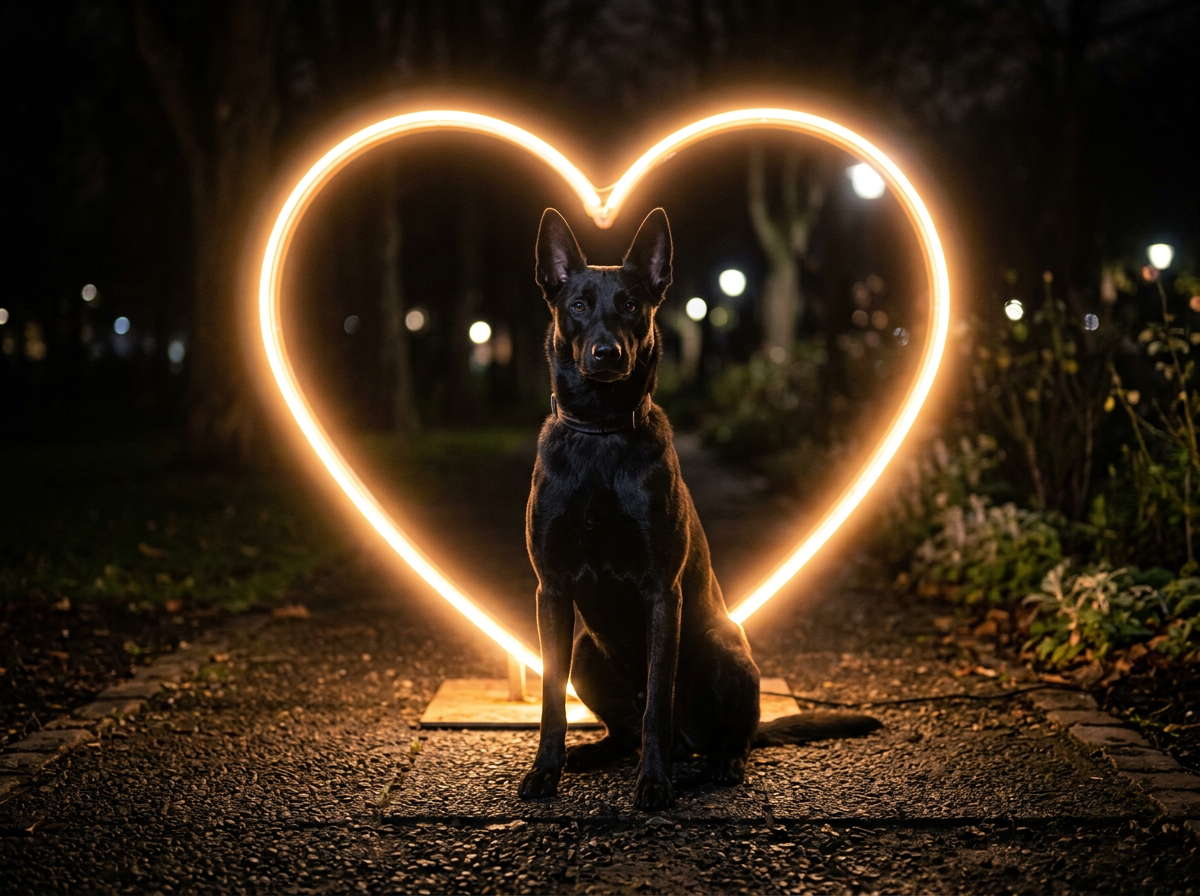
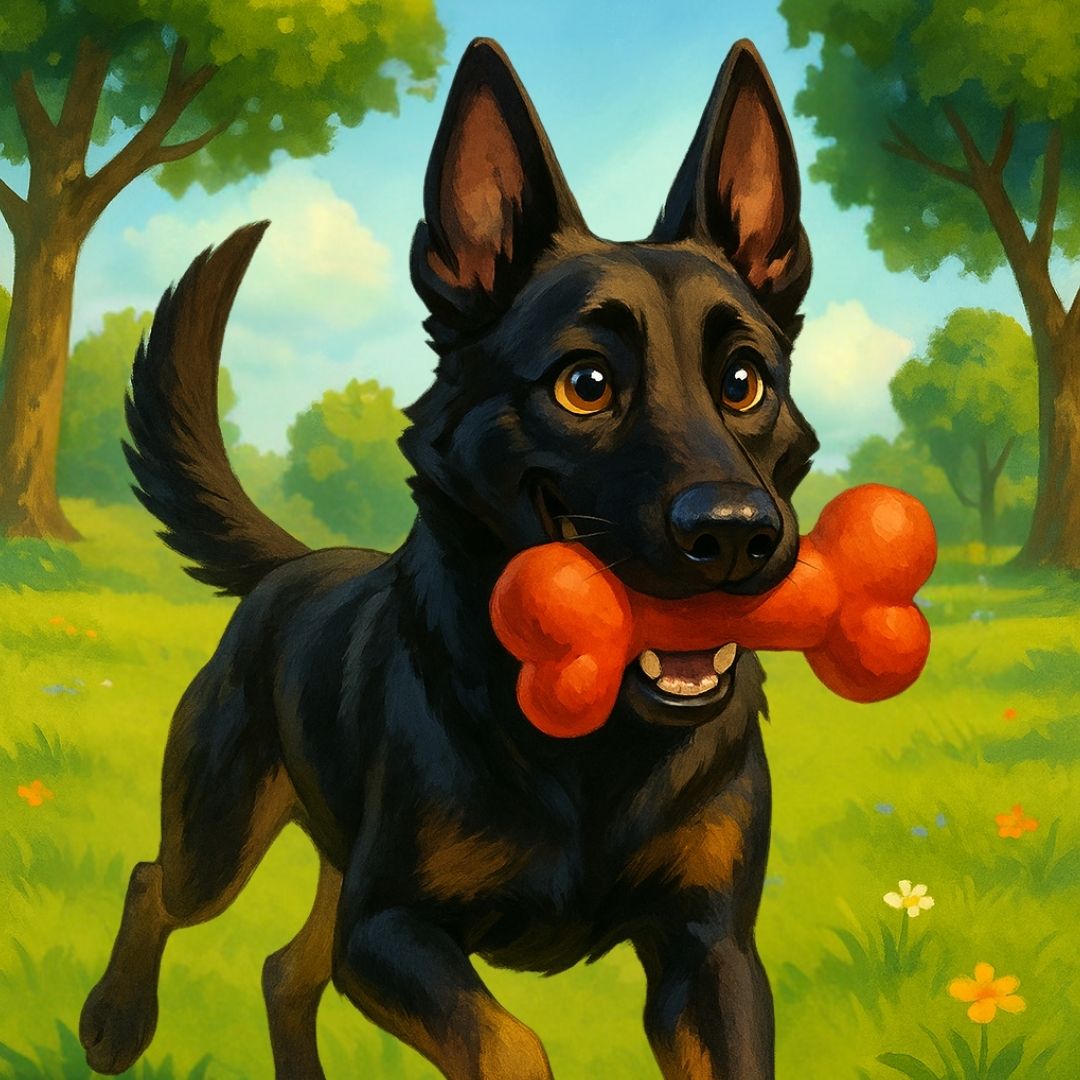
Sauli isn’t just a black Belgian Malinois. She isn’t simply the inspiration behind The Adventures of Sauli the Rescue Pup. She’s the reason those books exist at all.
Every page began with her.
Every laugh was earned.
Every tear was real.
She Was Never Just a Rescue Dog
People often assume that rescuing a dog means changing their life.
Feed them.
Train them.
Love them.
Give them a second chance.
That’s only half the story.
The other half?
They quietly begin rescuing you.
I didn’t go looking for a character to write about.
I rescued a puppy.
The books happened because life with Sauli became too unbelievable not to write down.
She Lives at 200 Miles Per Hour
If you’ve never lived with a Belgian Malinois, imagine combining:
the curiosity of a toddler,
the athleticism of an Olympic gymnast,
the determination of an FBI detective,
and the impulse control of… absolutely nobody.
Now multiply it by ten.
That’s breakfast.
Sauli doesn’t simply walk into a room.
She arrives.
Every shadow deserves investigation.
Every squirrel is a national emergency.
Every open gate is a personal invitation.
And every quiet afternoon somehow ends with me asking,
“How did you even manage that?”
Chaos Isn’t Her Personality.
Curiosity Is.
This is the part most people miss.
People see destruction.
I see investigation.
Sauli isn’t trying to be naughty.
She’s trying to understand the world.
Why does that cupboard open?
What’s behind this fence?
Where does this trail go?
Why is everyone running after me?
Her curiosity has no off switch.
And honestly…
I hope it never does.
Because curiosity built civilizations.
Curiosity writes books.
Curiosity rescues dogs.
She Doesn’t Love Halfway
When Sauli loves…
she commits completely.
She’ll lean her entire body against you.
Rest her head on your lap like you’re the safest place she’s ever known.
Follow you from room to room because apparently privacy is optional.
She has no interest in pretending to care.
It’s all or nothing.
There’s something incredibly refreshing about that.
Humans complicate love.
Dogs simplify it.
She Taught Me That Trust Is Earned in Tiny Moments
People think trust happens in one magical moment.
It doesn’t.
Especially with rescue dogs.
Trust happens…
…when you sit beside the crate instead of forcing them out.
…when you celebrate the first tail wag.
…when you realize progress isn’t measured in weeks.
It’s measured in tiny victories.
One look.
One lick.
One sigh.
One nap where they finally decide they’re safe enough to dream.
Those moments changed me far more than they changed Sauli.
She Has Absolutely No Interest in Being Perfect
I love that about her.
She has escaped daycare.
Created bathhouse disasters.
Started neighborhood chases.
Made professional groomers question their career choices.
She’s knocked over furniture.
Embarrassed me in public.
Destroyed toys within minutes.
And somehow…
every single one of those disasters eventually became a story.
Not because chaos is funny.
Because life is.
Perfection isn’t memorable.
Authenticity is.
She Reminds Me That Adventure Is Usually Unplanned
Nobody plans to write three children’s books.
Nobody plans for their rescue dog to inspire thousands of readers.
Nobody wakes up thinking,
“Today my dog will accidentally become a literary character.”
Yet here we are.
The Adventures of Sauli the Rescue Pup wasn’t born from brainstorming sessions.
It was born from living.
Real moments.
Real mistakes.
Real laughter.
Real love.
Every Book Carries a Piece of the Real Sauli
Readers often ask,
“Did that really happen?”
Usually…
yes.
Sometimes it’s exaggerated.
Sometimes it’s softened for younger readers.
But every adventure carries the heartbeat of the real Sauli.
The fearless explorer.
The professional escape artist.
The cuddle expert.
The tornado disguised as a Belgian Malinois.
Why Readers Connect With Her
Children don’t fall in love with perfect characters.
Neither do adults.
They love characters who make mistakes.
Who keep trying.
Who get scared.
Who find courage anyway.
Sauli reminds us that it’s okay to be wonderfully imperfect.
She isn’t trying to become someone else.
She’s simply becoming more herself.
Maybe that’s why readers root for her.
Maybe that’s why I do too.
The Rescue Mission Continues
The books may be about a mischievous Belgian Malinois, but they’ve always been about something much bigger.
Second chances.
Family.
Adventure.
Belonging.
Resilience.
And the quiet truth that Adopt, Don’t Shop isn’t just a slogan.
It’s an invitation to change two lives at once.
Mine changed forever the day I met Sauli.
I hope someone else’s will too.
Join Sauli’s Adventures
If you’ve ever loved a dog who refused to fit neatly into anyone’s expectations…
If you’ve ever believed that the best stories are the ones that actually happened…
Or if you’re looking for heartwarming children’s books that celebrate rescue dogs, family, adventure, and the beautiful chaos of growing together…
The Adventures of Sauli the Rescue Pup is for you.
From cross-country journeys and globe-trotting adventures to unforgettable escapes, every book is inspired by the real life of one extraordinary rescue pup who proved that sometimes the biggest hearts come wrapped in muddy paws and endless curiosity.
Because Sauli isn’t just the hero of these books.
She’s the reason they exist.
And somehow…
I think she’s only just getting started.
Celebrating One-Year of Adventures of Sauli the Rescue Pup!
Why I Stopped Waiting for “Perfect” to Start Creating
We all have that one project. You know the one—it’s that idea you keep tucked away in a notebook or a messy folder on your desktop, waiting for a “better time.” For me, it was a children’s book idea. For years, I told myself that once I had the budget to hire a professional illustrator or the time to master complex design software, I’d finally bring that story to life.
But “someday” is a dangerous place to live.
The turning point for me wasn’t a sudden influx of cash or a miracle of free time. It was the realization that the barrier to entry I had built in my mind was mostly an illusion. We are living in a moment where the tools to create are more accessible than they have ever been, yet we often let the intimidating nature of a project stop us from even the first draft.
The Shift from “Consumer” to “Creator”
When I started looking into how to actually build a book, I realized the technical side—writing the narrative, designing the characters, and prepping for print—could be simplified into a repeatable, manageable process. I stopped focusing on the “impossible” parts of professional publishing and started focusing on the workflow.
I found that by using simple, accessible tools like ChatGPT, I could iterate on ideas in real-time. I could refine my tone, fix plot holes, and maintain visual consistency in ways that felt like magic, but were really just the result of a solid, step-by-step system.
Why I’m Sharing This
If you’ve been following my journey here, you know I’m a big believer in getting ideas out of your head and into the world. It’s messy, it’s vulnerable, and it’s incredibly rewarding.
I don’t want your story to stay a “someday” project. That is exactly why I put together my step-by-step system for creating a children’s book. It’s the guide I wish I had when I was first staring at a blank page, feeling overwhelmed by the technical hurdles.
It covers everything from:
The “Brainstorming” phase: Turning a vague concept into a concrete, 24-page narrative.
The “Visual” phase: How to keep your characters consistent (the “DNA” of your book) across every illustration.
The “Publication” phase: The no-nonsense approach to getting your book ready for the world.
Your Turn
You don’t need permission to start. You don’t need an illustrator, a publisher, or a professional degree. You just need a little bit of curiosity and the willingness to learn a new workflow.
You get to build your perfect space for reading and writing. What’s it like?
If I could build my perfect space for reading and writing, it wouldn’t look like a productivity hack or a Pinterest board. It would look like a life—one that made room for thinking, feeling, wandering, and returning.
The room would have windows that open wide, not just to let light in, but to remind me that the world exists beyond the page. Outside, there would be trees—old ones, the kind that have seen cycles come and go. They would keep me honest while I worked on A Song and Dance for Mother Earth, grounding my words in gratitude and reverence, reminding me that stories, like ecosystems, need care more than control.
There would be a writing desk scarred with use, not aesthetic, just familiar. That’s where About Life Choices and Potholes would live—pages written after wrong turns, pauses, and those moments when life teaches you something by first knocking you flat.
Nearby, a stack of half-filled notebooks would belong to Diary of Clichés, because some realizations arrive only after you swear you’ll never become that person… and then quietly do.
This space would have a couch meant for staring at the ceiling. Not resting—thinking. That’s where Fever Dreams would be written, in the liminal hours when exhaustion softens the edges of truth and clarity arrives without explanation. In those moments, the room would feel slightly unreal, as if it were breathing along with me.
There would be a door that opens onto a street or a park. I’d leave it ajar while working on Beautiful Men: The Dog Walker, letting life pass by—footsteps, chance encounters, fleeting glances that remind me that softness still exists, that sometimes the universe doesn’t instruct, it flirts. The kitchen would matter just as much as the desk, because Beautiful Men: The Chef would be written between meals and memories, where nourishment is not just consumed but received.
At my feet, always, would be a dog. Muddy paws, restless energy, unconditional presence. Adventures of Sauli the Rescue Pup could only be written in a space that allows chaos and joy to coexist—where healing shows up unannounced and insists on being played with.
The quietest corner of the room would belong to Finding Noir. No distractions. No mirrors, except the internal ones. That book would demand stillness, the kind that forces you to sit with what you’re really looking for, long after you realize it isn’t another person.
There would also be a shelf that makes me laugh at myself. That’s where Why Is Nobody Buying My Book would sit—right next to hope and self-doubt, art and algorithms, reminding me that creativity is both sacred and absurd, and that both can be true at the same time.
Most importantly, this space wouldn’t be about selling stories. It would be about telling them. Every chair, window, and corner would exist to support honesty—whether the result is a book, a sentence, or just a moment of understanding.
Because the truth is, all these books were written in spaces that already existed: borrowed rooms, kitchen tables, hospital waiting areas, long walks, sleepless nights. My perfect space is simply one that allows me to keep doing what these stories taught me how to do—
Pay attention.
Tell the truth.
And trust that the right readers will find their way in.
(Hint: it involves a leash, a fence, and one very determined rescue pup.)
I wish I could say yoga.
Or pilates. Or something serene that involves candles and slow breathing.
But if I’m being honest?
My favorite form of exercise is called “Chasing Sauli.”
It’s a high-intensity, full-body cardio workout that starts the moment my rescue pup decides fences are suggestions.
There’s sprinting (after her), squats (to grab the leash she somehow dropped), core strength (from holding back laughter and panic at once), and endurance (because she always finds a new way to escape).
There are no memberships, no mats, no fancy shoes. Just me, my heart rate spiking, and Sauli—running like she’s auditioning for Fast & Furious: Dog Edition.
But here’s the secret: somewhere between the chaos, laughter, and occasional mud bath, I realized this isn’t just exercise.
It’s connection.
Every chase, every wild run through the park, every moment she looks back mid-sprint as if to say “Come on, human!”—it’s life reminding me to move, to play, to breathe.
That energy, that wildness, that hilariously unfiltered joy—that’s what inspired my book series, The Adventures of Sauli the Rescue Pup.
Because sometimes, the best workouts aren’t found in gyms. They’re found on the other end of a leash.
🐾 Sauli and the Great Escape
Book 3 of The Adventures of Sauli the Rescue Pup is now available on Amazon.
It’s a question that seems simple enough—wars, revolutions, inventions, pandemics, elections. The milestones we were taught to underline in textbooks. But when I think of history, I don’t see dates or leaders. I see moments—small, human moments—where the Earth herself bore witness.
I remember the day the skies over San Francisco turned orange, as if the sun had grown weary and decided to rest. I remember the summer when rivers ran so dry that the fish lay gasping in the mud. I remember the floods that swallowed entire towns, the fires that raged for weeks, the ice that cracked and wept into the sea.
We call these “environmental crises,” but to me, they feel like history too—because they mark the chapters of a changing Earth.
In many ways, A Song and Dance for Mother Earth is about remembering. Not the history we memorized, but the history we have lived alongside the planet—the one written in smoke, wind, and tide. The one that reminds us that the Earth, too, has stories to tell.
Each piece in this series is a fable, but also a mirror.
There’s The Day Fire Disappeared, when humanity learns what happens when the flame that built civilization decides to go out.
There’s The Day Water Vanished, where rivers dry up to remind us that every drop we waste is a piece of our own reflection.
And there’s The Day the Sun Slept, when the light that sustained us grows dim, asking us to pause and listen to the Earth’s silent plea.
These are not apocalyptic tales. They are love stories—between humankind and the world that raised us. They are reminders that the Earth’s memory runs deep, and that every act of care, every small promise kept, becomes a note in the song we sing back to her.
So, when I ask what major historical events you remember, perhaps I’m not asking about kings or wars or borders. I’m asking:
Do you remember the first rain that smelled like home?
Do you remember the forest path where you felt utterly alive?
Do you remember the sound of the ocean that made you feel both tiny and infinite?
Those are the moments that matter now. Because history is not only about what we’ve built—it’s about what we’ve broken, and what we still have the chance to heal.
A Song and Dance for Mother Earth is my way of remembering—and inviting you to remember too.
Because perhaps the greatest event in human history isn’t something that happened to us, but something we’re still part of:
(A story about chaos, second chances, and one unforgettable rescue pup)
If you’d asked me this question years ago, I might’ve said something predictable—career milestones, creative projects, maybe a degree or two.
But now, I’d say: I’m proud that I said yes.
Yes to a rescue dog named Sauli.
Yes to the chaos she brought.
Yes to the life that unraveled (and rebuilt itself) because of her.
When I first met Sauli, she wasn’t the picture of a calm, adoptable pup. She was a blur of energy—sharp, stubborn, wild-hearted. The first weekend we spent together, she nearly tore apart a hotel room and escaped twice. It was, quite literally, a disaster.
But somewhere in that storm, I found something I didn’t even know I was missing—a sense of aliveness, of responsibility, of connection.
She made me show up. Every single day. No excuses.
What started as a rescue story turned into a companionship I never expected—and eventually, a book series: The Adventures of Sauli the Rescue Pup.
Through every escape, every moment of mayhem, and every quiet night where she finally fell asleep beside me, I realized this was more than just about having a dog. It was about choosing love over control, patience over frustration, and joy over perfection.
That’s what I’m most proud of.
Not that I rescued her—but that she rescued me right back.
🐾 Sauli and the Great Escape
Book 3 of The Adventures of Sauli the Rescue Pup is now available on Amazon.