I’ve spent the better part of my life watching teachers, becoming one, resisting the label, then finally surrendering to it with a nod of grace. I used to think great teachers were born in classrooms, standing at a podium with a chalk in one hand and a world of wisdom in the other. Now, I know better.
A great teacher, I’ve come to believe, isn’t someone who knows it all—but someone who knows how to stay curious. Someone who teaches not from a pedestal but from the trenches of their own lived experience. Someone who admits they too have potholes, detours, and doubts—and that the syllabus they teach is written, not in ink, but in mud, laughter, and late-night journal entries.
That’s how I began writing Diary of Clichés—as a kind of curriculum for the emotionally brave. Because sometimes the best teachers are not the ones in schools or seminar rooms, but the ones who sit across from you with a cup of coffee, or write books that hold up a mirror and whisper, “You too?”
I don’t believe in perfection. Never have. I believe in vulnerability. I believe in showing up, even when the lesson plan is incomplete. I believe in asking the hard questions—even if the answers are uncomfortable. Especially when they are. I believe in learning aloud, in failing forward, and in inviting others to join the journey—not when you’ve figured it all out, but when you haven’t.
That’s what Life Choices & Potholes is all about. It’s the textbook I wish I had when I was stumbling through crossroads, unsure of whether to listen to logic, intuition, or the girl inside me still learning how to speak. That book, and others like it, are my offering. Not because I claim to have all the answers—but because I’ve finally stopped pretending that I do.
A great teacher listens before they lecture. Holds space before they hand out solutions. And sometimes, a great teacher just asks the right question at the right moment and lets the silence do the rest.
So what makes a teacher great? Maybe it’s this: the willingness to show up fully human, to love people into their potential, and to remind them—gently, consistently, quietly—that their story matters.
That they matter.
And that maybe, just maybe, their mess is the message someone else has been waiting for.
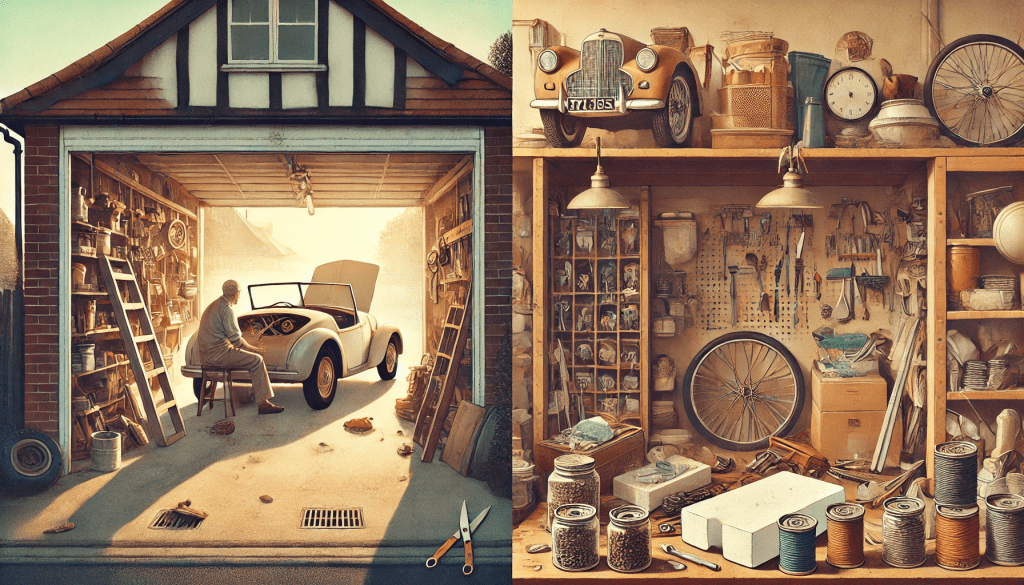
Ever so often while taking a walk on Polk Street towards the Pier I used to pass a house with its garage door open.
I used to sneak a peek into the beautiful garage and the wonderful keepsakes it had. It was probably like any other garage but something about it made it different.
There used to be someone perched up under a vintage-looking car working on it.
Never saw the beautiful car come out of the garage or maybe I missed it. I am not much of a car person, they don’t really do so much to me.
But I always thought about this beauty every time I passed the garage and thought of the person perched up beneath her wheels working on her.
I think she was a remodeled car, made from a vintage body.
I visualized the person spending their weekends working on her. Maybe having a few beers, people watching on the sunny side of Polk at the intersection of Polk and Chestnut, in between doing craftwork on their vintage beauty.
I used to think how much my dad might love a life like that.
A garage full of keepsakes and all the mechanical instruments his hands want to touch. The feel of metal on his fingertips and drills and nuts and bolts and bits and pieces of iron he’d like to surround himself with!
I never stopped to talk to the person in the garage. I never asked about the car, or why it never seemed to leave its space. But that small, quiet world they’d carved out for themselves on Polk Street—it stayed with me. Not because of what it was, but because of what it stirred in me. Memories of my dad’s hands, always working, always moving. His love of machines and keepsakes and little bits of iron that others might overlook.
I always thought about my dad when I walked past that garage.
Since I moved back in with my parents, my dad has acquired a few curious habits. He wakes up in the wee hours of the morning, when the house is still dark and quiet, and does mysterious things. He moves around the house gathering bits and pieces of discarded material, things out of the trash, little scraps others wouldn’t think twice about. If we disturb him—ask if everything’s okay—he’ll quickly pretend to drink some water, then hurry off to his tinkering, as if we hadn’t noticed anything out of the ordinary.
But then, slowly, the evidence appears. I’ll find bits of scrap material hidden beneath his bed, styrofoam tucked beneath his pillow like a secret treasure. And then there are the results of his quiet labor, scattered throughout the house in quiet corners. Broken scissors transformed into knives. Random scraps turned into cleaning supplies. Cloth fragments stitched into objects you can’t quite identify until, days or weeks later, he finds some ingenious use for them.
I can’t help but draw a connection between his midnight creations and that stranger under the car on Polk Street. Both of them are cut from the same cloth—people who see the potential in what others throw away. People who find joy in the act of creating, of transforming, of making something new from what’s been discarded. My dad doesn’t just fix things; he breathes life back into them. A kind of quiet magic, a love that takes shape in broken scissors, cloth scraps, and quiet corners of the house.
And I suppose, in a way, that stranger in the garage gave me a piece of my dad to carry with me on my walks. A thread of connection to the kind of life he’s always lived. A life that isn’t about big dreams or grand gestures, but about the small joys—the feel of metal on his fingertips, the hum of the world just outside the door, and the quiet satisfaction of making something with his own two hands.
We all have those dreams that feel larger than life—the ones that keep us awake at night and light our hearts on fire. But too often, the sheer size of our goals can feel overwhelming, leaving us stuck in the “someday” mindset. What if I told you that breaking them down into small, actionable steps is the key to achieving even the wildest ambitions?
Take a moment to reflect on your biggest goal. Maybe it’s writing a book, starting a business, traveling the world, or simply finding inner peace. Whatever it is, here’s how you can turn it into reality:
1. Get Clear on Your “Why”
Behind every goal lies a deeper purpose. Why does this matter to you? For me, writing Diary of Clichés was about more than just creating a book—it was about sharing my truth, inspiring others, and finding healing through storytelling. Knowing my “why” kept me motivated, even when the journey felt tough.
2. Break It Down
Big dreams can feel like mountains, but every mountain is climbed one step at a time. Start by dividing your goal into smaller milestones.
• Example: Want to write a book? Break it into phases like brainstorming, outlining, drafting, and editing.
• Pro Tip: Focus on one step at a time. The smaller the task, the more manageable it feels.
3. Create Daily Habits
Success is built on consistency. Transform your milestones into daily habits that align with your bigger goal.
• Write 500 words a day.
• Save a small amount weekly for your dream trip.
• Spend 15 minutes daily meditating for inner peace.
4. Celebrate the Small Wins
Every small step forward is progress. Take time to acknowledge and celebrate the wins along the way—it fuels your momentum.
5. Reflect and Adjust
Life isn’t linear, and neither is your journey toward your goals. Journaling helped me stay grounded and reflect on my progress while writing Diary of Clichés. When you track your journey, you can identify what’s working and tweak what isn’t.
6. Believe in Yourself
The most important step is trusting that you’re capable of achieving your dreams. Every big goal starts with a leap of faith. The path may not always be easy, but it’s always worth it.
Your Story Matters
If there’s one thing Diary of Clichés taught me, it’s that every cliché holds a kernel of truth—just like every dream holds the potential to change your life. This book is more than a collection of words; it’s a guide to finding inspiration, embracing vulnerability, and rewriting your story, one step at a time.
🌟 So, what’s your biggest goal? Let Diary of Clichés inspire you to take that first small step and keep moving forward. You’ve got this!
Every person carries a spark—a unique blend of talents, experiences, and quirks that make them them. For me, my greatest strengths are woven into my love for storytelling, my deep empathy for human connections, and my relentless ability to rise from challenges, crafting meaning from life’s messiest moments.
From journaling my fears to exploring the lessons hidden in past relationships, I’ve come to realize the incredible strength of vulnerability. It’s not about having it all figured out; it’s about showing up, even when the pages are blank, even when the story feels too messy to tell.
How Do I Use My Strengths to Make a Difference?
1. Transforming Pain into Power:
Life’s twists and turns have taught me that clichés aren’t just overused phrases—they’re wisdom disguised in simplicity. By leaning into these truths, I’ve found ways to heal, grow, and help others do the same. Diary of Clichés is my offering to the world—a reminder that we’re not alone in our struggles and that even the most broken moments hold beauty.
2. Connecting Through Stories:
Stories bridge the gaps between us, making the universal feel personal. Through my writing, I aim to connect with readers on a soul-deep level, encouraging them to reflect on their journeys, laugh at their stumbles, and embrace their truths.
3. Turning Reflection into Action:
My strength lies in making self-discovery accessible. By breaking big ideas into small, actionable steps, I inspire others to take their first steps toward transformation, whether it’s journaling, setting boundaries, or simply daring to dream.
How Can You Use Your Strengths to Make a Difference?
• Know Your Gifts: What comes naturally to you? What lights you up? Maybe it’s creativity, empathy, resilience, or the ability to listen. Write them down, honor them, and see how they show up in your life.
• Share Your Light: Don’t underestimate the power of your story. It can inspire, heal, and spark change in someone else’s life.
• Start Small: Every big difference begins with one small action. Mentor someone, share your experiences, or use your unique talents to solve a problem in your community.
💡 Remember, your strengths are your superpowers, and the world needs what only you can bring.
Why Does This Matter?
Because strength isn’t about perfection—it’s about embracing who you are, flaws and all, and using that authenticity to impact the world.
📖 Ready to uncover your strengths and rewrite your story? Diary of Clichés is here to guide you. Let’s dive deep, reflect, and take action—one cliché at a time.
✨ What’s your greatest strength, and how do you use it to make a difference? Share below—we’d love to hear your story. ✨
Challenges—big or small—are like shadows. They can feel overwhelming when you’re standing still, but when you take a step forward, they shrink just enough to remind you that you can move through them. So, let’s talk about those shadows, the hurdles that make us feel stuck, and how to take those first small steps toward the light.
Challenge: Feeling Overwhelmed by Big Goals
Maybe your dream feels too big to even start. You want to write a book, start a business, or finally get in shape, but every time you think about it, the task seems monumental.
Small Step Solution: Break it down. Don’t think about finishing the whole book—just write one sentence. Don’t focus on running a marathon—start with a 10-minute walk. Progress doesn’t have to be perfect; it just has to be consistent.
💡 Diary of Clichés Tip: “Rome wasn’t built in a day, but bricks were laid every hour.” Take it one brick at a time and celebrate every little win.
Challenge: Procrastination
The allure of tomorrow is strong, isn’t it? “I’ll do it later” feels harmless until you’re staring at a pile of missed opportunities.
Small Step Solution: Use the “2-Minute Rule.” If something takes less than two minutes, do it now. If it’s a larger task, set a timer for just two minutes to work on it. Often, starting is the hardest part, but once you begin, momentum takes over.
💡 Diary of Clichés Tip: “Why wait for the perfect moment when you can make this moment perfect?” Start now, even if it’s messy.
Challenge: Fear of Failure
Failure feels like the villain in our story, doesn’t it? But the truth is, failure is just another plot twist, not the end of the book.
Small Step Solution: Reframe your mindset. Instead of asking, “What if I fail?” ask, “What can I learn if I fail?” Write down your fears in a journal and counter each one with a positive “What if?” statement. For example:
• Fear: “What if I fail at this presentation?”
• Counter: “What if this presentation teaches me how to improve for next time?”
💡 Diary of Clichés Tip: “The greatest stories are born from the messiest drafts.” Let failure be part of your process, not the end of it.
Challenge: Self-Doubt
You’ve got big dreams, but a little voice in your head keeps whispering, “Who are you to think you can do this?”
Small Step Solution: Talk back to that voice. Write a list of your past achievements, no matter how small. Revisit it when self-doubt creeps in. You’ve overcome challenges before; you’ll do it again.
💡 Diary of Clichés Tip: “Doubt kills more dreams than failure ever will.” Write your fears in your journal, and then write your truths. You’ll see which one holds more power.
Challenge: Lack of Clarity
Sometimes, we’re stuck not because we’re afraid or unmotivated, but because we simply don’t know where to start.
Small Step Solution: Ask yourself three questions:
1. What do I want?
2. Why do I want it?
3. What’s one tiny thing I can do today to move closer to it?
Write your answers down. Clarity often comes through the process of reflection, not before it.
💡 Diary of Clichés Tip: “When the path isn’t clear, take a small step forward. The road will reveal itself as you move.”
Challenge: Lack of Consistency
Motivation is fleeting, but habits stick around. If you struggle to stay consistent, it’s time to rethink your approach.
Small Step Solution: Stack new habits onto existing ones. For example:
• Want to journal every day? Do it after your morning coffee.
• Need to exercise? Pair it with a podcast you love.
💡 Diary of Clichés Tip: “It’s not about being perfect every day—it’s about showing up more often than not.” Keep going, even when it’s hard.
Turning Challenges into Stories
At its heart, Diary of Clichés is about finding meaning in life’s everyday struggles. It’s about seeing challenges not as roadblocks, but as stepping stones to something greater. Each cliché reminds us that while life isn’t always easy, it’s always worth reflecting on.
So the next time you feel stuck, pull out your journal and start writing. Write about your fears, your dreams, your doubts, and your triumphs. Use your words to turn shadows into stepping stones and challenges into chapters of your story.
Because here’s the truth: You already have everything you need to overcome your challenges. All it takes is one small step—and a little faith in the journey ahead.
💡 Want to dive deeper into your journey? Pick up a copy of Diary of Clichés and start transforming your challenges into wisdom, one journal entry at a time.
Dreams are the quiet whispers of your soul, reminding you of the life you’ve always imagined but may not have dared to pursue. They’re the sparks that light up your heart when you least expect it. But the real magic lies not just in dreaming big—but in believing they’re possible and taking the first step toward them.
So, what are your biggest dreams?
Maybe it’s to:
🌍 Travel the world and immerse yourself in cultures that leave you awestruck.
🎨 Turn your creative passion into a career that doesn’t feel like work.
❤️ Find a love so deep, it feels like it’s been written in the stars.
📚 Write your story—or rewrite it—to reflect the life you truly want to live.
Now comes the real question: How can you achieve them?
1. Listen to Yourself
Your dreams start with the whispers within. Journaling is the perfect way to connect with those dreams, peeling back layers of doubt and fear to uncover what you truly want.
2. Set Intentions, Not Just Goals
Dreams aren’t just about the end result; they’re about the journey. Intend to grow, to learn, and to live fully as you chase them.
3. Take Small, Brave Steps
Every dream begins with a single step. Maybe it’s booking that solo trip, signing up for a class, or finally cracking open that blank notebook to pour your heart out.
4. Embrace Your Flaws and Failures
Every cliché holds a truth: “Rome wasn’t built in a day.” Mistakes and setbacks are part of the process—they’re what make the story of your dream worth telling.
5. Surround Yourself with Inspiration
Fuel your fire with stories, books, and people that remind you of what’s possible.
And that’s where Diary of Clichés comes in. It’s more than a book—it’s a guide to reflect on your dreams, embrace the clichés that shape your journey, and rewrite your life with intention. It’s filled with prompts and reflections designed to nudge you closer to your own “happily ever after.”
Dare to Dream
Your dreams are valid. They’re worth fighting for. And the first step to achieving them? Write them down. Let Diary of Clichés be the spark that helps you dream big, reflect deeply, and act boldly.
✨ Your dreams deserve to live outside your imagination. Write your story today. ✨
Life often feels like a balancing act between what we fear and what we dream of achieving. On one side is the weight of self-doubt, fear of failure, and the unknown. On the other is the shining promise of our ambitions and aspirations. How do we bridge the gap? For me, the answer has always been through reflection, gratitude, and journaling.
Journaling is more than just scribbling words on a page. It’s a practice that allows us to sit with our fears, explore the whispers of our dreams, and uncover the truths that lie within us. When we take the time to write, we create a safe space to navigate life’s challenges and cultivate the courage to move forward.
Facing Fear with Gratitude
Fear often stems from the unknown. We fear we’re not good enough, that we’ll fail, or that we’ll be judged. But fear loses its power when we meet it with gratitude.
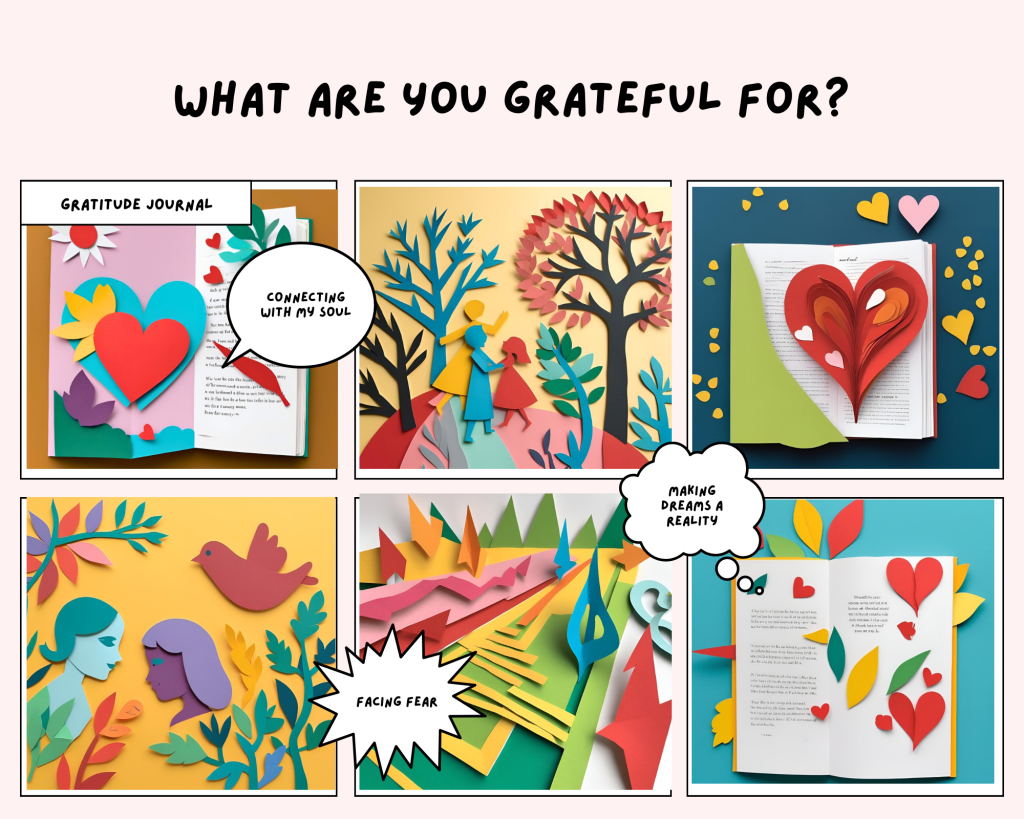
Gratitude shifts our focus from what we lack to what we have. It reminds us of the strength we’ve gained from past challenges, the people who’ve supported us, and the small victories we’ve achieved. When I sit down to write in my journal, I start with gratitude. I list the things that light me up—big or small. It might be the comfort of a morning cup of coffee, a kind word from a friend, or the way writing has helped me heal.
Gratitude doesn’t erase fear, but it gives us a solid foundation to stand on. It reminds us of what we’re capable of and makes the journey ahead feel less daunting.
Journaling Your Dreams into Reality
Dreams can feel distant and overwhelming, but journaling helps to bring them closer. Writing about your dreams makes them tangible—it transforms a vague idea into something you can visualize, plan, and act upon.
Start by asking yourself: What do I truly want? Write it down without judgment or hesitation. Let your pen flow, capturing the essence of your aspirations.
Next, break those dreams into smaller, actionable steps. If your dream is to write a book, your journal might include a timeline for finishing the first draft or a list of topics you’d like to explore. If your dream is to travel the world, jot down destinations, savings goals, or ways to learn a new language.
Journaling not only helps you map out your dreams but also allows you to track your progress. It’s a way of holding yourself accountable while celebrating every milestone along the way.
Overcoming Fear Through Writing
When fear creeps in—and it will—your journal becomes your confidant. Write about your fears honestly and openly. What’s holding you back? What’s the worst that could happen? More often than not, putting your fears on paper diminishes their power.
But don’t stop there. After you’ve named your fears, write about the strengths you already possess. What challenges have you overcome in the past? What resources and skills do you have to face this new challenge?
For me, writing through fear has been transformative. It’s a way to acknowledge the discomfort while also reminding myself that I am more resilient than I often realize.
The Soul Connection of Journaling
Journaling isn’t just a tool for productivity—it’s a way to connect with your soul. It’s where your deepest truths emerge, where your fears and dreams coexist, and where you find clarity in the chaos of life.
This is why I created Diary of Clichés. It’s not just a book; it’s a companion for those who are ready to embrace their stories, reflect on their journeys, and rewrite the narratives that no longer serve them. It’s a space for dreamers, thinkers, and anyone looking to connect with their authentic selves.
When we take the time to journal, we’re not just writing words; we’re laying the foundation for a life that aligns with our truest desires.
Your Turn
If you’ve never tried journaling, now is the time to start. Find a quiet space, grab a notebook, and let your thoughts flow. Write about your fears, your dreams, and the things you’re grateful for. Let your journal become your sanctuary—a place where you can dream boldly, confront your fears, and build the life you’ve always imagined.
And if you’re looking for inspiration, pick up a copy of Diary of Clichés. Let it guide you through the process of self-reflection and transformation. Together, we can turn fears into lessons and dreams into realities.
Because life is too short to let fear win—and your dreams are far too beautiful to wait.
In a world dominated by digital convenience, the humble physical diary often seems like an artifact of the past. Yet, for those who’ve embraced its pages, it’s not just a book—it’s a doorway to the soul. There’s something undeniably intimate and grounding about writing in a diary that no app or online journal can replicate. Let’s explore why this analog ritual remains the best journaling experience, one that connects you with your deeper truths.
1. The Power of Touch: Writing Anchors You in the Present
When you pick up a pen and touch it to paper, you’re engaging your senses in a way typing never can. The texture of the paper, the weight of the pen, the flow of ink—all these tactile elements create a grounding effect. Writing becomes an embodied practice, one that brings you fully into the moment.
This physicality slows you down, forcing you to engage with your thoughts instead of rushing through them. It’s a meditative process that mirrors the rhythm of your heartbeat, grounding you in your own truth.
2. A Safe Space for Vulnerability
A diary doesn’t judge. It doesn’t demand likes, comments, or shares. It’s a sanctuary where you can pour out your rawest emotions without the fear of being misunderstood.
When you write in a physical diary, you’re free to express yourself authentically. You’re not performing for an audience or constrained by autocorrect. Your words, messy or neat, are your own—raw, real, and unfiltered.
3. The Ritual of Writing: A Spiritual Connection
The act of journaling by hand is a ritual in itself. Choosing a diary that resonates with you, opening it to a blank page, and writing your thoughts feels sacred. This ritual connects you with something deeper—call it your soul, your intuition, or your subconscious.
It’s in these quiet moments, away from screens and distractions, that you often stumble upon profound insights. The diary becomes a mirror, reflecting your inner world back to you.
4. Memory and Reflection: The Gift of Permanence
Digital journaling may be convenient, but it often lacks the tactile permanence of a physical diary. Flipping through handwritten pages years later is a visceral experience. The way your handwriting changes, the doodles in the margins, even the smudges of ink—all these details bring memories alive in a way digital entries cannot.
A physical diary is more than a record; it’s a keepsake. It holds not just your words but the essence of who you were at the time you wrote them.
5. Creativity Unleashed
There’s a unique magic in writing by hand—it sparks creativity. The physical act of forming letters and sentences connects to your brain in a way typing doesn’t. Studies have shown that handwriting enhances cognitive processes, helping you think more deeply and creatively.
In a diary, you’re free to doodle, draw, or let your pen wander. This creative freedom can lead to surprising breakthroughs, both in your writing and your personal growth.
6. Disconnect to Reconnect
In an age of constant notifications and screen fatigue, a physical diary offers a rare chance to disconnect. When you set aside your devices and pick up a pen, you’re carving out space for yourself.
This act of stepping away from the digital world allows you to reconnect—with your thoughts, your emotions, and your deeper truths. It’s a form of self-care that nurtures your mind and soul.
7. Writing as a Dialogue with Your Soul
When you write in a diary, you’re not just documenting your day—you’re having a conversation with your inner self. Your diary becomes a trusted confidant, a place where you can explore your hopes, fears, dreams, and doubts.
Through this dialogue, you gain clarity and insight. You begin to understand yourself on a deeper level, uncovering truths that may have been buried beneath the noise of everyday life.
A Love Letter to the Written Word
Writing in a physical diary is more than a habit—it’s a love letter to yourself. It’s an acknowledgment that your thoughts, feelings, and experiences matter. It’s a commitment to honoring your journey, one page at a time.
The Connection to Diary of Clichés
This timeless practice of journaling mirrors the themes explored in Diary of Clichés. Just as each cliché holds a hidden truth waiting to be discovered, so too do the pages of your diary.
Diary of Clichés invites you to reflect on life’s universal truths through the lens of familiar sayings. Why not take these reflections further by journaling your own experiences, fears, and dreams? Let your diary become a companion on your journey of self-discovery—a place where the wisdom of clichés meets the unique story of you.
Your Turn
So, grab your favorite pen, open that beautiful blank book, and start writing. Let the process surprise you. Let it connect you to your soul, your creativity, and your deeper truths.
Who knows? Someday, you might look back at those pages and find they hold not just your past but the keys to your future.
Ready to start journaling? Tell us: What will you write on your first page?
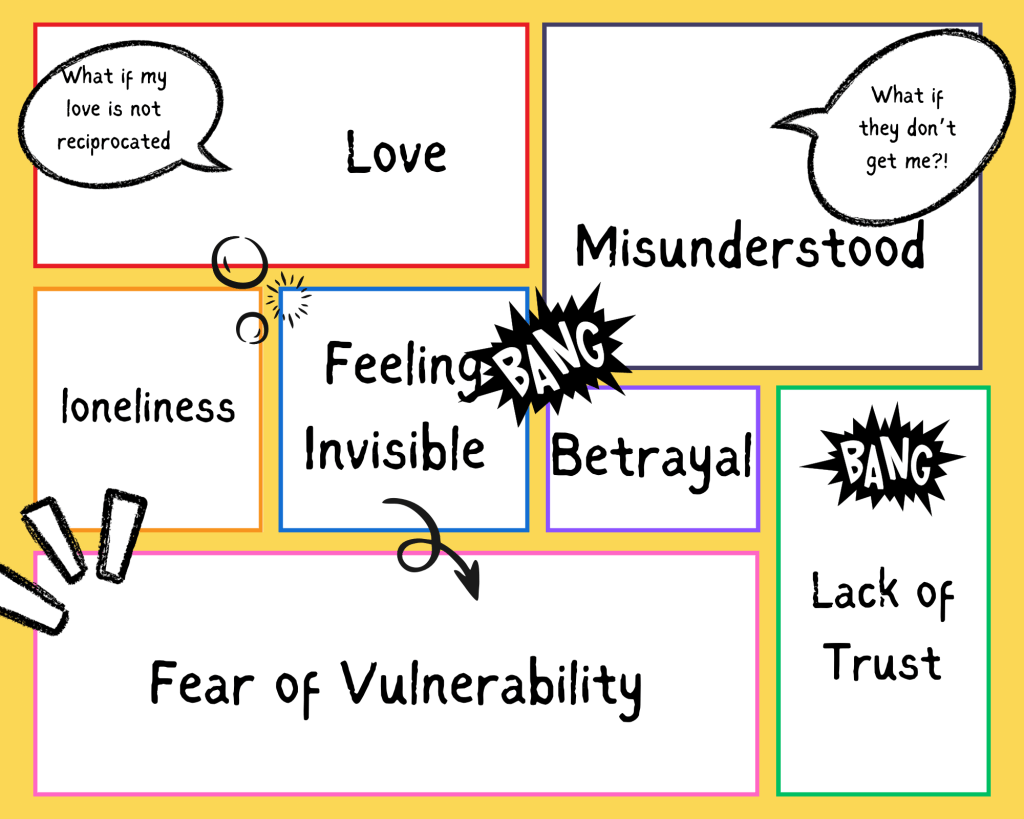
Fear has a funny way of sneaking up on us, doesn’t it? It’s that silent passenger that whispers doubts when we’re about to make a bold move or holds us back when we’re standing on the edge of something new. But what makes fear fascinating—and deeply human—is how universal yet wildly personal it is.
As the author of Diary of Clichés, I’ve spent countless hours untangling the truths buried within those everyday phrases we love to roll our eyes at. And if there’s one thing I’ve learned, it’s this: our fears often live in the clichés we try so hard to dismiss.
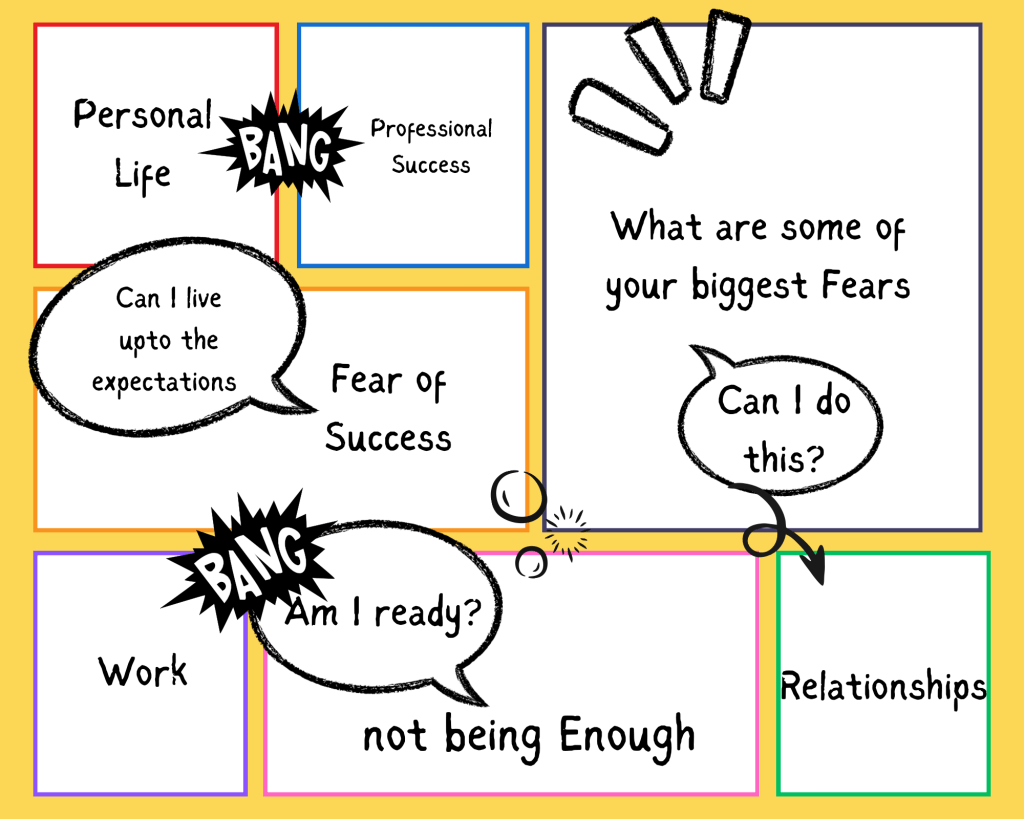
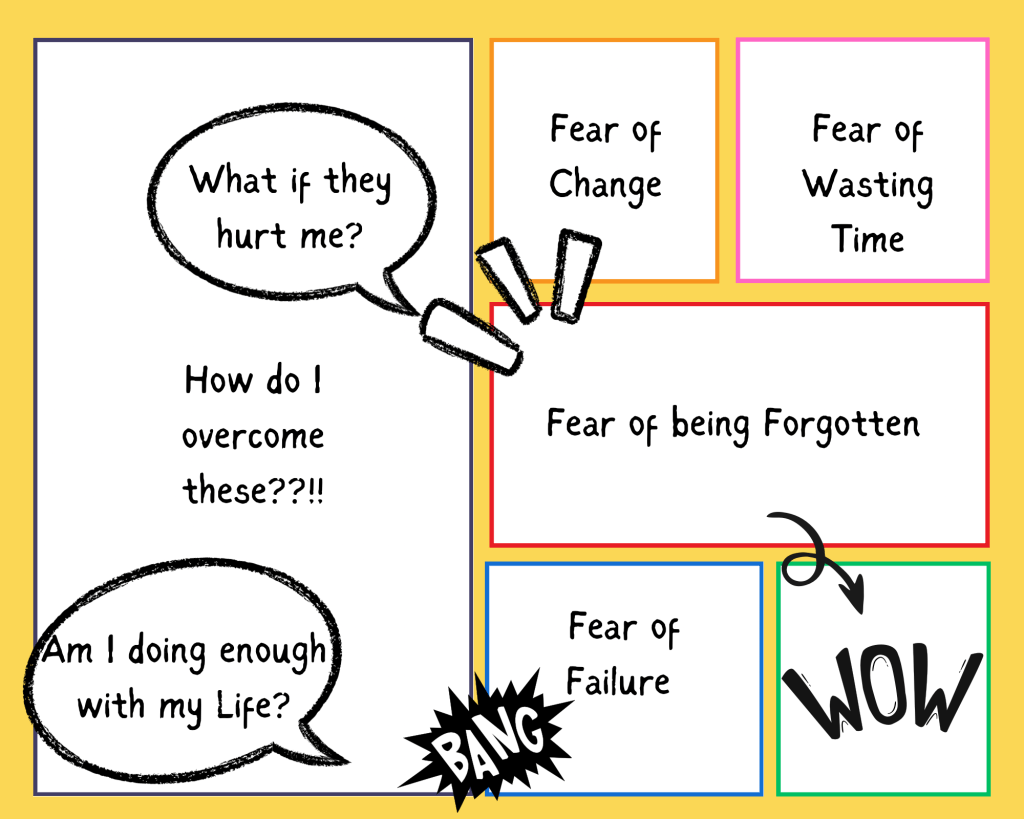
Here are some of my biggest fears—and maybe, just maybe, they’ll feel a little like your own.
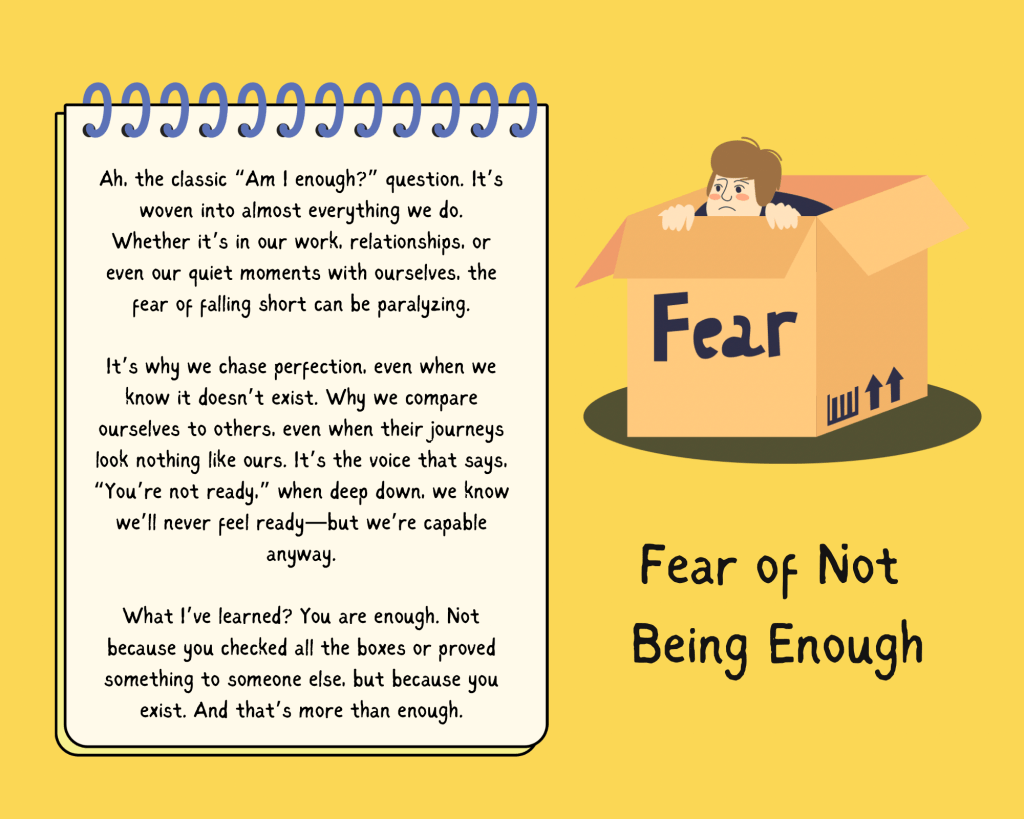
1. The Fear of Not Being Enough
Ah, the classic “Am I enough?” question. It’s woven into almost everything we do.
Whether it’s in our work, relationships, or even our quiet moments with ourselves, the fear of falling short can be paralyzing.
It’s why we chase perfection, even when we know it doesn’t exist. Why we compare ourselves to others, even when their journeys look nothing like ours. It’s the voice that says, “You’re not ready,” when deep down, we know we’ll never feel ready—but we’re capable anyway.
What I’ve learned? You are enough. Not because you checked all the boxes or proved something to someone else, but because you exist. And that’s more than enough.
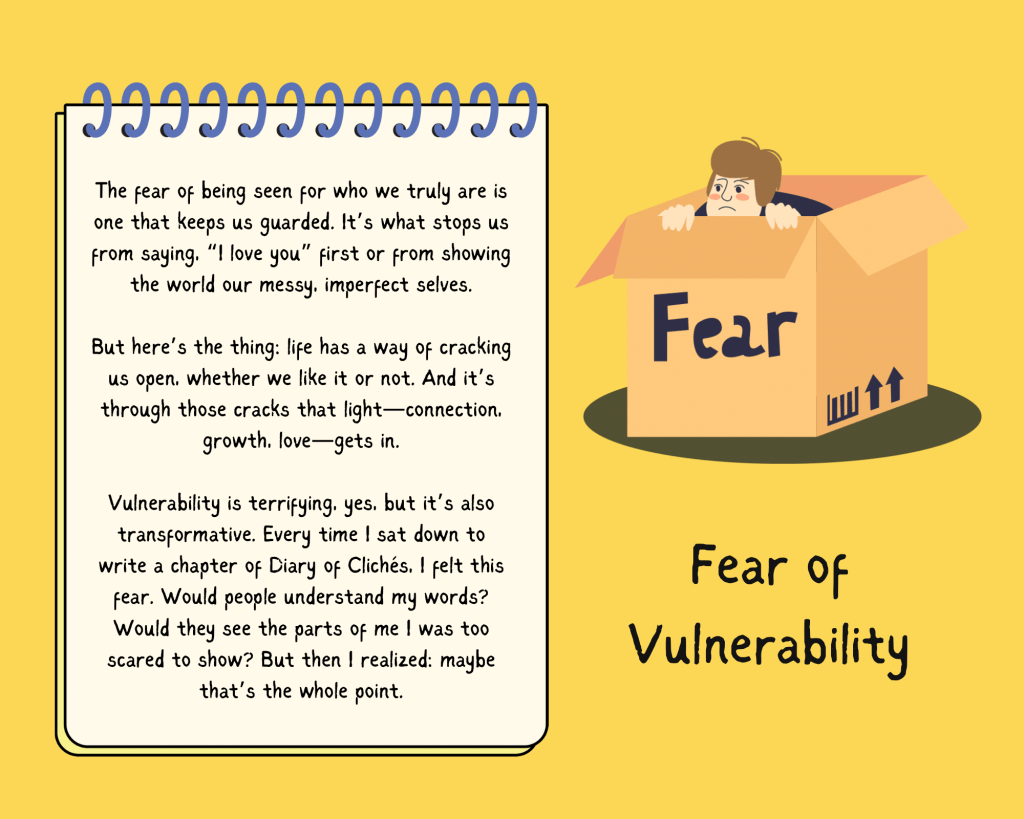
2. The Fear of Vulnerability
The fear of being seen for who we truly are is one that keeps us guarded. It’s what stops us from saying, “I love you” first or from showing the world our messy, imperfect selves.
But here’s the thing: life has a way of cracking us open, whether we like it or not. And it’s through those cracks that light—connection, growth, love—gets in.
Vulnerability is terrifying, yes, but it’s also transformative. Every time I sat down to write a chapter of Diary of Clichés, I felt this fear. Would people understand my words? Would they see the parts of me I was too scared to show? But then I realized: maybe that’s the whole point.
3. The Fear of Being Forgotten
This one’s a doozy, isn’t it? The fear that our existence might slip through the cracks of time, that our story won’t be remembered.
But here’s the truth I’ve come to embrace: we don’t need to be remembered by the whole world. We just need to make an impact on the people whose lives we touch.
It’s the kind word to a stranger, the laughter shared with a friend, the moments of courage we inspire in others. Those are the legacies that matter.
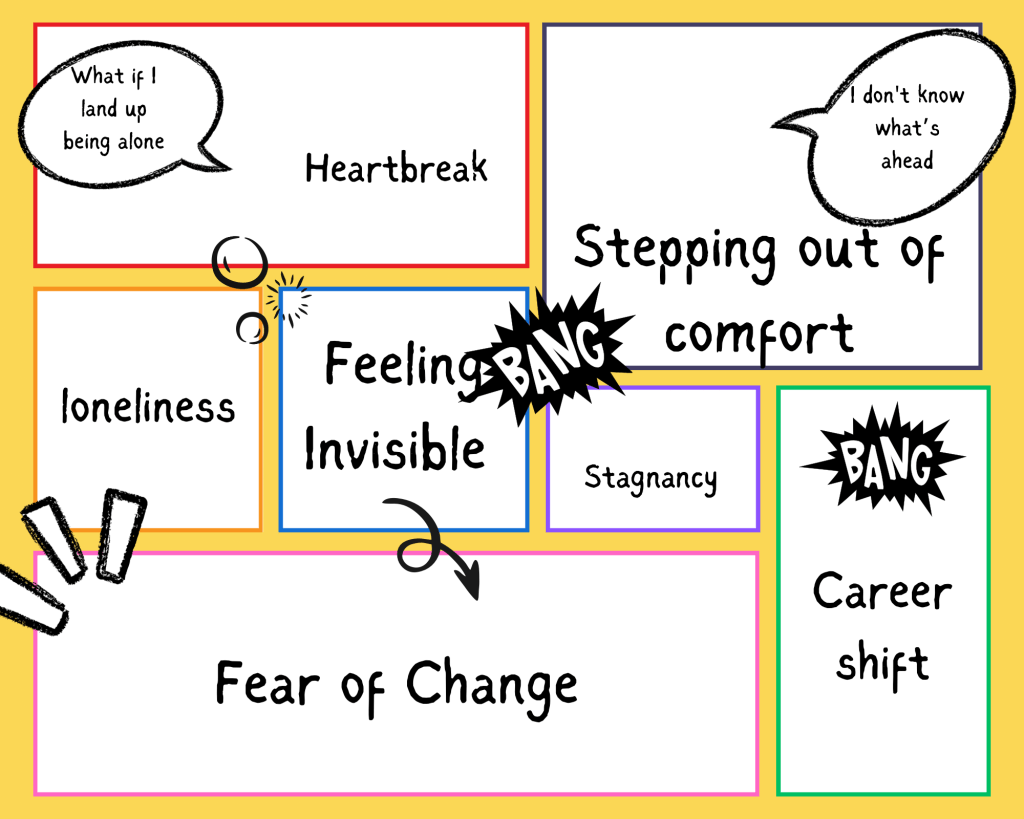
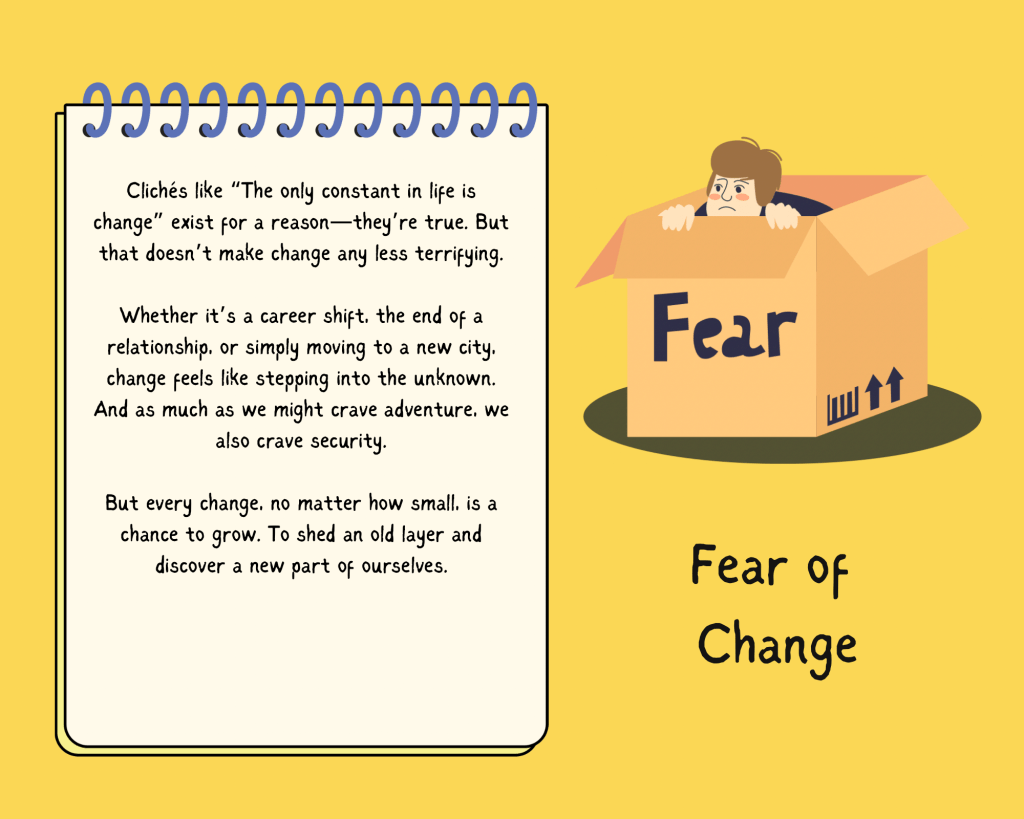
4. The Fear of Change
Clichés like “The only constant in life is change” exist for a reason—they’re true. But that doesn’t make change any less terrifying.
Whether it’s a career shift, the end of a relationship, or simply moving to a new city, change feels like stepping into the unknown. And as much as we might crave adventure, we also crave security.
But every change, no matter how small, is a chance to grow. To shed an old layer and discover a new part of ourselves.
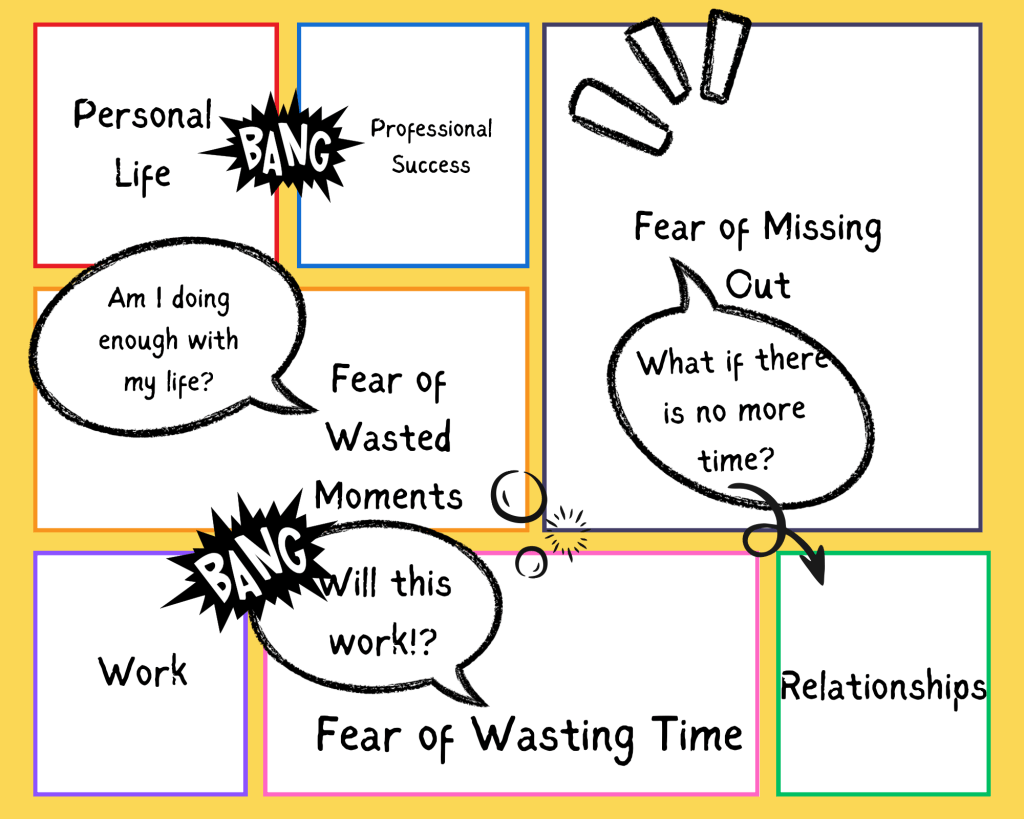
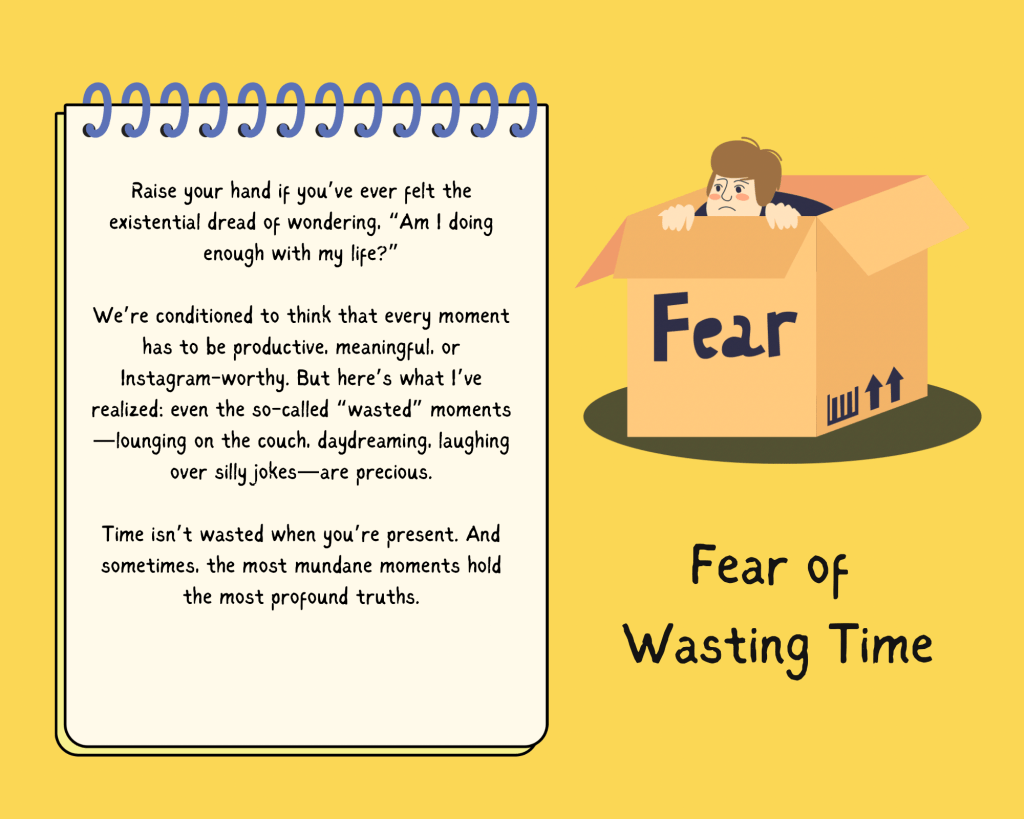
5. The Fear of Wasting Time
Raise your hand if you’ve ever felt the existential dread of wondering, “Am I doing enough with my life?”
We’re conditioned to think that every moment has to be productive, meaningful, or Instagram-worthy. But here’s what I’ve realized: even the so-called “wasted” moments—lounging on the couch, daydreaming, laughing over silly jokes—are precious.
Time isn’t wasted when you’re present. And sometimes, the most mundane moments hold the most profound truths.
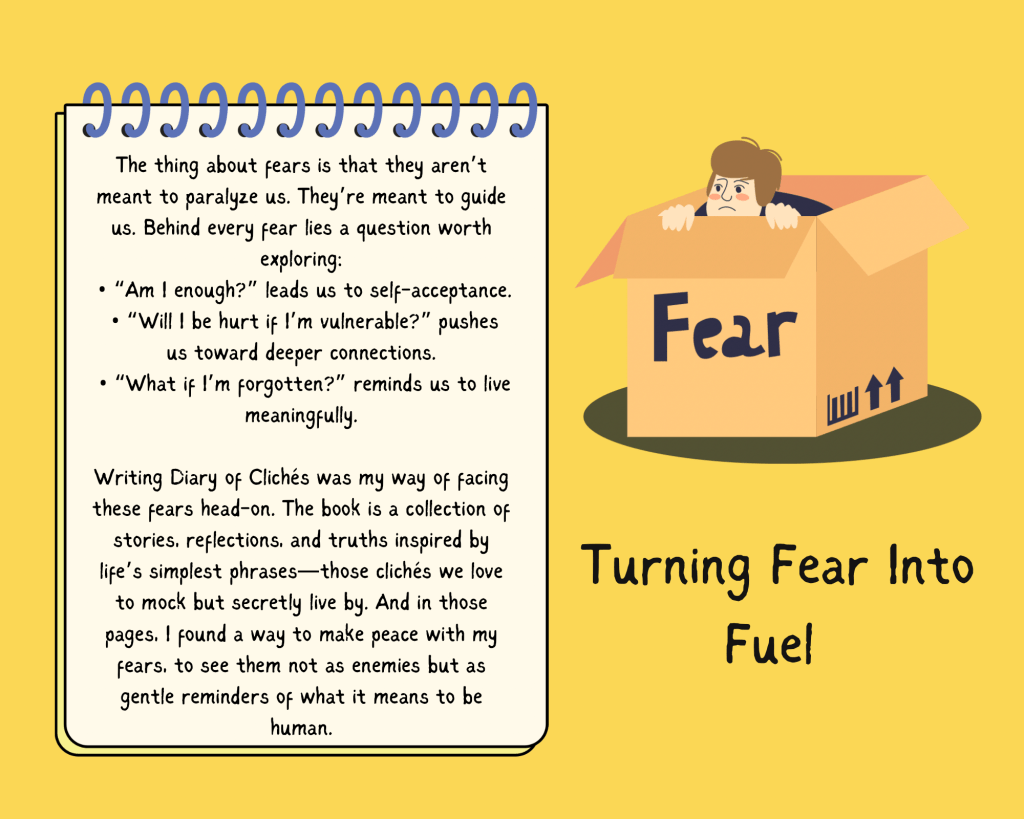
Turning Fear Into Fuel
The thing about fears is that they aren’t meant to paralyze us. They’re meant to guide us. Behind every fear lies a question worth exploring:
• “Am I enough?” leads us to self-acceptance.
• “Will I be hurt if I’m vulnerable?” pushes us toward deeper connections.
• “What if I’m forgotten?” reminds us to live meaningfully.
Writing Diary of Clichés was my way of facing these fears head-on. The book is a collection of stories, reflections, and truths inspired by life’s simplest phrases—those clichés we love to mock but secretly live by. And in those pages, I found a way to make peace with my fears, to see them not as enemies but as gentle reminders of what it means to be human.
Your Turn
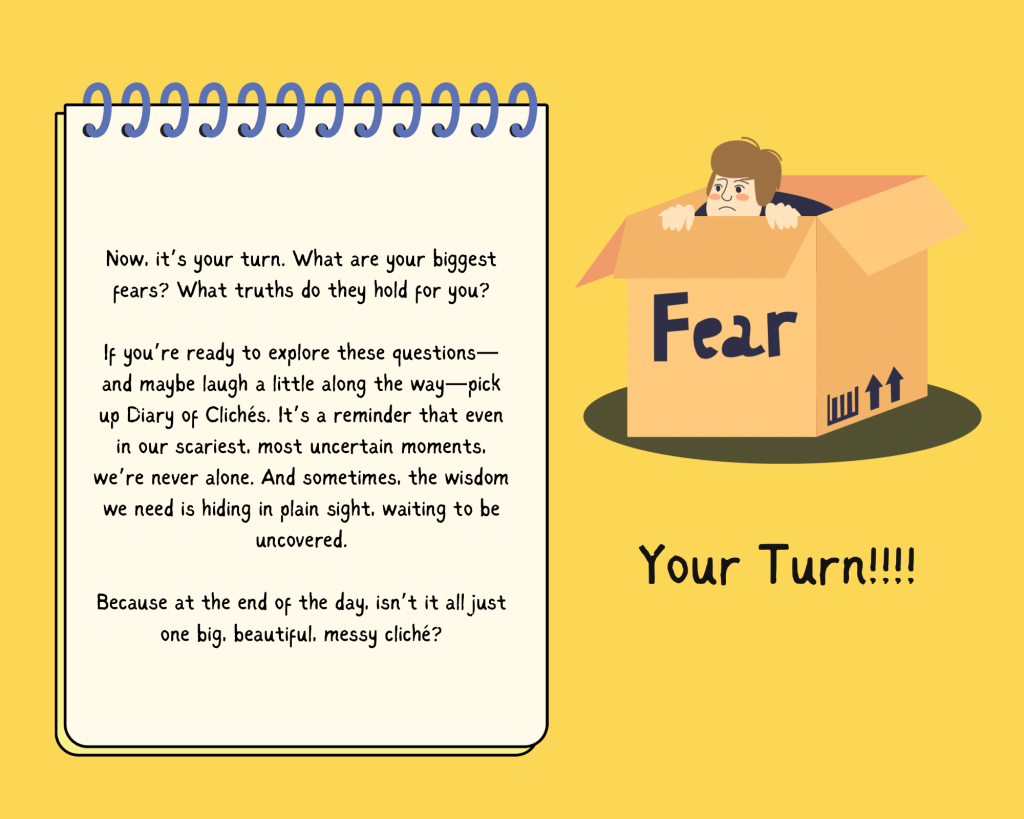
Now, it’s your turn. What are your biggest fears? What truths do they hold for you?
If you’re ready to explore these questions—and maybe laugh a little along the way—pick up Diary of Clichés. It’s a reminder that even in our scariest, most uncertain moments, we’re never alone. And sometimes, the wisdom we need is hiding in plain sight, waiting to be uncovered.
Because at the end of the day, isn’t it all just one big, beautiful, messy cliché?
Clichés—those overused phrases we often dismiss with a roll of our eyes. Growing up, I was no exception. “Everything happens for a reason,” people would say, and I’d silently groan. How could they possibly know? But as life unfolded, these once-irritating platitudes began to morph into something else entirely: lessons, lifelines, and, dare I say, wisdom.
It didn’t happen overnight. It started during a particularly low period in my life, when I lost a job that had defined so much of who I thought I was. For weeks, I felt adrift, unable to reconcile the person I used to be with the one staring back at me in the mirror. A well-meaning friend handed me a notebook and said, “Why don’t you write about it?”
I wasn’t sold on the idea. Writing about what? My failures? My confusion? My complete lack of direction? But eventually, I opened that notebook and let the pen wander. And that’s when the clichés started showing up.
The Cliché Renaissance
At first, they came as sarcastic rebuttals. “When one door closes, another opens,” I scrawled one day, immediately adding, “But what if I’m stuck in the hallway, huh?” It was an attempt at humor, but as the words sat there on the page, something shifted. Was I in the hallway? If so, could I light a match and find my way forward?
That’s how it began: a grudging acknowledgment of these overused phrases, which slowly turned into exploration. I started to write each one down as it popped into my head, then dissect it. “This too shall pass.” Pass into what? What could I build while I waited? “You miss 100% of the shots you don’t take.” Which shots had I been too afraid to try?
Each cliché turned into a prompt, a chance to explore my inner world. I wasn’t just writing anymore—I was excavating. And with every page, I found more than I expected.
Clichés and Connection
What surprised me most was how these phrases, which I once thought of as lazy shortcuts, held the power to connect. The more I journaled, the more I found shared experiences with friends, family, and even strangers.
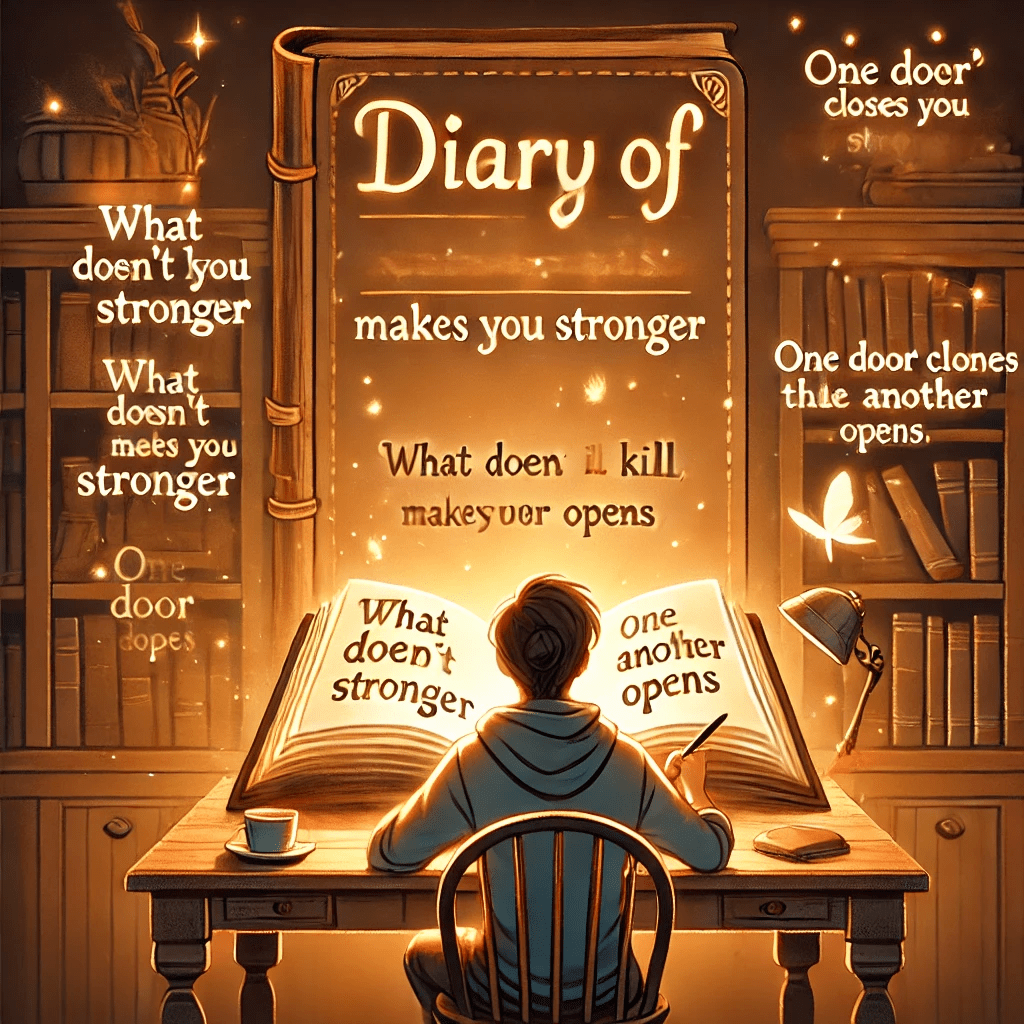
I remember sharing, “What doesn’t kill you makes you stronger,” during a conversation about resilience. My friend paused and said, “You know, that got me through my dad’s illness.” Suddenly, it wasn’t just a saying—it was a bridge.
The Transformation
Through these journal entries, I began to see clichés for what they truly are: distilled truths. They’ve survived generations because they encapsulate something universal, something deeply human. And once I stopped fighting their familiarity, I realized they could teach me far more than I ever expected.
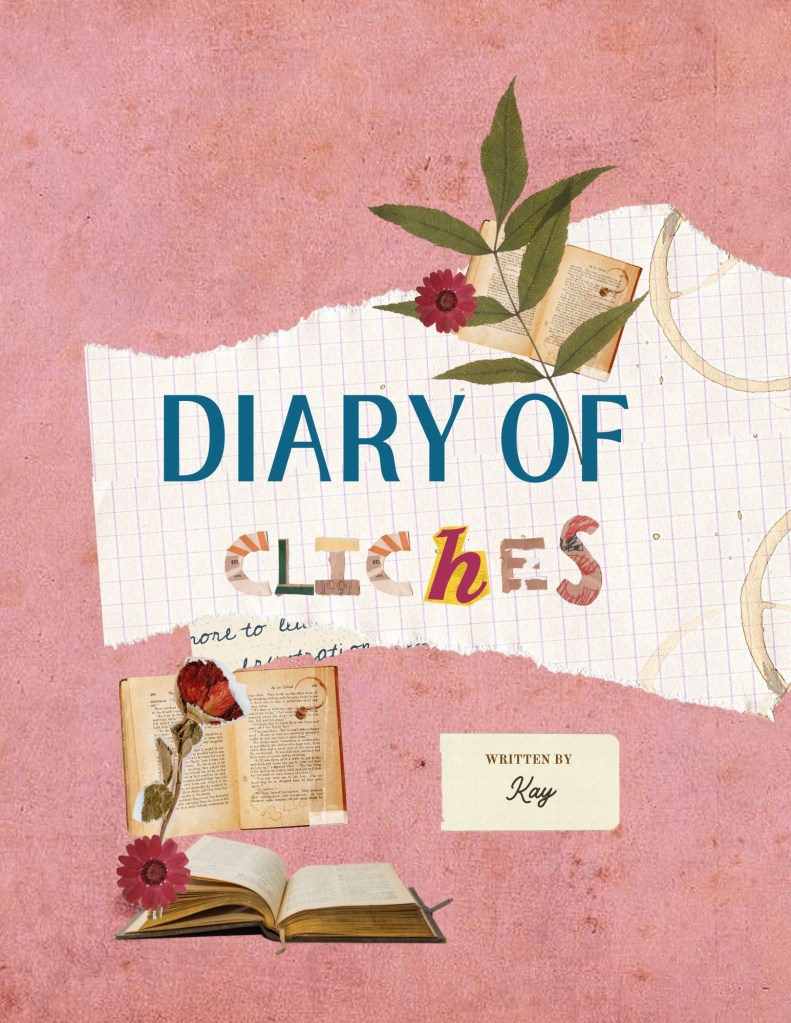
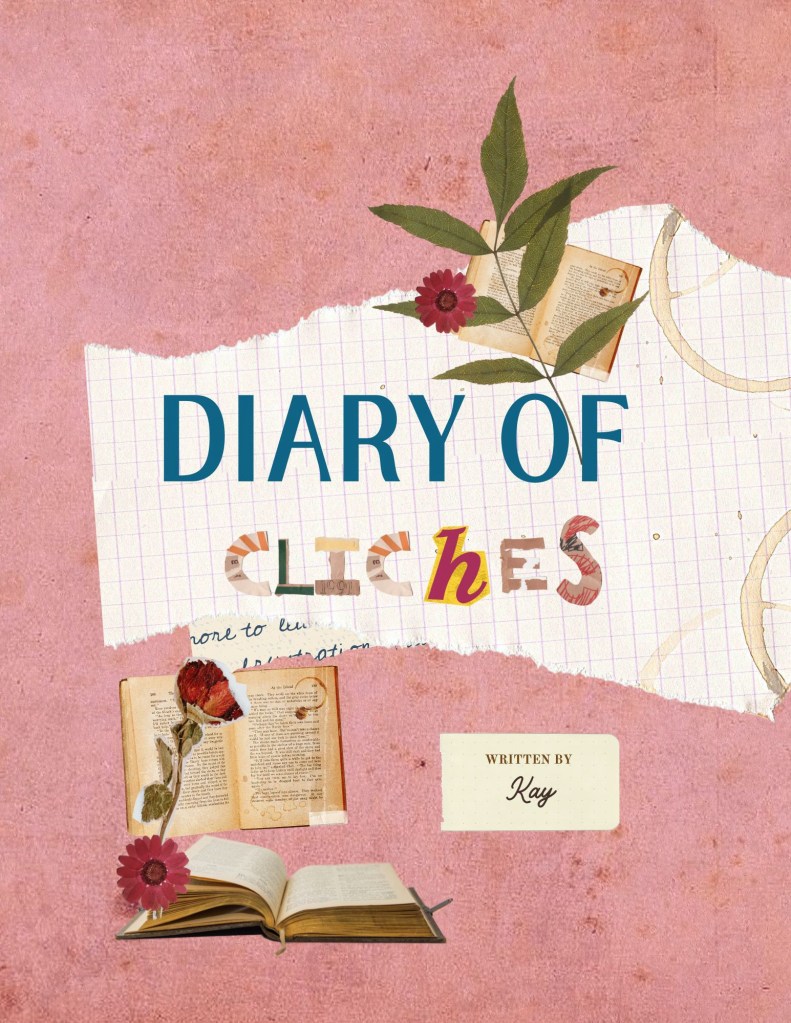
When I poured these thoughts into what would eventually become Diary of Clichés, I wanted to capture that journey—how these phrases moved me from skepticism to solace, from frustration to understanding. It’s not just a book about clichés; it’s a book about the beauty of finding meaning in the everyday, of turning simple words into profound change.
Why It Matters
We all hit those moments when life feels overwhelming or directionless. In those moments, we don’t need grand theories or lofty ideals. Sometimes, all we need is a few words—a reminder that we’re not alone, that others have walked this path and found their way through.
That’s what clichés offer. They’re like breadcrumbs left by previous travelers, guiding us when we’re lost. Yes, they’re simple. But simplicity is often where the magic lies.
Your Turn
Have you ever dismissed a cliché, only to find it resonates with you later? I’d love to hear your thoughts. And if you’re curious about my journey, Diary of Clichés is my love letter to the words that helped me heal, grow, and connect.
Because in the end, life isn’t about reinventing the wheel—it’s about rolling forward, one cliché at a time.































 Kay’s Odyssey