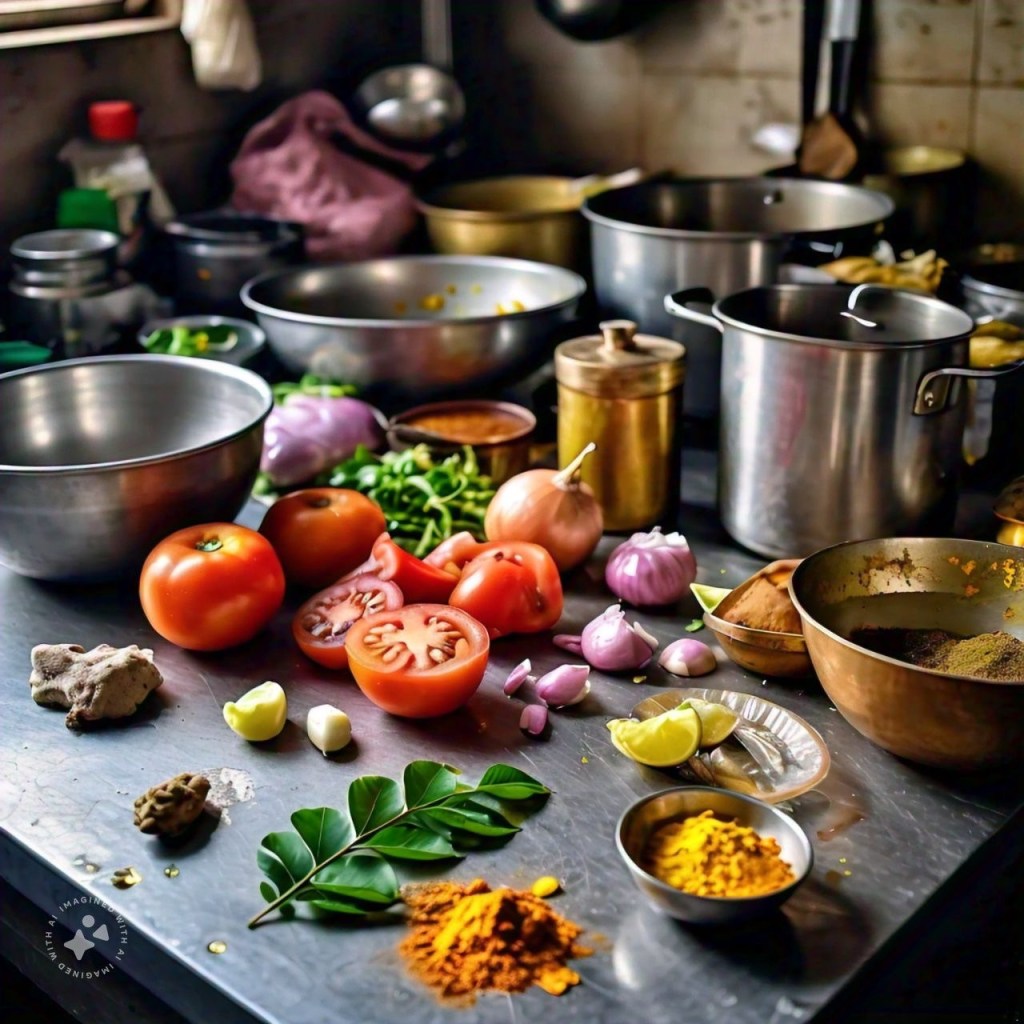
In the globalized chaos of the modern Indian household, the kitchen is less a room and more a cultural relic—like the rotary phone or the fax machine. It exists somewhere in that grey area between ritual and nuisance, a place where familial relationships are fermented alongside homemade pickles, even as everyone involved wishes they could outsource the whole thing to Swiggy or Uber Eats. The old adage that “too many cooks spoil the broth” remains relevant, though the cooks in question have evolved. Today, the battlefield of the kitchen is occupied not by stay-at-home mothers but by tech-driven, jet-setting bicoastal families who divide their time—and cuisine—between Mumbai and San Francisco.
In this scenario, the mother is a high-powered executive managing a team spread across four time zones while fielding calls from various boards. Her laptop hums on the granite countertop, surrounded by the detritus of half-finished spreadsheets and hastily chopped garlic. The daughter, a product of private international schooling, lounges nearby, multitasking between her Stanford coursework on AI ethics and managing the family’s social calendar. The son—a culinary enthusiast and self-proclaimed foodie who’s recently returned from an artisanal bread-making workshop in Copenhagen—stands by the stove with a sous-vide machine he bought online after watching one too many episodes of Chef’s Table.
Naturally, conflicts arise. The son, emboldened by his newfound passion for Nordic cuisine, starts ranting about how traditional Indian cooking methods are “so unscientific.” He scoffs at the idea of tempering spices in hot oil. “Do you know how much smoke that releases into the air? We should think about the carbon footprint.” He’s been on a sustainability kick ever since reading an article on The Guardian that argued vegetarianism alone won’t save the planet.
The mother, still half on her 10 a.m. Zoom with the New York office, manages to roll her eyes without taking them off the screen. “Beta, people have been tempering spices for centuries, and the planet has managed just fine,” she says, clicking through a slideshow of quarterly growth metrics. “Focus on making the dal without turning it into a manifesto on climate change.”
Meanwhile, the daughter smirks behind her MacBook. “This is why I only eat plant-based,” she adds, never missing an opportunity to plug her lifestyle as an extension of her identity. “Why don’t we make quinoa khichdi instead?” She knows full well that the very suggestion of quinoa will incite a low-level riot among the more traditional family members. Her grandfather, whose time in the kitchen is limited to making chai, is quick to chime in. “Quinoa is for rabbits,” he grumbles from the living room, not bothering to look up from NDTV, where the latest political debate features the merits of an India-US trade deal. “Rice has fed us for centuries.”
The debate over ingredients mirrors the family’s identity struggle: are they more Mumbai or San Francisco? More masala or microgreens? It’s not just a question of taste; it’s a question of allegiance. The mother’s kitchen cabinet is stocked with spices sourced from a local Indian grocer in the Bay Area, but the refrigerator contains a fair share of cold-pressed juices and kale. Somewhere between the ground turmeric and the Greek yogurt lies the heart of the problem: nobody knows exactly what they’re cooking anymore, least of all the son, whose attempts at culinary fusion mostly consist of drizzling sriracha over everything.
Tensions escalate when the grandmother—a formidable presence who divides her time between dispensing free medical advice and WhatsApp gossip—enters the fray. She insists on giving everyone a crash course in the Ayurvedic properties of fenugreek, although no one asked. “This is why your digestion is terrible,” she declares, pointing a wooden spoon at her grandchildren like a sword. “Eating all this pizza and sushi. And now, you want to add quinoa to khichdi?” She shakes her head, resigned to the fact that her children and grandchildren may be able to discuss the latest developments in global tech policy, but not the proper way to peel ginger.
And, of course, the men—having embraced the spirit of modernity—are no longer the distant critics of old, appearing only to comment on the level of spice in the curry. Oh no, they’re far more “aspirational” now. The father has a YouTube cooking channel, where he attempts to combine Michelin-level plating with Mumbai street food classics, all while delivering philosophical reflections on India’s G20 presidency and the latest economic policies. He posts videos tagged #fusionfood and #kitchensofinstagram, despite not fully understanding what these hashtags mean. His recipe for “avocado bhel” went viral for all the wrong reasons.
To complicate things further, the family’s bicoastal lifestyle adds logistical wrinkles. When in San Francisco, the ingredients must be Whole Foods compliant: organic, fair trade, with packaging that reassures you about the sustainable future of the planet. In Mumbai, however, it’s a return to the familiar chaos of local markets, where there are no labels, no guarantees, and no end to the haggling. The produce vendor’s response to the question “Are these free-range?” is a blank stare that implies: “Madam, they’re chickens, not political prisoners.”
In the midst of this culinary confusion, attempts are still made to honor some semblance of tradition. The family decides to prepare a Diwali meal together, which turns out to be an exercise in project management, more akin to coordinating a UN climate summit than making pakoras. The mother, who’s recently taken an online course in mindfulness to deal with stress, suggests that everyone should “set an intention” before cooking. The son, who spent a semester abroad in Paris, insists on adding a cheese course because “it’s an important part of the meal in Europe.” The daughter starts making a spreadsheet to track ingredients, sourcing, and—naturally—the carbon footprint of each dish.
Ultimately, the kitchen becomes a metaphor for everything that goes right and wrong in this bicoastal life. It is a space where global politics meets ghar ka khana (home-cooked food), where debates about sustainability are conducted over kadhi, and where familial love is served in the form of imperfect, sometimes inedible fusion dishes. No one really knows what they’re doing, but that’s okay because the food, like the family, is a work in progress. Yes, the khichdi might end up tasting faintly of quinoa, or the bhel might feature suspicious chunks of avocado, but they’ll eat it together. And at the end of the day, that’s what really matters.
Or so they’ll tell themselves, as they sneakily open their delivery apps under the table.









 Kay’s Odyssey
Leave a reply to Dr. K Anil Roy Cancel reply