
A provocative piece arguing that relevance trumps quality in the attention economy.
Let’s get something out of the way. I don’t care if your book is “good.”
In fact, the moment you tell me you’ve spent five years polishing every comma, obsessing over the historical accuracy, and refining the prose to a point of objective perfection—that’s the moment I start to worry for you.
Because “good” is the most dangerous, comforting lie in publishing. It is the anesthetic that dulls you to the reality of the marketplace. It convinces you that your job is over when the manuscript is complete, and that the universe operates on a system of literary meritocracy.
The brutal truth is this: Objective quality is a minimum entry fee, not a guarantee of success.
The world is saturated with “good” books that are invisible. They sit quietly, technically flawless, utterly ignored. Meanwhile, books that are less polished, less comprehensive, and sometimes frankly less “good” by academic standards, reach millions of readers and transform lives.
The marketplace, it turns out, is indifferent to objective quality. It does not reward craft consistently.
It rewards relevance.
A reader is not scrolling through a feed looking for a book that is objectively good. They are scrolling for a book that says, “I know exactly how you feel.”
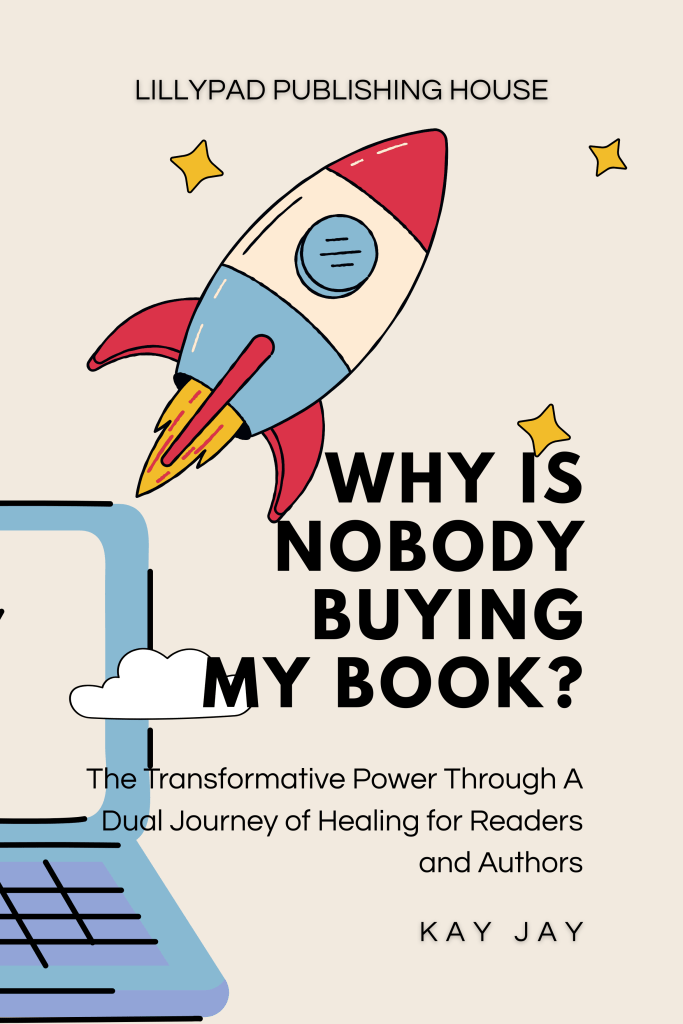
This is the heart of the argument: your book is not a piece of art to be judged; it is a tool for a specific transformation, a bridge out of a specific pain point. If your signal—your title, cover, and description—is focused on conveying how good the book is, it becomes polite, generic, and easily missed. It says, “I am a high-quality product.”
But the irresistible signal is one that focuses entirely on the reader’s struggle. It doesn’t rely on being “good”; it relies on being magnetic. It’s the difference between a technical thesis and a direct, emotional shout of recognition.
When you shift your focus from Quality (which serves your ego and your craft) to Relevance (which serves the reader’s immediate, specific need), everything changes. You stop asking, “How do I prove this is good?” and start asking, “How do I make the reader feel utterly seen in the first three seconds?”In the attention economy, the good book that is invisible is effectively a non-existent book. Don’t chase “goodness”—chase connection. Because a perfectly relevant book, even if imperfectly written, will always beat an objectively good book that doesn’t know how to shout its relevance.






Leave a Reply