The most intuitive part of the publishing journey is the writing. It is the part where your genius, your craft, and your passion finally meet the page. Because of this, almost every author starts at the wrong place: Chapter One.
They begin with the content, believing that if they simply pour their heart and expertise into the manuscript, the aim of the book—its ultimate purpose in the reader’s life—will magically emerge later.
This is the most fundamental mistake, and it is the single reason why a book that is objectively “good” remains unread. You cannot define the aim of your book after the writing is complete. You must define it before you write Chapter One.
The aim of your book is not its topic (e.g., productivity). The aim is the Promise: the specific, clear, emotional transformation you guarantee to the reader. If you begin writing before you have defined this aim, you fall into the Vague Promise Trap. Your content, though brilliant, will be too general, too abstract, and too focused on the concepts rather than the urgent outcome the reader needs.
The Core Pre-Writing Work
To ensure your book will be read, you must ruthlessly define its aim by mastering the Position phase before the writing begins. This means answering two questions with uncompromising clarity:
What is the specific, hidden pain (the struggle) of the one person I am writing for? (This is the WHO and the STRUGGLE from the framework.) You must name the pain better than the reader can name it themselves (e.g., the shame of the 2 AM dashboard check).
What is the single, tangible, emotional transformation I promise to deliver? (This is the WANT.) This must be the ultimate relief that makes the book an irresistible necessity.
This initial clarity is the emotional work that saves your book from silence. When you know the precise aim of your book before you write the first word, every subsequent chapter, heading, and sentence is automatically filtered through that clear lens. The book is no longer a Manifesto of abstract concepts; it is a dedicated Survival Guide to a specific, painful reality.
The aim of your book is its signal. If your signal is vague, your book is invisible. The moment you define your aim with unshakeable clarity, you guarantee that your book will cut through the noise, make the right reader feel seen, and ensure that your masterpiece is not only finished, but finally read.
I’ve always believed that true romance isn’t found in a “neat little package” tied with a perfect bow. To me, romance is something much grittier and more profound; it is the quiet, often terrifying courage of watching someone you love fall apart and choosing to stay anyway.
Beyond the Michelin-Starred Facade
When I wrote The Chef, I wanted to explore what happens when the “Michelin-starred” success of a man like Kevin collides with the “lead apron” of depression. In the world of romance, we often want the hero to be untouchable, but Kevin is haunted by a “gnawing emptiness” that makes even answering a text feel like a “Herculean effort”.
Real intimacy in that story isn’t just about the “alchemy of flame, butter, garlic, and wine” they share in the kitchen. It’s the moment Tammy looks past his professional prestige to see the man whose “inner world was crumbling”. I believe that intimacy is not about a “flawless performance”; it is the raw honesty of showing up “hungry, imperfect, and willing to be fed”.
The Honesty of the “Nuts” and the Messy
Book cover for Beautiful Men: The Dog Walker.
I know that my approach to storytelling can be polarizing. When The Dog Walker was released, a reviewer called my protagonist, Sarah, “absolutely nuts” for her humiliating, grief-stricken attempts to connect with Andy. I actually smiled when I read that. Why? Because I didn’t set out to write a flattering story; I set out to write about longing that is “raw, unfiltered and humiliating”.
If Sarah’s journey made you uncomfortable, it’s because “discomfort is the art” and “awkwardness is the honesty” of the human condition. Romance is being messy. It is the “cringeworthy moments” we usually try to hide, laid bare before another person who doesn’t turn away.
Navigating the Digital Abyss
In Fever Dreams, I took this theme into the “digital labyrinth”. Dev and Mira are two souls who find a “fragile sanctuary” through a screen, yet they are paralyzed by the fear that a physical meeting will shatter their “shimmering mirage of belonging”.
They are “spectators in their own lives,” wondering if their connection is a genuine bond or just a “projection of their own desires”. Romance, in their world, is the agonizing wait for a “tomorrow” that perpetually recedes. It is the willingness to confront the “void” together, even when reality feels “slippery” and unaligned with your desires.
Choosing the Shared Imperfection
Ultimately, I write for the “thinkers, feelers, and the ones who never stopped wondering”. We live in an age of curated profiles and “manufactured smiles,” but my stories insist that we are more than our masks.
True connection is born out of “shared imperfection”. It is the realization that while we are all navigating our own “urban mazes” of loneliness, there is a “pathway to connection” found in the very things that make us fall apart. Thank you for having the courage to walk with me through these shadows.
I know the spiral well. It starts in the silence—that “quiet violence of unanswered messages”—and it ends in an autopsy of the self.
You replay every sentence, every pause, every “almost.” You convince yourself that if you had only moved a different piece on the chessboard of the relationship, the ending would have changed. You tell yourself you should have been softer, braver, less intense, or more mysterious. You treat your own honesty like a liability and your depth like a defect.
But I want to offer you a quieter, more dangerous question: What if you didn’t do anything wrong—what if you were simply brave enough to feel everything?
The Seduction of Control
Asking “What could I have done differently?” is seductive because it implies control. It suggests that love is a strategic game rather than a collision. We want to believe that if we edit ourselves perfectly, we can secure an outcome—longevity, commitment, or return.
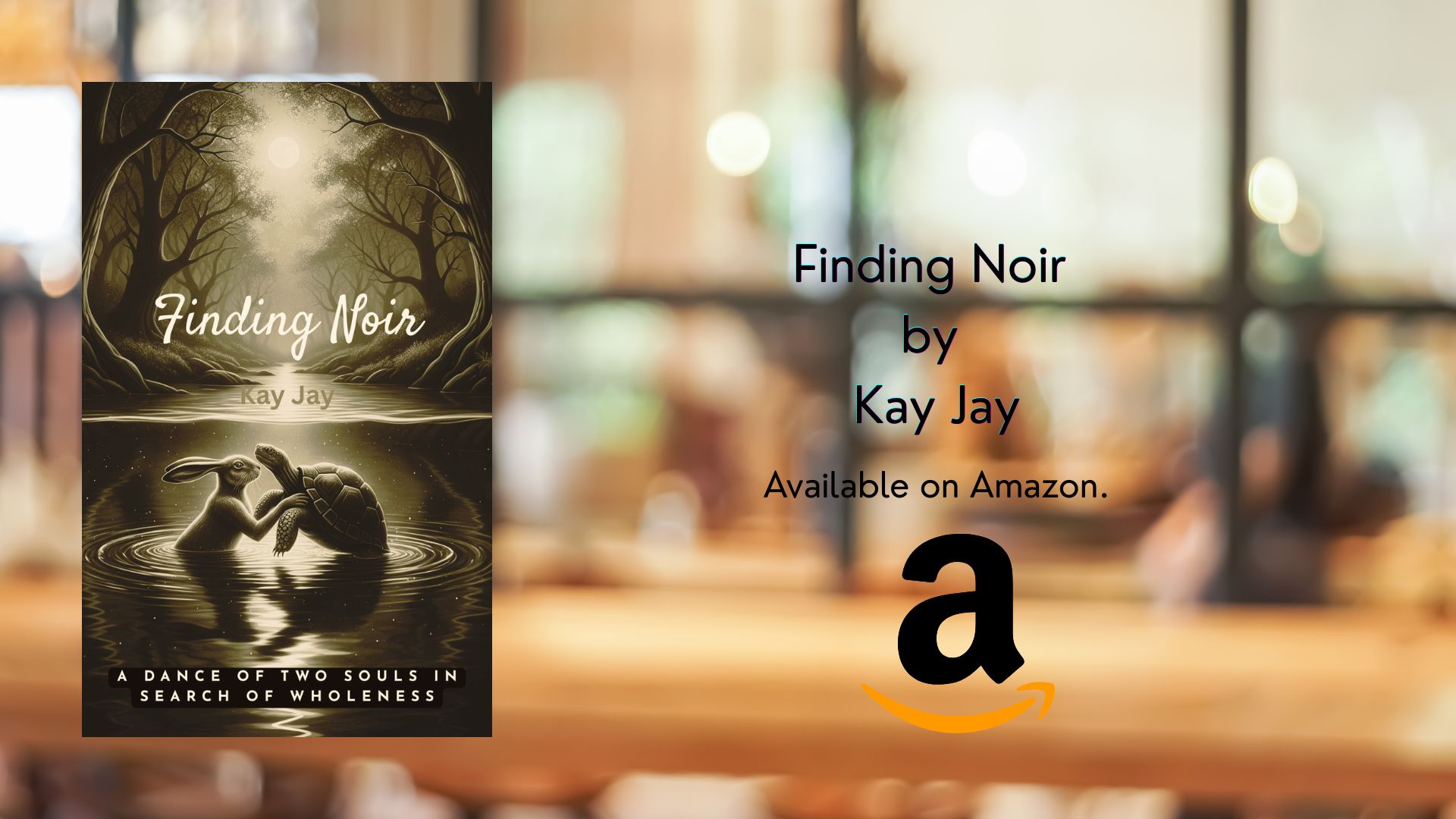
In Finding Noir, I explore what happens when you stop editing yourself for an outcome that was never available. Many of our most intense connections are not meant to be secured; they are meant to act as catalysts. They arrive to rearrange the internal furniture of our lives, to ask questions instead of offering futures.
Activation vs. Intimacy
Often, we blame ourselves for “failing” at a connection that lived vividly in the interior world but failed spectacularly in the physical one. We mistake intensity for alignment and activation for intimacy. Our nervous systems can confuse the high-voltage triggers of our past with the quiet depth of a shared future.
When you feel like you “messed up,” consider that the connection might have simply reached its capacity to teach you. Sometimes, the only thing you could have done differently was leave the story earlier—before it taught you everything it came to teach.
Love as a Mirror, Not a Promise
If we treat love as a mirror rather than a promise, the “wrongness” disappears. A mirror doesn’t tell you if you are a “good” or “bad” partner; it shows you who you become in the presence of another. It exposes your unhealed hunger, your projections, and the parts of yourself you have been reluctant to face.
If you were “too much” or “too honest,” perhaps you weren’t failing at a relationship; perhaps you were succeeding at an awakening. You were finally standing in your own raw, visceral truth.
The Freedom of Recognition
This work doesn’t offer closure—it offers recognition. It is for anyone who felt chosen in private and abandoned in reality.
If you find yourself standing at the edge of this realization, know that your intensity is not a liability. Your willingness to feel is your greatest strength. Some encounters are not meant to last because their purpose is not companionship, but consciousness. They arrive to interrupt the architecture of who you think you are so that something truer has a chance to emerge.
You didn’t do anything wrong. You were just brave enough to step into the clearing and look at the reflection without flinching. And in that stillness, you might finally find the one thing you were actually searching for: yourself.
The publishing journey, as it is often taught, is presented as a comforting, logical, and thoroughly linear path: Write the Book → Polish the Manuscript → Hit Publish → Readers Will Come. This is the foundational belief that guides the emotional investment of countless authors. It is the hope that if the craft is pure, the universe will reward the effort.
This linear path is a lie, and embracing it is the single most expensive mistake an author can make.
The truth that nobody tells authors is that the marketplace of attention is not a reward system for quality; it is a response system for connection. The “Readers Will Come” mentality is an abdication of responsibility for the crucial step that occurs betweenPublish and Sales: the building of an irresistible signal.
The Cost of the Assumption
The comfortable assumption of the linear path—that a book’s goodness will speak for itself—leads directly to the profound, isolating Silence we have discussed. When the silence hits, the author, operating under the assumption of the linear path, has only one logical conclusion: The book was not good enough.
This is the most expensive cost of the mistake. It costs the author:
Emotional Energy: It leads to the 2 AM dashboard check and the internal shame of believing the failure is one of talent.
Time and Strategy: It misdirects all future effort into pushing an invisible product, rather than solving the real problem: the Invisible Barrier between the book’s meaning and the reader’s perception.
Conviction: The silence slowly erodes the author’s faith in their work, often leading to burnout and retreat from the long game.
The Non-Linear Reality
The reality is that you must earn the right for a reader to even evaluate your quality. To break the silence, you must adopt the non-linear path of Position → Package → Signal.
The ultimate function of your promotional effort is not to sell the product, but to build the bridge of recognition. You must force the reader to stop scrolling by articulating their specific pain so clearly that they feel seen. That clear signal—not the objective quality of the manuscript—is what eliminates the Invisible Barrier and transforms the decision to buy from a logical risk into an emotional imperative.Stop believing in the comfortable lie of the linear path. Publishing is the starting line of the marathon, not the finish. The moment you accept that the work of Positioning and Signaling is as critical as the work of writing, you stop making the most expensive mistake and finally set your book on the path to being seen.
When I reflected on my own journey after publishing my first book and staring into that silent void, I realized something deeply uncomfortable. My failure wasn’t in the writing—I had focused entirely on the book as a masterpiece in itself.
I had not focused on the critical next step: helping readers recognize themselves inside it. I operated on the dangerous, silent assumption that the book was good enough to simply speak for itself.
But the core truth of the attention economy is that books do not exist in isolation. They exist inside perception.
The reader does not experience your Intention—the months, sometimes years, of your inner life and craft poured into the manuscript. They only experience your Presentation—the distillation of all that effort into a title, a cover, and a description.
The problem is that you, the author, know what the book means because you created it. But the reader, scrolling by in a distracted state, must guess.
This creates the Invisible Barrier. The barrier is not physical; it is psychological. It is the widening gap between what your book means to you (the author) and what readers believe it means for their life (the potential customer).
Closing this gap is not about changing your book’s truth or simplifying your message. It is about translating it into the reader’s urgent, immediate language of pain, desire, and relevance.
The Untranslated Menu
Imagine you’ve poured your soul into creating a Michelin-star meal—your book is a masterpiece of craft and intention. That meal is your book. Now imagine the restaurant menu (your presentation) only lists the ingredients in a foreign language.
Your intention is to nourish and delight, but the reader, looking only at the menu, cannot translate it into a promise of relevance for their own life. They move on, not because the meal isn’t good, but because the presentation created an invisible barrier of confusion and irrelevance.
This is the invisible barrier that keeps the most brilliant work invisible. By using vague, broad, or purely descriptive language (the Vague Promise), you force your reader to guess your value. You place the burden of translation on the scrolling reader, and in the attention economy, that is a burden they will never accept.Your book’s truth is locked behind its presentation. To break through the barrier, you must ensure that your external elements—title, subtitle, cover, and description—are a clear, well-labeled bridge, communicating the immediate, practical problem your book is solving for them. Only then can a searching reader finally see the solution they desperately need.
The single most important authority shift for the modern author.
When an author enters the marketplace, the instinct is to lead with the Resume. We believe our degrees, our job titles, our years of experience, or our past successes are the only things that will convince a reader to trust us. This is the Expert mindset, and it is a fundamental mistake in the attention economy.
Relying on your resume immediately creates two problems:
It Creates Distance: The reader sees the polished resume and thinks, “That’s great, but you don’t understand my messy, unpolished, current struggle.” The pedestal is built, and connection is repelled.
It’s Too Slow: A scrolling reader will not stop to read your full biography. The battle for attention is won in three seconds, and a resume requires ten minutes of logical analysis.
The most powerful form of authority today is not earned through a long list of credentials. It is earned through Clarity—the ability to articulate the reader’s hidden pain so precisely that you become the only logical guide.
Your goal is to Position Authority in One Sentence that bypasses the resume entirely. This sentence must be a magnetic combination of vulnerability and specific transformation.
The Formula for One-Sentence Authority
Your single-sentence authority statement must move from a statement of Expertise to a statement of Empathy. It is a declaration that you know the territory intimately because you were lost there, too.
Instead of relying on the Resume:
“I am a Certified X and have 15 years of industry experience. Buy my book.” (This is a statement of Fact.)
Position your Authority in One Sentence:
“I wrote this guide to give the specific, actionable map I wish someone had handed me when I was secretly terrified that all my hard work was leading to failure.” (This is a statement of Truth.)
The one-sentence statement of truth is a clear, irresistible signal because it:
Validates the Pain: It names a specific, hidden fear (“secretly terrified of failure”).
Establishes Traveler Authority: It proves you are the guide who knows the hole because you climbed out of it.
Promises the Transformation: It frames the book as the necessary map.
The reader is not buying your past; they are buying their future. The moment you stop relying on the slow, logical resume and start speaking the Authority of Clarity in one single, emotionally honest sentence, you instantly build the highest form of trust and transform your book from an invisible product into an essential guide.
Arguing that articulating a shared experience clearly is the highest form of authority.
The traditional definition of authority in any field—including publishing—is a list of credentials: degrees, certifications, years of experience, or a highly visible platform. This is the Expert model, which relies on a simple premise: Trust me because I have the title.
This model leads to one of the five major mistakes authors make: assuming that authority is earned through a pedestal. But in the modern marketplace, this old model is rapidly dissolving. Readers are drowning in a sea of experts. The result is not trust, but skepticism and fatigue. When you lead with credentials, the reader often responds with an unconscious barrier: “That’s nice, but your life is too different from mine. You don’t know my struggle.”
The highest form of authority today is not earned through a title. It is earned through Clarity.
The Authority of Clarity is the deep, magnetic trust you build when you articulate a shared experience—the reader’s specific, secret pain—with such precision and emotional honesty that they cannot ignore you. When you name their struggle better than they can name it themselves, you instantly become the most trusted voice in the room.
The reader’s ultimate question is not, “Is this person qualified to teach me?” It is, “Does this person truly see and understand me?”
Clarity trumps credentials because it is irrefutable proof of a shared journey.
The Credentialed Signal:“I have a PhD and 20 years of experience. Buy my guide.” (This is a statement of Expertise that demands logical evaluation.)
The Clarity Signal:“Do you ever feel like you’ve done everything right, but you’re still checking your dashboard at 2 AM, convinced you’re a failure? That specific shame is the problem. I have the map out.” (This is a statement of Empathy and Shared Experience that creates trust instantly.)
The Authority of Clarity is achieved by shifting from the Expert on the pedestal to the Traveler who came back with the map. Your knowledge is essential, but your vulnerability—your ability to speak from the confusion you overcame—is what forges the connection.
Stop building authority by listing your titles. Start building authority by articulating your reader’s deepest, most hidden truth. The moment you achieve that level of profound clarity, you possess the highest form of authority in the attention economy: the authority of the guide who knows the territory intimately.
The key to transforming your book from an invisible product into an irresistible map.
When an author invests their heart and soul into a book, they often create a Manifesto.
A Manifesto is a grand statement of belief. It details the author’s philosophy, their process, their vision for the world, and the importance of their ideas. It is broad, often abstract, and focused on the author’s intellectual journey and the why behind their own life’s work. The Manifesto is beautiful, but in the marketplace, it is a Vague Promise—a high-minded signal that is too distant from the reader’s urgent, immediate needs.
The problem is that the reader scrolling through a feed is not looking for a statement of grand philosophy. They are looking for a Survival Guide.
A Survival Guide is a specific, actionable, step-by-step map out of a painful, immediate reality. It focuses relentlessly on the reader’s before and after. It is not concerned with the abstract concept; it is obsessed with the clear, tangible outcome it promises to deliver.
The Fatal Flaw of the Manifesto
The Manifesto fails because it forces the reader to do the heavy lifting of translation. It says, “Here is a brilliant abstract concept; now figure out how to apply it to your messy life.” The reader, exhausted by distraction, registers this as too much work. They move on, not because the ideas are bad, but because the book’s signal is not a clear bridge to the desired result.
Readers do not buy abstract concepts; they buy outcomes. They are not investing their time to understand your philosophy; they are investing their time to solve their problem.
The shift is a simple, profound adjustment to your book’s signal:
The Manifesto Signal:“This is a comprehensive exploration of the principles of effective self-leadership.” (Abstract, concept-focused.)
The Survival Guide Signal:“The High-Achiever’s Map to Escaping Burnout: A simple, 3-step guide to reclaiming your time and energy.” (Specific, outcome-focused.)
The Survival Guide is an Irresistible Signal because it names a specific pain (burnout) and promises a clear, measurable outcome (reclaiming time and energy). It transforms the book from an impersonal product into a personal tool for rescue.Before you publish, check your signal. Stop crafting a manifesto that is centered on the importance of your ideas. Start framing your book as a survival guide that is centered on the relief and transformation of your reader. That clear focus on a specific, desired outcome is the only way to cut through the noise and ensure your book is seen as an urgent necessity.
One of the deepest tensions in my professional life has been the gap between what is valuable and what is visible. Few fields embody that tension more sharply than software and technology, where immense effort, skill, and intelligence often produce outcomes that are powerful yet largely invisible. I know that code runs banks, hospitals, logistics systems, communication platforms, and the infrastructure of everyday life, but because it cannot be held in the hand or displayed on a skyline, it is often treated as less real than the work of building something physical. That tension becomes even more charged when viewed through the eyes of an older generation shaped by industries in which labor announced itself in steel, concrete, machinery, and scale.
My father’s skepticism that software is not “real engineering” has always represented more than a personal opinion; for me, it reflects an entire worldview about legitimacy, usefulness, and permanence. In that worldview, engineering is something you can point to: a bridge that carries traffic, a dam that redirects force, a machine that occupies space and performs a visible function. Its authority comes from physical proof. By contrast, software appears abstract, weightless, and elusive. It lives behind screens, disappears into interfaces, and performs its labor silently. To someone trained to respect what can be measured in material terms, software can seem strangely insubstantial, even when it powers the very systems on which modern life depends.
This is where the conflict becomes psychological, not merely professional. For me, the desire to create something tangible has not simply been entrepreneurial curiosity. It has often been a longing for validation. A physical object seems capable of settling an argument that digital labor never quite resolves. A product on a shelf, a package in someone’s hand, a storefront, a machine, even something as modest as a handmade candle or a bag of herbs can feel more defensible than years spent designing systems no one sees. Tangibility becomes a form of evidence: proof that my labor exists, that I have made something real, that my work cannot be dismissed as invisible manipulation of symbols.
Yet this longing reveals a paradox at the heart of my life in technology. Software is among the most materially consequential forms of labor in the modern world. It shapes economies, mediates relationships, organizes governments, distributes resources, and increasingly structures human attention itself. It may not leave behind a monument in the traditional sense, but its effects are everywhere. The invisibility of software is not evidence of triviality; it is often evidence of integration. The more seamlessly software functions, the less visible it becomes. Its success lies in disappearing into the background of ordinary life.
And still, the emotional force of my father’s criticism persists because I do not live by logic alone. I live, as most people do, by symbols, inheritance, and the standards that formed me before I had language to resist them. Because I grew up hearing that real work must be concrete, measurable, and externally legible, even significant digital success has sometimes felt strangely hollow. No promotion, salary, or corporate prestige fully quiets the suspicion that I have built a life on abstractions. In that sense, my hunger for tangible creation has been an attempt to bridge two incompatible systems of value: the contemporary economy, which rewards scale, information, and code, and the older moral imagination, which equates worth with what can be touched.
What makes this tension so compelling to me is that it is not only about my father and me, or about tradition and modernity. It points to a broader crisis in how I understand work itself. In knowledge economies, much of the most important labor is intangible: analysis, design, strategy, care, coordination, writing, modeling, programming. These forms of work can be intellectually rigorous and socially indispensable, yet they remain vulnerable to dismissal because they do not produce a visible artifact. The result is a deep and often unspoken insecurity among people like me, whose work is real in every meaningful sense except the symbolic one.
To long for tangible creation, then, is not necessarily to reject technology. For me, it has often been a desire to reconnect labor with embodiment, process with presence, and effort with visible consequence. It is a yearning to make meaning in a form that can be witnessed without explanation. But perhaps the deeper resolution lies not in abandoning software for physical products, but in expanding my idea of what counts as real. Engineering is not made legitimate by concrete alone. It is made legitimate by problem-solving, precision, imagination, and usefulness. A bridge and a distributed system are not opposites; they are expressions of the same human impulse to build structures that help others cross from one point to another.
My father’s skepticism, then, exposes an old question inside a new economy: if a thing cannot be touched, can it still carry weight? I believe the answer, increasingly, is yes. But the emotional difficulty of accepting that answer explains why I, and so many people in tech, continue to crave the handmade, the physical, and the visibly constructed. We are not merely seeking a new hobby or a side business. We are searching for a form of creation that feels undeniable. In that search lies both the wound and the wisdom of modern work.
The key to unlocking your book’s irresistible signal.
The single biggest mistake authors make is confusing their book’s Topic with its Promise. Your topic is what your book is (e.g., productivity). Your promise is what your book does for the reader (e.g., moves them from busy-but-behind to clear-and-in-control).
When you try to sell a book, you are asking a distracted reader to invest their time and money. The only way to cut through the noise and make that sale inevitable is to articulate your Promise so clearly that it becomes an irresistible signal.
This can—and must—be done in one sentence.
This sentence is the key to escaping the Vague Promise Trap. It forces you to compress your entire book into a sharp, magnetic statement of transformation. The best way to construct it is to use the simple but powerful Who, Want, Struggle framework.
Your One Sentence must connect these three essential points of the reader’s journey:
WHO: The specific person/audience you are talking to.
WANT: The specific, emotional desire they are pursuing.
STRUGGLE: The specific, hidden pain/problem that is currently holding them back.
When you can articulate the promise as a bridge between the WHO + STRUGGLE and the WANT, you instantly create the perfect signal.
How to Build Your One Sentence
Let’s take a common book idea and see the transformation:
Vague Promise (Topic):A book about finding your purpose.
One Sentence (Promise):I help [overwhelmed corporate executives] who [are secretly terrified they’ve wasted their best years] to [finally transition to a life of meaning and impact].
Notice the change:
It’s not for “everyone”—it’s for the overwhelmed corporate executive.
It names a Hidden Fear—”secretly terrified they’ve wasted their best years.”
It promises a clear, emotional Transformation—”transition to a life of meaning and impact.”
This single sentence is the gravitational core of your entire signal. It is what your title, cover, description, and every promotional post must relentlessly communicate. The moment you define your book’s promise using the Who, Want, Struggle framework, you stop selling a generic topic. You start selling the clearest, most urgent map out of a specific, painful reality, and that is the only signal that sells books today.