Category: writing

  • Why Side Hustles Reduce Startup Risks

    Why Side Hustles Reduce Startup Risks

    Why Quitting Your Day Job Too Soon Is Killing Your Startup (And What to Do Instead)

    If you have ever felt the pull of entrepreneurship, you have likely heard the romanticized advice to “take a leap of faith” and burn your ships. But according to author Kay Jay in her new book, How to Start a Small Business That Actually Makes Money, that dramatic narrative is a recipe for financial burnout.

    Instead, Jay advocates for the side-hustle-first model—the statistically superior, low-risk path to building a thriving enterprise.

    The 33% Lower Failure Rate

    The rationale for keeping your day job is rooted in a compelling 2014 study from the Academy of Management Journal, which found that entrepreneurs who launched their businesses while still employed were 33% less likely to fail than those who quit immediately.

    Keeping your day job gives you three massive advantages:

    • Time to Iterate: You can test your business model and market assumptions without the terrifying pressure of immediate survival.
    • Financial Stability: A steady paycheck allows you to weather the inevitable volatility and setbacks of the early months.
    • Reduced Desperation: Because your rent and bills are covered, you never sound desperate in client conversations, allowing you to hold firm on your pricing and value.

    Stop Working for a Paycheck, Start Funding Your Dream

    In How to Start a Small Business That Actually Makes Money, Jay encourages a crucial mindset shift: stop viewing your day job as an obstacle and start viewing it as your business’s primary venture capital fund.

    Your salary is literally paying for your Runway Number—the liquid savings required to comfortably survive once you eventually make the transition to full-time owner.

    The 3-Step “Strategic Exit” Roadmap

    How do you know when it is actually time to hand in your resignation? Jay outlines a clear, phased approach to transitioning out of the corporate world:

    1. Phase 1 (Nights and Weekends): Use your off-hours to validate your idea, secure your first clients, and build your initial savings buffer.
    2. Phase 2 (The Financial Buffer): Once your side business consistently generates 25% to 50% of your monthly expenses, your job officially transitions from a primary income source to a protective financial buffer.
    3. Phase 3 (The Transition Point): You are ready to quit when you have hit your full Runway Number in savings (typically 6 to 12 months of expenses) and your business reliably covers at least half of your living costs.

    Continue watching the full video here!

    Aim for the “Boring” Quit

    The ultimate goal of keeping your day job is to make your eventual resignation “boring.” A boring quit means your business has already proven itself through real-world data and revenue, turning your departure into a logical next step rather than a high-stakes gamble.

    Ready to build a profitable business without risking your livelihood? Pick up a copy of How to Start a Small Business That Actually Makes Money today and discover the step-by-step blueprint to launching a smarter, safer side hustle.

  • Why You Should Own Your Audience Beyond Social Media

    Why You Should Own Your Audience Beyond Social Media

    I Don’t Own My Audience on Any Platform Except One

    Every platform I post on will, at some point, without asking me, change the rules of how many of my own followers actually see what I make. This is not a conspiracy theory. It’s just how the business works — attention is the product, and I am, at best, a supplier who doesn’t get a vote. I’ve made peace with this the way you make peace with weather. I just stopped pretending any of those platforms were mine.

    I do own one thing, though, and I didn’t fully appreciate it until I watched a video quietly reach a fraction of the people who’d deliberately chosen to follow me for it.

    The moment this actually became real to me

    I posted something I was genuinely proud of, to an audience I’d spent 18 months building, and watched it get shown to a noticeably smaller slice of that audience than the post before it, for reasons nobody explained to me, because nobody owes me an explanation — I’m a guest there, however long I’ve been visiting. Nothing had changed about the content. Something had changed about the rules, quietly, upstream, somewhere I don’t have access to.

    That’s the moment I stopped thinking of platforms as places I “have an audience” and started thinking of them as places I’m allowed to rent attention, on terms that can change without notice, forever, as a permanent condition of doing business there.

    The one exception

    My email list — which for me lives inside Substack — doesn’t work that way. If someone subscribed, they see what I send. Not “might see, depending on an algorithm’s mood that week.” See. That’s the entire deal, and it’s a deal so simple it almost sounds naive to say out loud in an industry this obsessed with growth hacks and engagement rates.

    I don’t say this to be precious about email newsletters, which I understand is a slightly unfashionable thing to be precious about. I say it because it’s the one piece of this whole system I actually own outright, and everything else — the clips, the reposts, the cross-posts — I’ve started thinking of as advertising for the one channel where the rules can’t quietly change under me.

    Why this changes how I think about the whole workflow

    Every platform still matters. I’m not walking away from any of them — that would be its own kind of self-sabotage, given how much of this system depends on reaching people who’ve never heard of me yet. But I’ve stopped treating them as equally mine. The clips and social posts are outreach. The home-base post, the one going to people who already opted in, is the actual relationship. Everything else is just how I introduce myself to strangers who might eventually want to be there too.

    I used to measure success by whatever the biggest number was that week — most views, most likes, whichever platform had a good day. I measure it differently now. How many people are on the list I actually own. Everything else is weather, and I’ve stopped checking the forecast quite so anxiously.

    What I’d tell someone building this for the first time

    Build the audience you rent. You have to — that’s where discovery happens, that’s where strangers become readers. But build the one you own at the same time, from day one, even when it feels smaller and slower and less exciting than watching a clip take off. The clip’s numbers will humble you eventually, on a schedule you don’t control. The list won’t, because nobody but you decides what happens to it.


    Turn one piece of content into a steady stream of reach. Grab the toolkit here to streamline your workflow.

    A promotional graphic for The Content Multiplication System showing a dark cover with title text and small graphic symbols representing multi-platform content distribution.
    Product cover for The Content Multiplication System toolkit.
  • The 50% Rule: When to Leave Your Day Job for Business

    The 50% Rule: When to Leave Your Day Job for Business


    The 50% Rule for Quitting: When Is It Actually Safe to Leave Your Day Job?

    Leaping from a steady paycheck to running your business full-time shouldn’t be a gamble. In my book, How To Start A Small Business That Actually Makes Money, I emphasize that building a sustainable enterprise requires replacing emotional optimism with clinical, hard data.

    Enter the 50% Rule.

    What Is the 50% Rule?

    This specific financial threshold determines when a founder is operationally and financially ready to transition out of their day job. It states that you are ready to quit only when your business is consistently generating at least 50% of your monthly expenses.

    Instead of waiting to replace 100% of your previous corporate salary—which can take years and stall your growth—this serves as a de-risked transition point, proving your business can reliably cover half of your financial floor.

    The Key Components

    • Mandatory Consistency: A single “great month” doesn’t count. The revenue must stay at or above the 50% mark for at least three consecutive months.
    • Tied to Expenses, Not Salary: Your calculation should be based strictly on your monthly burn rate (the minimum amount needed to keep the lights on), not what your corporate job used to pay you.
    • Your Day Job as a Funding Mechanism: Until you hit this mark, view your 9-to-5 as an investor paying for your runway, buying you the time to build correctly without desperation.

    Why This Strategy Works

    Hitting this number turns your exit into a calculated, strategic step rather than a desperate leap of faith. Research shows that entrepreneurs who keep their day jobs while launching are 33% less likely to fail because they have the breathing room to iterate without immediate survival pressure.

    The Full Checklist for a Safe Exit

    Hitting the 50% revenue mark is a massive milestone, but it’s only one piece of the puzzle. To make your exit truly boring—meaning the heavy lifting was done before you resigned—you should pair it with:

    • A Full Runway: Fully funded liquid savings covering 6 to 12 months of expenses.
    • Operational Proof: At least one paying client from outside your personal network to validate your customer acquisition system.
    • Health Insurance: New coverage arranged and verified as affordable.

    Continue watching here


    Want a step-by-step roadmap to building a business that generates real revenue from day one? Grab a copy of How To Start A Small Business That Actually Makes Money to learn the exact frameworks you need to turn your side hustle into a profitable reality.

  • Break the Silence: The Complete Guide to Author Success

    Break the Silence: The Complete Guide to Author Success

    The essential reason why the full map is the only way to break the silence for good.

    If you have read this far, you have already experienced the life-changing power of clarity. You now understand the truth of the Invisible Barrier and the painful emotional trap of the 2 AM Dashboard Check. You have learned that the problem is not a lack of quality, but a failure of signal.

    This guide—the essays you have just read—is designed to be the Door.

    The Door is the point of initial recognition. It is the single, sharp moment where the emotional truth of your struggle is named and validated. It gives you the “Ah-ha” realization that eliminates the shame of your isolation and directs you to the exact source of your problem (the Vague Promise, the Hesitant Price Trap, etc.). The Door is necessary because it stops your retreat, shifts your mindset from the anxious Gambler to the calm Positioner, and proves that the journey out is possible.

    But a traveler cannot live in a door.

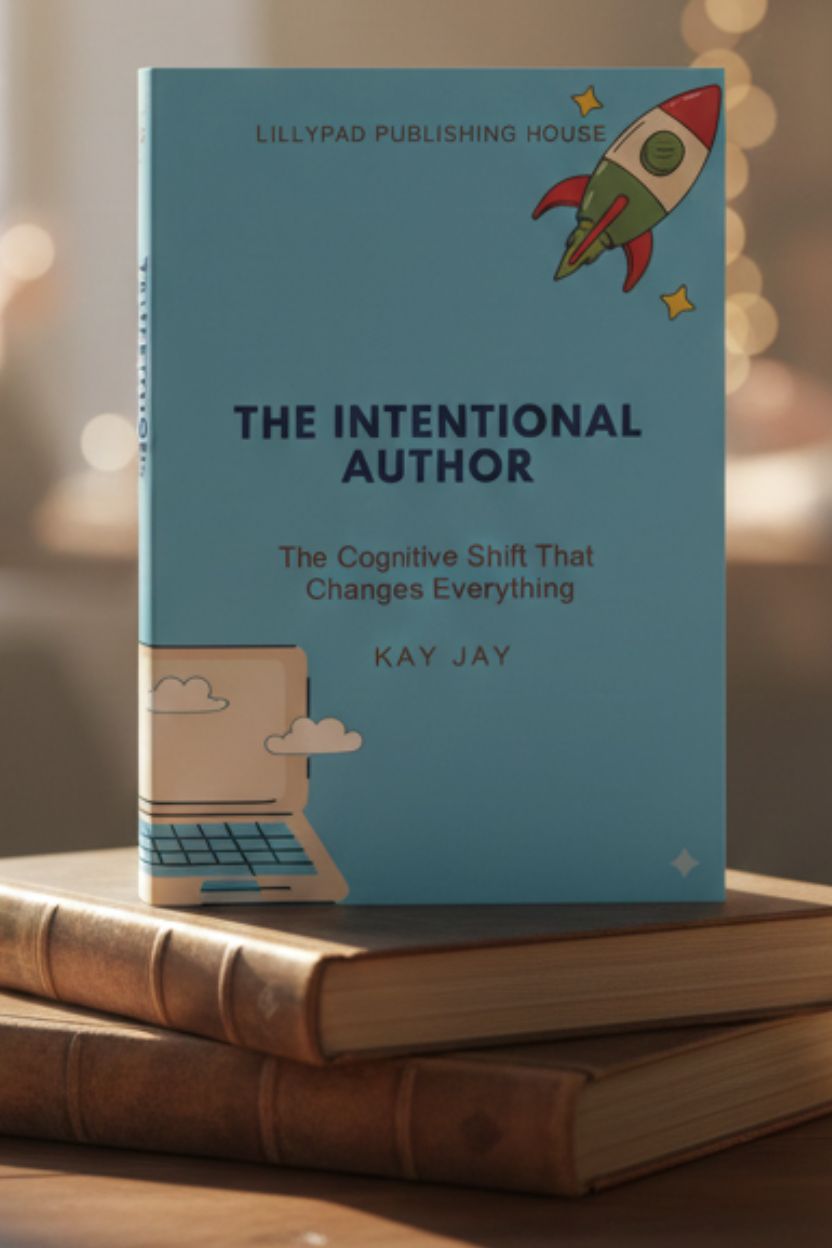
    This book, The Intentional Author, is the Fully Furnished House.

    The Fully Furnished House is the entire, complete, step-by-step system you need to transform the temporary clarity of the Door into sustained, predictable success. It contains the engineering blueprint for the entire Marathon.

    1. It’s the Full Framework, Not the Fragment: You have the Fragment of the problem; the full book provides the complete Position → Package → Signal sequence—the actionable curriculum for every single point of disconnection.
    2. It’s the System, Not the Insight: You have the profound emotional insight (e.g., you need to be the Traveler). The full book provides the detailed system for how to do that: the step-by-step audit of your title, the exact formula for the Service Post, and the complete framework for the Authority of Clarity.
    3. It’s the Long Game, Not the First Step: The Door gave you the initial courage; the House gives you the internal fortitude for the full Marathon. It provides the internal work to achieve your Author’s Emancipation and sustain the Cumulative Conversation over years.

    Your conviction is high. Your motivation is clear. But to transform the silence into sustained sales, you need the complete Survival Guide that covers every inch of the territory. The Door was the invitation to the necessary truth. The Fully Furnished House is the safe, complete, and fully-equipped system where your book’s long-term success finally begins.

    The Intentional Author

    A book titled 'The Intentional Author' by Kay Jay, featuring a blue cover with illustrations of a rocket and a laptop, placed on top of two stacked brown hardcover books.
  • The Critical Choice in Author Success: Publish Consciously

    The Critical Choice in Author Success: Publish Consciously

    The critical choice that determines whether an author retreats or commits to the long game.

    The moment an author completes a manuscript, they stand at a profound internal crossroads. Their next decision—the choice of how to approach the marketplace—will be the single most defining factor in their career trajectory. This choice is between two fundamentally opposing mindsets: Publishing Blindly or Publishing Consciously.

    Publishing Blindly is the default, passive, and emotionally exhausting path. It is the comfortable lie of the linear sequence: Write the Book → Hit Publish → Readers Will Come. This approach assumes that quality is an irresistible force and that the marketplace operates on a system of meritocracy. It is the approach of the Gambler who operates on the False Hope of Impulse.

    • The Blind Signal: The book is launched with a Vague Promise—a generic signal that is too polite, too broad, and too focused on the Product rather than the Service.
    • The Blind Result: When the launch is met with the inevitable Silence, the author experiences the shame of the 2 AM Dashboard Check, concludes their book is a failure, and loses all conviction, leading to the path of Blame and, eventually, to quitting the Marathon.

    Publishing Consciously is the deliberate, strategic, and emotionally sustainable path. It is the realization that the marketplace is not a reward system for quality but a response system for Clarity and Connection. It is the path of the Intentional Author and the calm certainty of the Positioner.

    • The Conscious Position: The author commits to the non-linear sequence of Position → Package → Signal. They ruthlessly define their book’s aim, naming the specific Shared Secret they solve using the Who, Want, Struggle framework.
    • The Conscious Signal: The book is launched as the Anticipated Culmination of a Cumulative Conversation. The signal is an Emotional Invitation that speaks the Language of Shared Confusion, leading with the Authority of Clarity and framing the book as a vital Survival Guide and a necessary Investment.

    The ultimate difference is that the author Publishing Blindly is trying to win the lottery of attention, while the author Publishing Consciously is building infrastructure for connection.Your decision to publish consciously is the internal act of reclaiming your power. It is the moment you reject the paralyzing Why question and embrace the empowering What question, committing to the Emotional Work of Staying Present for the long game. The silence breaks not with a massive spike, but with the steady, unshakeable force of an author who knows, with profound internal certainty, that their book is a necessary map. Choose consciousness, and you choose the path of enduring success.

    The Intentional Author

    A book titled 'The Intentional Author' by Kay Jay, featuring a blue cover with illustrations of a rocket and a laptop, placed on top of two stacked brown hardcover books.
  • You Are Not Looking for Tactics, You Are Looking for Clarity: Why the answer to your sales problem is internal.

    You Are Not Looking for Tactics, You Are Looking for Clarity: Why the answer to your sales problem is internal.

    The single most important perspective shift that transforms a problem into a solvable system.

    If you have been drawn to this guide, you are likely already exhausted by the pursuit of tactics. You have searched the web for marketing hacks, social media tricks, and the latest algorithms—the fleeting, external solutions that promise an instant, explosive spike. You are operating with the energy of the Gambler, believing that one lucky, clever tactic will magically break the silence.

    This pursuit of tactics is the most significant strategic dead end in publishing. It fails because it is an external solution to a problem that is fundamentally internal.

    The Internal Problem of Disconnection

    The silence you are experiencing is not a failure of strategy; it is a failure of signal. Your book is invisible not because you lacked the right ad copy, but because the bridge between your content and the reader’s need (the Invisible Barrier) is unclear. This lack of clarity stems from a failure of Position—an internal ambiguity about your book’s exact purpose, value, and audience.

    1. Tactics are Passive: They require you to wait for the next viral trick to be handed to you. They are the domain of the anxious Why question (Why is this happening to me?).
    2. Clarity is Active: It forces you to become the Positioner—the active force in your career—by embracing the strategic What question (What is the next step I can take to clarify my signal?).

    The painful truth is that no external tactic can fix an internal lack of clarity. If your Position is vague, a viral tweet will only send a generic Vague Promise to more people, accelerating the failure. If your price is set with a Hesitant Price Trap, a massive discount tactic only confirms your low conviction to a larger audience.

    The Irresistible Power of Clarity

    The Intentional Author knows the answer to the sales problem is internal Clarity. This is the hard, necessary work of:

    • Defining the Shared Secret: Naming the specific, hidden pain your ideal reader is too embarrassed to admit.
    • Embracing Your Authority: Speaking from the Truth of Your Scars as the Traveler Who Found the Map, rather than hiding behind the Expert’s Pedestal.
    • Articulating Transformation: Framing your book as the necessary Investment (the map), not an optional expense (the product).

    Clarity is the ultimate, non-negotiable tactic. It is the single competitive advantage that no amount of money or “hustle” can buy. The moment you stop chasing fleeting external tricks and commit to the relentless internal work of achieving clarity, you transform your anxiety into Agency, and your book’s message becomes an irresistible signal that no reader can ignore.

    The Intentional Author

    A book titled 'The Intentional Author' by Kay Jay, featuring a blue cover with illustrations of a rocket and a laptop, placed on top of two stacked brown hardcover books.
  • The Simple Problem of Safety Check Failure: How to look at your title and description like an engineer, not a writer.

    The Simple Problem of Safety Check Failure: How to look at your title and description like an engineer, not a writer.

    The essential filter that determines whether your book is seen or ignored.

    When a writer finally finishes their manuscript, their primary emotional attachment is to the art. They view the title, subtitle, and description as final, beautiful packaging—a poetic encapsulation of the work they poured their soul into. This is the Writer’s Mindset, and while it creates great content, it often leads directly to the Silence.

    The problem is that the market is not a literary salon; it is a complex, chaotic system. The reader scrolling past your book is not performing an art critique; they are performing a high-speed, emotional Invisible Safety Check.

    To survive this test and break the silence, you must temporarily set aside the Writer’s Mindset and adopt the focus of an Engineer.

    The Engineer’s Mindset views the title and description not as final art, but as a crucial piece of signal infrastructure that must perform a specific, measurable function: Signal Integrity.

    The Simple Problem of Safety Check Failure

    The engineer understands that a failure of the system is not a personal failure, but a solvable problem of alignment. The goal is to ensure the signal is so clear that it eliminates the reader’s doubt. The Writer’s Mindset asks, “Is this beautiful?” The Engineer’s Mindset asks, “Does this pass the Safety Check?”

    The Safety Check requires the external signal to confirm three things to the reader’s subconscious in two seconds:

    1. Signal Integrity Check (Is the Signal Clear?): A writer uses a Vague Promise because it sounds elegant. An engineer rejects this because it fails to communicate the specific function. The signal must be an Irresistible Signal that names the specific pain (the Shared Secret). Function: Interrupt the Scroll.
    2. Safety Protocol Check (Is the Guide Safe?): A writer may hide their vulnerabilities. An engineer understands that trust is a required safety protocol. You must communicate the Authority of Clarity by speaking the Language of Shared Confusion and leading with your scars (the Traveler Post). Function: Establish Empathy and Trust.
    3. End-State Guarantee Check (Is the Map Reliable?): A writer lists content (the Inventory List Trap). An engineer guarantees the functional outcome. Your description must sell Transformation Over Information, framing the book as a vital Survival Guide. Function: Promise an Unambiguous Outcome.

    The silence is simply a pattern—a failure of signal integrity. The Student of Patterns does not blame the manuscript; they analyze the signal. The moment you look at your title and description like an engineer—focused not on the beauty of the pipe, but on the unshakeable clarity of the water flowing through it—you solve the simple problem of Safety Check Failure, and your necessary book finally gets the clear signal it needs to travel.

    The Intentional Author

    A book titled 'The Intentional Author' by Kay Jay, featuring a blue cover with illustrations of a rocket and a laptop, placed on top of two stacked brown hardcover books.
  • Overcoming Author Guilt: A New Approach to Promotion

    Overcoming Author Guilt: A New Approach to Promotion

    The single internal choice that transforms a burden into a mission.

    When an author looks at the promotional process—the continuous posting, the emails, the direct asks for sales—the overwhelming emotion is often a deep, quiet guilt. We feel guilty for asking for money, guilty for interrupting the reader’s scroll, and guilty for focusing on the transactional aspect of our work. This guilt is rooted in the fear that we are being a pushy “salesperson,” and it is the single greatest drain on the author’s energy.

    This guilt is a direct product of the Performance mindset. When you act from the energy of Performance, you are focused on yourself: I need to sell this book to justify my effort. I feel guilty because I am putting my own needs first. This feeling is a massive Invisible Barrier that makes your voice small and your signal weak.

    The emotional liberation that breaks this cycle is a single, profound identity shift: Stop Feeling Guilty, Start Acting on Duty.

    This is the core commitment of the Intentional Author. It replaces the anxious, self-focused energy of the Gambler with the calm, resolute certainty of the Positioner.

    The Duty of the Intentional Author

    The moment you commit to this duty, the entire perception of promotion changes:

    1. Duty Replaces Guilt: You are no longer asking for a favor; you are fulfilling a duty to the person who is still lost. Your book is a necessary map that eliminates their specific pain (the Shared Secret). You have a moral obligation to ensure that map reaches the traveler who needs it. To withhold the map out of your own personal discomfort with selling is the ultimate act of self-indulgence.
    2. Service Replaces Performance: Your promotion ceases to be a transactional Product Post and becomes a clear, confident Service Post. You are no longer selling; you are providing the recognition and clarity that only your book can offer. The energy is no longer transactional (Buy this) but transformational (I see your struggle).
    3. Agency Replaces Anxiety: The pursuit of sales is no longer an emotional burden of persuasion; it is a strategic act of Agency—the clear next step to provide the map. The anxiety that asks, Am I good enough? is replaced with the steady conviction that: This map is necessary.

    The Intentional Author’s duty is to be the clear signal. This commitment is the only way to endure the Marathon and ensure your voice is sustained. The guilt is an internal noise that blocks the signal. The duty is the external clarity that makes the sale inevitable. When you stop worrying about your own feelings and focus relentlessly on the reader’s desperate need, you achieve the ultimate emancipation: promotion stops feeling like a shame to be avoided and becomes a necessary, powerful act of service.

    The Intentional Author

    A book titled 'The Intentional Author' by Kay Jay, featuring a blue cover with illustrations of a rocket and a laptop, placed on top of two stacked brown hardcover books.
  • The Invisible Barrier: Connecting with Readers Deeply

    The Invisible Barrier: Connecting with Readers Deeply

    The true measure of a clear signal, found in the quiet confessions of readers.

    When an author embarks on the long game, they are searching for a clear sign that the shift from Performance to Service—from chasing sales to cultivating clarity—is actually working. The conventional measure of success is a transactional number: a spike on the sales dashboard, a chart position, a flood of positive reviews. But these are the metrics of the Sprint, and they are often noisy, fleeting, and ultimately unsatisfying.

    The true, unvarnished evidence that your signal has achieved the irresistible clarity of the Intentional Author is found in the quiet, private confessions of your readers.

    When the shift from transactional persuasion to emotional recognition goes from theory to reality, success no longer looks like a number. It looks like a simple message in your inbox, a note on social media, or a quiet statement that proves your signal has successfully navigated the Invisible Barrier and reached the exact person it was intended for.

    Success is the Proof of Recognition

    This is the unvarnished evidence that proves your Position → Package → Signal sequence is working:

    1. The Validation of the Shared Secret: The single most common message you receive is one that says, “I thought I was the only one. Thank you for naming that specific fear.” This proves you successfully articulated the Shared Secret—the hidden, contradictory pain your reader was too embarrassed to admit. It proves you achieved Authority of Clarity by making the reader feel seen, which is the foundational purpose of your map.
    2. The End of Isolation: The reader stops speaking about the book’s content and starts speaking about the emotional relief of their discovery. “I no longer check the dashboard with shame at 2 AM. I feel like the problem is solvable now.” This proves your message is working as a Survival Guide to a specific, painful state. It shows the emotional transformation has begun, which is the true value of your Investment.
    3. The Acknowledgment of the Traveler: Readers stop addressing you as the distant expert on the Pedestal and start addressing you as a fellow journeyer. “Your honesty about your first book’s failure is why I bought yours.” This proves you successfully led with your scars (the Truth of Your Scars), establishing a relationship built on empathy and trust, not just expertise.

    These private confessions—the moments where a reader shares the intimate truth of their pain and thanks you for the map—are the only metrics that matter in the long game. They are the undeniable proof that your message has not only broken the silence but also forged a connection that transcends a transaction.
    When you commit to the Marathoner’s Mindset and dedicate every Service Post to achieving this emotional recognition, the unvarnished evidence will follow. It confirms the profound truth that your book’s ultimate purpose is not to be a product of massive sales, but to be a trusted map for a few, leading inevitably to the cumulative sales that sustain your career.

    The Intentional Author

    A book titled 'The Intentional Author' by Kay Jay, featuring a blue cover with illustrations of a rocket and a laptop, placed on top of two stacked brown hardcover books.
  • Unlocking Success with the Full Alignment Matrix

    Unlocking Success with the Full Alignment Matrix

    The single most powerful internal shift that guarantees your book is seen.

    When your book is an “ignored product,” the problem is not a simple failure of marketing. It is a profound failure of Alignment—a deep, internal misalignment between the profound value you poured into the manuscript and the weak, confusing signal you are sending to the world.

    The ignored product operates on the anxious energy of the Gambler, hoping the market will reward an external event (the launch). The magnetic necessity operates on the calm conviction of the Positioner, knowing the market must reward an internal, unshakeable truth (the clear signal).

    The process of transforming an ignored product into a magnetic necessity is the Full Alignment Matrix. It is the internal work that must be done before you can ask the external world for a sale. This matrix requires the ruthless, honest alignment of three core elements:

    1. Alignment of Identity (Expert vs. Traveler)

    • The Problem: The author is operating from the Expert’s Pedestal, trying to sell a product based on credentials and polished perfection. This is emotionally distant and repels the connection the reader desperately needs.
    • The Internal Work: Embrace the Truth of Your Scars. Make the Confession that you wrote the book from the hole you climbed out of. You must become the Traveler Who Found the Map.
    • The Result: You establish the Authority of Clarity—a deep, magnetic trust built on shared experience, not titles. The reader stops asking, “Are you good enough for this book?” and starts thinking, “This guide is a safe haven for my struggle.”

    2. Alignment of Value (Expense vs. Investment)

    • The Problem: The author carries an Invisible Resistance—a private discomfort with wealth—that causes them to fall into the Hesitant Price Trap. This whispers to the market that the book is an Expense that might be risked.
    • The Internal Work: Reframe your book’s price and value. Your book is not an object to be sold; it is a life-saving map that eliminates the Shared Secret (the anxiety, the shame, the confusion). It is a vital Investment in the reader’s time and future.
    • The Result: You set the Confident Price and speak the language of conviction. The magnetic necessity is created when the reader concludes that the cost of staying stuck in their pain is exponentially higher than the cost of buying your map.

    3. Alignment of Service (Performance vs. Purpose)

    • The Problem: The author is trapped in a transactional Sprint, focusing on external Performance (volume, urgency, sales figures) to compensate for internal fear. This leads to the Failure of Sequencing.
    • The Internal Work: Commit to a core Purpose—a Silent Vow to serve. Shift the energy of your communication from “Buy my book” to “Let me help you feel seen.” This is the essence of the Service Post and the Marathoner’s Mindset.
    • The Result: The launch transforms from an easily ignored Interruption into the Anticipated Culmination of a Cumulative Conversation. The book becomes a magnetic necessity because it is seen as the inevitable answer to a relationship built on sustained, clear, and valuable service.

    The Full Alignment Matrix is the definitive work that precedes the launch. The ignored product operates from fear and scarcity. The magnetic necessity operates from clarity and conviction. The moment you achieve this internal alignment, your book’s signal becomes irresistible, and the sales finally become an inevitable act of self-recognition.

    The Intentional Author

    A book titled 'The Intentional Author' by Kay Jay, featuring a blue cover with illustrations of a rocket and a laptop, placed on top of two stacked brown hardcover books.