Category: writing

  • The Fatal Illusion Authors Face After Writing

    The Fatal Illusion Authors Face After Writing

    The moment most authors misunderstand the true work of publishing.

    The most dangerous moment in the entire publishing journey is not the final edit or the launch day. It is the moment you type the words, “The End.”

    In that instant of triumphant exhaustion, the author is consumed by a powerful, yet fatal, illusion: that the end of writing is the beginning of buying. You assume a linear sequence: Finish Manuscript → Hit Publish → Sales Begin. This comfortable, logical path is, in reality, the Failure of Sequencing, and it is the single most expensive mistake an author can make.

    The truth that breaks the silence is that the market does not reward a linear journey; it rewards a strategic, non-linear one. The work you just finished (writing) is internal; the work you must now begin (signaling) is external. They are not the same, and the market ruthlessly punishes the confusion between the two.

    The Cost of the Missequence

    When you mistake the end of writing for the beginning of buying, you commit three errors that lead directly to the Silence:

    1. You Build the Product, Not the Bridge: You focus all your energy on the internal content (the gold) and none on the external infrastructure (the map). You launch a brilliant Manifesto (the product) but with a Vague Promise (a confusing signal). The silence is the sound of no reader being able to find the road to your treasure.
    2. You Launch a Cold Interruption: You operate with the Sprint Mindset, treating the launch as a sudden, transactional event that demands attention from strangers. Because you haven’t built the Cumulative Conversation—the sustained service of the Positioner—your book is easily dismissed as an Interruption to be filtered out.
    3. You Lose Your Authority: You try to sell the final solution as an Expert who has finished the work, rather than offering the map as a Traveler who just escaped the hole. You fail to establish the Authority of Clarity that is built on sharing your scars and speaking the Language of Shared Confusion.

    The sale of a book is an act of recognition. That recognition is not magically created by the word count of the final manuscript. It is created by the sustained, strategic effort of Positioning and Packaging your work so that the right reader sees their Shared Secret articulated perfectly in your title.The work is not done when the book is finished. The most crucial work—the non-linear sequence of Position → Package → Signal—begins now. The moment you stop making the assumption of the linear path and embrace the strategic necessity of the correct sequence, you transform your book from an invisible product into an irresistible necessity.

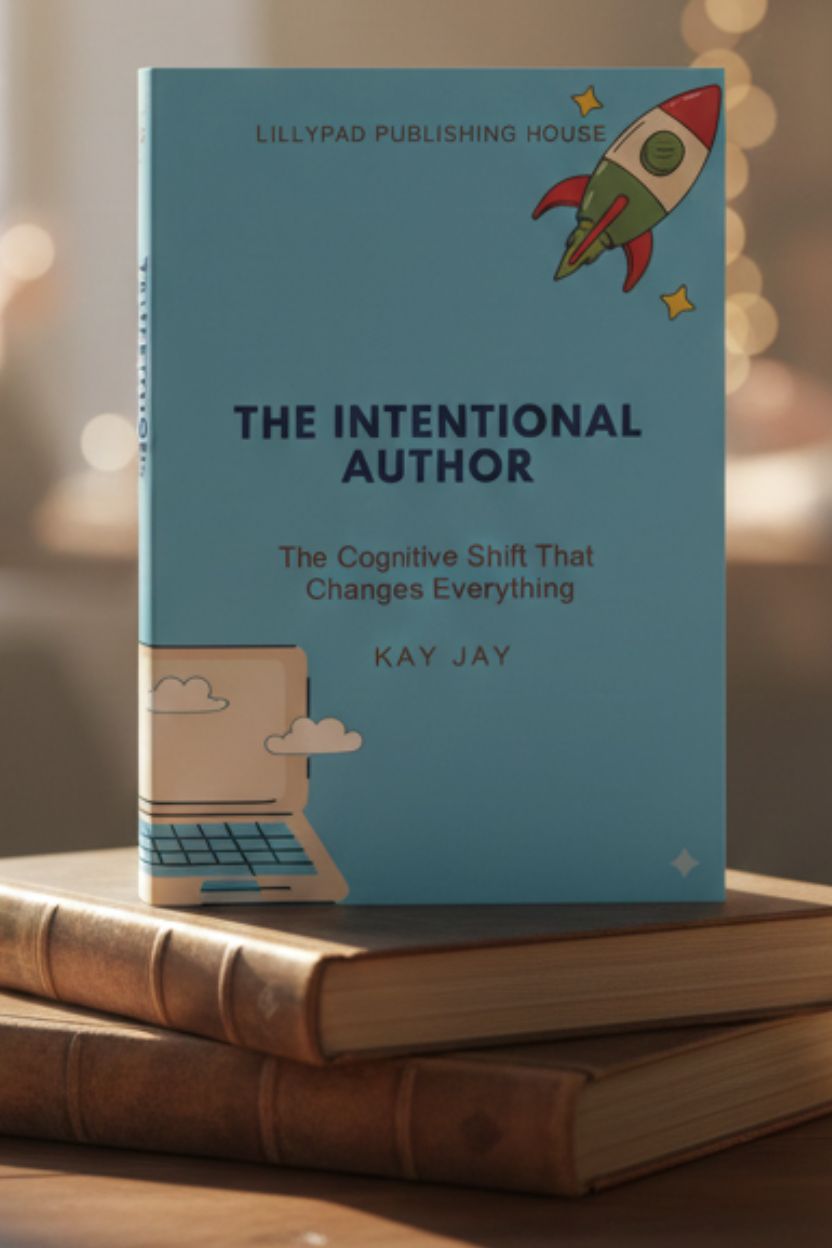
    The Intentional Author

    A book titled 'The Intentional Author' by Kay Jay, featuring a blue cover with illustrations of a rocket and a laptop, placed on top of two stacked brown hardcover books.
  • How to Capture Readers with Cognitive Efficiency

    How to Capture Readers with Cognitive Efficiency

    The essential filter that determines whether your book is seen or ignored.

    The modern reader is not a patient scholar. They are a profoundly distracted individual operating with a singular, primal instinct: cognitive efficiency.

    Cognitive efficiency is the brain’s ruthless impulse to conserve energy by filtering out every piece of information that is not immediately, obviously, and urgently relevant. In the flow of the endless scroll, this means your book’s signal has to beat the reader’s natural impulse to move on.

    When your book’s presentation—your title, subtitle, and cover—hits a reader’s eye, they are not performing a Quality Check. They are performing an Invisible Safety Check, a rapid-fire assessment that can be boiled down to three silent questions. Your book must answer an instantaneous, emphatic YES to all three to survive the test and beat cognitive efficiency.

    1. Is This Specifically for Me? (The Identity Check)

    The Vague Promise—the title that tries to help everyone—fails this test immediately. The distracted brain will not perform the labor of translation to figure out if your book is relevant. You must declare the audience and the specificity of the pain upfront.

    • If the answer is Vague: “It’s a general guide for success.” (The brain moves on: Too much work, too broad, low-value content.)
    • If the answer is Clear: “This is for the high-achiever who is secretly terrified they’ve wasted their best years.” (The brain stops: This is a specific identity, and it knows my hidden pain.)

    2. Do You Understand My Specific Pain? (The Empathy Check)

    The reader is carrying a Shared Secret—a specific, messy, hidden struggle they are too embarrassed to admit. They need to know you are a safe guide for that specific hole. A logical list of credentials (the Expert’s Pedestal) will not pass this test.

    • If the answer is Vague: “It contains 7 steps to a better life.” (The brain is skeptical: You don’t know my specific shame; you’re just selling a system.)
    • If the answer is Clear: “I know the shame of the 2 AM sales dashboard check, and I wrote this for you.” (The brain trusts: You speak the Language of Shared Confusion. You are the Traveler who found the map.)

    3. What is the Clear, Immediate Outcome? (The Value Check)

    The reader is not buying content; they are buying the transformation, the emotional and practical after state. The book must be framed as an essential Survival Guide to a specific destination.

    • If the answer is Vague: “You will learn everything about this topic.” (The brain resists: Learning is work; the outcome is unclear.)
    • If the answer is Clear: “This book replaces the anxiety of self-doubt with the unshakeable clarity to act.” (The brain commits: The emotional value is immediate and high; this is a necessary Investment.)

    The silence breaks when you stop treating your book as a product to be sold and start treating your signal as an urgent act of recognition. The Intentional Author knows that the only way to beat the high-speed filter of cognitive efficiency is to deliver an Immediate Signal that answers all three of the reader’s deepest, most urgent questions.

    The Intentional Author

    A book titled 'The Intentional Author' by Kay Jay, featuring a blue cover with illustrations of a rocket and a laptop, placed on top of two stacked brown hardcover books.
  • How to Pass the Invisible Safety Check for Your Book

    How to Pass the Invisible Safety Check for Your Book

    The essential filter that determines whether your book is seen or ignored.

    When your meticulously crafted book appears in a reader’s feed—whether it’s on a digital shelf or a scrolling timeline—you are likely hoping they will perform a Quality Check. You assume they will pause, admire your credentials, logically evaluate your chapter list, and conclude: This is objectively a good book. I should buy it.

    This is a fatal miscalculation.

    In the chaos of the attention economy, the reader’s brain is not operating in a state of logical evaluation. It is operating in a state of emotional self-preservation. The fundamental filter they apply to your book is not a Quality Check; it is an Invisible Safety Check.

    The reader is not asking, “Is this the best book?”

    The reader is asking, “Is this author a safe guide for the painful, hidden struggle I am living inside?”

    The Urgency of Self-Protection

    The reader is already overwhelmed, already skeptical of loud, transactional noise, and already deeply embarrassed by the Shared Secret they are carrying (the Invisible Barrier). They are not looking for more information to process; they are looking for a reliable escape route from a specific pain.

    A Safety Check is a quick, emotional scan for signals that confirm or deny trustworthiness:

    1. The Check for Empathy: If your book’s signal is a Vague Promise or a Technical Label, it fails the check. It signals a lack of specificity and a failure to understand their unique, contradictory struggle. If you don’t understand my pain, you cannot be a safe guide.
    2. The Check for Vulnerability: If you are speaking from an Expert’s Pedestal—hiding your own journey and presenting a polished, flawless solution—you fail the check. The reader senses the inauthenticity and concludes you are too distant to be trusted. The Traveler Who Found the Map is always safer than the guru who claims to know everything.
    3. The Check for Conviction: If your price or promotional language is apologetic (the Hesitant Price Trap), you fail the check. The lack of your own conviction signals that the map might be incomplete or unreliable.

    The single most powerful signal you can send to pass the Invisible Safety Check is the Authority of Clarity. This is the moment you speak the Language of Shared Confusion and articulate their specific, hidden pain with such precision that they feel profound, instant Recognition.

    The sale of a book is an act of emotional investment. The reader will only invest their most finite resource—their time—when they feel a fundamental level of safety. Stop trying to prove your book’s quality. Start proving your capacity to be a safe, empathetic, and clear guide for their specific struggle. The moment you pass the Invisible Safety Check, the purchase becomes an inevitable act of self-preservation.

    The Intentional Author

    A book titled 'The Intentional Author' by Kay Jay, featuring a blue cover with illustrations of a rocket and a laptop, placed on top of two stacked brown hardcover books.
  • The Confession Every Intentional Author Must Make: When your seriousness becomes a duty, not a desperate plea.

    The Confession Every Intentional Author Must Make: When your seriousness becomes a duty, not a desperate plea.

    The quiet commitment that separates the enduring author from the exhausted one.

    When a book launch fails to break the silence, the author’s deepest, most hidden emotional state is exposed. For most, this state is one of desperation. Every promotional post, every check of the dashboard, and every conversation about the book is actually a silent, desperate plea: Please see me. Please validate my work. Please justify the months of effort.

    This energy—the pleading for validation—is a transactional frequency that the marketplace is ruthlessly conditioned to reject. It stems from the author’s internal doubt, the question: Am I good enough for this book? And it transforms the act of publishing from a confident service into an anxious performance.

    The single most profound truth that breaks this cycle is a quiet, internal realization—a Confession that every Intentional Author must make to themselves: My seriousness about this book must be a resolute duty to serve, not a desperate plea for validation.

    This shift transforms the entire process:

    1. From Desperate Plea to Internal Duty: The plea is focused on the outcome (sales), which is chaotic and uncontrollable. The duty is focused on the intent (service), which is internal and fully controllable. The Intentional Author detaches their self-worth from the 2 AM Dashboard Check and anchors their identity in the commitment to provide clarity, regardless of the immediate numbers.
    2. From Performance to Position: The plea forces the author into a transactional, anxious Performance (the Gambler’s mindset). The duty establishes the calm certainty of the Positioner. It means that every Service Post is not an urgent request for a sale, but a committed, regular act of providing a Fragment of the map, fulfilling the duty to serve the traveler who is still lost.
    3. From Transaction to Transformation: The desperate plea asks the reader to justify the author’s effort. The quiet duty simply offers an Irresistible Signal of recognition and a clear map out of the Shared Secret. The Confession is the moment the author stops being consumed by the “Why” of their failure and embraces the “What” of their strategic Agency.

    The author’s true conviction is not proven by the size of their sales, but by the stillness of their intent in the face of silence. The desperate plea is the path of the Sprint, which leads to quitting. The quiet duty is the commitment of the Marathon, which ensures that the clear, confident signal endures long enough to attract the audience it was written to serve.

    The Intentional Author

    A book titled 'The Intentional Author' by Kay Jay, featuring a blue cover with illustrations of a rocket and a laptop, placed on top of two stacked brown hardcover books.
  • Mastering the Silence: The Advantage that Brings Clarity

    Mastering the Silence: The Advantage that Brings Clarity

    The quiet advantage that eliminates shame and guarantees clarity.

    When your meticulously crafted book is met with the profound, isolating Silence, the experience is emotionally devastating. The mind, searching for a quick answer to the pain, immediately defaults to the Gambler’s anxious question: Why is this happening to me?

    This “Why” question is a trap because it is rooted in personal shame. It forces the author to treat a predictable, systematic failure as a mystical, personal inadequacy: My book is not selling because I am not good enough. This is the emotional path that leads to the Decision Fork of Blame and eventually, to quitting.

    The Intentional Author understands the core truth that breaks this cycle of despair: The silence is not a mystery; it is a solvable engineering problem.

    Your emotional energy—your self-worth—is finite and must be protected. The advantage you now possess is the capacity to achieve an Author’s Emancipation by shifting your internal identity from a Victim of the Silence to a Student of Patterns.

    The Engineering Mindset

    An engineering problem is one where a defined input does not produce the expected output, signaling a clear bottleneck in the system. The system is your publishing sequence: Position → Package → Signal.

    1. Input: Your high-quality manuscript (your content).
    2. Output: Recognition and sales (the clear connection).
    3. Bottleneck: The Invisible Barrier (the lack of a clear signal).

    The Student of Patterns replaces the paralyzing Why question (Why am I failing?) with the empowering What question (What is the pattern of disconnection in my signal?). This shift eliminates the emotional turbulence and activates your Agency.

    The engineer does not blame the pipe; they check for the clog. The Intentional Author does not blame the book; they check for the Vague Promise, the Hesitant Price Trap, or the failure to articulate the Shared Secret.

    • The low sales figure is not a verdict; it is an instruction that your Position is not clear enough.
    • The lack of engagement is not a sign of indifference; it is an instruction that your Package is failing the 2-Second Test.

    This mindset is your quiet advantage in the Marathon. It allows you to detach emotionally and engage logically. The moment you transform your despair into a strategic checklist—the moment you see your publishing sequence as a system with solvable bottlenecks—you reclaim your conviction. You stop being a passive recipient of the market’s chaos and become the deliberate, calm force of clarity that is necessary to ensure your book finally gets the signal it needs to travel.

    The Intentional Author

    A book titled 'The Intentional Author' by Kay Jay, featuring a blue cover with illustrations of a rocket and a laptop, placed on top of two stacked brown hardcover books.
  • Why the Marathon Mindset is Key to Break the Silence

    Why the Marathon Mindset is Key to Break the Silence

    The quiet commitment that determines your long-term success.

    When an author finally hits the ‘publish’ button, the default mental model for success is almost always a sprint. We anticipate a burst of sales, a quick wave of recognition, and an immediate, triumphant arrival. We look at the overnight successes and believe that, if our book is truly excellent, it will follow the same rapid trajectory.

    This belief that success should be immediate—the frantic energy of the Sprint Mindset—is a profound trap. It is the hope of the Gambler, and it is what makes the subsequent Silence so devastating. When the initial burst of promotion fades, and the anticipated spike fails to materialize, the author experiences burnout and retreat, mistakenly concluding that the book itself was a failure.

    The truth that sustains the career and breaks the silence is the Silent Vow—the deep, quiet commitment to the Marathon.

    The Intentional Author understands that the marketplace does not simply reward the loudest voice; it rewards the most consistent and resonant signal. The attention economy is a constant, endless scroll. A single, massive burst of promotion (the sprint) will create a momentary Interruption, but it will quickly fade, leaving your book exactly where it started: invisible.

    The Silent Vow to the Marathoner’s Mindset

    The Silent Vow is the commitment to a process of sustained, clear service over twelve months, not twelve days. It requires three critical shifts:

    1. From Urgent to Consistent Clarity: The sprinter pushes urgent, transactional demands (“Buy now!”). The marathoner commits to clarity—sending a consistent Service Post (a Fragment of the map) every week. This consistency builds an unconscious trust and ensures your signal is a dependable fixture in the reader’s world.
    2. From Impulse to Intent: The sprint is driven by the emotional high of impulse. The marathon is rooted in the steady, internal conviction of Intent. The Intentional Author detaches their worth from the 2 AM Dashboard Check and commits to the Emotional Work of Staying Present, viewing the silence as a strategic instruction for a clearer Position.
    3. From Transaction to Cumulative Conversation: The sprint is a transactional, cold event. The marathon is a Cumulative Conversation built on months of validating the reader’s Shared Secret and offering the map. The launch is not a desperate shout; it is the Anticipated Culmination—the welcome, inevitable final step of a trusted relationship.

    Success is not an explosion; it is the compounding interest of consistent, clear communication. Your book is a Living Entity, a long-term asset designed for sustained connection. The Silent Vow is the courageous choice to reject the myth of overnight success and commit to the long game. That sustained, quiet presence—that relentless focus on service and clarity—is the only force that ensures your voice endures the full course of the marathon and finally breaks the silence for good.

    The Intentional Author

    A book titled 'The Intentional Author' by Kay Jay, featuring a blue cover with illustrations of a rocket and a laptop, placed on top of two stacked brown hardcover books.
  • Attract Engagement: Service vs. Performance in Sales

    Attract Engagement: Service vs. Performance in Sales

    The one shift that changes everything in the marketplace.

    When an author enters the marketplace, every single post, email, and ad you create is radiating a form of energy. That energy is instantly categorized by the reader as either Performance or Service. This subtle, yet profound, distinction is the single most important factor determining whether your signal attracts an audience or repels connection.

    The Energy of Performance (Repels)

    The energy of Performance is the instinct of the Gambler and the Sprint Mindset. It is rooted in the author’s anxiety, fear of the Zero Sales, and the desperate need to prove their worth. The core message is transactional and urgent: Help me, the author, by buying my product.

    1. The Focus is on the Outcome: The author is obsessed with sales figures, chart positions, and external validation.
    2. The Communication is Demanding: It is a transactional, loud, and often apologetic Product Post that functions as an Interruption: “My book is out! Go buy it now and help me hit the charts!”
    3. The Reader’s Response: The reader senses the author’s anxiety. They feel treated like a target, and their emotional defenses go up. They filter the noise and scroll past, confirming the author’s fear and deepening the Silence.

    Performance repels connection because it asks the reader to give before the author has proven the commitment to service.

    The Energy of Service (Attracts)

    The energy of Service is the sustained commitment of the Intentional Author and the Positioner. It is rooted in the unshakeable certainty that the book is a necessary map, and the author’s job is simply to clarify the signal. The core message is relational and empathetic: I see your struggle, and I have the map out.

    1. The Focus is on the Reader’s Need: The author is obsessed with articulating the Shared Secret—the specific pain their ideal reader is currently living inside.
    2. The Communication is Giving: It is a consistent, calm, and vulnerable Service Post that acts as a Fragment of the map: “Do you ever feel like you’ve done everything right, but you’re secretly terrified you’re still behind? Here’s the one truth that breaks that cycle.”
    3. The Reader’s Response: The reader feels profound Recognition. They sense the author’s clarity and conviction. The author is no longer an Expert selling a product, but a Traveler offering a map. This emotional connection is irresistible.

    The energy of Service attracts gravity because it provides value and recognition, building a Cumulative Conversation over time. The launch is not a desperate sprint; it is the Anticipated Culmination of a trusted relationship.

    The one shift that changes everything is to realize that the sale is not something you have to force through persuasion. It is a natural byproduct of connection. Stop pouring your energy into the anxious, transactional demands of performance. Start directing all your effort into the calm, clear, and consistent service of helping one person feel profoundly seen. That courageous commitment is the only energy that truly attracts buyers.

    The Intentional Author

    A book titled 'The Intentional Author' by Kay Jay, featuring a blue cover with illustrations of a rocket and a laptop, placed on top of two stacked brown hardcover books.
  • Unlocking Your Authorial Intent: From Dreamer to Doer

    Unlocking Your Authorial Intent: From Dreamer to Doer

    The quiet force that separates the author from the dreamer.

    If you have picked up this guide, you are likely standing in a place of pain. You know the silence. You have faced the 2 AM Dashboard Check, and you are haunted by the shame of the Invisible Barrier. You are searching for the map out of the confusion.

    But the most important thing you need to realize is not what you are lacking, but what you already carry.

    The deep, inner conviction that brought you to this guide—the refusal to accept the silence as the final word—is the single most valuable asset you have. This conviction is the quiet force that separates the author who endures from the dreamer who retreats.

    The Difference Between Desire and Intent

    Many people want to write a book. They dream of the finished product, the applause, and the prestige. This is desire, and it is a fragile thing that shatters instantly upon contact with the market’s indifference.

    But you possess something stronger: Intent.

    Intent is the deep, unshakeable certainty that your book is a necessary map. It is the realization that you did not write the book to become someone; you wrote the book because you had to give an answer to the specific, painful question that once defined your own life.

    1. Your Conviction is Your Origin Story: The reason you are still searching is because you know, in the quietest part of your soul, that the answer you found is true. Your book’s Origin Story—the journey from the hole you climbed out of—is rooted in this conviction. This internal truth is the only signal that can stand up to the chaos of the marketplace.
    2. Your Conviction is Your Only Authority: The Intentional Author understands that the Authority of Clarity is not earned through a title or a credential; it is earned through an unshakeable belief in the book’s necessity. This conviction transforms your message from a plea for attention into a confident, irresistible invitation.
    3. Your Conviction is the Fuel for the Marathon: The Emotional Work of Staying Present—the sustained effort of the Positioner—cannot be fueled by fleeting motivation. It can only be sustained by the profound, inner certainty that your work is a vital Service Post.

    The anxiety of the Gambler is rooted in the lack of this internal clarity. The calm certainty of the Positioner is rooted in the unwavering knowledge of the map’s necessity. Stop questioning your fundamental worth (Am I good enough?). Reconnect with the clarity you already carry—the deep, inner truth that compelled you to write this necessary book. That courageous conviction is the single most powerful signal you have, and it is the only thing that ensures your voice endures the full course of the marathon.

    The Intentional Author

    A book titled 'The Intentional Author' by Kay Jay, featuring a blue cover with illustrations of a rocket and a laptop, placed on top of two stacked brown hardcover books.
  • The Decision Fork: Empowering Authors to Persist

    The Decision Fork: Empowering Authors to Persist

    The critical choice that determines whether an author retreats or commits to the long game.

    When a book launch is met with the profound, isolating Silence, the author finds themselves standing at a critical juncture—the Decision Fork. The raw, emotional pain of the Zero Sales number forces an immediate, desperate question: Why is this happening?

    Most authors choose the path of least emotional resistance, the path that seems most logical in the moment: The Path of Blame.

    This path is tempting because it offers a quick answer and a temporary release of shame. The author points the finger outward, blaming the market, the algorithm, the reviewer, or the sheer volume of competition. Or, more dangerously, they point the finger inward, blaming the book itself and concluding: The content was flawed. I am a failure.

    This path is a profound trap because it is fundamentally a passive, debilitating pursuit that leads inevitably to Quitting.

    The Destructive Logic of Blame

    The logic of blame is a passive mindset that consumes all the author’s energy without offering an actionable solution:

    1. It Destroys Agency: If the marketplace or the algorithm is to blame, the problem is outside your control. The author becomes a passive Gambler waiting for a lucky break, rather than the proactive Positioner who creates their own signal.
    2. It Consumes Conviction: If the book itself is to blame, the author loses all conviction in its value. The book becomes a monument to personal failure, and the shame of the 2 AM Dashboard Check forces them into emotional retreat—the final, quiet act of quitting.
    3. It Hides the Curriculum: Blame prevents the author from seeing the silence for what it truly is: an instruction for clarity. By pointing the finger, they refuse to mine the failure for its most valuable content—the curriculum that proves the book’s necessity.

    The Intentional Path: The Path of Instruction

    The Intentional Author chooses the other fork: The Path of Instruction.

    They embrace the single, empowering What question: What is the next step I can take to clarify my signal? They move from the paralyzing anxiety of the Why to the calm certainty of Agency. They commit to the Emotional Work of Staying Present, viewing the silence not as a verdict, but as a compass pointing toward a clearer Position.The Decision Fork is not about the book; it is about the author’s mindset. The path of blame leads to a silent, inevitable retreat. The path of instruction—the commitment to finding the Authority of Clarity within the failure—is the only sustainable path that ensures the Intentional Author endures the marathon and finally breaks the silence for good.

    The Intentional Author

    A book titled 'The Intentional Author' by Kay Jay, featuring a blue cover with illustrations of a rocket and a laptop, placed on top of two stacked brown hardcover books.
  • The Choice You Make When No One Is Looking: Defining your identity as an Intentional Author regardless of sales.

    The Choice You Make When No One Is Looking: Defining your identity as an Intentional Author regardless of sales.

    The quiet commitment that determines your long-term success.

    The moment an author is confronted with the Silence—the empty sales dashboard, the lack of external validation—they are faced with the most defining choice of their career. This is the moment when the market removes the temporary scaffolding of hope and exposure, and the author is left alone with a profound, terrifying question: Why am I still doing this?

    This is the crucible where the Intentional Author is forged.

    The accidental author is defined by their outcome. Their identity is outsourced to the sales dashboard, the review count, or the social media likes. When the numbers are high, they are a success. When the numbers are low, they are trapped in the anxiety of the Gambler and the shame of the 2 AM Dashboard Check, questioning their fundamental worth (Am I good enough for this book?).

    The Intentional Author, however, is defined by an internal commitment—The Choice You Make When No One Is Looking.

    This choice is the quiet commitment to defining your identity not by the Outcome (sales), but by the Intent (service). It is the decision to anchor your self-worth in the process of providing clarity, regardless of the chaos of the marketplace.

    The Choice is Your Authority

    The Intentional Author understands that the Silence is simply a lack of a clear Signal, not a verdict on their mission. Their identity is rooted in three internal commitments:

    1. Commitment to Clarity: They reject the paralyzing Why question and embrace the empowering What question: What is the next step I can take to clarify my signal? This transforms the silence into a strategic instruction for a clearer Position.
    2. Commitment to Service: They shift their focus from their own fear of failure to the desperate, specific need of the reader (the Shared Secret). Their identity is not “Seller,” but Traveler Who Found the Map—a commitment to the Service Post even when the transaction is delayed.
    3. Commitment to the Marathon: They achieve Author’s Emancipation from the tyranny of the sales dashboard. They choose the calm certainty of the Positioner over the frantic anxiety of the Gambler, knowing that the long game is won through Emotional Work of Staying Present and the compounding interest of consistent, clear connection.

    The external world will always be unpredictable. The market will always be chaotic. But your identity is a choice you make, not a result you achieve. The Intentional Author commits to the unshakeable truth that their book is a necessary map, and their purpose is to serve the traveler who needs it. This quiet conviction—the Choice You Make When No One Is Looking—is the only internal force strong enough to break the silence and ensure your voice endures the full course of the marathon.

    The Intentional Author

    A book titled 'The Intentional Author' by Kay Jay, featuring a blue cover with illustrations of a rocket and a laptop, placed on top of two stacked brown hardcover books.