Category: love

  • When You Know It Won’t Work

    When You Know It Won’t Work

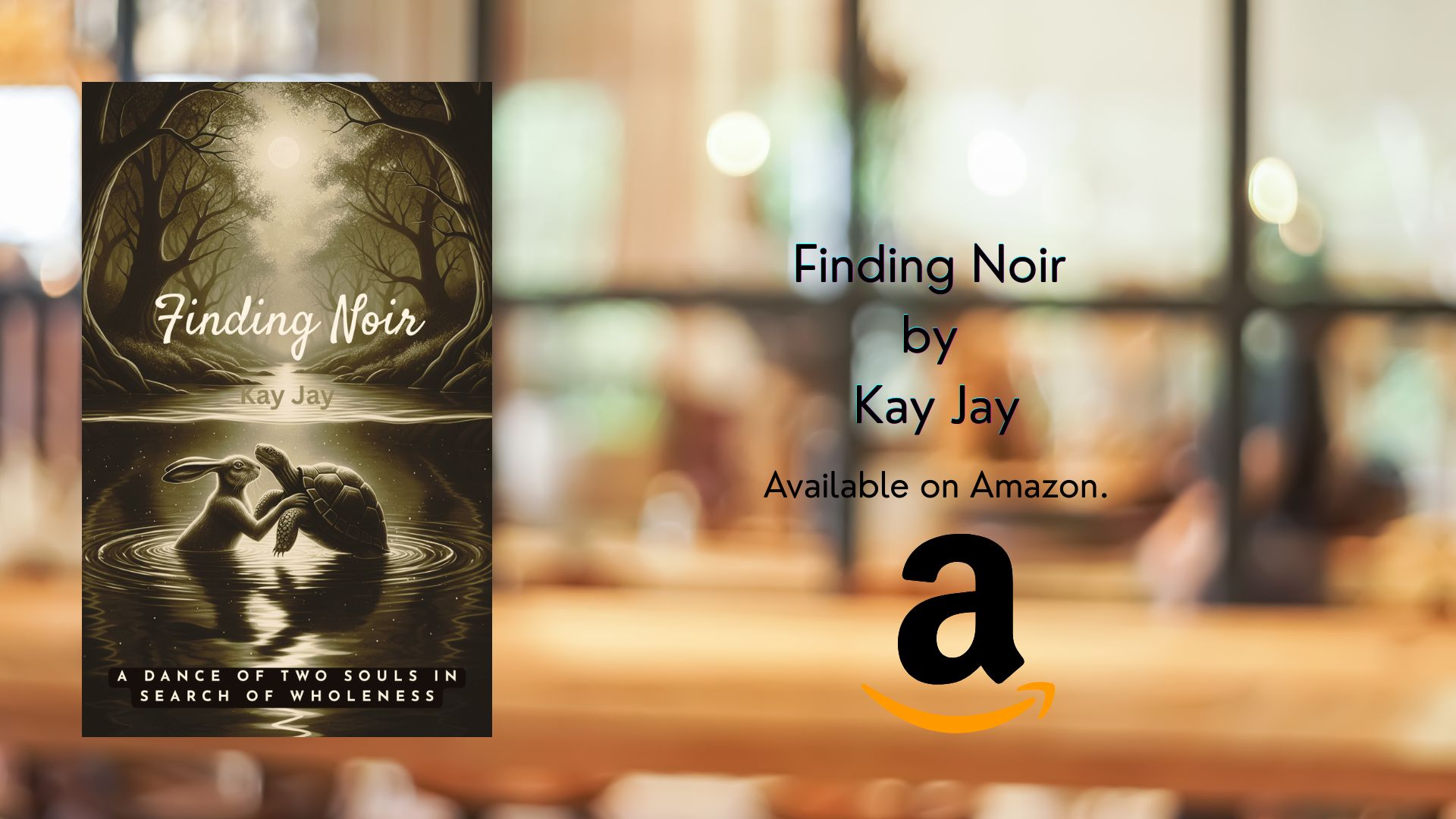
    Finding Noir by Kay Jay

    There is a specific kind of grief that lives in the realization that a story has reached its natural conclusion before you were ready to put it down. It isn’t always marked by a dramatic explosion or a final, cinematic goodbye. More often, it is the quiet violence of unanswered messages and a body that understands the truth long before the mind is willing to admit it: this is it.

    In these moments, we are seduced by the question: “What could I have done differently?”. We replay the pauses, the “almosts,” and every sentence spoken, convincing ourselves that if we had moved a different piece on the chessboard, the ending would change. But love is a collision, not a game of strategy, and sometimes the only thing you could have done differently was leave the story earlier—before it taught you everything it came to teach.

    The Failed Physicality vs. The Vivid Interior

    We are taught to measure the legitimacy of a connection by its outcomes—longevity, commitment, and return. When a connection fails to manifest in the physical world, we label it a failure. However, my work explores the connections that live vividly in the interior world while failing spectacularly in the physical one.

    When you know it won’t work, it is often because the encounter was never intended to be a “promise” of a shared future. Instead, it was a mirror—a reflective surface that showed you not who the other person was, but who you became in their presence. These connections don’t arrive to soothe or stabilize us; they arrive to rearrange the internal furniture and ask questions instead of offering futures.

    Recognition Over Closure

    The modern pursuit of “closure” is often just a disguised attempt to edit ourselves for an outcome that was never available. My mission is not to offer you closure, but recognition.

    • Activation is not Intimacy: Often, when we feel a connection is “fated” but impossible, it is because our nervous system is confusing activation with intimacy.
    • The Catalyst: The unreachable other is often a placeholder—a catalyst meant to reveal your own unhealed hunger rather than a partner meant to accompany you.
    • The Somatic Truth: Your body knows when a connection is meant for consciousness rather than companionship.

    Finding the Strength to Stay Still

    If you find yourself standing at the edge of this realization, understand that you didn’t do anything wrong; you were simply brave enough to feel everything. The “Hare” will always run, and the “Tortoise” must eventually realize that her stillness is not a passive wait for a return, but an active cessation of the need for external validation.

    When you know it won’t work, the journey shifts. It is no longer about chasing a silhouette into the trees. It is about the Sacred Marriage of the self—finding the strength not to find someone else to complete you, but to complete yourself. The most powerful connections are not always the healthiest, but they are almost always the most revealing. When the mirror has shown you what you need to see, it is okay to let it break.

    Finding Noir a novel by Kay Jay
    A Dance of Two Souls in search of wholeness
  • Why Radical Career Pivots Often Fail

    Why Radical Career Pivots Often Fail

    For years, I believed that if my life hit a deep enough pothole, the only way out was a radical, cinematic pivot. When the “thunderbolt” of a corporate layoff shattered my Silicon Valley identity, I didn’t just want a new job; I wanted a completely new soul. I stepped into an “existential abyss” where my worth, previously measured by “KPIs and quarterly goals,” had vanished overnight. My immediate instinct was to perform a 180-degree turn, attempting to leap from high-level data strategy to selling holistic herbs on Amazon or hand-pouring artisanal candles. But as I navigated the “messy middle” of this transition, I realized why these radical pivots often fail: they are frequently a desperate attempt to satisfy someone else’s definition of success rather than our own.

    My pivot into “tangible” businesses was largely fueled by my father, a mechanical engineer who dismissed software as “digital nonsense” and an “imaginary profession”. He believed “real engineers” built bridges and dams, not lines of code. In my vulnerability, I tried to bridge this generational chasm by dreaming up “real-tangible-products”—like matcha-infused chai lattes or gourmet paneer masala burgers—hoping that a physical product would finally make me a success in his eyes. Pivots fail when they are a reaction to external devaluation rather than an internal evolution. I was trying to build a “machinery” career to fix a feeling of invisibility, but the “Byzantine seller policies” and the “existential dread of inventory management” only added new layers of chaos to my already fractured life.

    Another reason radical pivots falter is the expectation of a “montage moment.” We are conditioned by movies to believe that starting over comes with a sudden burst of clarity and a quick resolution. In reality, reinvention is a “perpetual pothole-ridden road trip” where the familiar signposts vanish and the road is rarely paved. I found myself sitting on a suitcase in an airport, mourning the person I used to be while having no idea who I was becoming. When we expect a clean break, we are unprepared for the “liminal space between darkness and light” where we feel like a visitor in our own lives.

    Furthermore, radical pivots often fail because we use them to outrun our own unpredictability. I spent years trying to choose the structure of the West over the “madness of home,” only to realize that the “potholes” followed me across continents. Whether it was my dog Sauli’s dramatic “Mission Impossible” escape attempts or the “psychological warfare” of a landlord from hell, life refused to be neatly re-categorized into a new, efficient business plan. I learned that we often seek “comfort more than connection,” clinging to the illusion of a new career or a new city to avoid the “raw reality” of our own grief.

    Ultimately, I discovered that my pivot from “code to copy”—from building digital systems to writing—was successful only because it wasn’t a total abandonment of myself. It was a “quiet recalibration of values” where I stopped trying to find a “guaranteed key to unlock any door” and instead focused on the “patient work of belonging to myself”. Radical pivots fail when we try to fly over the potholes; they succeed when we accept that the potholes are the very paths that lead us home. Success is not a final destination or a prestigious new title; it is the steady decision to keep showing up for yourself on the scenic, unpredictable route.

    Listen to the full episode on the Diary of Cliches Podcast!

    The piece argues that radical life or career pivots often fail when they come from panic, external pressure, or the desire to prove something rather than genuine inner change. Using a personal story after a corporate layoff, it shows how dramatic reinvention can become a way to chase validation, escape grief, or expect a clean cinematic transformation. The core takeaway is that lasting change usually comes not from abandoning who you are, but from a slower, more honest realignment of your values and identity.
  • Navigating Identity Crisis After Job Loss

    Navigating Identity Crisis After Job Loss

    For two decades, my life was a carefully constructed fortress built on the bedrock of a corporate title. In the high-stakes tech world of San Francisco, my job was not merely a source of income; it was my “badge of honor” and the primary justification for every choice I made. I used my position to validate my existence, from the exorbitant rent on my apartment to the years of therapy and countless sleepless nights I endured to keep climbing the ladder. I was a creature of structure, finding safety in the “constant hum of work responsibilities” that acted as a protective layer, keeping deeper heartaches at bay through sheer busyness.

    Then, the “thunderbolt” hit. A corporate layoff—delivered via a sterile email beginning with the dreaded “We regret to inform you”—shattered my foundation. Suddenly, I was standing at the edge of an “existential abyss,” an ominous void of uncertainty and doubt. I was forced to confront a terrifying question: who was I outside of “KPIs and quarterly goals”?. Without the “life rafts” of meetings, emails, and presentations, I felt unmoored and adrift, a mere visitor in my own life.

    The process of looking for a new anchor only deepened the crisis. I entered a “soul-crushing ritual” where I felt reduced to a “keyword-optimized resume” or a series of checkboxes on an online form. I was fighting against “endless algorithms” that chose my fate before I could ever have a human conversation, making me feel like a disposable “cog in a vast, impersonal machine”. Even when I returned to my roots in India, the “absurdity of resumes” followed me; interviewers viewed my international success with suspicion, treating my return as a “red flag” rather than an asset.

    My sense of professional legitimacy was further hollowed out by the “Real Engineer” debate with my father. A mechanical engineer by trade, he dismissed my entire career as “digital nonsense” and an “imaginary profession” because it lacked a physical manifestation like a bridge or a dam. In his eyes, I wasn’t an engineer; I was just someone doing a “programmer’s job,” and despite my years in Silicon Valley, I felt like a failure.

    I am now navigating what I call the “messy middle” of reinvention. It is a liminal space where I am simultaneously mourning the person I was while trying to figure out who I might become. I have had to learn that rebuilding a life happens one “small, inconsequential act at a time”—setting up a new workspace, learning the layout of a new neighborhood, or finding the perfect cup of chai.

    I’ve realized that the “potholes” of job loss and identity crisis weren’t just obstacles; they were “unanticipated mentors” guiding me toward a deeper understanding of my own resilience. I am slowly unlearning the idea that my worth is tied to a zip code or a corporate title. Instead, I am doing the quiet, patient work of belonging to myself. Success, I’ve found, is not a final destination on a freshly paved highway, but the steady decision to keep showing up for yourself on the scenic, pothole-ridden route.

    Watch the full episode on the Diary of Cliches Podcast!

    Alt text: Illustration or featured image for a reflective post about job loss, career identity, corporate layoffs, reinvention, resilience, and rebuilding self-worth beyond professional titles.

  • Food, Dogs, and Real Intimacy

    Food, Dogs, and Real Intimacy

    In an era defined by the “paradox of modern connection,” we often find ourselves technologically linked to thousands yet fundamentally isolated within a “digital labyrinth”. In my latest literary works, particularly the Beautiful Men series and Fever Dreams, I suggest that the way out of this “existential claustrophobia” isn’t through more screens, but through the tangible, messy, and unvarnished realities of life—specifically through food and the companionship of dogs.

    Food: The Emotional Language of Healing

    Across these stories, food is never portrayed as merely biological sustenance; it is a critical “lifeline for mental health”. In The Chef, the kitchen serves as a “crucible” where the protagonist, Kevin, uses the “alchemy of flame, butter, garlic, and wine” to keep the “lead apron” of depression from swallowing him whole.

    When human language feels “mechanical” or inadequate to express deep-seated pain, food becomes a form of “confession without speaking”. Every pinch of spice or rhythmic chop of a knife carries fragments of a character’s inner life, turning meals into “love letters” and “prayers” for a life that feels out of reach. By returning to the “familiar rhythms of cooking,” characters can “stitch back together the pieces” of their fractured selves and find a sense of purpose amidst professional or personal failure.

    Dogs: Beacons of Authenticity

    If food is the language of the soul, dogs are the “beacons of authenticity” that cut through the noise of a “screen-driven world”. In a digital landscape filled with “manufactured smiles” and “fleeting bios,” the presence of a dog in a profile signals a capacity for loyalty and care that pixels alone cannot convey.

    Dogs act as powerful catalysts for connection in several ways:

    • Shared Language: In The Dog Walker, Sarah and Andy’s bond is defined by an emotional language that is “not about words, but about feelings,” facilitated entirely by their furry friend.
    • Bridging Realities: The “playdate premise” often provides the necessary push to move a digital connection into the physical world. Meeting for a “furry little playdate” forces characters into raw, unscripted interactions—such as a “comedy of errors” with fighting pets—that strip away the “scripted performance” of online chat.
    • Soulful Anchors: For those navigating job loss or grief, dogs provide a “lonely haven” and a sense of structure, preventing total isolation within the “digital abyss”.

    Defining Real Intimacy Through Discomfort

    Real intimacy is not found in a “neat little romance package” or a “flawless performance”. Instead, it is born out of “intentional discomfort”.

    I write to reveal longing that is “raw, unfiltered and humiliating,” asserting that “awkwardness is the honesty”.

    Authentic connection requires the “quiet courage” to show up “hungry, imperfect, and willing to be fed”. It is the willingness to sit with the “gnawing emptiness” of another person and find companionship in the “shared imperfection” of being human. By grounding themselves in the earthly reality of a shared meal or the unconditional gaze of a dog, characters find a way to transcend the “shimmering mirage of belonging” offered by technology and discover a intimacy that is both “spiritual and profound”.

    Watch the latest episode of Beautiful Men to connect with my latest stories on love, longing, and the power of shared vulnerability.

  • Stop Blaming the Unreachable Other

    Stop Blaming the Unreachable Other

    Finding Noir by Kay Jay

    We spend an agonizing amount of time staring at the horizon, obsessing over the silhouette that chose to disappear into the trees. It is a seductive distraction to focus on the “quiet violence of unanswered messages” or the distance maintained by a partner who refuses to fully arrive. We turn the other person into a villain of abandonment or a tragic figure of fate, yet this focus on the “unreachable other” is often the ultimate act of self-avoidance. In my work, Finding Noir, I suggest that Noir is not a person in the traditional sense; Noir is a catalyst—a placeholder for a connection that arrives to reveal, not to stay.

    The Seduction of External Blame

    When we blame the other for their absence or their inability to meet our intensity, we are operating under the illusion of control. We ask, “What could I have done differently?” as if love were a chessboard where moving the right piece could change the ending. But the truth is that some connections fail spectacularly in the physical world while living vividly in the interior one because they were never meant for narrative resolution. Blaming the “Hare” for running is a way to avoid the “Mirror”—the reflective surface that shows you not who the other person is, but who you become in their presence.

    Activation is Not Intimacy

    We must be rigorous enough to ask: What are we really responding to when someone feels familiar yet remains out of reach? Often, the “nervous system confuses activation with intimacy,” and we mistake the high-voltage triggers of our past for the quiet depth of a shared future. The unreachable other is frequently just a screen upon which we project our “unhealed hunger,” dressing it up in the sacred language of “destiny” or “twin flames” to justify a deeply ingrained pattern of fixation. Blame is simply the armor we wear to keep from feeling the raw reality of our own shadows.

    From Longing to Self-Completeness

    If the connection is truly a “Somatic Twin Flame” union, its purpose is not to end in a “happy ending” but to act as a mechanism for transformative healing and the integration of the self. To stop blaming the other is to accept that their role was to interrupt your life, not to accompany it. The work is not about chasing the “Hare” back to the clearing; it is about the “active cessation of the need for external validation”.

    When we move the focus from the other’s absence to our own internal state, we find that the “unreachable” was merely a teacher. Healing must come from within, and the ultimate goal is not a physical union with another, but the “Sacred Marriage of the self” (Hieros Gamos), where the Masculine and Feminine principles within us converge to create wholeness. The other didn’t do anything wrong by leaving; perhaps they were simply brave enough to be the catalyst that forced you to finally return to yourself.

    Watch the latest episode of the Beautiful Men Podcast for a deeper dive on my latest book Finding Noir.

    Finding Noir a novel by Kay Jay
    A Dance of Two Souls in search wholeness

  • When Recognition Beats Closure

    When Recognition Beats Closure

    Finding Noir by Kay Jay

    I remember the exact moment I realized nothing was going to happen. There was no dramatic explosion, no grand cinematic goodbye—just the quiet violence of unanswered messages and a body that understood the truth long before my mind was willing to admit it: this is it. In the wake of such silence, we often find ourselves obsessed with the concept of closure, that seductive idea that love is a chessboard where, if we only moved the right piece, the ending might change.

    We replay every sentence, every pause, and every “almost,” wondering if being softer, braver, or less intense would have yielded a different outcome. But we are editing ourselves for a resolution that was never actually available.

    The Illusion of Resolution

    In our modern narrative of intimacy, we have been taught to measure the legitimacy of a connection by its outcomes: longevity, commitment, and return. We believe that if a story doesn’t end in a “forever,” it is somehow a failure. However, my work, Finding Noir, refuses to offer that kind of closure. It refuses to orient itself toward resolution because some connections are not meant to soothe or stabilize us; they are meant to destabilize.

    They arrive to rearrange the internal furniture of our lives. These are the encounters that lived vividly in the interior world while failing spectacularly in the physical one. When we chase closure, we are often just looking for a way to put the story away, to consume it and be done with it. But some stories don’t want to be finished—they want to be recognized.

    Love as a Mirror, Not a Promise

    The shift from seeking closure to seeking recognition requires treating love as a mirror rather than a promise. A mirror does not offer you a future; it offers you a reflective surface that shows you not who the other person is, but who you become in their presence. It exposes what you mistake for destiny when it is, in fact, revelation.

    Recognition is the “somatic” understanding that your nervous system may confuse activation with intimacy. It is the rigorous, often uncomfortable inquiry into what parts of ourselves we are trying to reclaim through another person. While closure seeks to shut the door, recognition keeps the eyes open to the patterns—the unhealed hunger that dresses itself up as fate or the longing that borrows the language of spirituality.

    The Strength of Standing Still

    For the character of Kayra, the path to healing wasn’t about Noir returning to provide closure; it was about the active cessation of her need for external validation. Her stillness was not a passive wait for a happy ending, but a conscious break from the addictive urge to find completeness in another.

    We must be brave enough to ask: What if you didn’t do anything wrong? What if you were simply brave enough to feel everything? Sometimes, the only thing you could have done differently was leave the story earlier—before it taught you everything it came to teach.

    When we choose recognition over closure, we accept that some encounters are not meant to last because their purpose is not companionship, but consciousness. They arrive to interrupt us, to break down the architecture of who we think we are, so that something truer has a chance to emerge. Recognition doesn’t give you the person back, but it gives you yourself back—and that is the only ending that truly matters.

    Listen to the latest episode in the Beautiful Men to unpack the dynamics of intimacy in my latest book, Finding Noir!

  • What Ascension in a Relationship Actually Means (And What It Doesn’t)

    What Ascension in a Relationship Actually Means (And What It Doesn’t)

    There’s a lot of language around “ascension” that can make it feel like something you arrive at.

    Higher vibration.
    Spiritual maturity.
    A clean, enlightened state where old patterns no longer touch you.

    I’ve learned that’s a trap.

    Ascension isn’t a destination.
    It’s a process of noticing the invisible forces inside you—the old stories, the fears, the triggers—and choosing how you engage with them.


    It doesn’t mean perfection

    When I first started my inner work, I imagined ascension as a permanent state of grace.
    No pain.
    No conflict.
    No need to grapple with the self.

    Reality looked different.

    Old fears would rise.
    Old patterns would surface.
    Even small interactions could feel like an emotional earthquake.

    Ascension isn’t about eliminating the human experience—it’s about being present with it without being ruled by it.


    It doesn’t mean the other “has” to change

    One of the biggest misconceptions about spiritual relationships is that ascension depends on someone else.

    I wanted the people in my life to meet me in the space I was inhabiting.
    To mirror my growth.
    To validate it.

    They didn’t have to.
    And expecting them to only made the process painful.

    True ascension is internal alignment, not external compliance.


    What ascension does mean

    Ascension is:

    • noticing when old triggers arise
    • allowing your emotions to exist without judgment
    • choosing not to outsource your emotional regulation
    • staying present with yourself when the other person is absent, resistant, or evolving at a different pace

    It’s subtle.
    Often invisible.
    But it fundamentally changes how you engage with life.


    The “inner war” ends first

    In every deep connection, including the most challenging ones, there’s a point where you realize the conflict isn’t between people.

    It’s inside you.

    You may feel resentment, longing, or confusion toward someone else, but the real work is observing how those feelings are arising within you.
    When that observation deepens, the inner war stops.
    Your reactions soften.
    Patterns that used to feel unavoidable begin to loosen.

    Ascension isn’t heroic. It’s quiet.


    How this looked in my life

    There were phases where I thought I had “arrived” spiritually.
    But a single setback—a miscommunication, a personal loss—would bring the old narrative roaring back.

    What changed was when I stopped measuring ascension as a state and started experiencing it as presence.
    I stopped needing external proof.
    I stopped looking for validation in the actions of others.
    I stayed with my own system, with my own truth.

    In Finding Noir, this is the essence of the story—the protagonist’s journey toward internal alignment, regardless of whether the other person meets her on the same path.


    The paradox of ascension

    The deeper you go, the more you realize: ascension doesn’t separate you from life.

    It makes life more real.
    More raw.
    More present.

    You don’t leave struggle behind.
    You engage with it differently.

    And in that engagement, love—without expectation, without control—becomes possible.

  • Finding Freedom: Decentralizing Your Identity in Relationships

    Finding Freedom: Decentralizing Your Identity in Relationships

    What Changes When a Connection Stops Being the Center of Your Identity

    There’s a subtle shift that happens when a relationship or connection is no longer the axis around which your world spins.

    At first, it feels like loss.
    Like gravity has gone missing.
    You panic because all your meaning seems tethered to their presence, attention, or approval.

    But slowly—if you allow it—a different kind of freedom emerges.


    The danger of centralizing someone else in your identity

    When someone else becomes the center of your emotional universe, you start living reactively:

    • You measure your self-worth by their behavior.
    • You monitor every interaction for hidden signs.
    • Your internal stability becomes conditional.

    Even love, which should feel expansive, begins to feel like a form of debt.


    The subtle liberation of decentralization

    When you stop making someone else the gravitational point of your identity, two things happen:

    1. Stability grows within
      Your moods, choices, and self-perception are no longer hostage to external variables.
      You start trusting your own inner compass instead of interpreting every look, word, or pause.
    2. Love becomes expansive rather than possessive
      You can appreciate their presence without craving it.
      You can honor their choices without taking them personally.
      You can love without needing the connection to define you.

    Why the change feels paradoxical

    It’s tempting to believe that stepping back emotionally is a loss of depth.

    It isn’t.

    Ironically, the moment the connection stops being your anchor, your heart often opens wider.
    You experience love without expectation.
    You feel intimacy without anxiety.
    You witness the other fully without feeling the need to hold or control.


    How this showed up in my life

    There was a period when I realized that a certain connection had been dominating my thoughts, emotions, and even daily rhythms.

    I wasn’t fully conscious of it at the time, but the dependency had built a cage around my internal life.

    The shift came when I stopped asking for validation from that presence and started grounding in my own self-worth.
    Suddenly, the same connection that once felt urgent now felt gentle, expansive, and alive without pressure.

    In Finding Noir, this principle guides the story: the characters discover that freedom doesn’t mean absence—it means recalibrating the center of gravity from the other to oneself.


    The ultimate lesson

    When a connection stops being the center of your identity, you don’t lose love—you gain perspective.

    You start to see the other person as a partner in experience, not a guarantor of your wholeness.
    You stop chasing meaning externally and find it within.
    And in that space, every connection—past, present, or future—becomes a mirror of growth rather than a measure of survival.

  • Why Separation Is Almost Always a Blessing—Even When It Breaks You First

    Why Separation Is Almost Always a Blessing—Even When It Breaks You First

    No one experiences separation as a gift in real time.

    It arrives as loss.
    As confusion.
    As a sudden collapse of meaning.

    When the connection that once felt like oxygen disappears—or becomes unreachable—the mind scrambles to make sense of the pain. We ask what went wrong. Who failed. What we should have done differently.

    But separation isn’t a punishment.
    It’s a recalibration.

    And almost always, it’s necessary.


    When closeness accelerates what you can’t yet hold

    Some connections move faster than the nervous system can integrate.

    They awaken parts of us that haven’t been stabilized—old trauma, dormant longing, unresolved identity fractures. When that happens, proximity becomes overwhelming rather than nourishing.

    The bond isn’t the problem.
    The pace is.

    Separation slows things down enough for the body and psyche to catch up.


    In my case, everything fell apart at once

    The unraveling didn’t limit itself to love.

    I was dealing with chronic physical pain.
    I was laid off from work.
    I had to change countries.
    My sense of continuity—career, health, geography—collapsed in parallel.

    At the time, it felt cruel. Excessive. Unnecessary.

    But distance from the relationship created space for something else to surface:
    a reckoning with how much of my life had been built around endurance rather than alignment.


    Absence reveals what presence can’t

    When someone is no longer available as an emotional anchor, all the unaddressed parts of you start speaking louder.

    Not because you’re failing—
    but because there’s finally room to hear them.

    Patterns become obvious.
    Dependencies show themselves.
    Parts of the self that were numbed by intensity come back online.

    It’s destabilizing.
    And it’s also clarifying.


    Why growth accelerates in this phase

    Without the option to regulate through the other, you’re forced inward.

    Not in a romantic way.
    In a practical one.

    You learn:

    • how to sit with discomfort without outsourcing it
    • how to rebuild identity from the inside out
    • how to let life reorganize around truth instead of habit

    Transformation that might have taken years gets compressed.

    Not because you’re special—
    but because the conditions demand it.


    The hidden role the other plays

    This is the part that’s hardest to accept.

    Sometimes a connection’s highest function isn’t to stay.
    It’s to initiate.

    To catalyze a collapse that reveals where your life was misaligned.
    To expose what needed to be dismantled.
    To step away so the work could actually begin.

    In Finding Noir, this is the unspoken undercurrent of the story—the recognition that presence lit the match, but absence did the refining.


    When you stop asking for it to end differently

    There’s a moment, usually much later, when the question changes.

    Not:
    “Why did this happen to me?”

    But:
    “What did this make possible?”

    When you see clearly how much inner ground you gained—clarity, strength, self-trust—the narrative of loss loosens its grip.

    The pain doesn’t vanish.
    But it stops feeling pointless.

    And that’s when separation quietly reveals itself—not as the opposite of love, but as one of its more severe expressions.

    Not kind.
    Not gentle.
    But precise.

  • Transformative Connections: Embrace Love Beyond Norms

    Transformative Connections: Embrace Love Beyond Norms

    Why Connections That Don’t Fit the Matrix’s Definition of Relationships Can Be the Most Transformative

    Most of us are taught to define relationships by visible markers:

    • exclusivity
    • longevity
    • social approval
    • milestones checked off in sequence

    These definitions create a framework we can manage, evaluate, and present to the world. They feel safe because they’re measurable.

    But some connections refuse to be measured. They refuse to fit neatly into schedules, labels, or expectations. And because of that, they feel destabilizing at first—sometimes terrifying.


    Want versus need

    The key difference is subtle: traditional relationships often operate on need.

    We need love, validation, stability, or belonging. The connection becomes a source of security, a way to fill internal gaps.

    Transformative connections operate on want.

    You want the presence of the other.
    You want their energy, their depth, their truth.
    But the connection doesn’t demand your stability or completion—it invites it.

    Want doesn’t create dependency. Need does.


    Why the discomfort is part of the work

    When a connection refuses to fit the matrix, the mind panics:

    • “Why isn’t this relationship normal?”
    • “Am I doing something wrong?”
    • “Should I give up?”

    This discomfort isn’t a mistake.
    It’s the mirror: it reflects your attachment patterns, your need for control, and your expectations of love.

    Through that reflection, you start to notice something vital: the connection’s value isn’t measured by conventional markers—it’s measured by its ability to catalyze inner growth.


    When love becomes a teacher

    In these kinds of connections, love doesn’t ask you to stay.
    It asks you to notice.
    To reflect.
    To expand.

    It stretches your comfort zones.
    It dissolves old narratives.
    It exposes what parts of yourself you were hiding from—sometimes even from yourself.

    And paradoxically, the more you surrender the need for a “normal” outcome, the more expansive and alive the connection becomes.


    How this manifested in my life

    There were periods where the connection I experienced made no sense externally.

    • Plans didn’t align.
    • Timelines didn’t exist.
    • Social and cultural differences made simple togetherness impossible.

    But internally, the connection forced clarity.
    It exposed old wounds.
    It invited presence.
    It taught me how to hold love without ownership.

    In Finding Noir, this principle is at the heart of the story: the characters are drawn to each other beyond societal frameworks, and the value of the connection lies in its capacity to transform, not in its conformity to expectation.


    Reframing the matrix

    The lesson is simple but profound:

    Love that doesn’t fit the matrix isn’t broken.
    It’s advanced.
    It’s designed to meet you where you are, challenge your internal patterns, and catalyze transformation that traditional definitions could never reach.

    Once you embrace that, the discomfort fades.
    You stop asking, Why isn’t this normal?
    You start asking, What am I learning about myself?

    And that question opens the door to growth that no conventional connection could provide.