
It is disorienting to realize that your decisions are coherent—and still constrained.
We are fluent in the language of self-improvement. We know the right phrases to deploy after a setback. We call a relationship ending “redirection.” We frame a deep disappointment as “growth.” And when we’re exhausted, we label it “ambition.”
This is the great self-trick of the intelligent, high-functioning adult: we become so efficient at reframing discomfort that we often miss the crucial signal the discomfort was trying to send. We call this ability to narrate our own hurt with composure strength.
But sometimes, it is just endurance disguised as wisdom.
The language we use to soften chaos is powerful. It creates what my work calls “narrative coherence”—a story that makes sense, where nothing is random. And narrative coherence feels like control.
The problem? Clichés are not false. They are incomplete. And incomplete truths are the most persuasive kind.Are you confusing Endurance with Evolution?
When you tell yourself “Everything Happens for a Reason,” what are you avoiding? Often, you are postponing the confrontation that is needed right now. You trust the benevolent plan of the universe more than you trust your own quiet intuition.
This is the difference:
| Endurance (The Cliché) | Evolution (The Rewrite) |
| Patience is confused with Postponement. | Patience is a conscious choice, not a passive wait. |
| Acceptance is confused with Resignation. | Acceptance is what happens when you’ve fully processed a truth. |
| Meaning is confused with Rationalization. | Meaning evolves naturally; rationalization is often forced. |
If you have ever called something “fine” that quietly diminished you, you understand the tension between these columns. These unexamined sentences become the subtle forces that shape your entire life. They keep you stuck, small, and afraid to ask for more.
Your Journey to Authorship Starts with a Pause
The goal here is not rebellion. It is authorship. It is the power to pause before the inherited sentence completes itself and ask two simple questions:
- Where did this sentence originate?
- Does it still apply?
That first moment of interruption—that flicker of self-awareness—is where all change begins.
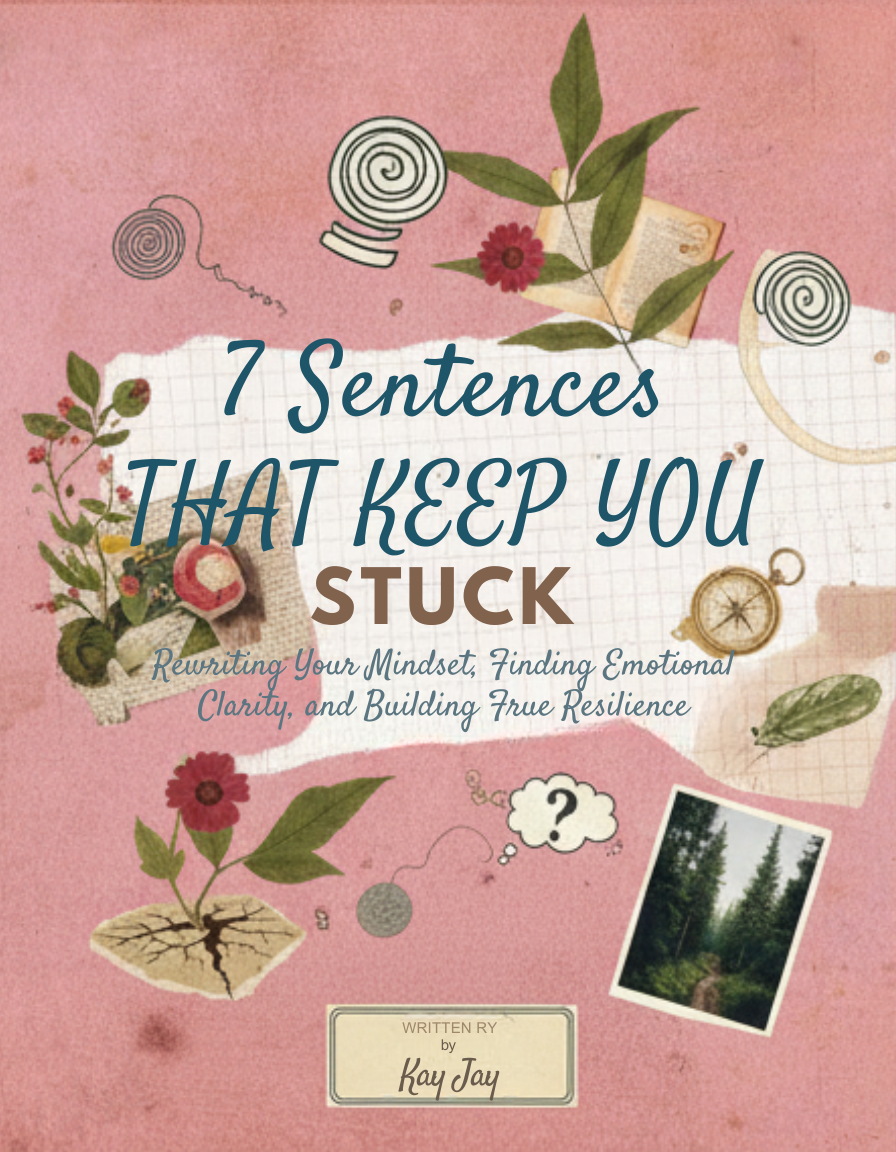
I created a sharp, insightful mini-ebook, “7 Sentences That Keep You Stuck,” to help you identify those invisible scripts and perform your first essential Rewrite. In this guide, you will see exactly how your most comforting phrases have been costing you power, clarity, and emotional ownership.
This free guide is the awakening. It will open your eyes to the language that is running your life.

If this exploration resonates and you want to continue the journey from passively living a borrowed sentence to actively writing your own, the full book, Diary of Clichés, is the definitive roadmap.



Leave a Reply