When I reflected on my own journey after publishing my first book and staring into that silent void, I realized something deeply uncomfortable. My failure wasn’t in the writing—I had focused entirely on the book as a masterpiece in itself.
I had not focused on the critical next step: helping readers recognize themselves inside it. I operated on the dangerous, silent assumption that the book was good enough to simply speak for itself.
But the core truth of the attention economy is that books do not exist in isolation. They exist inside perception.
The reader does not experience your Intention—the months, sometimes years, of your inner life and craft poured into the manuscript. They only experience your Presentation—the distillation of all that effort into a title, a cover, and a description.
The problem is that you, the author, know what the book means because you created it. But the reader, scrolling by in a distracted state, must guess.
This creates the Invisible Barrier. The barrier is not physical; it is psychological. It is the widening gap between what your book means to you (the author) and what readers believe it means for their life (the potential customer).
Closing this gap is not about changing your book’s truth or simplifying your message. It is about translating it into the reader’s urgent, immediate language of pain, desire, and relevance.
The Untranslated Menu
Imagine you’ve poured your soul into creating a Michelin-star meal—your book is a masterpiece of craft and intention. That meal is your book. Now imagine the restaurant menu (your presentation) only lists the ingredients in a foreign language.
Your intention is to nourish and delight, but the reader, looking only at the menu, cannot translate it into a promise of relevance for their own life. They move on, not because the meal isn’t good, but because the presentation created an invisible barrier of confusion and irrelevance.
This is the invisible barrier that keeps the most brilliant work invisible. By using vague, broad, or purely descriptive language (the Vague Promise), you force your reader to guess your value. You place the burden of translation on the scrolling reader, and in the attention economy, that is a burden they will never accept.Your book’s truth is locked behind its presentation. To break through the barrier, you must ensure that your external elements—title, subtitle, cover, and description—are a clear, well-labeled bridge, communicating the immediate, practical problem your book is solving for them. Only then can a searching reader finally see the solution they desperately need.
The single most important authority shift for the modern author.
When an author enters the marketplace, the instinct is to lead with the Resume. We believe our degrees, our job titles, our years of experience, or our past successes are the only things that will convince a reader to trust us. This is the Expert mindset, and it is a fundamental mistake in the attention economy.
Relying on your resume immediately creates two problems:
It Creates Distance: The reader sees the polished resume and thinks, “That’s great, but you don’t understand my messy, unpolished, current struggle.” The pedestal is built, and connection is repelled.
It’s Too Slow: A scrolling reader will not stop to read your full biography. The battle for attention is won in three seconds, and a resume requires ten minutes of logical analysis.
The most powerful form of authority today is not earned through a long list of credentials. It is earned through Clarity—the ability to articulate the reader’s hidden pain so precisely that you become the only logical guide.
Your goal is to Position Authority in One Sentence that bypasses the resume entirely. This sentence must be a magnetic combination of vulnerability and specific transformation.
The Formula for One-Sentence Authority
Your single-sentence authority statement must move from a statement of Expertise to a statement of Empathy. It is a declaration that you know the territory intimately because you were lost there, too.
Instead of relying on the Resume:
“I am a Certified X and have 15 years of industry experience. Buy my book.” (This is a statement of Fact.)
Position your Authority in One Sentence:
“I wrote this guide to give the specific, actionable map I wish someone had handed me when I was secretly terrified that all my hard work was leading to failure.” (This is a statement of Truth.)
The one-sentence statement of truth is a clear, irresistible signal because it:
Validates the Pain: It names a specific, hidden fear (“secretly terrified of failure”).
Establishes Traveler Authority: It proves you are the guide who knows the hole because you climbed out of it.
Promises the Transformation: It frames the book as the necessary map.
The reader is not buying your past; they are buying their future. The moment you stop relying on the slow, logical resume and start speaking the Authority of Clarity in one single, emotionally honest sentence, you instantly build the highest form of trust and transform your book from an invisible product into an essential guide.
Arguing that articulating a shared experience clearly is the highest form of authority.
The traditional definition of authority in any field—including publishing—is a list of credentials: degrees, certifications, years of experience, or a highly visible platform. This is the Expert model, which relies on a simple premise: Trust me because I have the title.
This model leads to one of the five major mistakes authors make: assuming that authority is earned through a pedestal. But in the modern marketplace, this old model is rapidly dissolving. Readers are drowning in a sea of experts. The result is not trust, but skepticism and fatigue. When you lead with credentials, the reader often responds with an unconscious barrier: “That’s nice, but your life is too different from mine. You don’t know my struggle.”
The highest form of authority today is not earned through a title. It is earned through Clarity.
The Authority of Clarity is the deep, magnetic trust you build when you articulate a shared experience—the reader’s specific, secret pain—with such precision and emotional honesty that they cannot ignore you. When you name their struggle better than they can name it themselves, you instantly become the most trusted voice in the room.
The reader’s ultimate question is not, “Is this person qualified to teach me?” It is, “Does this person truly see and understand me?”
Clarity trumps credentials because it is irrefutable proof of a shared journey.
The Credentialed Signal:“I have a PhD and 20 years of experience. Buy my guide.” (This is a statement of Expertise that demands logical evaluation.)
The Clarity Signal:“Do you ever feel like you’ve done everything right, but you’re still checking your dashboard at 2 AM, convinced you’re a failure? That specific shame is the problem. I have the map out.” (This is a statement of Empathy and Shared Experience that creates trust instantly.)
The Authority of Clarity is achieved by shifting from the Expert on the pedestal to the Traveler who came back with the map. Your knowledge is essential, but your vulnerability—your ability to speak from the confusion you overcame—is what forges the connection.
Stop building authority by listing your titles. Start building authority by articulating your reader’s deepest, most hidden truth. The moment you achieve that level of profound clarity, you possess the highest form of authority in the attention economy: the authority of the guide who knows the territory intimately.
The key to transforming your book from an invisible product into an irresistible map.
When an author invests their heart and soul into a book, they often create a Manifesto.
A Manifesto is a grand statement of belief. It details the author’s philosophy, their process, their vision for the world, and the importance of their ideas. It is broad, often abstract, and focused on the author’s intellectual journey and the why behind their own life’s work. The Manifesto is beautiful, but in the marketplace, it is a Vague Promise—a high-minded signal that is too distant from the reader’s urgent, immediate needs.
The problem is that the reader scrolling through a feed is not looking for a statement of grand philosophy. They are looking for a Survival Guide.
A Survival Guide is a specific, actionable, step-by-step map out of a painful, immediate reality. It focuses relentlessly on the reader’s before and after. It is not concerned with the abstract concept; it is obsessed with the clear, tangible outcome it promises to deliver.
The Fatal Flaw of the Manifesto
The Manifesto fails because it forces the reader to do the heavy lifting of translation. It says, “Here is a brilliant abstract concept; now figure out how to apply it to your messy life.” The reader, exhausted by distraction, registers this as too much work. They move on, not because the ideas are bad, but because the book’s signal is not a clear bridge to the desired result.
Readers do not buy abstract concepts; they buy outcomes. They are not investing their time to understand your philosophy; they are investing their time to solve their problem.
The shift is a simple, profound adjustment to your book’s signal:
The Manifesto Signal:“This is a comprehensive exploration of the principles of effective self-leadership.” (Abstract, concept-focused.)
The Survival Guide Signal:“The High-Achiever’s Map to Escaping Burnout: A simple, 3-step guide to reclaiming your time and energy.” (Specific, outcome-focused.)
The Survival Guide is an Irresistible Signal because it names a specific pain (burnout) and promises a clear, measurable outcome (reclaiming time and energy). It transforms the book from an impersonal product into a personal tool for rescue.Before you publish, check your signal. Stop crafting a manifesto that is centered on the importance of your ideas. Start framing your book as a survival guide that is centered on the relief and transformation of your reader. That clear focus on a specific, desired outcome is the only way to cut through the noise and ensure your book is seen as an urgent necessity.
One of the deepest tensions in my professional life has been the gap between what is valuable and what is visible. Few fields embody that tension more sharply than software and technology, where immense effort, skill, and intelligence often produce outcomes that are powerful yet largely invisible. I know that code runs banks, hospitals, logistics systems, communication platforms, and the infrastructure of everyday life, but because it cannot be held in the hand or displayed on a skyline, it is often treated as less real than the work of building something physical. That tension becomes even more charged when viewed through the eyes of an older generation shaped by industries in which labor announced itself in steel, concrete, machinery, and scale.
My father’s skepticism that software is not “real engineering” has always represented more than a personal opinion; for me, it reflects an entire worldview about legitimacy, usefulness, and permanence. In that worldview, engineering is something you can point to: a bridge that carries traffic, a dam that redirects force, a machine that occupies space and performs a visible function. Its authority comes from physical proof. By contrast, software appears abstract, weightless, and elusive. It lives behind screens, disappears into interfaces, and performs its labor silently. To someone trained to respect what can be measured in material terms, software can seem strangely insubstantial, even when it powers the very systems on which modern life depends.
This is where the conflict becomes psychological, not merely professional. For me, the desire to create something tangible has not simply been entrepreneurial curiosity. It has often been a longing for validation. A physical object seems capable of settling an argument that digital labor never quite resolves. A product on a shelf, a package in someone’s hand, a storefront, a machine, even something as modest as a handmade candle or a bag of herbs can feel more defensible than years spent designing systems no one sees. Tangibility becomes a form of evidence: proof that my labor exists, that I have made something real, that my work cannot be dismissed as invisible manipulation of symbols.
Yet this longing reveals a paradox at the heart of my life in technology. Software is among the most materially consequential forms of labor in the modern world. It shapes economies, mediates relationships, organizes governments, distributes resources, and increasingly structures human attention itself. It may not leave behind a monument in the traditional sense, but its effects are everywhere. The invisibility of software is not evidence of triviality; it is often evidence of integration. The more seamlessly software functions, the less visible it becomes. Its success lies in disappearing into the background of ordinary life.
And still, the emotional force of my father’s criticism persists because I do not live by logic alone. I live, as most people do, by symbols, inheritance, and the standards that formed me before I had language to resist them. Because I grew up hearing that real work must be concrete, measurable, and externally legible, even significant digital success has sometimes felt strangely hollow. No promotion, salary, or corporate prestige fully quiets the suspicion that I have built a life on abstractions. In that sense, my hunger for tangible creation has been an attempt to bridge two incompatible systems of value: the contemporary economy, which rewards scale, information, and code, and the older moral imagination, which equates worth with what can be touched.
What makes this tension so compelling to me is that it is not only about my father and me, or about tradition and modernity. It points to a broader crisis in how I understand work itself. In knowledge economies, much of the most important labor is intangible: analysis, design, strategy, care, coordination, writing, modeling, programming. These forms of work can be intellectually rigorous and socially indispensable, yet they remain vulnerable to dismissal because they do not produce a visible artifact. The result is a deep and often unspoken insecurity among people like me, whose work is real in every meaningful sense except the symbolic one.
To long for tangible creation, then, is not necessarily to reject technology. For me, it has often been a desire to reconnect labor with embodiment, process with presence, and effort with visible consequence. It is a yearning to make meaning in a form that can be witnessed without explanation. But perhaps the deeper resolution lies not in abandoning software for physical products, but in expanding my idea of what counts as real. Engineering is not made legitimate by concrete alone. It is made legitimate by problem-solving, precision, imagination, and usefulness. A bridge and a distributed system are not opposites; they are expressions of the same human impulse to build structures that help others cross from one point to another.
My father’s skepticism, then, exposes an old question inside a new economy: if a thing cannot be touched, can it still carry weight? I believe the answer, increasingly, is yes. But the emotional difficulty of accepting that answer explains why I, and so many people in tech, continue to crave the handmade, the physical, and the visibly constructed. We are not merely seeking a new hobby or a side business. We are searching for a form of creation that feels undeniable. In that search lies both the wound and the wisdom of modern work.
The key to unlocking your book’s irresistible signal.
The single biggest mistake authors make is confusing their book’s Topic with its Promise. Your topic is what your book is (e.g., productivity). Your promise is what your book does for the reader (e.g., moves them from busy-but-behind to clear-and-in-control).
When you try to sell a book, you are asking a distracted reader to invest their time and money. The only way to cut through the noise and make that sale inevitable is to articulate your Promise so clearly that it becomes an irresistible signal.
This can—and must—be done in one sentence.
This sentence is the key to escaping the Vague Promise Trap. It forces you to compress your entire book into a sharp, magnetic statement of transformation. The best way to construct it is to use the simple but powerful Who, Want, Struggle framework.
Your One Sentence must connect these three essential points of the reader’s journey:
WHO: The specific person/audience you are talking to.
WANT: The specific, emotional desire they are pursuing.
STRUGGLE: The specific, hidden pain/problem that is currently holding them back.
When you can articulate the promise as a bridge between the WHO + STRUGGLE and the WANT, you instantly create the perfect signal.
How to Build Your One Sentence
Let’s take a common book idea and see the transformation:
Vague Promise (Topic):A book about finding your purpose.
One Sentence (Promise):I help [overwhelmed corporate executives] who [are secretly terrified they’ve wasted their best years] to [finally transition to a life of meaning and impact].
Notice the change:
It’s not for “everyone”—it’s for the overwhelmed corporate executive.
It names a Hidden Fear—”secretly terrified they’ve wasted their best years.”
It promises a clear, emotional Transformation—”transition to a life of meaning and impact.”
This single sentence is the gravitational core of your entire signal. It is what your title, cover, description, and every promotional post must relentlessly communicate. The moment you define your book’s promise using the Who, Want, Struggle framework, you stop selling a generic topic. You start selling the clearest, most urgent map out of a specific, painful reality, and that is the only signal that sells books today.
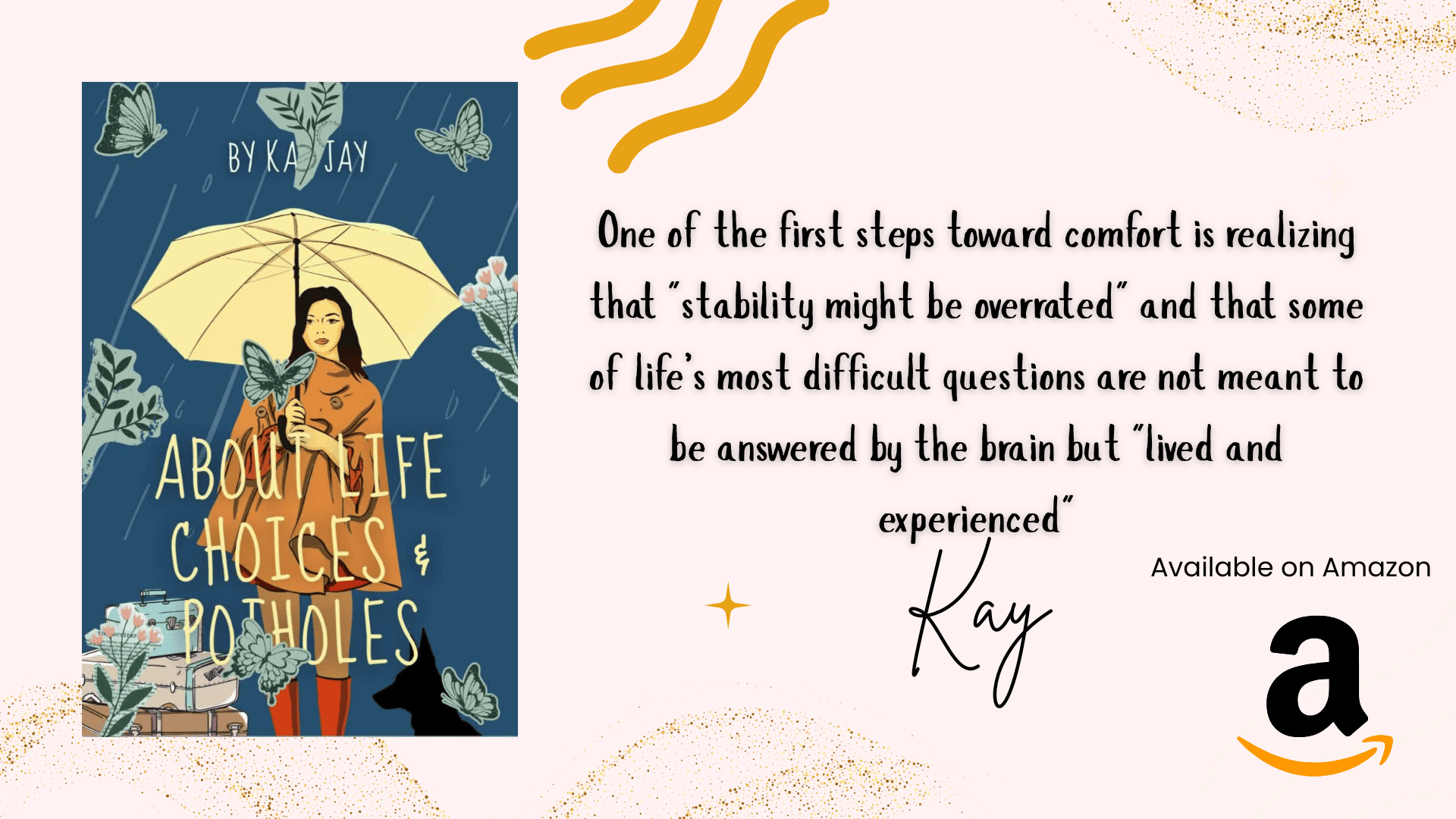
For twenty years, I believed I was building a fortress, only to realize I had been building on rented land. This wasn’t just about the physical apartments I occupied in San Francisco or the temporary rental I moved into upon returning to Mumbai; it was a metaphor for my entire existence—my career, my legal status, and my very identity were all subject to the whims of landlords, immigration officers, and corporate algorithms.
In the United States, the land I stood on was literally rented from the government. I spent two decades building a life, paying taxes, and forging deep communities, only to be reminded by a “BOOM” moment from an immigration officer that I didn’t truly belong. Visa rules are not just immigration policy; they are life policy. They dictated whether I could keep my home, my stability, and my dignity. When that “rented” legal status was challenged, the two decades of sweat and heart I had invested felt like they counted for nothing.
My professional identity was similarly built on borrowed soil. I viewed my high-flying tech career as my “badge of honor” and the tangible evidence of my worth. I used my corporate title to justify everything from my San Francisco rent to my self-esteem. But when the “thunderbolt” of a layoff hit, I was thrust into an “existential abyss”. I realized I had been a mere “cog in a vast, impersonal machine,” and without the “life rafts” of meetings and KPIs, I was suddenly unmoored. I was an inhabitant of an “uncharted territory” of free time, mourning a person I no longer was.
Returning to India offered no immediate solid ground. I found that the house I grew up in—the silent witness to my entire childhood—had been demolished for redevelopment. My past was unceremoniously discarded to make way for a “shinier” future, and I was forced into a rental apartment that felt “borrowed” and sterile. Here, the “rented land” took the form of Mrs. D, the landlord from hell. Renting in India felt like entering a long-term relationship with someone I didn’t even like, where privacy was a myth and my family’s habits were under constant “psychological warfare”. Whether it was the “Crow-Feeding Incident” or unannounced inspections, I was treated like an “untrustworthy babysitter” in a space that was supposed to be my sanctuary.
The breaking point came when I realized I could no longer live at the mercy of others’ rules—whether they were the “Byzantine seller policies” of Amazon or the “eviction threats” of a petty landlord. I finally understood that I had spent years trying to outrun unpredictability, choosing the structure of the West over the “madness of home,” only to find that stability is often an illusion.
I am now learning to build on the only land I truly own: myself. Reinvention has taught me that “home” is not a zip code or a corporate title, but the “slow, patient work of belonging to yourself”. I am finding my footing through “small, inconsequential acts”—shared laughter during family meals, the “playful dinner-time negotiations” with my dog Sauli, and the simple pleasure of hot chai on a rainy day. The potholes I encountered were not just obstacles; they were “unanticipated mentors” guiding me toward a version of myself that can laugh at absurdities and find peace in the “messy middle”. I have stopped looking for a “guaranteed key” to someone else’s door and have started the work of finally building a home within.
I have a confession to make: I don’t write to flatter my readers. I don’t set out to craft love stories dressed in “neat little packages” or polished bows. Instead, I am drawn to the raw, messy edges of emotion—the places where longing feels “raw, unfiltered, and humiliating.” In my literary world, I have come to believe a singular truth: discomfort is the art.
The Honesty in the “Nuts”
Book cover for Beautiful Men: The Dog Walker.
When my first book, The Dog Walker, was released, it sparked quite a divide. One critic famously called the protagonist, Sarah, “absolutely nuts” for her humiliating attempts to connect with a man while navigating her grief. They labeled the book a “narrative failure.”
When I read those words, I actually smiled. That reaction meant the story had done exactly what I intended. Sarah’s flaws, her delusions, and her awkwardness weren’t mistakes; they were the story. I believe that awkwardness is the honesty of the human condition. If you felt uncomfortable reading Sarah’s journey, it’s because real longing—the kind that isn’t sanitized for a movie screen—is inherently cringeworthy and painful.
Sitting with the “Lead Apron”
This philosophy of intentional discomfort followed me into the kitchen in The Chef. Here, the discomfort isn’t just about social awkwardness; it’s about the “lead apron” of depression. I wanted to force readers to sit with Kevin as he performs the role of a confident, Michelin-starred chef while his “inner world was crumbling.”
There is a profound unease in watching someone we want to root for disappear or fail to answer a message because the weight of their own mind is too heavy. But I refuse to tidy that away. True connection doesn’t happen in spite of our brokenness; it happens because of it. Intimacy is not a “flawless performance”; it is the quiet courage to show up—hungry, imperfect, and willing to be fed.
The Labyrinth of “Tomorrow”
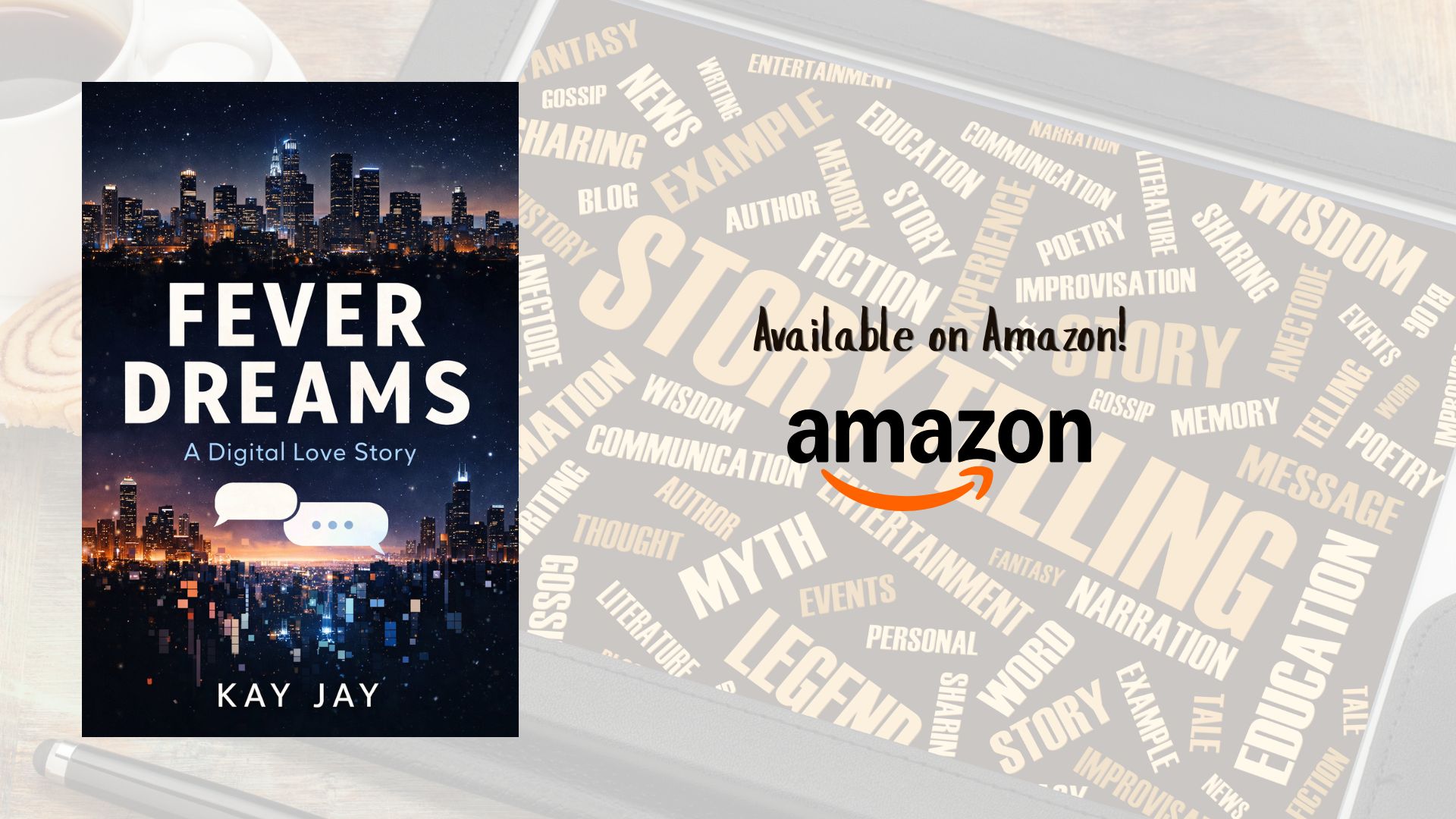
In Fever Dreams, I explored a more modern form of discomfort: the “existential claustrophobia” of the digital age. I wanted to capture that “shimmering mirage” of belonging we feel through dating apps, which often only deepens our solitude.
The discomfort in Dev and Mira’s story comes from the blurring of reality and illusion. I purposefully created a “delayed tomorrow,” a loop where meeting in person is a mirage that perpetually recedes. It’s an unsettling space to inhabit, both for the characters and the reader. It asks a question we are often afraid to answer: Is our “online self” an accurate reflection of identity, or just another mask that keeps us from being truly known?
Embracing the Cringe
As an author, I am basically daring you to embrace the cringe. I want you to squirm a little, to recognize the unvarnished parts of yourself in my characters’ humiliations and their “nuts” behavior.
We live in a world obsessed with digital validation and curated perfection. By leaning into discomfort, I hope to create a “pathway to connection” based on our shared human imperfection. Thank you for having the courage to walk with me into these shadows; I hope that in the awkwardness, you find a spark of recognition for your own quiet courage.
If you are holding this guide, you have almost certainly known the silence. You know the unique, isolating grief of pouring your heart, soul, and years into a manuscript, only to watch it disappear into the quiet, indifferent existence of the marketplace. You’ve asked yourself the dangerous, desperate questions: Was it not good enough? Was I not good enough?
After launching my first book, Diary of Cliches, I searched for the answer outside of myself. I scoured the internet for marketing tricks, sales hacks, and instant formulas that would solve the problem of zero sales. But the answer was never “out there.” The silence only deepened, and the shame of invisibility grew.
The true breakthrough—the one realization that changed the entire trajectory of my work and became the foundation of this book—came with a profound internal shift. I had to stop looking at the marketplace and start looking at my own mind.
I finally understood the simple, unshakeable truth: The problem was never the book itself. It was my relationship with visibility, value, and connection.
This realization was a moment of internal clarity that stretched my mind, allowing me to finally see the invisible barriers I had inadvertently created.
Visibility: I had focused on Performance (making noise) instead of Clarity (sending a resonant signal).
Value: I had fallen into the Hesitant Price Trap, communicating low value through my own discomfort with money.
Connection: I had tried to sell a product from an Expert’s Pedestal instead of offering a map as a Fellow Traveler.
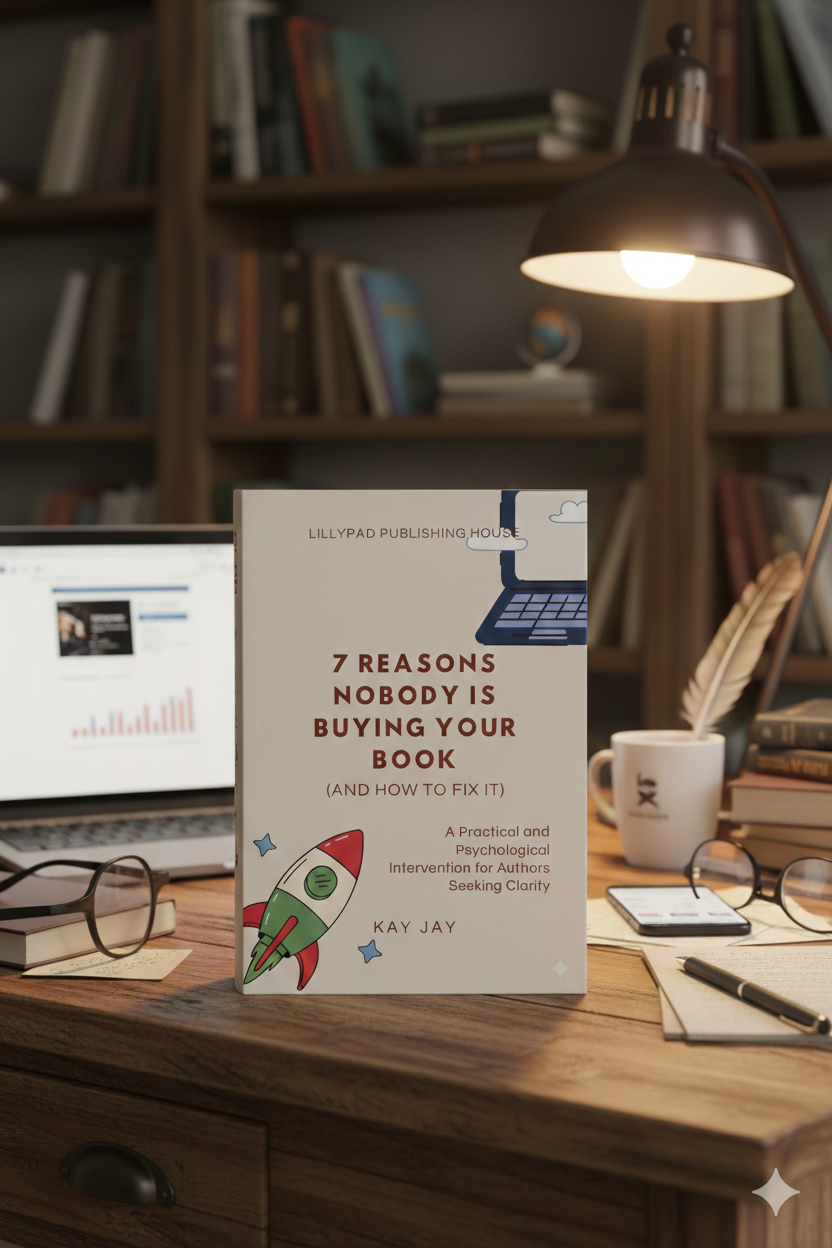
This discovery—that selling a book is not just a technical process, but a deeply human one rooted in confidence, empathy, and service—changed everything. It was the moment I stopped battling the marketplace and started serving the reader. Understanding why your book is not selling is not the end of the journey; it is the true beginning of clarity.This book, 7 Reasons Nobody Is Buying Your Book And How to Fix It, is the map born from that realization. It explores the deeper forces that truly shape a book’s destiny—money, psychology, emotional resonance, and the authority of authenticity. Because once you understand that your book is a Living Entity and your signal is a service, everything changes, and your story finally gets the chance to travel.
For years, I believed that if my life hit a deep enough pothole, the only way out was a radical, cinematic pivot. When the “thunderbolt” of a corporate layoff shattered my Silicon Valley identity, I didn’t just want a new job; I wanted a completely new soul. I stepped into an “existential abyss” where my worth, previously measured by “KPIs and quarterly goals,” had vanished overnight. My immediate instinct was to perform a 180-degree turn, attempting to leap from high-level data strategy to selling holistic herbs on Amazon or hand-pouring artisanal candles. But as I navigated the “messy middle” of this transition, I realized why these radical pivots often fail: they are frequently a desperate attempt to satisfy someone else’s definition of success rather than our own.
My pivot into “tangible” businesses was largely fueled by my father, a mechanical engineer who dismissed software as “digital nonsense” and an “imaginary profession”. He believed “real engineers” built bridges and dams, not lines of code. In my vulnerability, I tried to bridge this generational chasm by dreaming up “real-tangible-products”—like matcha-infused chai lattes or gourmet paneer masala burgers—hoping that a physical product would finally make me a success in his eyes. Pivots fail when they are a reaction to external devaluation rather than an internal evolution. I was trying to build a “machinery” career to fix a feeling of invisibility, but the “Byzantine seller policies” and the “existential dread of inventory management” only added new layers of chaos to my already fractured life.
Another reason radical pivots falter is the expectation of a “montage moment.” We are conditioned by movies to believe that starting over comes with a sudden burst of clarity and a quick resolution. In reality, reinvention is a “perpetual pothole-ridden road trip” where the familiar signposts vanish and the road is rarely paved. I found myself sitting on a suitcase in an airport, mourning the person I used to be while having no idea who I was becoming. When we expect a clean break, we are unprepared for the “liminal space between darkness and light” where we feel like a visitor in our own lives.
Furthermore, radical pivots often fail because we use them to outrun our own unpredictability. I spent years trying to choose the structure of the West over the “madness of home,” only to realize that the “potholes” followed me across continents. Whether it was my dog Sauli’s dramatic “Mission Impossible” escape attempts or the “psychological warfare” of a landlord from hell, life refused to be neatly re-categorized into a new, efficient business plan. I learned that we often seek “comfort more than connection,” clinging to the illusion of a new career or a new city to avoid the “raw reality” of our own grief.
Ultimately, I discovered that my pivot from “code to copy”—from building digital systems to writing—was successful only because it wasn’t a total abandonment of myself. It was a “quiet recalibration of values” where I stopped trying to find a “guaranteed key to unlock any door” and instead focused on the “patient work of belonging to myself”. Radical pivots fail when we try to fly over the potholes; they succeed when we accept that the potholes are the very paths that lead us home. Success is not a final destination or a prestigious new title; it is the steady decision to keep showing up for yourself on the scenic, unpredictable route.